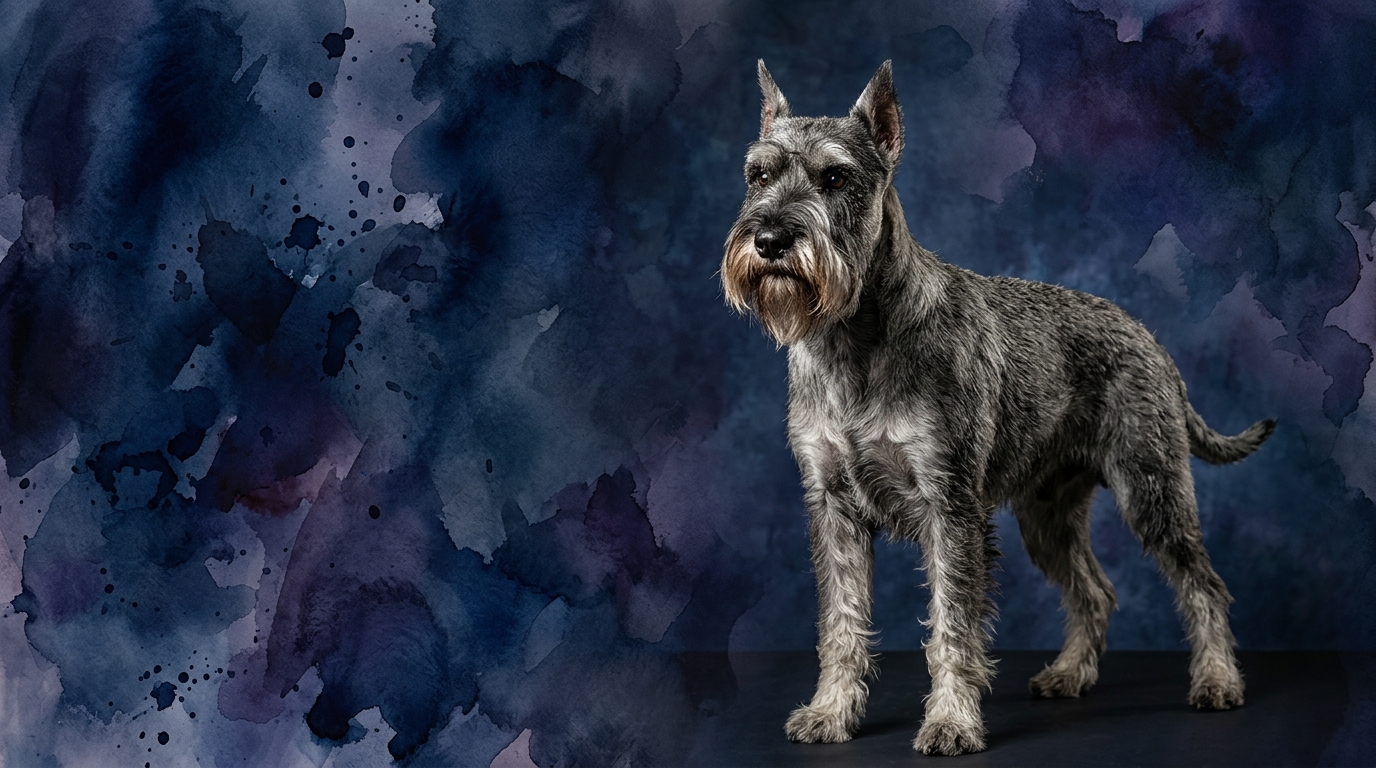
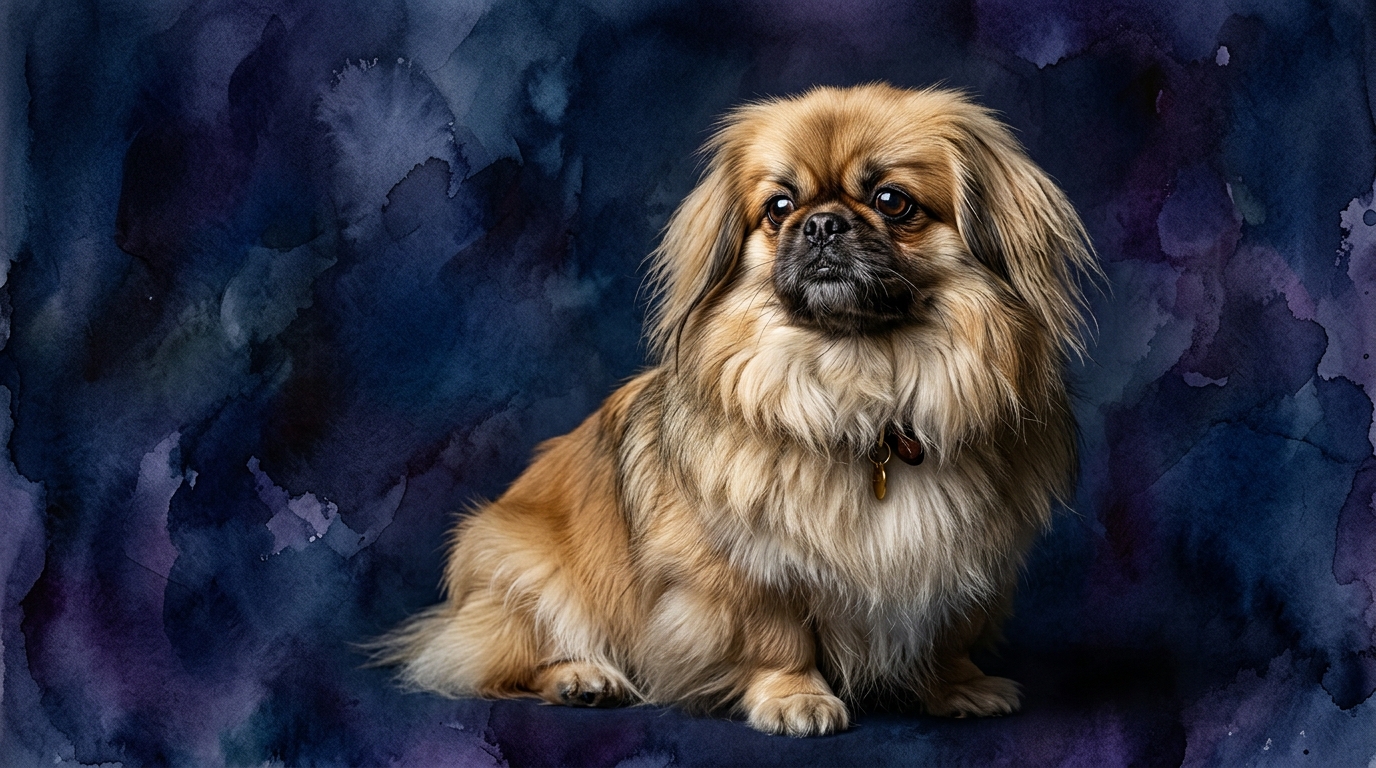
Side-by-Side IQ Profile: Standard Schnauzer vs. Pekingese
The Standard Schnauzer, ranking #22 on the Coren scale, demonstrates a significant capacity for working and obedience intelligence. Their Problem Solving score of 4/5 indicates strong independent thought and resourcefulness; these dogs often devise their own solutions to challenges rather than passively awaiting direction. With a Training Speed of 4/5, they possess a keen desire to learn, grasping new concepts and commands quickly with fewer repetitions. Their Social Intelligence, rated at 3/5, suggests they form deep bonds but can be discerning, often reserved or watchful with strangers, requiring consistent socialization. An Instinctive Drive of 3/5 reflects a moderate need for engagement and purpose, manifesting as a desire for 'a job to do,' whether it’s tracking or guarding. Finally, their Memory score of 4/5 highlights excellent retention of learned behaviors and experiences, contributing to their reliability and consistency.
In contrast, the Pekingese holds a Coren rank of #77, suggesting a different cognitive approach to learning and responsiveness. Their Problem Solving is rated 3/5, indicating an ability to navigate their environment effectively, often in ways that prioritize comfort or immediate gratification, and they can be quite adept at subtly influencing their human companions. A Training Speed of 3/5 means they will learn, but may require more patience, repetition, and motivation, often complying based on their own perceived benefit rather than an inherent eagerness to please. Their Social Intelligence also scores 3/5, characterized by strong, selective bonds with their chosen humans and an often-aloof demeanor towards unfamiliar individuals or animals, necessitating early socialization. The Pekingese’s Instinctive Drive is 3/5, primarily centered around companionship and personal comfort, rather than strenuous physical or mental tasks. Their Memory, at 3/5, is functional for routines and favored people, though complex sequences or less-frequent commands might require more frequent reinforcement to ensure retention.
Where Standard Schnauzer Wins Cognitively
The Standard Schnauzer decisively outperforms the Pekingese in areas requiring independent thought, rapid learning, and robust memory. Their problem-solving score of 4/5 reflects an innate ability to assess situations and formulate effective responses, a trait honed by centuries of working alongside humans in demanding roles. This manifests in their capacity to navigate complex environments, figure out how to open gates, or even strategically 'herd' family members. Furthermore, their superior training speed (4/5) means they absorb new commands with fewer repetitions, often demonstrating a comprehensive understanding of tasks quickly. This efficiency stems from a combination of focus and a drive to engage meaningfully with their environment and handlers. Their memory (4/5) underpins this, allowing them to retain vast repertoires of commands and experiences, making them reliable partners in various activities. For instance, a Schnauzer might remember a hidden treat location after several days or recall a specific route walked months prior, whereas a Pekingese might require more frequent cues for less-practiced tasks. These cognitive strengths make the Schnauzer particularly adept at advanced obedience, agility, or even search and rescue work, where quick comprehension and retention are paramount.
Where Pekingese Wins Cognitively
While the Pekingese might not match the Standard Schnauzer in traditional working intelligence metrics, their cognitive strengths lie in areas often overlooked by raw performance scores. Their problem-solving (3/5) is often geared towards social manipulation and comfort acquisition, rather than abstract tasks. A Pekingese excels at understanding how to get what it wants from its human companions, whether through charming persistence, a well-timed gaze, or even a subtle nudge. This form of social problem-solving is a nuanced skill, allowing them to effectively communicate their needs and desires without always resorting to overt demands. Their social intelligence (3/5), while sometimes appearing aloof, is deeply selective and focused on key relationships, enabling them to read the moods and intentions of their chosen few with remarkable accuracy. They develop intricate patterns of interaction within their established social circles, often anticipating their owner's next move or emotional state. Their moderate instinctive drive (3/5) is largely channeled into self-preservation and comfort, making them masters of finding the warmest sunbeam or the softest cushion, a practical application of their cognitive resources for optimizing their personal well-being. This unique cognitive profile allows the Pekingese to thrive in environments where close companionship and subtle communication are valued above rigorous task performance.
Which is Easier to Train and Why
The Standard Schnauzer generally presents as the more straightforward breed to train, primarily due to their higher scores in training speed (4/5) and problem-solving (4/5). These dogs possess an inherent eagerness to learn and a strong desire for purpose, making them receptive students. They grasp new commands quickly, often needing only a few repetitions to understand what is expected. Their memory (4/5) ensures that once a command is learned, it is retained effectively, leading to consistent performance. Schnauzers are also less prone to independent stubbornness when engaged, thriving on mental stimulation and the satisfaction of a job well done. For instance, teaching a Schnauzer a complex sequence of tricks or an agility course would likely progress much faster, as they actively try to understand the pattern and cues.
The Pekingese, with a training speed of 3/5 and problem-solving of 3/5, can be more challenging. Their independent nature, a hallmark of many ancient breeds, means they often weigh whether a command is truly worth their effort. While capable of learning, they may require more patience, creativity, and motivation from their trainer. Repetitive drills might bore them, leading to disengagement, so positive reinforcement and making training a rewarding game are crucial. Their moderate memory score (3/5) means that consistency in training is paramount to ensure retention; skills not regularly practiced might fade. For example, a Pekingese might perfectly execute a 'sit' command when a treat is imminent but then feign deafness when the reward isn't immediately apparent or if they simply aren't in the mood. Their training success often hinges on the owner's ability to make the process engaging and to understand the breed's unique motivations, which often prioritize comfort and personal preference.
Which Suits Active Owners vs. Relaxed Owners
For active owners seeking a canine companion to participate in various endeavors, the Standard Schnauzer is the clear choice. Their moderate instinctive drive (3/5), coupled with superior problem-solving (4/5) and training speed (4/5), makes them excellent partners for activities such as hiking, jogging, advanced obedience, rally, or even dog sports like agility. They thrive on having a 'job' and require consistent mental and physical stimulation to prevent boredom and potential behavioral issues. An owner who enjoys structured training sessions, outdoor adventures, and engaging their dog's mind will find a deeply rewarding partnership with a Schnauzer. Their robust build and energetic disposition mean they can keep pace with an active lifestyle, and their cognitive abilities allow them to learn and adapt to new challenges readily.
Conversely, the Pekingese is exceptionally well-suited for more relaxed owners or those with a less physically demanding lifestyle. Their instinctive drive (3/5) is oriented more towards companionship and comfort than rigorous activity. While they enjoy short, leisurely strolls, their exercise needs are modest, making them ideal for apartment living or owners who prefer quiet evenings at home. Their cognitive strengths, which lean towards social awareness and subtle communication, mean they excel in environments where close human interaction and emotional bonding are prioritized over athletic feats. A Pekingese companion is content to supervise household activities from a comfortable perch, offering affection and subtle cues for attention. Owners who appreciate a dog with a strong personality, a dignified demeanor, and a penchant for luxurious lounging will find the Pekingese an ideal, low-key companion. They offer deep emotional connection without requiring an extensive commitment to physical exertion or complex training regimens.
The Verdict
Choose a Standard Schnauzer if you are an active individual or family seeking a highly trainable, intelligent, and engaged companion for diverse activities and a strong working partnership. Their desire for mental and physical engagement makes them ideal for those committed to consistent training and providing ample stimulation.
Opt for a Pekingese if you prefer a less demanding companion, value independent personality and subtle communication, and seek a loyal, affectionate dog content with a relaxed lifestyle and moderate exercise. They are perfect for owners who appreciate a regal demeanor and intimate companionship.
🧠 Find Your Pet's IQ Score
Our Pet IQ Lab assessment covers 25+ tests across 5 cognitive dimensions — personalized to your breed.
Take the Full IQ Test →Frequently Asked Questions
Are Standard Schnauzers difficult to manage due to their working drive?
Standard Schnauzers possess a moderate working drive that requires consistent mental and physical engagement, but this isn't necessarily 'difficult.' With proper socialization, training, and outlets for their energy, they are well-adjusted and rewarding companions. Neglecting their needs, however, can lead to boredom and potential behavioral challenges.
Can a Pekingese learn advanced tricks or commands?
Yes, a Pekingese can certainly learn advanced tricks and commands, though it may take more patience and creative motivation than with a breed like the Standard Schnauzer. Their independent nature means training sessions should be kept fun and rewarding, focusing on positive reinforcement to encourage their cooperation and engagement.
How do their social intelligence scores impact their interactions with children or other pets?
Both breeds score 3/5 in social intelligence, meaning they can form strong bonds but may be discerning. Standard Schnauzers need early socialization to ensure they are comfortable with various people and pets, while Pekingese often prefer a calmer environment and may be aloof with strangers or boisterous children. Supervision and careful introductions are key for both.