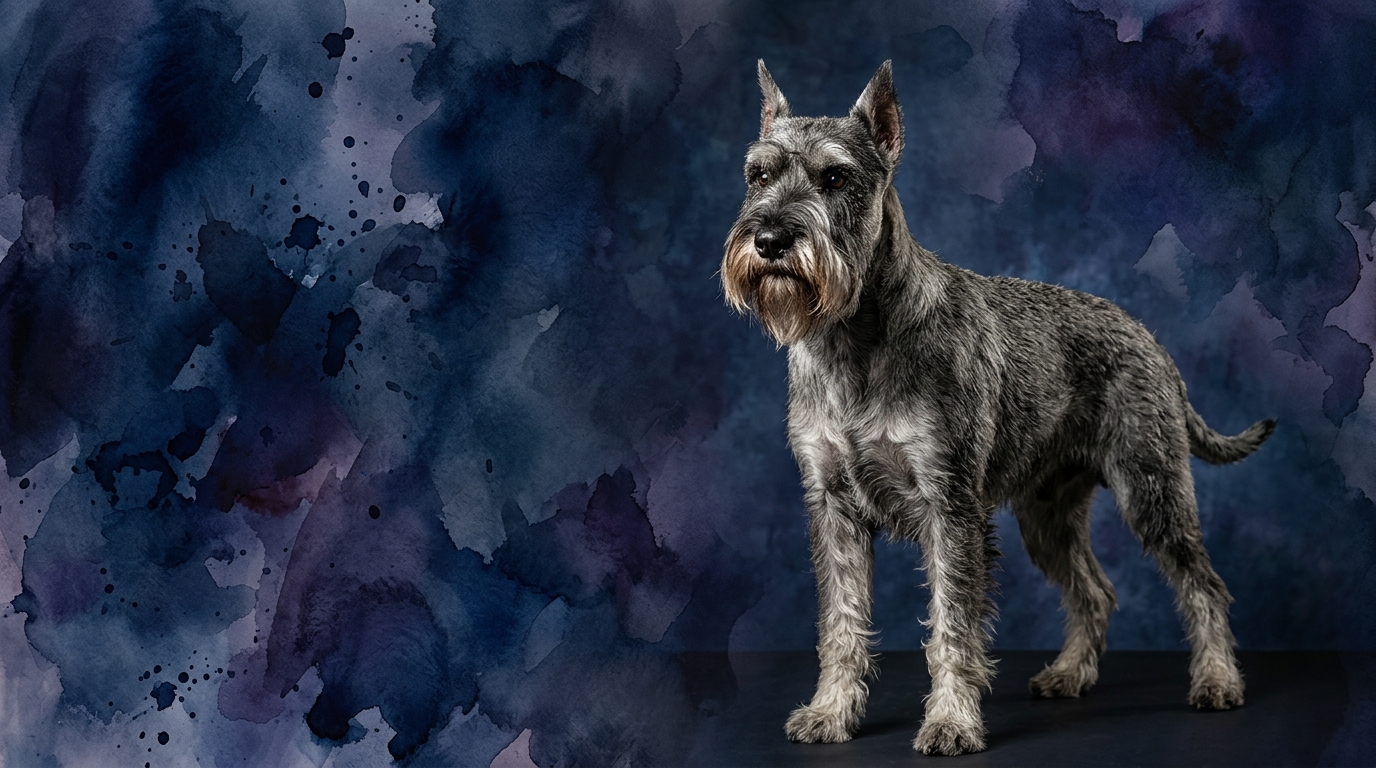

Side-by-Side IQ Profile
The Cosmic Pet Pet IQ Lab employs a comprehensive five-dimensional framework to evaluate canine intelligence, offering a nuanced perspective beyond simple obedience rankings. For the Standard Schnauzer, a breed rooted in guarding and vermin control, its cognitive blueprint reflects a robust capacity for independent thought and rapid acquisition of skills. Its problem-solving score of 4/5 indicates a breed adept at navigating complex situations, figuring out novel puzzles, and adapting strategies when faced with new challenges, often demonstrating a resourceful approach to obstacles. The 4/5 rating in training speed signifies a quick uptake of new commands and routines, suggesting they often require fewer repetitions to solidify a learned behavior. Social intelligence, at 3/5, implies a capability to understand human cues and integrate into family dynamics, though they might exhibit a discerning nature with strangers and prioritize task-orientation over subtle social manipulation. An instinctive drive of 3/5 points to a moderate but purposeful impulse for its working heritage, such as vigilance and protective behaviors, which can be channeled effectively. Finally, a memory score of 4/5 demonstrates effective retention of learned behaviors and past experiences, crucial for long-term training success and reliable recall.
In contrast, the Sussex Spaniel, a breed developed for flushing game in dense undergrowth, showcases a different yet equally valuable set of cognitive attributes. Its problem-solving capacity, rated at 3/5, suggests it can tackle straightforward challenges efficiently but might require more guidance or repetition for intricate or multi-step tasks, preferring a more methodical approach. A training speed of 3/5 means they learn at a steady, deliberate pace, benefiting from patience, consistency, and positive reinforcement to embed new commands. The Sussex Spaniel's social intelligence, also at 3/5, manifests as a deeply affectionate and companion-oriented nature, fostering strong bonds with its family while generally being amiable towards others, though perhaps less inclined towards the strategic social interactions seen in some breeds. Its instinctive drive, at 3/5, is specifically tailored for sustained scent work and methodical searching, reflecting its sporting origins without excessive frenetic energy. A memory score of 3/5 indicates reliable retention of routines and commands, though owners might find occasional refreshers helpful to maintain peak performance, particularly after periods without practice.
Where Standard Schnauzer Wins Cognitively
The Standard Schnauzer's cognitive strengths distinctly outshine the Sussex Spaniel's in areas demanding rapid cognitive processing and independent decision-making. With a problem-solving score of 4/5, Schnauzers exhibit a superior aptitude for dissecting novel situations, quickly formulating solutions, and executing them with precision. This translates into a dog that can more readily master intricate puzzle toys, navigate complex obstacle courses, or even figure out how to open child-proof latches, often demonstrating a clever ingenuity. Their training speed, also rated 4/5, means they generally grasp new commands and sequences with remarkable swiftness, often requiring fewer repetitions than many other breeds. This rapid learning curve allows for a broader and deeper repertoire of learned behaviors, making them exceptional candidates for advanced obedience, agility, and protection work where quick, accurate responses are paramount. Furthermore, their 4/5 memory score ensures that these complex lessons are retained effectively over time, reducing the need for constant reteaching and allowing for consistent, high-level performance across various disciplines. Their cognitive agility enables them to adapt swiftly to changing environments and expectations, making them highly versatile companions for engaged owners.
Where Sussex Spaniel Wins Cognitively
While the Sussex Spaniel may not numerically outscore the Standard Schnauzer in all IQ dimensions, its specific cognitive profile represents a unique and valuable set of strengths perfectly suited to its heritage and ideal lifestyle. The Sussex Spaniel's instinctive drive, rated 3/5, is precisely calibrated for sustained, methodical scent work, a trait that makes it an exceptional partner for activities like nose work or tracking where persistence and focused attention are prized over speed. Unlike breeds with higher, more intense drives that might lead to distraction or over-excitement, the Sussex applies its drive with a calm, unwavering concentration, allowing it to meticulously follow a scent trail without becoming easily flustered. Its social intelligence, also at 3/5, fosters a deep, unwavering loyalty and a profound sensitivity to its family's emotional states, often expressed through quiet devotion rather than boisterous displays. This breed excels in creating a harmonious home environment, offering a comforting presence and an uncanny ability to understand and respond to the subtle nuances of human mood, making them empathetic companions. Their memory, a steady 3/5, reliably holds consistent routines and cherished interactions, contributing to a predictable and reassuring daily rhythm that many owners find incredibly appealing. The Sussex Spaniel's cognitive strengths lie in its steadfastness, its profound connection to its handler, and its patient, methodical approach to tasks, offering a different kind of brilliance that enriches the lives of those who appreciate a more deliberate pace.
Which is Easier to Train and Why
When considering ease of training, the Standard Schnauzer generally presents a more straightforward path for owners due to its higher scores in training speed (4/5) and problem-solving (4/5). These dogs possess a natural eagerness to learn and a quicker cognitive uptake, meaning they often grasp new commands and complex sequences with fewer repetitions. Their inherent drive for purpose and mental engagement means they thrive on structured training sessions and benefit from consistent challenges, often viewing training as an enjoyable collaborative activity. However, their intelligence can also manifest as an independent streak; without consistent, fair leadership and mental stimulation, they might become bored or develop their own "rules," requiring an owner who can channel their cognitive energy effectively.
In contrast, the Sussex Spaniel, with a training speed of 3/5, requires a more patient and consistent approach. They learn at a steady pace and respond best to positive reinforcement techniques, such as praise, treats, and play, rather than harsh methods which can make them shut down. Their focus can sometimes be on their scenting instincts, so training might need to incorporate these natural drives or be structured in a way that captures their attention over external stimuli. While they are willing to please their beloved family members, their enthusiasm for repetition might wane faster than a Schnauzer's, necessitating shorter, more engaging sessions. Their moderate problem-solving (3/5) means complex commands might need to be broken down into smaller, more manageable steps. Therefore, while not difficult to train, the Sussex Spaniel demands an owner who values gentle persistence and celebrates incremental progress.
Which Suits Active Owners vs Relaxed Owners
The choice between a Standard Schnauzer and a Sussex Spaniel often hinges on an owner's lifestyle and their capacity to meet a dog's physical and mental exercise requirements. The Standard Schnauzer, a Working group breed, is unequivocally better suited for active owners. With its background in guarding and farming, this breed possesses significant stamina and a robust need for both physical exertion and mental engagement. Owners who enjoy long daily walks, running, hiking, or participating in dog sports like agility, obedience, or tracking will find a perfect partner in the Schnauzer. Their 4/5 problem-solving and training speed mean they thrive on having a "job" to do, whether it's advanced training, puzzle toys, or even just being included in daily chores, and insufficient mental stimulation can lead to boredom and undesirable behaviors.
Conversely, the Sussex Spaniel, while a Sporting group member, typically aligns better with more relaxed owners who still commit to consistent, moderate activity. Historically bred for slow, methodical flushing of game in dense cover, they do not possess the frenetic energy of some other spaniel breeds. They require regular daily exercise, such as moderate walks, engaging play sessions in a securely fenced yard, or opportunities for scent work that taps into their instinctive drive (3/5). However, they are generally content to relax at home with their family after their exercise needs are met. Their moderate problem-solving and training speed mean they appreciate a predictable routine and a calm home environment, making them ideal companions for individuals or families who prefer a devoted, affectionate presence without the constant demand for high-intensity activity. They are satisfied with comfortable companionship and a steady rhythm to their days.
The Verdict
Choose the Standard Schnauzer if you are an active owner seeking a mentally agile, highly trainable companion for dog sports, advanced obedience, or a vigilant family guardian who thrives on purpose and consistent engagement in complex tasks.
Opt for the Sussex Spaniel if you desire a devoted, steadfast companion with a moderate activity level, appreciating a more deliberate approach to learning and a calm, affectionate presence in the home that values routine and close family bonds.
🧠 Find Your Pet's IQ Score
Our Pet IQ Lab assessment covers 25+ tests across 5 cognitive dimensions — personalized to your breed.
Take the Full IQ Test →Frequently Asked Questions
Do Standard Schnauzers get bored easily?
Yes, with a problem-solving score of 4/5 and high training speed, Standard Schnauzers require consistent mental stimulation to prevent boredom and potential destructive behaviors. They thrive on learning new tasks, engaging with puzzle toys, and participating in structured activities that challenge their intellect.
Are Sussex Spaniels good with children?
Their social intelligence of 3/5, combined with their generally calm and affectionate nature, makes them suitable family companions. They are typically patient and tolerant, forming strong bonds with all family members, including children, when properly socialized and given a predictable environment.
What kind of mental exercise benefits a Sussex Spaniel most?
Given their instinctive drive for scent work and methodical nature, Sussex Spaniels benefit greatly from nose work, tracking games, and hide-and-seek activities where they can utilize their keen sense of smell. These engagements tap into their natural talents, providing fulfilling mental stimulation at their preferred pace.