
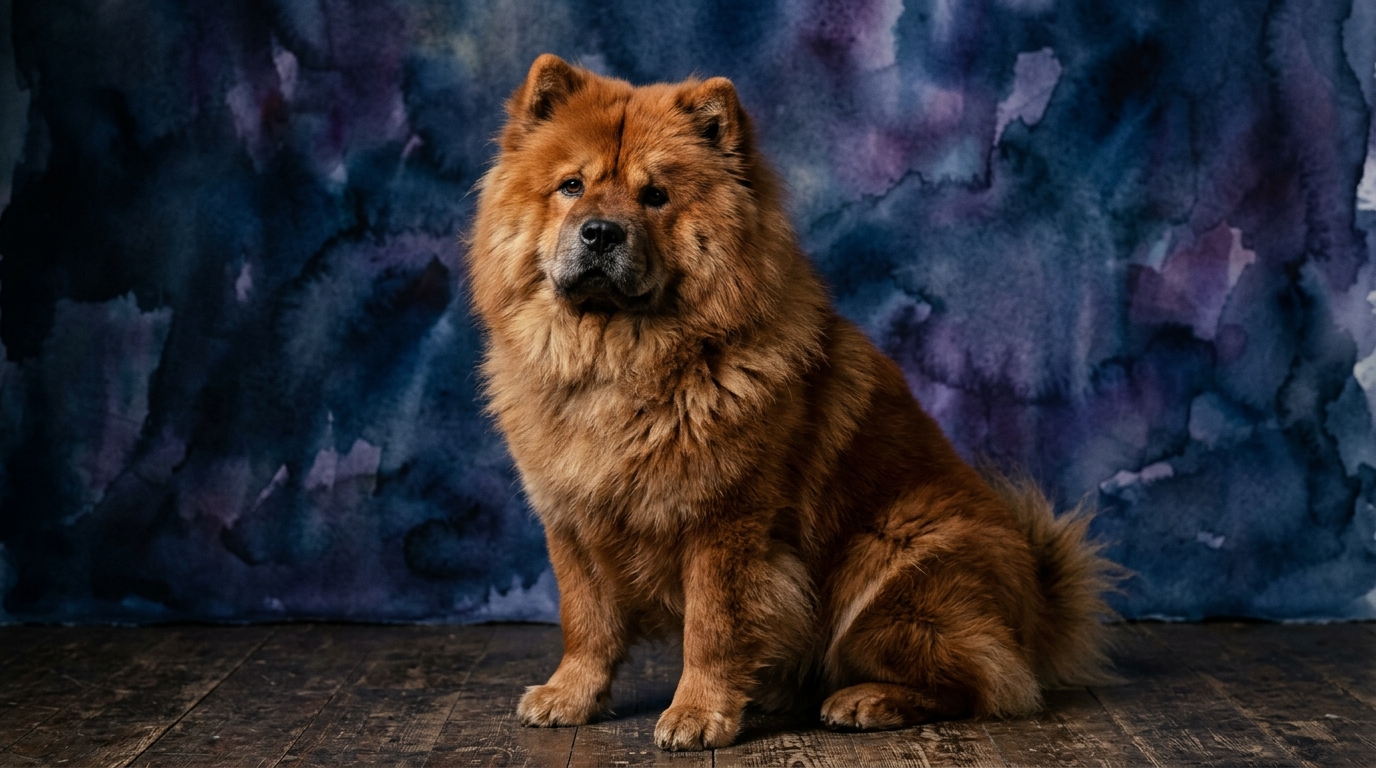
Side-by-Side IQ Profile: Unpacking the 3/5 Scores
While both the Sussex Spaniel and Chow Chow are assigned a 3/5 across our five cognitive dimensions, their expressions of these abilities diverge significantly, rooted in their historical roles and inherent temperaments. This uniform score invites us to explore the qualitative differences in their mental makeup rather than just quantitative.
A Sussex Spaniel's problem-solving aptitude, rated 3/5, often manifests in practical, task-oriented scenarios. Given their sporting heritage, they excel at figuring out how to locate a hidden scent or navigate a brushy field to retrieve an object. Their solutions are often collaborative, seeking to complete a task presented by their human companion, such as maneuvering around obstacles to bring back a thrown ball. The Chow Chow, also scoring 3/5 in problem-solving, approaches challenges with a distinct independence. Their cognitive efforts might be directed towards achieving a personal comfort or desired outcome, like subtly figuring out how to access a favorite sunbeam spot or outsmarting a gate latch to explore. Their solutions are typically self-motivated, demonstrating ingenuity in fulfilling their own agenda rather than performing a directed task.
In training speed (3/5), the Sussex Spaniel learns new commands at a moderate pace, particularly when the training involves positive reinforcement and feels like a partnership or game. Repetition with enthusiasm yields steady progress, as they are generally eager to please their human companions. The Chow Chow also takes a moderate amount of time to learn new commands, but their independent nature means they require consistent, patient, and motivating methods. They grasp concepts, but their willingness to perform on command is often contingent on their own assessment of the value or necessity of the task, rather than an inherent drive to comply for approval.
Social intelligence (3/5) in the Sussex Spaniel means they read human cues adequately and respond to familiar people with warmth, showing a moderate understanding of social hierarchies within their family unit. Their social interactions are generally open and friendly, though they may be reserved with strangers initially, enjoying being part of family activities. The Chow Chow's social intelligence is expressed through a keen observation of their immediate family, often forming deep, loyal bonds with a select few. They are discerning and aloof with outsiders, understanding social boundaries and often preferring to maintain a dignified distance; they are not oblivious to social dynamics but choose to engage selectively.
The instinctive drive (3/5) of a Sussex Spaniel is rooted in their sporting heritage, possessing a moderate urge to scent, flush, and retrieve, translating to an enjoyment of outdoor activities, tracking games, and a desire for purpose-driven tasks. They channel this drive into constructive activities when given the opportunity. The Chow Chow's instinctive drive is more about guarding and independence. They possess a moderate protective instinct for their home and family, coupled with a strong sense of self-preservation and a tendency towards self-sufficiency. This manifests as watchful behavior and a preference for making their own decisions rather than blindly following.
Memory (3/5) in the Sussex Spaniel ensures they recall commands, routines, and experiences with reasonable accuracy. Once a task or behavior is learned, it tends to stick, especially if it was a positive experience, and they can recall scent trails and locations effectively. The Chow Chow possesses a good memory for routines, people, and past interactions, both positive and negative. They are unlikely to forget a kindness or a perceived slight, and they remember boundaries and expectations set within their environment; their recall of commands is good, but their willingness to execute can vary.
Where the Sussex Spaniel Wins Cognitively
The Sussex Spaniel shines in cognitive scenarios demanding partnership and adaptability. Their problem-solving is often geared towards achieving a shared goal with their human, making them highly effective in activities like agility or complex scent work where communication and cooperation are key. This collaborative spirit allows them to adapt more readily to new challenges and learning environments.
Their social intelligence, while rated the same, tends towards a more overtly engaging and people-focused approach. This allows them to integrate smoothly into diverse family dynamics and respond more openly to a broader range of social cues from various individuals. This makes them particularly adept at understanding and responding to nuanced human direction during tasks or daily interactions.
Where the Chow Chow Wins Cognitively
The Chow Chow demonstrates a unique cognitive strength in independent problem-solving and self-reliance. They are adept at evaluating situations and devising solutions that benefit their own comfort or agenda without direct human intervention. This can manifest as clever ways to secure a preferred spot, or navigating their environment to avoid perceived inconveniences, showcasing a distinct, self-directed ingenuity.
Their specific expression of social intelligence, marked by aloofness and discernment, grants them a superior ability to observe and understand their immediate environment and family dynamics with a watchful, protective eye. This allows them to form incredibly deep, loyal bonds with their chosen few, while maintaining a dignified distance from others, making them excellent, discerning guardians of their home space.
Which is Easier to Train and Why
The Sussex Spaniel generally presents as the easier breed to train. Their sporting background imbues them with a desire to work alongside humans and a natural eagerness to please. They typically view training as a fun, collaborative activity, responding well to positive reinforcement and consistency, which facilitates a smoother learning curve and greater enthusiasm for new commands.
Training a Chow Chow can be a more involved endeavor. While they are capable of learning, their independent and often strong-willed nature means they need to be convinced that performing a command is worthwhile. Success hinges on immense patience, consistency, and understanding their unique motivations, as they are less inclined to perform simply for praise and can be stubborn if they don't see the point or if the training isn't engaging on their terms.
Which Suits Active Owners vs. Relaxed Owners
The Sussex Spaniel is better suited for moderately active owners who enjoy engaging their dog in various activities. They thrive on consistent physical activity and mental stimulation, enjoying walks, scent games, and family participation in outdoor adventures. Owners who can provide a sense of purpose or a 'job,' even if it’s just fetching or tracking, will find them more content and responsive.
The Chow Chow aligns well with more relaxed owners who appreciate a dignified, independent companion. While they still require regular exercise like daily walks, their energy levels are generally lower, and they often prefer quiet companionship over constant activity. Owners who respect their self-sufficient nature and provide a calm home environment will find the Chow Chow a loyal and watchful presence.
The Verdict: When to Choose Each
The Verdict
Choose a Sussex Spaniel if you seek a collaborative, moderately active companion eager for shared adventures and who thrives on partnership in training and daily life.
Opt for a Chow Chow if you desire a discerning, independent companion who offers quiet loyalty and requires an owner who respects their self-sufficient nature and dignified presence.
🧠 Find Your Pet's IQ Score
Our Pet IQ Lab assessment covers 25+ tests across 5 cognitive dimensions — personalized to your breed.
Take the Full IQ Test →Frequently Asked Questions
Do Sussex Spaniels or Chow Chows bark more?
Sussex Spaniels, as sporting dogs, tend to be more vocal, using barks to communicate excitement, alert to new scents, or express needs. Chow Chows are generally quieter, barking primarily for alarm or territorial warnings, reflecting their more reserved nature.
Are either of these breeds good with children?
Sussex Spaniels can be good with respectful children, often enjoying play and family interaction, though supervision is always important. Chow Chows can tolerate older, respectful children within their immediate family but are less tolerant of boisterous play and require careful socialization and boundaries.
How do their problem-solving skills differ in a home environment?
A Sussex Spaniel might problem-solve by figuring out how to retrieve a toy stuck under furniture, often seeking human assistance or guidance. A Chow Chow, conversely, might independently figure out how to access a forbidden treat or secure a comfortable spot, relying less on external cues.