
Side-by-Side Cognitive Profiles: Decoding the 3/5 Score
While both the Sussex Spaniel and the Rat Terrier register a 3 out of 5 across all five cognitive dimensions, understanding their breed-specific manifestations is crucial. These scores, rather than indicating identical cognitive processes, highlight that both breeds possess a functional and adaptable intelligence, tailored to their historical roles, yet express these capabilities through distinct behavioral lenses.
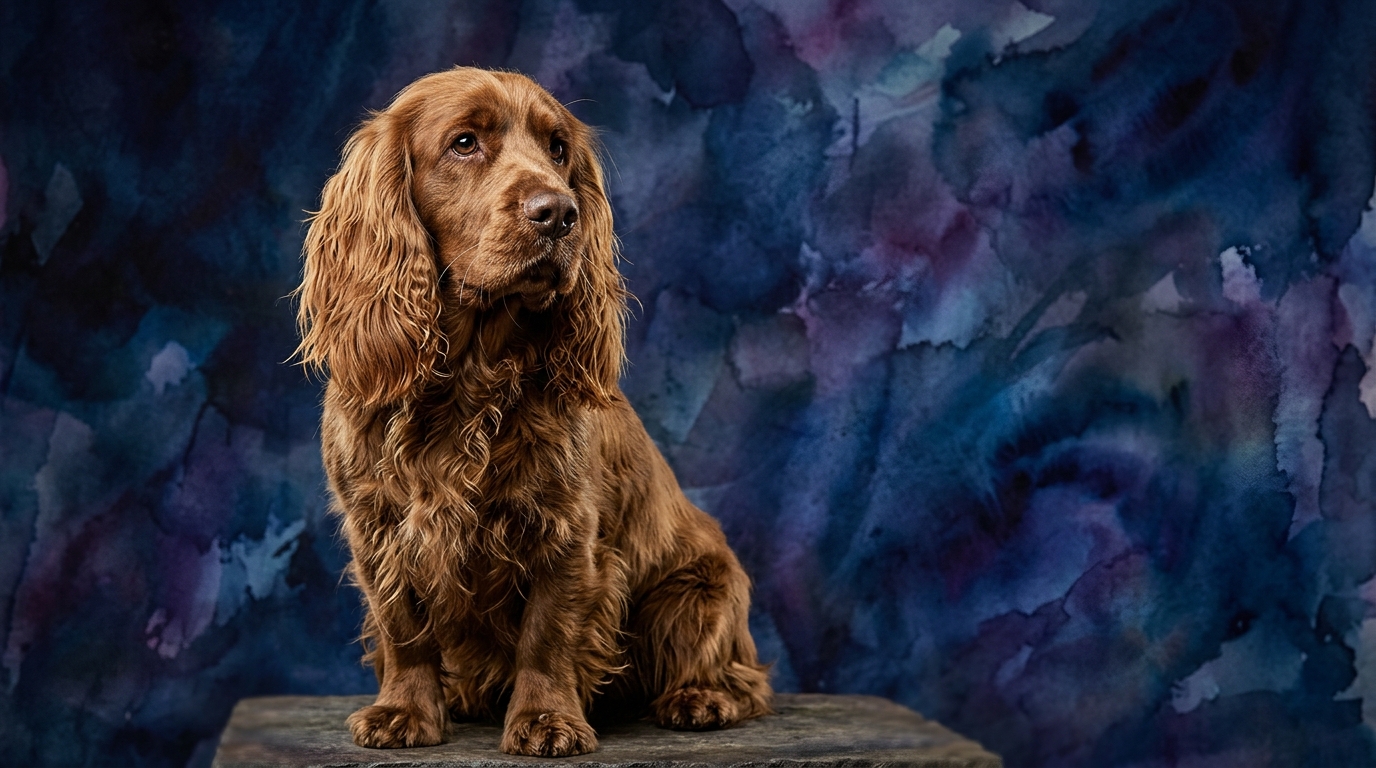
For the **Sussex Spaniel**, a Sporting group dog ranked #62 by Coren, a Problem Solving score of 3/5 often translates to a methodical and persistent approach. Their challenges historically involved navigating dense cover to flush game or retrieve, requiring steady analysis rather than rapid, impulsive decisions. Training Speed at 3/5 suggests they are capable learners who respond well to consistent, patient instruction, absorbing information steadily without necessarily being the quickest to grasp new concepts on the first few repetitions. Their Social Intelligence (3/5) is typically seen in their cooperative nature with handlers during fieldwork, understanding subtle cues and working as part of a team, while generally being amiable but not overly effusive with strangers. An Instinctive Drive of 3/5 in a Sussex points to a well-developed scenting and retrieving instinct, focused on game birds, exhibiting controlled enthusiasm rather than frantic energy. Finally, their Memory (3/5) is robust for recalling specific field commands, scent trails, and the locations of downed game, demonstrating a practical, task-oriented recall.
The **Rat Terrier**, a Terrier group dog without a Coren ranking, also scores 3/5 across the board, but these scores reflect a different set of cognitive strengths. Their Problem Solving (3/5) is often characterized by cunning and agility, figuring out how to access tight spaces or outsmart small prey, requiring quick assessment and adaptable tactics rather than methodical patience. A Training Speed of 3/5 for a Rat Terrier signifies they can learn rapidly when motivated, but their independent nature means they might choose to comply based on their own assessment of the reward or the task's perceived value. Their Social Intelligence (3/5) is deeply bonded to their primary human, often displaying a nuanced understanding of their owner’s moods and intentions, though they can be more reserved or discerning with strangers and other animals due to their protective and self-reliant instincts. An Instinctive Drive of 3/5 in a Rat Terrier is powerfully directed towards hunting and dispatching vermin, manifesting as intense focus, digging, and a strong chase response. Their Memory (3/5) is sharp for recalling the location of past successes in hunting, environmental layouts, and the boundaries they are expected to respect, often tied to their self-preservation and hunting strategies.
Where the Sussex Spaniel's Cognition Shines
The Sussex Spaniel's cognitive strengths lie in their deliberate and cooperative approach to tasks, a hallmark of their Sporting group heritage. Their 3/5 Problem Solving score, while numerically equal, manifests as a superior capacity for sustained focus on complex, multi-step tasks, particularly those involving scent discrimination and retrieval. They excel in scenarios demanding patience and a methodical progression towards a goal, such as systematically working through a field to locate a scent source or retrieve an object from challenging terrain. This isn't about rapid, impulsive solutions, but rather a steady, persistent application of learned behaviors and innate drives.
Furthermore, their Social Intelligence, also a 3/5, is particularly adept at fostering a deep, working partnership with a human handler. This translates into a nuanced understanding of human body language and vocal cues within a collaborative context. They are less likely to diverge from a handler's instructions due to independent thought, instead preferring to work in tandem. This cooperative intelligence makes them particularly effective in activities that require precise, directed action alongside their person, showcasing a cognitive disposition for partnership over pure autonomy. Their memory reinforces this, allowing them to consistently recall complex sequences of commands and previously successful strategies in collaborative settings.
Where the Rat Terrier's Cognition Excels
The Rat Terrier's cognitive prowess, while also scoring 3/5, truly stands out in areas demanding independence, quick decision-making, and adaptable problem-solving, characteristic of their Terrier background. Their 3/5 Problem Solving score reflects an exceptional ability to analyze novel situations and devise immediate, often ingenious, solutions to overcome obstacles, especially when a strong drive is engaged. This might involve figuring out how to bypass a barrier to reach a perceived 'prey' or manipulating objects to achieve a desired outcome, showcasing a more inventive and less constrained cognitive style compared to the Sussex.
Their Instinctive Drive (3/5), while numerically similar, is channeled into highly self-directed and tenacious pursuits. This cognitive drive fuels an unparalleled persistence in achieving a goal, often against considerable odds, without constant human direction. This translates into a remarkable ability to focus intensely on a singular objective, filtering out distractions, and employing a range of learned and innate behaviors to succeed. Coupled with their memory, which readily retains information about successful strategies and environmental details pertaining to their objectives, they become highly effective independent operators, capable of making swift, effective judgments in dynamic environments.
Training Dynamics: Cooperative Steadiness vs. Independent Drive
When considering ease of training, the identical 3/5 Training Speed scores for Sussex Spaniels and Rat Terriers belie significant differences in their learning styles and handler requirements. The Sussex Spaniel, with its Sporting dog background, generally offers a more cooperative training experience for standard obedience and field work. Their steadiness and desire to work alongside their handler mean they are typically attentive and less prone to independent diversions. While they may not grasp new concepts with lightning speed, their consistency and willingness to repeat tasks make them reliable learners, responding well to positive reinforcement and a patient, gentle approach. Behavioral challenges, when they arise, often stem from a lack of consistent direction or insufficient mental engagement for their breed's purpose.
The Rat Terrier, conversely, presents a unique training challenge due to their inherent independence and strong prey drive. While they are certainly capable of learning quickly, their 3/5 Training Speed is heavily influenced by their motivation and whether they perceive the task as beneficial or interesting. They possess an innate 'what's in it for me?' attitude, meaning a trainer must be engaging, consistent, and creative with rewards to maintain their focus. Their tendency towards independent problem-solving can sometimes manifest as stubbornness or selective hearing if they deem a command less important than an environmental stimulus. Training a Rat Terrier demands a firm yet fair hand, a sense of humor, and a deep understanding of their terrier nature to channel their considerable drive and intelligence effectively, often requiring more effort to manage distractions and reinforce compliance in diverse settings.
Lifestyle Suitability: Endurance Companion vs. Agile Thinker
Matching these breeds to an owner's lifestyle requires understanding the nuances of their physical and mental energy. The Sussex Spaniel is an excellent fit for active owners who appreciate sustained outdoor activities, particularly those involving scent work, retrieving, or long, exploratory walks in varied terrain. They thrive on having a 'job' that engages their methodical problem-solving and cooperative spirit. After sufficient exercise, they are typically calm and content indoors, making them suitable for owners who enjoy a relaxed home environment but are committed to daily, purposeful outdoor engagement. Their social intelligence also makes them amenable family companions, enjoying quiet companionship after their energy has been expended.
The Rat Terrier, while also requiring an active owner, needs a different kind of engagement. They are best suited for owners who can provide bursts of intense physical activity paired with significant mental stimulation. Activities like agility, earthdog trials, lure coursing, or complex puzzle toys that mimic hunting scenarios are ideal for channeling their sharp problem-solving and instinctive drives. For owners seeking a more relaxed companion, the Rat Terrier can be challenging; their high mental and physical energy, if not adequately channeled, can lead to boredom and destructive behaviors. They need an owner who is proactive in providing consistent mental challenges and opportunities for their independent intelligence to shine, even if it's just through rigorous games of fetch or hide-and-seek indoors.
The Verdict: Choosing Your Cognitive Partner
The Verdict
Choose a Sussex Spaniel if you seek a patient, cooperative companion for methodical outdoor activities, valuing a steady temperament and a dog that works alongside you rather than independently.
Opt for a Rat Terrier if you desire an independent, sharp-witted companion for fast-paced mental and physical challenges, and you are prepared for consistent, engaging training to channel their tenacious drive.
🧠 Find Your Pet's IQ Score
Our Pet IQ Lab assessment covers 25+ tests across 5 cognitive dimensions — personalized to your breed.
Take the Full IQ Test →Frequently Asked Questions
Do Sussex Spaniels or Rat Terriers excel in specific dog sports?
Sussex Spaniels often excel in scent work, obedience, and field trials that emphasize steady retrieval and cooperative partnership with their handler. Rat Terriers, conversely, frequently shine in agility, earthdog trials, and barn hunt, sports that harness their quick reflexes, independent problem-solving, and strong prey drive.
How do their social intelligence scores manifest differently with strangers or other pets?
A Sussex Spaniel's 3/5 social intelligence typically means they are generally amiable and tolerant with strangers and other pets, though they may not be overly demonstrative, reflecting their cooperative but not overly effusive nature. A Rat Terrier's 3/5 social intelligence often translates to deep loyalty to their family unit but can manifest as wariness or discernment towards strangers and a strong prey drive towards smaller pets, requiring careful socialization and supervision.
Despite similar scores, are there common training challenges unique to each breed?
For Sussex Spaniels, a common training challenge can be their methodical pace, requiring patience and consistent repetition to solidify new commands, as they are not always the quickest to learn. Rat Terriers, despite their learning capability, often present challenges due to their strong independence and prey drive, requiring highly engaging, consistent training to ensure compliance over their own self-directed motivations and to manage environmental distractions effectively.