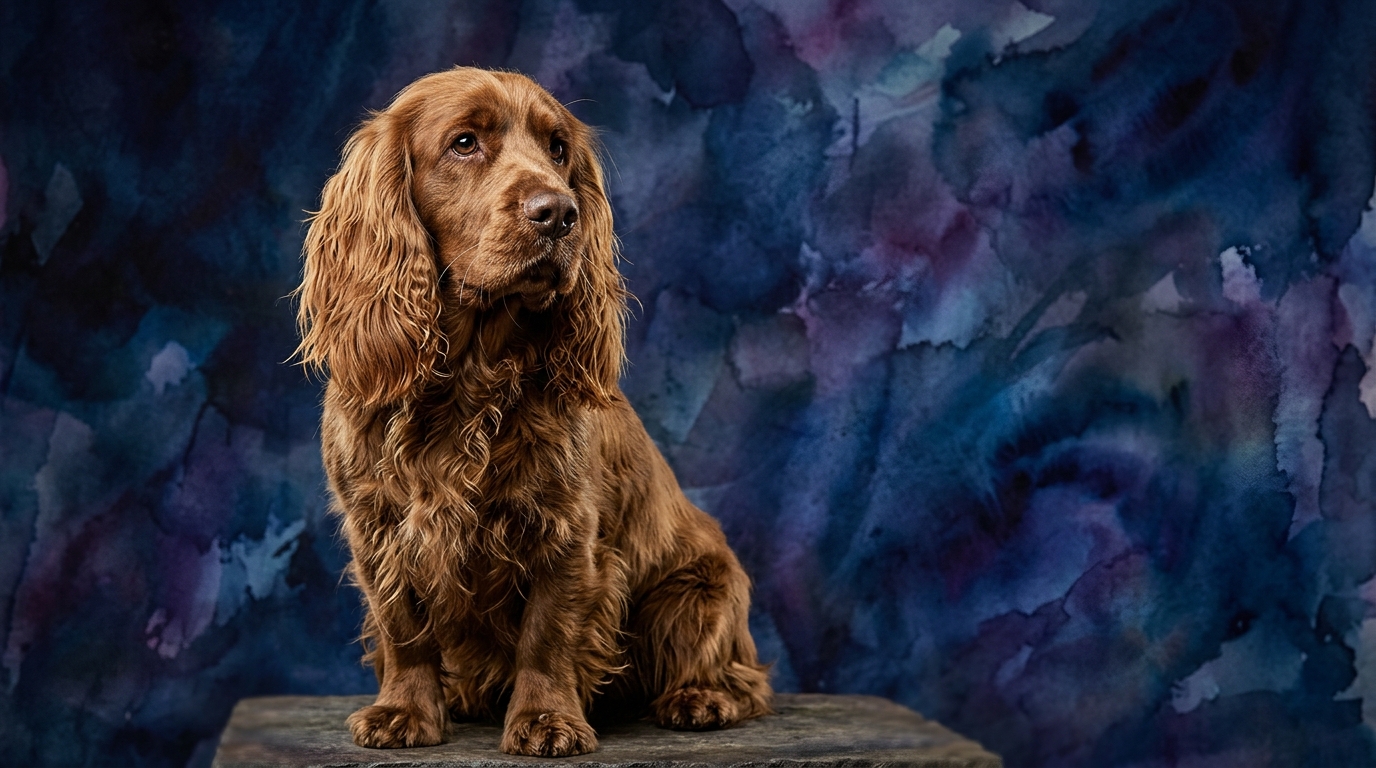
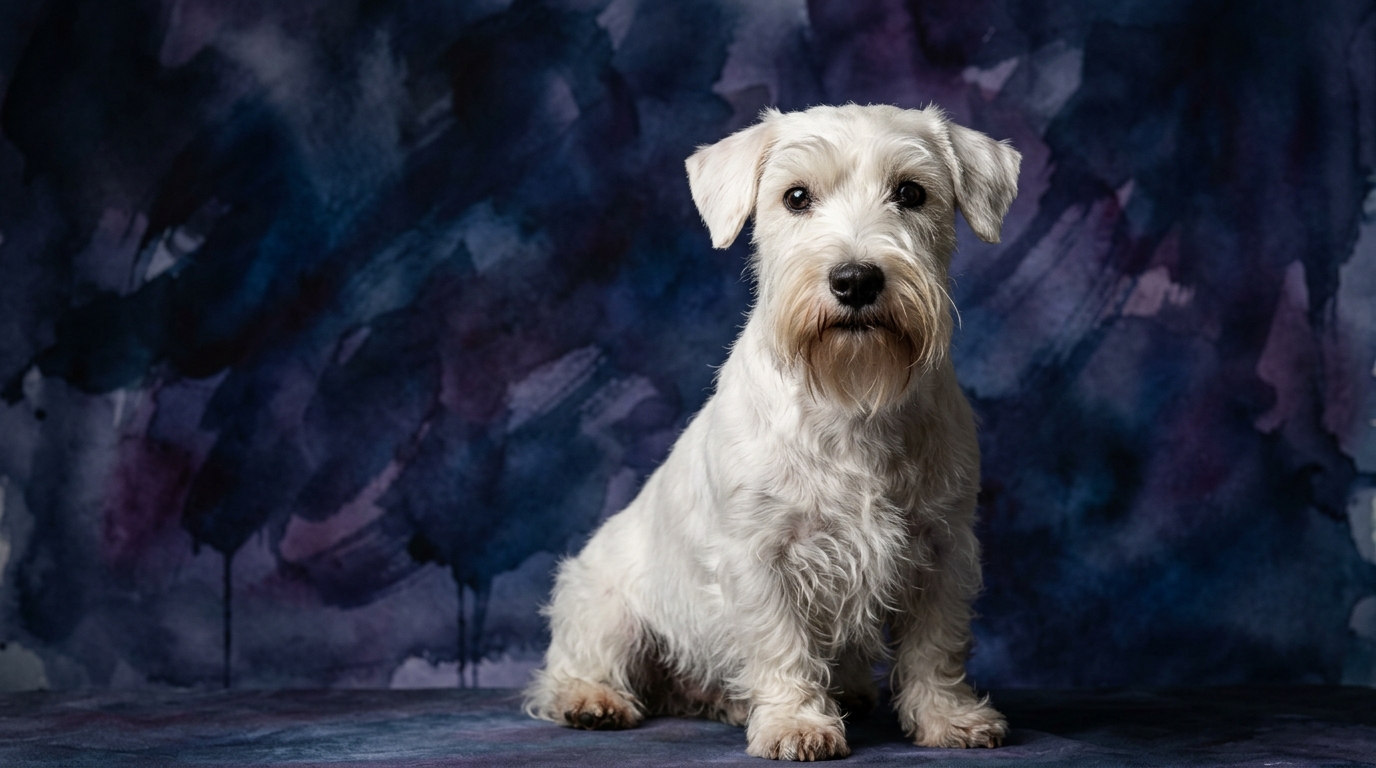
Side-by-Side Cognitive Profiles
At The Cosmic Pet Pet IQ Lab, we assess canine intelligence across five key dimensions: Problem Solving, Training Speed, Social Intelligence, Instinctive Drive, and Memory. Both the Sussex Spaniel and the Sealyham Terrier register a consistent 3 out of 5 across all these metrics, suggesting a balanced cognitive toolkit. However, understanding their historical roles illuminates how these capacities are channeled and expressed distinctly within each breed.
The **Sussex Spaniel**, a Sporting Group member, was developed for flushing game in dense cover and retrieving. For this breed, a 3/5 in Problem Solving often translates to adept navigation of varied terrain, locating hidden game through scent, and making strategic decisions to direct prey towards a hunter. Their Training Speed at 3/5 reflects a steady willingness to learn and cooperate, crucial for working alongside a handler in the field. Social Intelligence at 3/5 indicates a capacity for understanding human cues and integrating into a working partnership, while Instinctive Drive (3/5) points to their focused prey drive for birds. A 3/5 Memory allows them to recall complex commands and the locations of fallen game.
The **Sealyham Terrier**, a member of the Terrier Group, was bred to hunt vermin like badgers and otters, often independently underground. Their 3/5 in Problem Solving manifests as tenacity in confined spaces, strategizing how to dislodge quarry, and navigating complex tunnel systems. Training Speed at 3/5 for a Sealyham suggests they are capable learners, but their independent spirit means they often require more patient, creative, and consistent methods compared to a biddable sporting dog. Social Intelligence at 3/5 means they are generally responsive to their family, but their terrier nature can sometimes lead to selective hearing or a preference for their own agenda. Their Instinctive Drive (3/5) is directed powerfully towards small, furry prey, often expressed through digging and pursuit. Memory at 3/5 ensures they remember their hunting grounds and learned behaviors, even if they choose to apply them on their own terms.
Where the Sussex Spaniel Excels Cognitively
Despite identical scores, the Sussex Spaniel often demonstrates a cognitive edge in tasks requiring sustained focus on a human partner and methodical, cooperative problem-solving. Their historical role demanded a dog that could work in concert with a hunter, responding to subtle cues and maintaining a steady pace. This translates to an aptitude for complex scent work where precision and adherence to a track are paramount, or in obedience routines that value fluid, responsive execution over independent initiative.
The Sussex's 3/5 in Social Intelligence, when combined with their Sporting heritage, leans towards a strong desire to please and collaborate. This makes them particularly adept at understanding and anticipating human intentions, excelling in activities like rally obedience or therapy work where a calm, predictable, and responsive demeanor is highly valued. Their memory for sequences and routines, also rated 3/5, is particularly strong when those routines involve working alongside their person, reinforcing their role as a dedicated companion and partner.
Where the Sealyham Terrier Demonstrates Cognitive Strengths
The Sealyham Terrier's cognitive strengths shine in scenarios demanding independent thought, persistence, and a degree of self-reliance. Their 3/5 in Problem Solving is less about cooperative strategy and more about tenacious, individualistic approaches to challenges. This breed excels at tasks that require ingenuity to overcome physical obstacles or to outmaneuver a perceived 'prey' target, such as puzzle toys designed to be manipulated without direct human guidance. Their determination in the face of a challenge is a hallmark of their cognitive style.
A Sealyham's 3/5 Instinctive Drive is a powerful cognitive engine, fueling their focused pursuit and digging behaviors. This drive, combined with their problem-solving ability, makes them formidable at tasks like earthdog trials, where they must navigate tunnels and engage with quarry independently. While their Social Intelligence is 3/5, it often manifests as a deep bond with their immediate family, combined with a discerning wariness towards strangers, requiring them to quickly assess new social situations and decide on appropriate responses based on their own judgment.
Trainability: Cooperation Versus Independence
When considering trainability, the fundamental difference between these breeds becomes apparent, even with identical 3/5 Training Speed scores. The Sussex Spaniel, a sporting dog, was bred to be biddable and responsive, eager to work alongside its handler. Training a Sussex often involves positive reinforcement methods that leverage their desire to please and their natural cooperative spirit. They typically learn new commands with a steady pace and consistency, often motivated by praise and food, making the training process a partnership.
Conversely, the Sealyham Terrier's 3/5 Training Speed is tempered by their independent terrier nature. Bred to make decisions without human intervention while hunting underground, they possess a strong will and can be selective about when they choose to obey. Training a Sealyham requires immense patience, creativity, and a deep understanding of terrier psychology. Owners must make training fun, varied, and highly rewarding to capture their attention and motivate them to comply, as they are less inherently driven by human approval and more by what benefits them personally. Real behavioral differences include a Sussex being more likely to hold a 'stay' command while a Sealyham might test boundaries, deciding if the reward for staying outweighs the excitement of exploring.
Lifestyle Match: Active Engagement vs. Determined Pursuits
The Sussex Spaniel typically thrives with active owners who can provide consistent, structured engagement. Their sporting heritage means they benefit from regular walks, opportunities for scent work, and activities that mimic their flushing and retrieving instincts. While not a high-energy breed in the vein of some other spaniels, they appreciate purpose-driven exercise and mental stimulation that keeps their cooperative mind engaged. They are often content to relax after a good session of activity, making them suitable for owners who enjoy a routine of moderate outdoor pursuits.
The Sealyham Terrier, while not requiring hours of continuous running, suits owners who appreciate a determined and sometimes feisty companion. Their exercise needs are moderate but crucial for managing their terrier energy; they enjoy brisk walks and opportunities to explore. More importantly, they need outlets for their inherent drive to dig and chase. Owners with secure yards or who can provide supervised digging areas will prevent unwanted landscaping projects. Sealyhams can be perfectly content as relaxed house companions, but their strong will and occasional bursts of energy for 'vermin control' (like chasing squirrels) mean their owners must be prepared for an independent spirit that requires consistent management and mental stimulation, even if it's less formally structured than a spaniel's activities.
The Verdict
Choose the Sussex Spaniel if you seek a steadfast, cooperative companion eager to work alongside you, excelling in structured activities and thriving on a predictable routine of moderate engagement.
Opt for the Sealyham Terrier if you appreciate a tenacious, independent spirit, are prepared for a dog with a strong will and inherent drives, and can provide outlets for their problem-solving ingenuity and determined pursuits.
🧠 Find Your Pet's IQ Score
Our Pet IQ Lab assessment covers 25+ tests across 5 cognitive dimensions — personalized to your breed.
Take the Full IQ Test →Frequently Asked Questions
Are Sussex Spaniels good with children?
Yes, Sussex Spaniels are generally known for their calm and patient demeanor, making them suitable family companions. Their agreeable nature and moderate energy levels often make them quite tolerant and gentle with children, especially when properly socialized from a young age.
Do Sealyham Terriers require a lot of grooming?
Sealyham Terriers have a dense, wiry coat that requires regular grooming to maintain its condition and prevent matting. Weekly brushing is essential, and professional stripping or clipping every few months is typically recommended to keep their coat healthy and tidy.
Which breed is better for apartment living?
Both breeds can adapt to apartment living if their exercise and mental stimulation needs are met. The Sealyham Terrier's smaller size and moderate exercise requirements might make them slightly more adaptable, provided they have regular walks and opportunities to engage their terrier instincts in a controlled environment. The Sussex Spaniel, while calm indoors, appreciates a bit more space and consistent outdoor activity.