
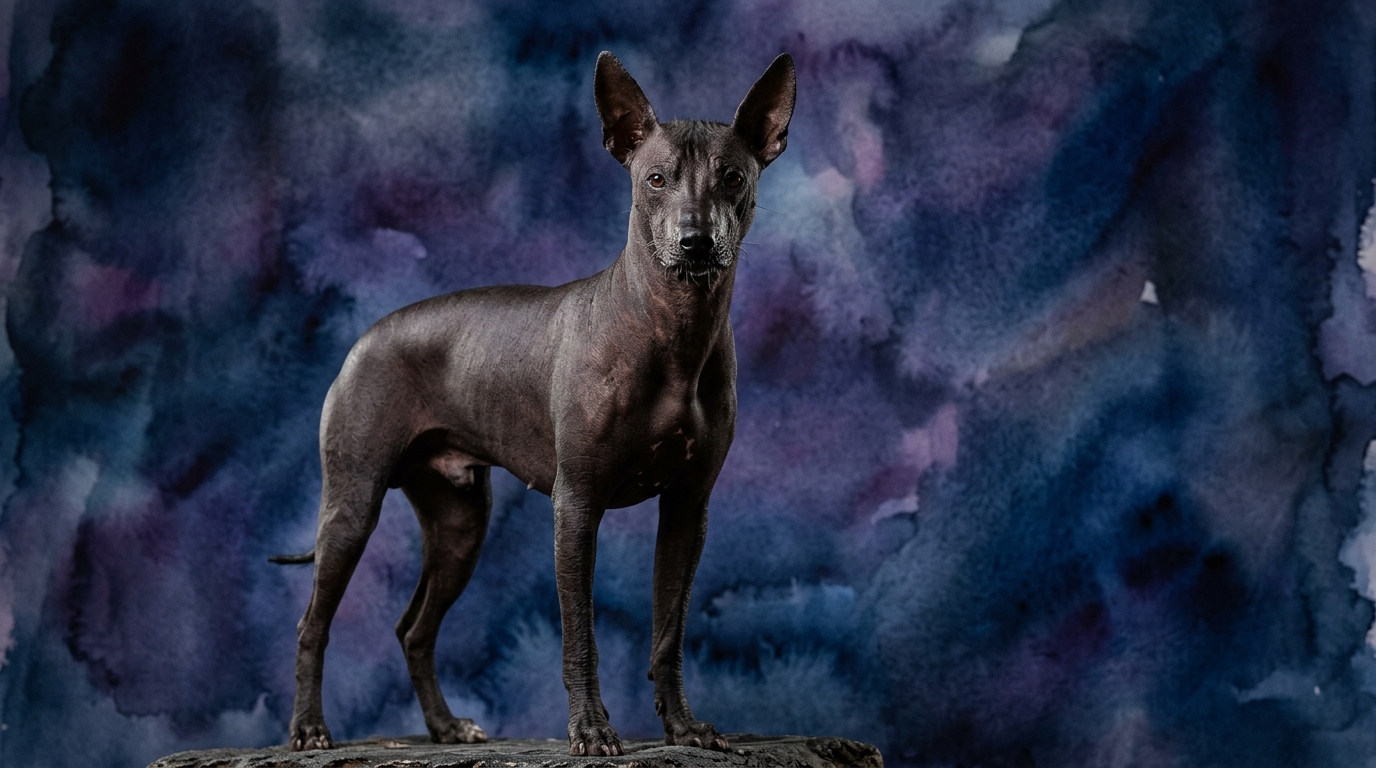
Side-by-Side Cognitive Profiles: Sussex Spaniel vs. Xoloitzcuintli
While both the Sussex Spaniel and the Xoloitzcuintli register a consistent 3/5 across the Cosmic Pet Pet IQ Lab’s five cognitive dimensions, their historical backgrounds profoundly shape how these capacities are expressed. Understanding these nuances is key to appreciating their unique mental landscapes, rather than simply viewing them through identical scores.
The Sussex Spaniel, a member of the Sporting Group and Coren-ranked at #62, exhibits a Problem Solving score of 3/5 that reflects its heritage as a deliberate, ground-scenting gundog. Their cognitive approach to obstacles in the field involves methodical investigation and persistence, rather than impulsive action, often tied to a tangible goal like flushing game. Their Training Speed, also 3/5, indicates a capable learner, though one that benefits from consistent motivation and clear, repetitive instruction, aligning with the precision required for working alongside a handler. Social Intelligence at 3/5 means they are attuned to their family's dynamics and handler's cues, forming deep bonds while maintaining a reserved demeanor with strangers. An Instinctive Drive of 3/5 is deeply rooted in their scenting and flushing abilities, a persistent internal motivation for searching and engaging with their environment. Finally, their Memory at 3/5 allows them to retain complex sequences, scent patterns, and learned commands crucial for navigating varied terrain and tasks over time.
The Xoloitzcuintli, belonging to the Non-Sporting Group and unranked by Coren, also scores 3/5 in Problem Solving, but this manifests through a different lens. Their ancient role as a companion and guardian means they often solve problems related to comfort, security, or navigating social situations within their human family, displaying a perceptive and sometimes resourceful cunning. Their Training Speed of 3/5 indicates they are intelligent learners, but their sensitivity and independent streak mean success hinges on positive reinforcement, patience, and a strong bond, as they can be easily discouraged by harsh methods. Social Intelligence at 3/5 is evident in their profound devotion to their chosen family, often displaying a keen empathy and attunement to human emotions, though this is balanced by a characteristic aloofness towards outsiders. An Instinctive Drive of 3/5 for the Xolo often presents as strong guarding tendencies, territoriality, and a keen awareness of their surroundings, rather than a classic prey drive. Their Memory, also 3/5, is robust, allowing them to recall routines, people, and past experiences with remarkable clarity, sometimes leading to long-held associations.
Where the Sussex Spaniel Excels Cognitively
Despite identical raw scores, the Sussex Spaniel's cognitive strengths distinctly align with its working background. One area where they notably excel is the sustained application of learned tasks within dynamic, distracting environments. Their field work demands an ability to maintain focus on commands, such as 'stay' or 'retrieve,' even when surrounded by novel scents, sounds, and movements, a skill honed through generations of practical application. This capacity for focused, task-oriented persistence, even amidst high distraction, is a hallmark of their breed-specific intelligence.
Furthermore, their Problem Solving and Instinctive Drive converge powerfully in scent-based challenges. A Sussex Spaniel can methodically unravel intricate scent puzzles, tracking complex trails or locating hidden objects with a deliberate, analytical approach that leverages their profound olfactory capabilities. This isn't merely about following a scent; it involves interpreting environmental cues and making decisions based on subtle sensory information, a complex cognitive process that few breeds perform with such focused determination and endurance.
Where the Xoloitzcuintli Shines Cognitively
The Xoloitzcuintli's cognitive advantages are deeply rooted in its role as a perceptive companion and guardian. A key strength lies in its exceptional environmental awareness and vigilance. With a Problem Solving score of 3/5, they are adept at subtly assessing their surroundings, quickly identifying anomalies or potential threats, and acting with quiet discernment rather than overt aggression. This keen observational intelligence makes them highly effective and discreet protectors of their home and family, noticing changes long before many other breeds.
Moreover, their Social Intelligence (3/5) manifests as an extraordinary attunement to human emotions and needs. Xolos often pick up on the most subtle shifts in their owner’s mood or body language, sometimes anticipating needs or reacting empathetically without explicit cues. This deep emotional perceptiveness, combined with their strong memory, allows them to forge profound, nuanced bonds, making them exceptionally intuitive and responsive companions within their trusted circle. They often use their problem-solving skills to navigate social dynamics for their own comfort or to alleviate perceived tension.
Training Dynamics: Which is Easier and Why?
Determining which breed is 'easier' to train is less about raw intelligence and more about temperament and approach. The Sussex Spaniel, with its Coren rank of #62, falls into the category of 'average working/obedience intelligence,' meaning they typically grasp new commands in 40-80 repetitions and obey first commands 30% of the time or better. While they possess a deliberate nature and can exhibit a 'Spaniel stubbornness,' their historical role as a gundog means they are generally receptive to learning, especially when tasks are clear, consistent, and rewarded. Their motivation is often tied to engaging their natural instincts and pleasing their handler within a working context, making them responsive to traditional, positive reinforcement methods. They are less prone to shutting down or questioning commands, preferring to engage with the task at hand.
The Xoloitzcuintli, despite identical IQ scores, presents a different training landscape. They are intelligent and capable of learning quickly, but their independent spirit and profound sensitivity require a more nuanced approach. A Xolo might learn a command in fewer repetitions than a Sussex but may also choose not to perform it if they don't see the immediate benefit or if they feel uncomfortable or unfairly treated. Harsh corrections or inconsistent methods can lead to a Xolo becoming withdrawn, anxious, or simply refusing to cooperate. Successful training with a Xolo demands immense patience, unwavering consistency, and a deep understanding of their 'primitive' dog nature, focusing on building a trusting relationship where the dog genuinely wants to participate. For a novice owner, the Sussex Spaniel might prove an 'easier' starting point due to its more straightforward working drive, while the Xolo often thrives with an experienced, patient hand attuned to its unique emotional landscape.
Lifestyle Match: Active vs. Relaxed Owners
The ideal owner profile for each breed diverges significantly, primarily due to their intrinsic drives and energy output. The Sussex Spaniel, while not a hyperactive breed, undeniably suits an owner with an active lifestyle who enjoys engaging their dog in moderate, consistent outdoor activities. Their 3/5 Instinctive Drive means they require regular opportunities for sniffing, exploring, and purposeful movement. Long, meandering walks where they can follow scents, engaging in scent work or tracking games, and even participating in field trials or obedience classes are crucial for their mental and physical well-being. A relaxed owner who fails to provide this outlet for their working instincts is likely to find a bored Sussex Spaniel inventing its own, potentially destructive, forms of 'work' indoors.
The Xoloitzcuintli, conversely, can adapt to a more relaxed owner, provided their fundamental needs for companionship and security are met. While they require daily exercise—brisk walks, playful romps in a secure yard—they are not endurance athletes. Their energy expenditure is often more focused on bursts of activity rather than sustained effort. For the Xolo, the 'active' component is less about constant motion and more about consistent interaction and mental engagement within the family unit. They thrive on close human interaction, often preferring to be a 'velcro dog' lounging near their owner after their exercise needs are satisfied. A relaxed owner who offers a predictable, calm home environment, consistent companionship, and fulfills their daily physical and mental enrichment will find the Xolo a deeply content and devoted presence, less driven by a need for constant outdoor 'work' than the Sussex.
The Verdict: When to Choose Each Breed
The Verdict
Choose the Sussex Spaniel if you are an owner who appreciates a dog with a traditional working drive, enjoys engaging in moderate outdoor activities like scent work or field trials, and values a loyal, deliberate companion with a practical, methodical approach to the world.
Opt for the Xoloitzcuintli if you seek a deeply devoted, perceptive companion who thrives on close human interaction, offers vigilant guardianship, and appreciates a calm, consistent home environment, understanding that training will require patience and an attuned approach to their sensitive nature.
🧠 Find Your Pet's IQ Score
Our Pet IQ Lab assessment covers 25+ tests across 5 cognitive dimensions — personalized to your breed.
Take the Full IQ Test →Frequently Asked Questions
Are Xoloitzcuintli difficult to train?
While intelligent, Xoloitzcuintli can be challenging to train due to their independent nature and sensitivity. They respond best to patient, consistent positive reinforcement and can become withdrawn or resistant if training methods are harsh or inconsistent.
Do Sussex Spaniels require a lot of exercise?
Sussex Spaniels require moderate, consistent exercise to satisfy their working dog instincts. This includes daily long walks, opportunities for scent work, and mental stimulation to prevent boredom and ensure their well-being.
How do their Coren rankings compare?
The Sussex Spaniel is Coren-ranked at #62, indicating 'average working/obedience intelligence,' typically learning new commands with 40-80 repetitions. The Xoloitzcuintli is not included in Coren's ranking, which often signifies breeds that are either less common, have distinct temperaments, or were not part of the original study methodology.