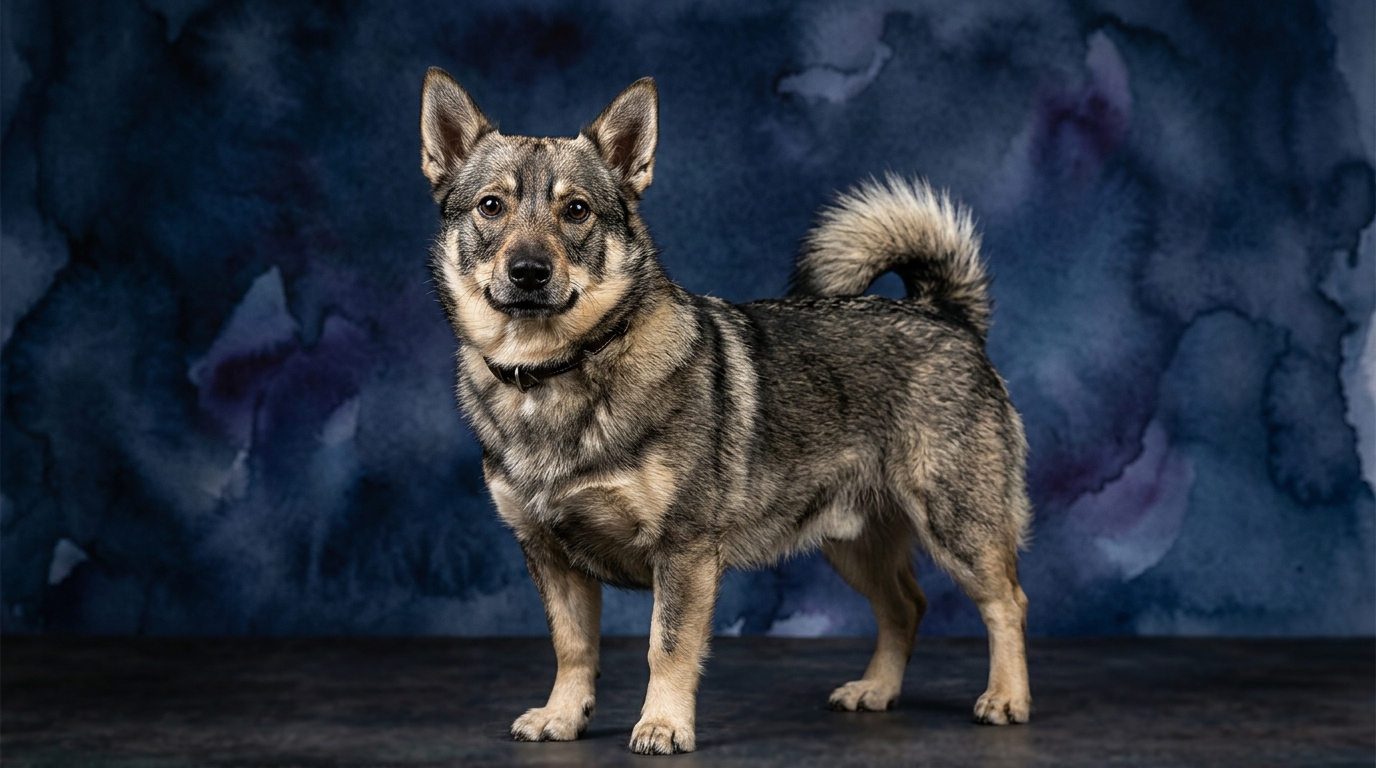
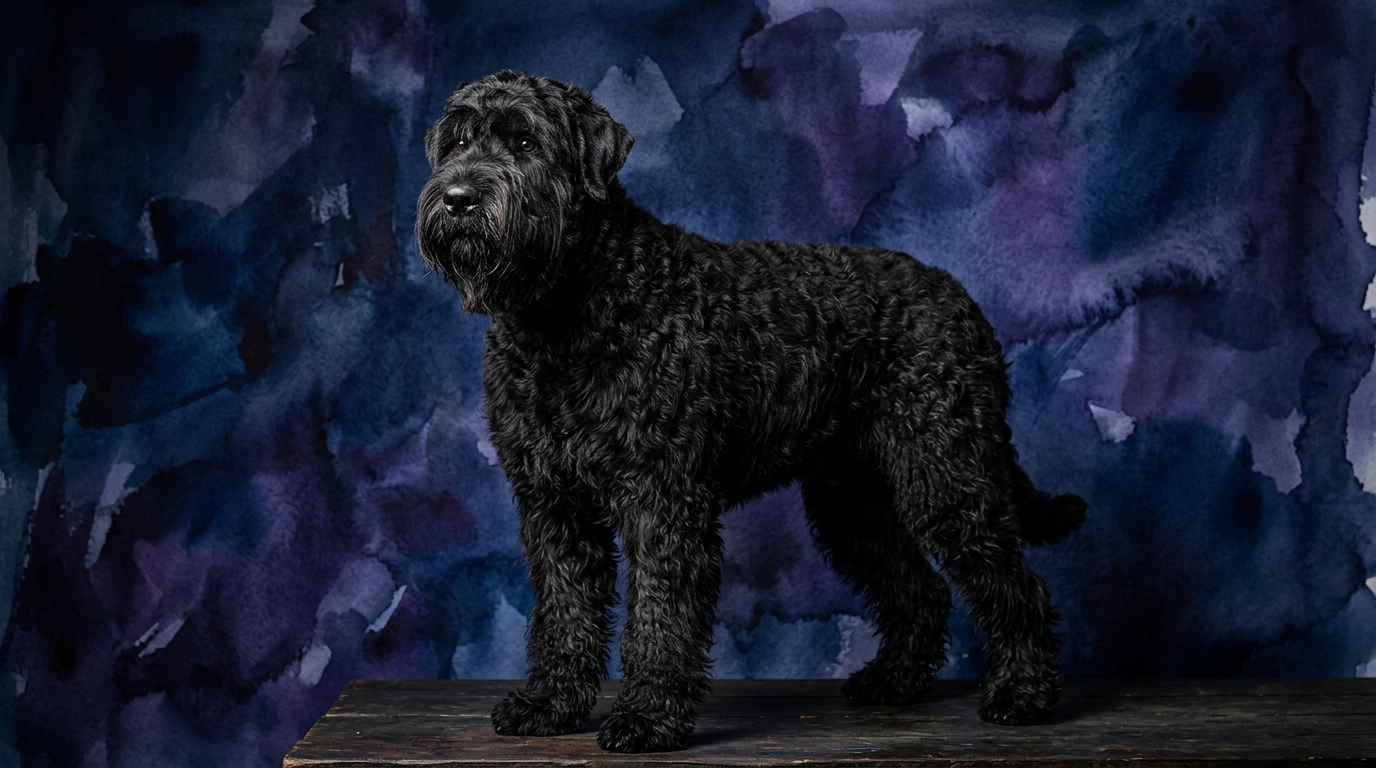
Side-by-Side Cognitive Profile: Decoding the 3/5 Score
The Cosmic Pet Pet IQ Lab's assessment assigns both the Swedish Vallhund and the Black Russian Terrier a consistent 3/5 across five critical cognitive dimensions: problem-solving, training speed, social intelligence, instinctive drive, and memory. While the numerical score is identical, the manifestation of this moderate capability differs significantly between these two distinct breeds, reflecting their divergent historical purposes and temperaments.
For the Swedish Vallhund, a 3/5 in **Problem Solving** suggests a practical, adaptable mind, capable of figuring out solutions in dynamic environments, such as navigating livestock or finding creative ways to engage in play. Their **Training Speed** at 3/5 indicates a willingness to learn and retain commands with consistent, positive reinforcement, often showing enthusiasm for new tasks, though their independent streak means they are not always instantly compliant. Their **Social Intelligence** (3/5) points to an ability to read human emotions and household dynamics, often expressed through playful interaction and a desire to be involved in family activities. The Vallhund's **Instinctive Drive** (3/5) is primarily rooted in herding, manifesting as a propensity to gather, chase, and direct, requiring outlets for this innate behavior. Finally, their **Memory** (3/5) allows them to retain routines, commands, and experiences effectively, making them reliable companions in established patterns.
The Black Russian Terrier also scores 3/5 in these areas, but with a characteristically different expression. Their **Problem Solving** capability, while moderate, tends towards methodical assessment in specific contexts, such as evaluating perceived threats or understanding complex boundaries within their territory. A 3/5 in **Training Speed** for the BRT means they are capable learners of intricate commands and routines, but their strong will and protective nature necessitate a firm, consistent, and experienced handler to ensure reliable adherence. Their **Social Intelligence** (3/5) is often expressed as a reserved watchfulness, acutely observing their surroundings and discerning intentions, particularly regarding strangers or novel situations, prioritizing family safety. The BRT's **Instinctive Drive** (3/5) is profoundly geared towards protection and guarding, exhibiting a natural vigilance and readiness to defend their perceived territory or family. Their **Memory** (3/5) is robust for recalling specific individuals, past interactions, and learned protocols, which is crucial for their role as discerning protectors.
Where the Swedish Vallhund Excels Cognitively
Despite identical scores, the Swedish Vallhund's cognitive strengths lean towards agile adaptability and playful engagement, traits honed by centuries of herding. Their problem-solving, rated 3/5, often manifests as clever resourcefulness in dynamic environments, a valuable trait for a herding dog needing to react quickly to livestock movements or changing terrain. This agile mental approach can make them quicker to grasp varied tasks and novel games in a home setting, providing diverse mental stimulation.
The Vallhund's social intelligence, also 3/5, typically expresses itself as a keen interest in family interactions and a playful curiosity, making them generally more open to novel social situations and quicker to integrate into diverse household dynamics. This translates to an easier time adapting to new people and pets, often seeking out interaction rather than maintaining a guarded distance. Their instinctive drive, while strong, is often channeled into activities like agility or rally, where quick thinking and responsiveness are highly valued, allowing them to excel in sports that demand dynamic decision-making and rapid execution.
Where the Black Russian Terrier Excels Cognitively
The Black Russian Terrier's cognitive strengths, while also rated 3/5, are distinctively geared towards methodical assessment, loyalty, and protective discernment. Their problem-solving, though numerically similar, excels in strategic application, particularly in situations requiring discerning judgment, such as identifying a potential threat or understanding complex boundary rules. This depth of situational awareness provides an edge in roles demanding consistent vigilance and precise decision-making in a protective context.
Their memory, rated 3/5, is exceptionally robust for retaining specific information about individuals and past events, critical for their protective duties, ensuring they reliably remember who belongs and who doesn't. Furthermore, their social intelligence, while often reserved, is acutely tuned to reading nuanced human intentions and environmental cues related to safety, making them exceptionally perceptive guardians in complex social settings. The BRT's instinctive drive for protection means they excel in roles requiring unwavering focus and commitment to a task, whether it's guarding their home or performing advanced obedience with precision and steadfastness.
Training Dynamics: Vallhund vs. BRT
When considering ease of training, the behavioral differences stemming from their cognitive profiles become apparent. The Swedish Vallhund, with its herding background, often approaches training with an eager-to-please attitude and a desire to work collaboratively. Their 3/5 training speed is coupled with a natural responsiveness to direction, making them generally receptive to positive reinforcement methods. They enjoy the mental engagement of learning new commands and tricks, often viewing training as an interactive game. However, their independent spirit and tendency to be easily bored mean training sessions need to be engaging, varied, and consistent to prevent them from becoming distracted or finding their own entertainment.
The Black Russian Terrier, while equally capable of learning due to their 3/5 training speed, presents a different challenge. Their independent nature and formidable protective instincts mean that training is less about pleasing and more about establishing a clear, respectful working relationship. They require a handler who exudes confidence, consistency, and fairness. While they can master complex commands, their strong will means that if they perceive a lack of leadership, they may choose to follow their own instincts. Their protective drive also necessitates extensive socialization from a young age to ensure they differentiate between genuine threats and everyday occurrences, making training a long-term commitment to guidance and trust-building rather than simple command acquisition.
Lifestyle Match: Active vs. Relaxed Owners
Neither the Swedish Vallhund nor the Black Russian Terrier is suited for truly 'relaxed' owners in the sense of minimal daily engagement. Both breeds demand significant mental and physical stimulation, but the *type* of activity and commitment required differs substantially. The Swedish Vallhund thrives with active owners who enjoy diverse activities. Their 3/5 instinctive drive for herding translates into a need for regular outlets such as agility, herding trials, long walks, or interactive puzzle toys. They are adaptable companions for owners who appreciate a dog eager to participate in family adventures and mental challenges, and who can provide consistent, engaging interaction to prevent boredom-induced behaviors.
The Black Russian Terrier, conversely, suits owners who are not just active, but deeply committed to structured training, extensive socialization, and providing a clear purpose. Their activity might be more focused on controlled walks, dedicated obedience sessions, and mental challenges like advanced training or protection sports, rather than spontaneous, free-spirited play. They are not a casual pet; their powerful protective drive and strong will demand a dedicated, experienced hand. Owners must be prepared for a significant long-term investment in their development, ensuring their formidable capabilities are channeled constructively and safely. A truly relaxed owner who cannot provide this level of leadership and stimulation would find a BRT overwhelming and potentially challenging to manage.
The Verdict
Choose the Swedish Vallhund if you seek a spirited, adaptable companion eager for varied activities and playful interaction, and can provide consistent mental engagement and moderate physical exercise in a family setting.
Opt for the Black Russian Terrier if you are an experienced owner prepared for a significant, lifelong commitment to structured training, extensive socialization, and channeling a powerful protective instinct into a loyal, steadfast guardian.
🧠 Find Your Pet's IQ Score
Our Pet IQ Lab assessment covers 25+ tests across 5 cognitive dimensions — personalized to your breed.
Take the Full IQ Test →Frequently Asked Questions
Are Swedish Vallhunds good with children?
Swedish Vallhunds can be excellent with children, often displaying a playful and tolerant nature. However, their herding instinct might lead them to 'nip' at heels, so supervision and teaching appropriate interactions are crucial for both dog and child.
Do Black Russian Terriers require a lot of grooming?
Yes, Black Russian Terriers have a dense, coarse double coat that requires significant grooming. Regular brushing, at least 2-3 times a week, and professional grooming every 6-8 weeks are essential to prevent matting and maintain coat health.
How do their 'instinctive drives' differ in daily life?
The Vallhund's 3/5 herding drive manifests as a desire to gather and control movement, often seen in chasing or circling family members or other pets, requiring outlets like fetch. The BRT's 3/5 protective drive translates to vigilance and territorial awareness, meaning they are constantly observing their surroundings and may be reserved with strangers, always assessing potential threats to their home and family.