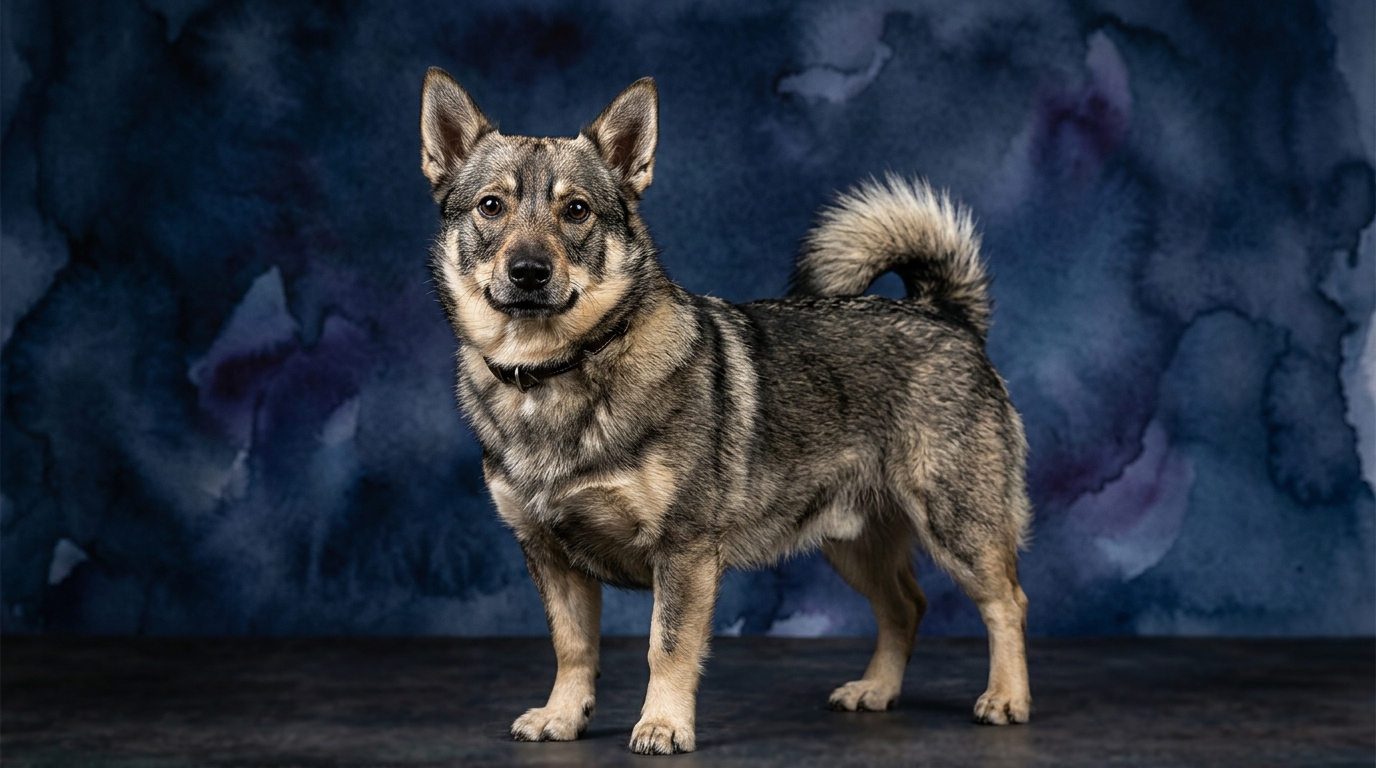
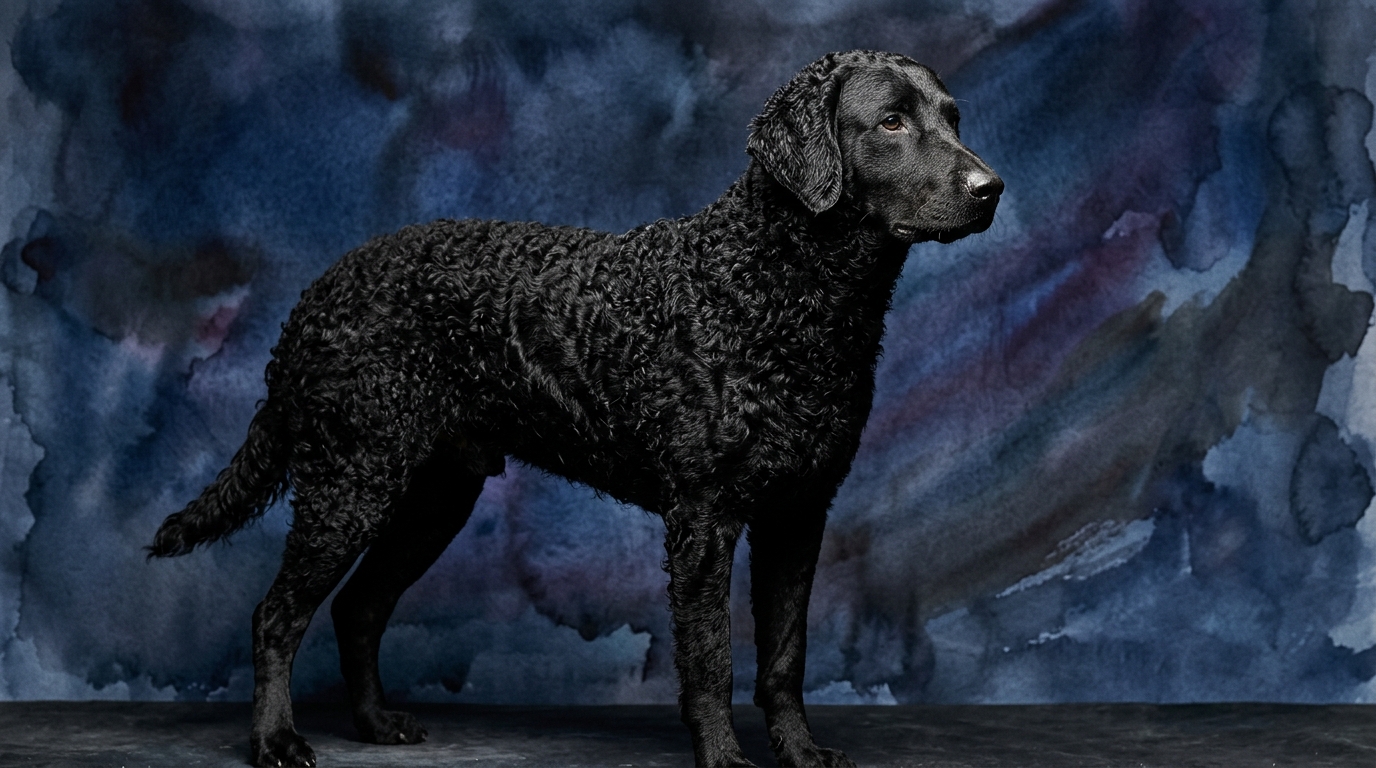
Side-by-Side Cognitive Profiles
At The Cosmic Pet Pet IQ Lab, we evaluate canine intelligence across five key dimensions, providing a nuanced understanding beyond simple obedience. For the Swedish Vallhund, a spirited herding dog, its scores are consistently 3/5 across the board: problem solving, training speed, social intelligence, instinctive drive, and memory. This balanced profile indicates a capable and adaptable mind, well-suited to its original purpose of managing livestock with practical acumen and reliable recall.
The Curly-Coated Retriever, a robust sporting dog, shares similar scores in many areas, yet distinguishes itself in one crucial aspect. It scores 3/5 for problem solving, training speed, social intelligence, and instinctive drive, reflecting a dependable and cooperative temperament for field work. However, its memory rating stands at an impressive 4/5, a clear advantage for a breed tasked with remembering precise locations and complex sequences during retrieving tasks. This specific strength contributes to its Coren rank of #41, placing it among the more consistent learners and performers.
Where the Swedish Vallhund Wins Cognitively
The Swedish Vallhund's cognitive strength lies in its uniformly balanced 3/5 scores, which combine to create a highly adaptable and practical intellect particularly suited for dynamic, real-time problem-solving within a fluid environment. Their problem-solving (3/5) isn't about complex abstract thought, but rather an intuitive understanding of spatial relationships and animal behavior, enabling them to anticipate livestock movement, block escape routes, and guide animals without explicit human commands. This allows for quick, independent decision-making on the pasture.
Their social intelligence (3/5) is finely tuned for subtle communication with both handler and herd, allowing them to exert influence with minimal fuss or unnecessary energy expenditure. This nuanced interaction, combined with their instinctive drive (3/5) for controlling movement, gives them an advantage in tasks requiring immediate judgment and flexible adjustments to changing variables. They excel where a dog needs to 'think on its feet' in a practical, physical sense, rather than executing a pre-programmed sequence, making them superb at tasks requiring improvisation and cleverness within a structured framework.
Where the Curly-Coated Retriever Wins Cognitively
The Curly-Coated Retriever truly shines with its superior memory (4/5), a critical asset for its traditional role as a retriever of downed game. This enhanced capacity for recall means they can consistently remember complex commands, the precise location of multiple retrieved items, and intricate routes through varied terrains, even after significant time has passed or numerous distractions have occurred. Their ability to retain detailed spatial and sequential information gives them a distinct advantage in tasks requiring precise execution based on prior learning and environmental cues.
While their problem-solving (3/5) is robust enough for navigating obstacles to retrieve, it's their exceptional memory that elevates their performance in demanding retrieving scenarios, ensuring reliability and thoroughness. This cognitive strength, coupled with their robust instinctive drive (3/5) for working in water and field, makes them exceptionally dependable in returning specific items from challenging environments. Their Coren ranking at #41 further underscores their capacity for consistent obedience and learning, which is heavily reliant on this strong memory foundation for retaining a wide array of commands and tasks.
Training Dynamics: Which is Easier and Why
When evaluating ease of training, both breeds score 3/5 for training speed, suggesting they absorb new commands at a moderate and steady pace. However, the Curly-Coated Retriever's superior memory (4/5) gives it a notable advantage in retaining complex sequences and a larger repertoire of commands over time. Once a Curly learns something, it tends to stick, leading to more reliable long-term performance in obedience and specific tasks like retrieving multiple items from different locations. Their focus on the handler during a 'job' can make them highly attentive and consistent students.
The Swedish Vallhund, while also receptive (3/5 training speed), might require slightly more consistent reinforcement to embed complex behaviors, given its 3/5 memory. Its herding instinct (3/5 instinctive drive) can sometimes manifest as an independent streak or a desire to 'manage' its environment, which, while valuable in its original role, might require more nuanced redirection and engagement in a training context. For fundamental obedience, both are capable partners, but for advanced, multi-step tasks or extensive repertoires, the Curly's memory offers a subtle yet significant advantage in sustained retention and reliability.
Matching Canine Cognition to Owner Lifestyles
Both the Swedish Vallhund and the Curly-Coated Retriever are dogs built for engagement and purpose, each possessing a moderate instinctive drive (3/5). This means neither breed is truly suited for a 'relaxed' owner who prefers minimal interaction or a sedentary lifestyle. However, their active needs manifest in distinct ways, aligning with different types of active owners.
The Swedish Vallhund, with its herding background, thrives on mental stimulation that involves problem-solving, observation, and controlled movement. Owners who enjoy activities like herding trials, agility, or even trick training that simulates 'work' will find a willing and clever partner. They require regular physical exercise, but also consistent mental challenges to prevent boredom and channel their innate herding tendencies. The Curly-Coated Retriever, as a sporting breed, demands vigorous physical exertion, particularly activities involving retrieving, running, and swimming. Owners who enjoy outdoor adventures like hiking, hunting, or water sports will find the Curly an enthusiastic and tireless companion. Their strong retrieving drive means they excel in games of fetch or field work that can last for extended periods. While both need engagement, the Vallhund leans towards structured mental and physical tasks that mimic their herding role, while the Curly thrives on sustained vigorous physical activity that utilizes its sporting instincts.
The Verdict
Choose the Swedish Vallhund if you appreciate a dog with balanced cognitive abilities, a practical problem-solving mind for dynamic situations, and a subtle herding instinct that can be channeled into engaging mental and physical challenges.
Opt for the Curly-Coated Retriever if you prioritize exceptional long-term memory for complex training sequences, a strong retrieving drive, and a robust companion for active outdoor pursuits, especially those involving water and field work.
🧠 Find Your Pet's IQ Score
Our Pet IQ Lab assessment covers 25+ tests across 5 cognitive dimensions — personalized to your breed.
Take the Full IQ Test →Frequently Asked Questions
How does the Curly-Coated Retriever's Coren ranking influence its perceived intelligence compared to the Swedish Vallhund?
The Curly-Coated Retriever's Coren ranking of #41 places it within the 'above average working dogs' category, indicating it understands new commands in 15-25 repetitions and obeys the first command 50% of the time or more. The Swedish Vallhund, not being Coren-ranked, doesn't have this specific benchmark, but its 3/5 training speed suggests a capable learner, though perhaps without the same established consistency for complex tasks as the Curly.
Despite similar problem-solving scores, are there differences in how these breeds approach challenges?
Yes, despite both scoring 3/5, their ancestral roles likely shape their problem-solving approaches. The Vallhund's problem-solving would typically involve spatial reasoning and adapting to the unpredictable movements of livestock, while the Curly's would focus more on navigating terrain and obstacles to locate and retrieve items efficiently. Both are practical, but their application is context-specific to their historical duties.
Given their similar social intelligence scores, how do they typically interact with their human families?
With similar social intelligence scores of 3/5, both breeds generally exhibit good awareness of human cues and can form strong bonds within their families. The Vallhund's social intelligence might lean towards cooperative partnership in a working context, anticipating a handler's needs, while the Curly's might be geared towards being an attentive and responsive companion for its owner, especially during shared activities.