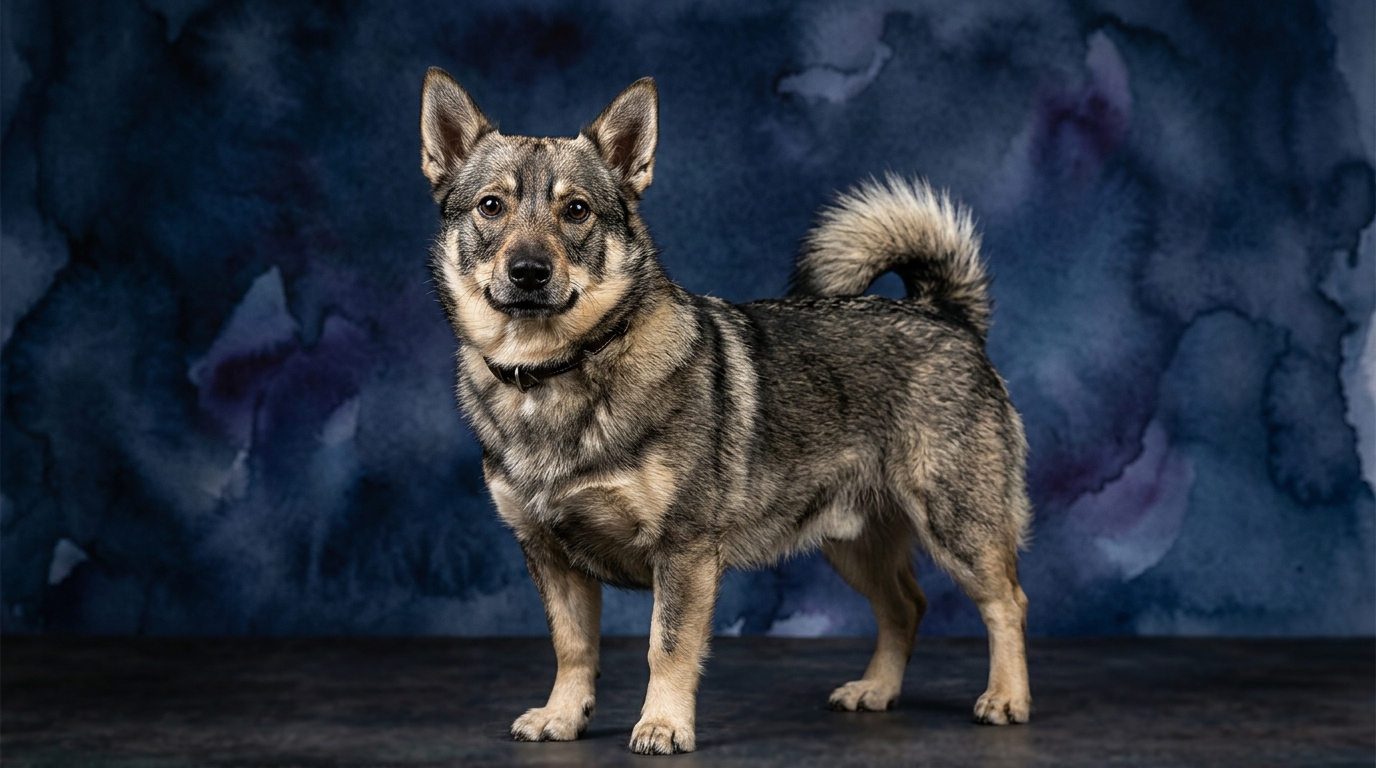
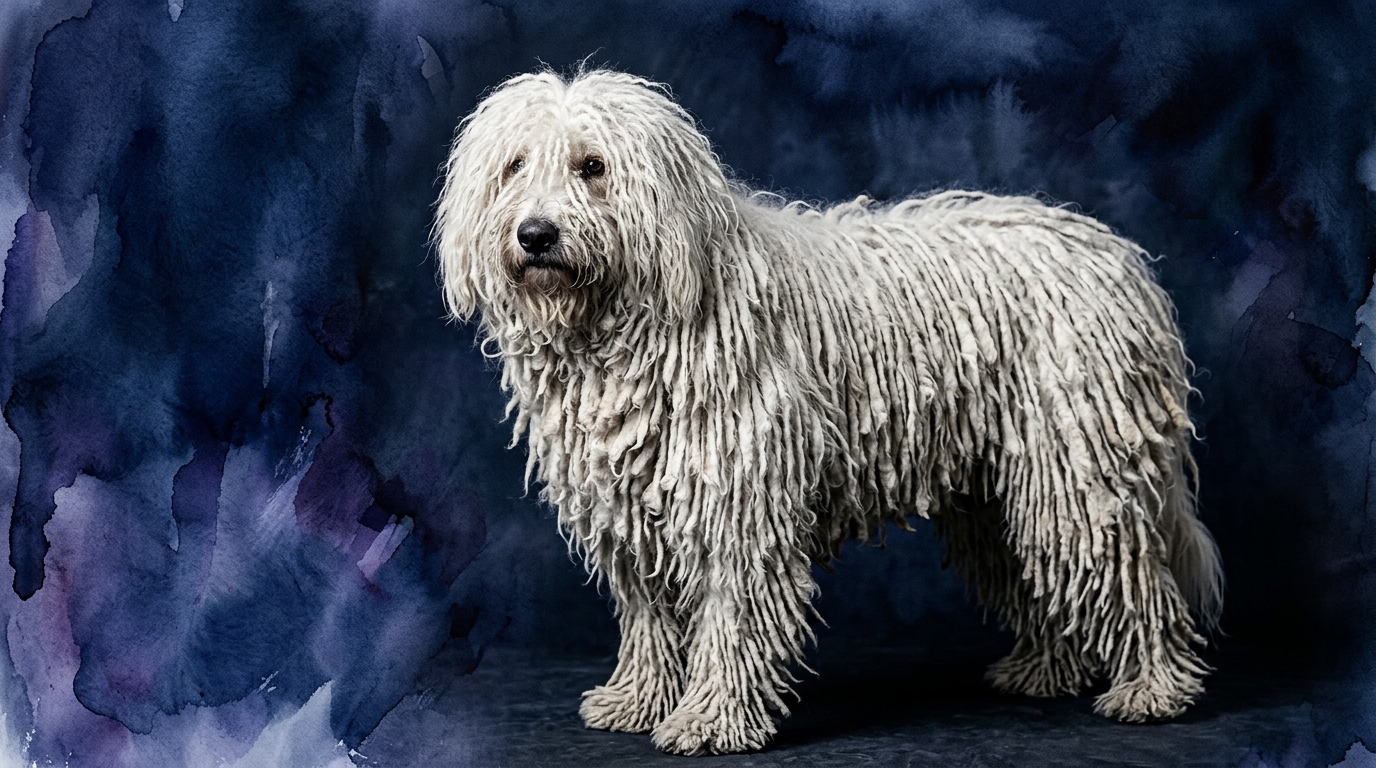
Side-by-Side Cognitive Profiles: Herding Wit vs. Guardian Resolve
The Swedish Vallhund, a spirited herding dog, consistently scores 3/5 across all five cognitive dimensions. Their Problem Solving at 3/5 manifests in dynamic, practical ways, such as efficiently moving livestock or deftly navigating complex agility courses. They quickly assess changing situations and adapt their approach, demonstrating a keen understanding of spatial relationships and cause-and-effect within their immediate environment. Their Training Speed, also 3/5, reflects their capacity to absorb new commands and routines with moderate repetition, especially when tasks align with their natural drives for collaboration and activity. Vallhunds’ Social Intelligence (3/5) allows them to excel at reading human body language and vocal cues, forming strong, cooperative bonds and subtly communicating their needs. A 3/5 for Instinctive Drive highlights their strong herding impulses, translating into a focused, energetic approach to tasks and a need for purpose-driven activity. Finally, their Memory at 3/5 means they retain learned commands, routines, and social interactions effectively, shaping their future responses.
The Komondor, a majestic working breed with a Coren rank of #67, also registers 3/5 across all five cognitive dimensions, yet its application differs profoundly. Its Problem Solving (3/5) revolves around independent assessment and strategic defense, evaluating perceived threats and making autonomous decisions to protect its charges without direct human instruction. These solutions are often deliberate and calculated, rather than quick, agile maneuvers. Their Training Speed (3/5) is tempered by their inherent independence; they require consistent, patient instruction and often need to understand the ‘why’ behind a command before fully committing, learning deeply for practical application. Komondors’ Social Intelligence (3/5) means they develop profound bonds with their immediate family or flock, displaying intense loyalty and protectiveness, while appearing reserved or aloof to outsiders. An Instinctive Drive of 3/5 signifies a powerful guarding impulse, translating into unwavering vigilance, territorial awareness, and a strong sense of responsibility. Their Memory (3/5) is robust for their territory, past threats, and trusted individuals, contributing to their consistent guarding behaviors and discernment.
Where the Swedish Vallhund's Mind Shines Cognitively
The Swedish Vallhund’s cognitive strengths are deeply rooted in its dynamic adaptability and collaborative spirit. Their herding lineage has honed a mind that excels at quick assessments and flexible responses to constantly changing situations. Unlike the deliberate, long-term decision-making characteristic of a guardian breed, a Vallhund processes information rapidly, allowing them to adjust their movements and strategies on the fly when working with livestock or navigating an agility course. This fast-paced processing for practical, real-time problem-solving is a hallmark of their intelligence.
Their social intelligence, rated 3/5, is particularly geared towards partnership; they are adept at interpreting subtle human cues, making them highly responsive to direction. This translates into a dog that not only understands commands but actively seeks to cooperate, making them exceptional partners in activities requiring synchronized effort and shared goals. Their memory, also 3/5, significantly supports this by retaining complex sequences and handler instructions, enabling fluid transitions between tasks and a seamless working relationship.
Where the Komondor's Mind Excels Cognitively
The Komondor's cognitive prowess is defined by its profound independence and unwavering resolve. As a livestock guardian, its intelligence, also rated 3/5, is optimized for autonomous decision-making in the absence of human instruction. They excel at sustained vigilance, patiently observing their surroundings and strategically evaluating potential threats, rather than reacting impulsively. This focused, long-term assessment of their environment, coupled with an inherent sense of responsibility, allows them to manage their territory with minimal human oversight.
Their problem-solving ability is less about quick tricks and more about long-term, calculated protection; they might take longer to process a new command, but once understood, it is deeply ingrained and applied with steadfast purpose, demonstrating a strong cognitive link between learning and utility. The Komondor's social intelligence, while scoring the same 3/5, manifests as an intense loyalty and discerning wariness, allowing them to accurately differentiate between trusted family members and potential intruders, a critical skill honed for their ancient role of protecting their flock.
Navigating Training: Eager Collaboration vs. Independent Purpose
Despite identical “Training Speed” scores of 3/5, the practical experience of training a Swedish Vallhund versus a Komondor is remarkably different due to their distinct behavioral drivers. The Swedish Vallhund, with its herding background, often approaches training with an eager, collaborative spirit. Their ingrained desire to work alongside a human translates into a willingness to engage, respond to positive reinforcement, and quickly grasp new concepts, especially when training involves movement, problem-solving, or a sense of purpose. They thrive on variety and mental stimulation, making them generally more straightforward to teach in traditional obedience or dog sports, as their minds are wired for cooperative learning and responsiveness.
The Komondor, however, embodies a different cognitive approach. Their 3/5 Training Speed is tempered by an inherent independence and a strong sense of self-preservation and protection. They are not typically driven by an eagerness to please in the same way a herder might be. Instead, a Komondor needs to understand the *reason* behind a command and trust their handler implicitly. Training requires immense patience, consistency, and a deep understanding of their guardian mindset. While they are capable of learning complex tasks, their compliance often stems from respect and perceived necessity rather than enthusiastic participation, making the process more a test of mutual understanding and leadership than quick repetition and eagerness.
Lifestyle Match: Dynamic Engagement vs. Steadfast Guardianship
For owners leading active lifestyles, the Swedish Vallhund emerges as an ideal cognitive match. Their 3/5 Problem Solving and Instinctive Drive mean they thrive on consistent mental and physical engagement, excelling in activities that channel their herding energy, such as agility, obedience, or even trick training. They are partners in adventure, eager to learn new things and participate in family outings, requiring owners who can provide consistent stimulation to prevent boredom and channel their energetic minds constructively. Their social intelligence makes them keen family members, always attuned to their human companions and seeking interaction.
Conversely, the Komondor, despite its identical scores, suits owners who appreciate a steadfast, independent guardian more than an always-on activity partner. Their 3/5 Instinctive Drive is channeled into vigilant observation and protection, rather than constant movement. While they require exercise, it's often more about patrolling their territory and maintaining a watchful presence than high-intensity bursts. Owners must be prepared for a dog whose primary cognitive function is guardianship, demanding a calm, confident handler who can establish clear boundaries and provide consistent leadership without expecting constant, eager interaction. They are not for owners seeking a 'relaxed' dog in the sense of low daily demands, but rather one whose 'work' is often quiet, watchful, and deeply committed to its family's safety.
The Verdict
Opt for a Swedish Vallhund if you seek an agile, cooperative companion eager for dynamic activities and a strong partnership in sports or active family life.
Select a Komondor if you are an experienced owner prepared for an independent, protective guardian requiring consistent, firm, and understanding leadership for its watchful nature.
🧠 Find Your Pet's IQ Score
Our Pet IQ Lab assessment covers 25+ tests across 5 cognitive dimensions — personalized to your breed.
Take the Full IQ Test →Frequently Asked Questions
Do both breeds require a lot of exercise despite similar IQ scores?
Yes, but the *type* of exercise differs significantly. The Vallhund needs active, engaging exercise to stimulate its herding mind and body, like agility or long walks. The Komondor requires consistent, purposeful exercise, often involving patrolling its territory, but less high-intensity activity, focusing more on stamina and vigilance.
Are there differences in how they interact with strangers, given their identical social intelligence scores?
Absolutely. While both score 3/5, the Vallhund's social intelligence often manifests as cautious curiosity, being generally approachable but reserved. The Komondor's, however, is intensely protective and discerning; they are inherently suspicious of strangers and will act as a formidable deterrent, relying on their judgment to assess potential threats.
How does their memory (3/5 for both) translate differently in their daily lives?
The Vallhund's memory serves its collaborative nature, recalling complex training sequences and routines for cooperative tasks and handler cues. The Komondor's memory is more focused on retaining spatial awareness of its territory, recognizing trusted individuals, and remembering past perceived threats, which reinforces its consistent guarding behaviors.