Side-by-Side IQ Profile: Swedish Vallhund vs. Lhasa Apso
At The Cosmic Pet Pet IQ Lab, we assess canine intelligence across five key dimensions. Interestingly, both the Swedish Vallhund and the Lhasa Apso score a consistent 3/5 in each category, indicating a robust, average cognitive capacity. However, the *manifestation* of these scores is deeply rooted in their breed histories and purposes.
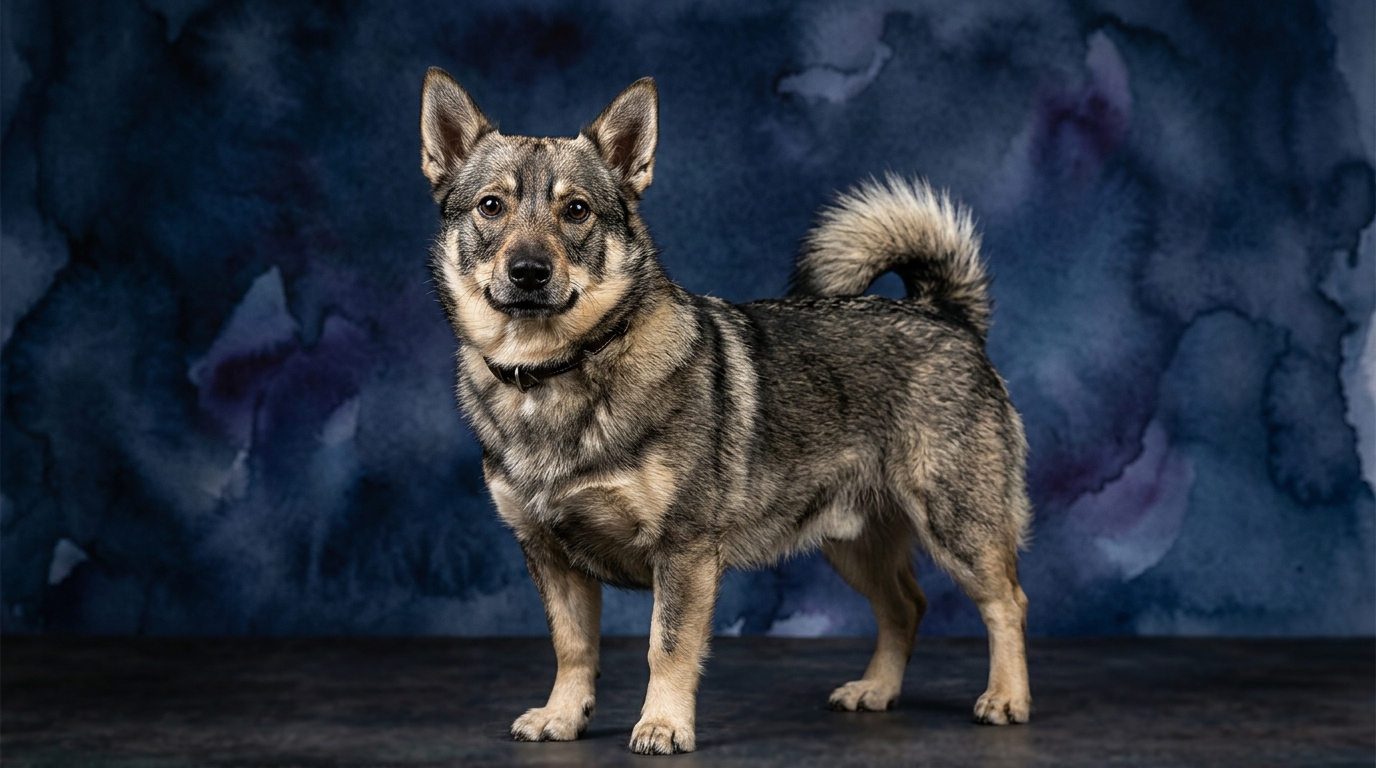
The Swedish Vallhund, a herding dog from Sweden, applies its cognitive skills with a focus on practical tasks and cooperation. Its Problem Solving (3/5) is evident in its ability to navigate varied terrains and strategically influence the movement of animals, demonstrating adaptability in dynamic outdoor environments. Training Speed (3/5) is solid; Vallhunds learn new commands at a steady pace, often motivated by engagement and a desire for structured activity, responding well to consistent, positive reinforcement. Social Intelligence (3/5) for this breed is rooted in understanding pack dynamics and handler cues, crucial for cooperative herding work and integrating smoothly into family life with clear leadership. An Instinctive Drive (3/5) for herding means they possess a strong desire to gather and manage, often expressed through playful 'rounding up' of family members or toys. Finally, their Memory (3/5) is reliable for recalling learned sequences of commands and routines, enabling them to remember complex tasks and expectations over time, which aids in their working capacity.
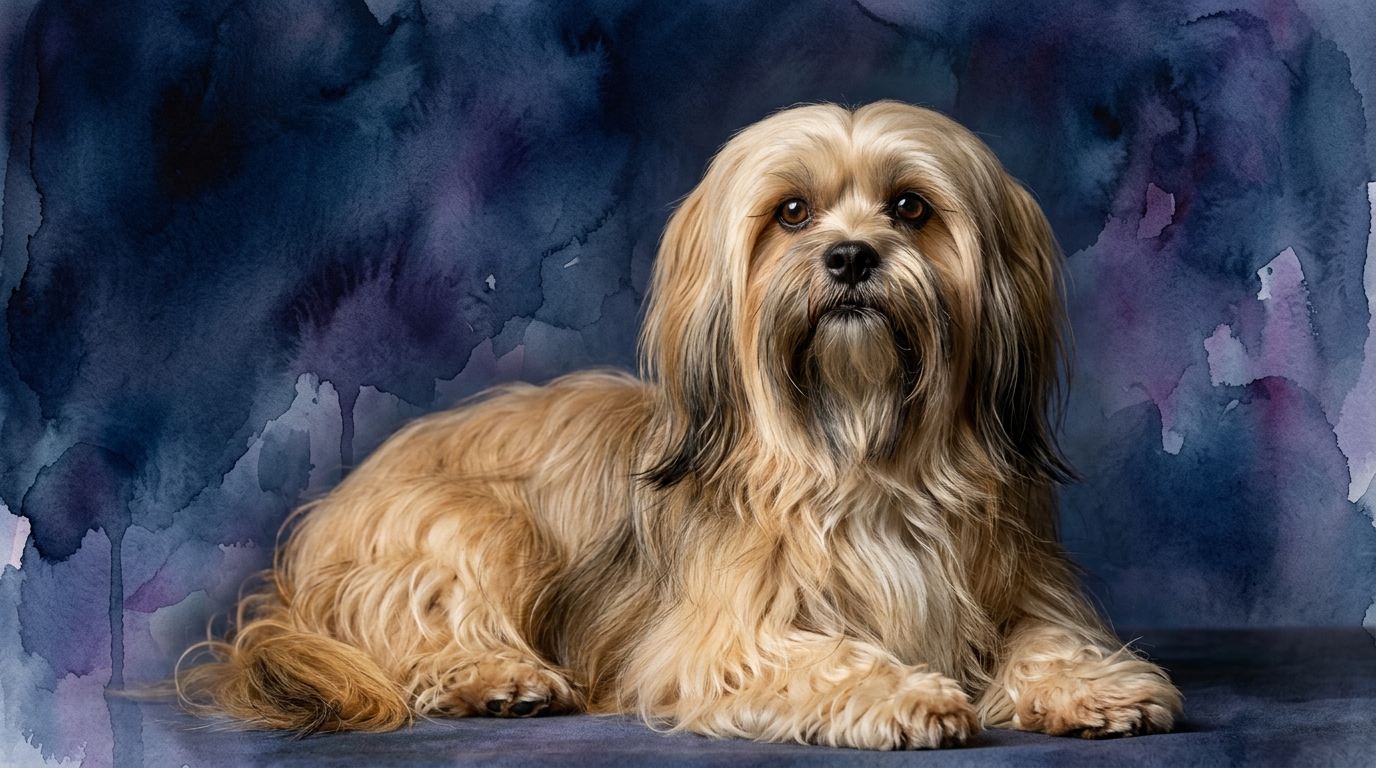
The Lhasa Apso, a non-sporting breed originating from Tibet, channels its cognitive abilities towards guardianship and discerning companionship. Its Problem Solving (3/5) is frequently directed towards assessing their environment for potential threats or figuring out clever ways to achieve their desires, reflecting an independent and discerning nature. Training Speed (3/5) is consistent; they absorb new information at a reliable rate, though their independent spirit means successful training often hinges on finding the right motivators and maintaining unwavering consistency to encourage compliance. Social Intelligence (3/5) in the Lhasa Apso is nuanced, forming deep bonds with their chosen family members while exhibiting a reserved and often discerning approach to strangers, reflecting their ancient guardian role. Their primary Instinctive Drive (3/5) is rooted in guardianship, manifesting as an alert watchfulness and a readiness to alert their household to unusual occurrences, a legacy of their temple duties. Their Memory (3/5) demonstrates a good capacity for established routines, recognizing familiar faces, and remembering past experiences, which contributes to their consistent guardian behavior and strong attachments.
Where the Swedish Vallhund Wins Cognitively
The Swedish Vallhund's cognitive strengths truly shine in scenarios demanding adaptability and a structured work ethic. Their Problem Solving (3/5) is less about subtle manipulation and more about practical application, such as swiftly assessing a shifting environment or finding the most efficient path to achieve a goal, like guiding a 'flock' of children. This breed's Instinctive Drive (3/5) for herding translates into a remarkable capacity for sustained focus on tasks, often outperforming the Lhasa Apso in activities requiring prolonged engagement with a specific objective. Their Memory (3/5) is particularly adept at recalling intricate sequences of commands and multi-step routines, making them excellent candidates for advanced obedience, agility, or even trick training where precision and order are paramount. The Vallhund's Social Intelligence (3/5) is geared towards cooperative working relationships, making them highly responsive to handler cues and able to anticipate instructions, which can make them seem more 'tuned in' during active training sessions compared to the more self-directed Lhasa Apso.
Where the Lhasa Apso Wins Cognitively
Conversely, the Lhasa Apso demonstrates distinct cognitive advantages in areas requiring independent judgment and nuanced social discernment. While their Problem Solving (3/5) might not manifest in herding, it excels in assessing social situations, quickly determining who is a friend or foe, and often figuring out subtle ways to get their needs met through charming persistence. Their Social Intelligence (3/5) is particularly pronounced in their ability to form incredibly deep, almost intuitive bonds with their core family members, often reading their owners' moods and intentions with remarkable accuracy, a skill less overtly displayed by the task-oriented Vallhund. This breed's Instinctive Drive (3/5) for guardianship means they possess an acute observational capacity, constantly scanning their environment and remembering details that might signal an unusual event. Their Memory (3/5) is highly efficient for recognizing patterns in daily life and recalling the specific individuals who belong in their inner circle versus those who are outsiders. This combination of independent thought and keen social filtering gives the Lhasa Apso a unique edge in roles demanding a watchful, discerning presence.
Which is Easier to Train and Why
Despite both breeds having a 3/5 rating for Training Speed, the *experience* of training them can differ significantly. The Swedish Vallhund, with its strong herding drive and inherent desire for a 'job,' often approaches training with an eager, cooperative mindset. Their Social Intelligence (3/5) makes them keen on understanding and pleasing their handler, meaning they are typically more responsive to verbal cues and body language, translating into a seemingly easier training process for structured obedience. They thrive on positive reinforcement and clear directives, quickly integrating new commands into their repertoire. In contrast, the Lhasa Apso's independence and guardian instincts mean that while they learn at a similar pace, their motivation often needs to be more carefully managed. Their Problem Solving (3/5) can sometimes be directed towards figuring out if they *want* to comply, rather than simply understanding the command. Training a Lhasa Apso requires unwavering consistency, patience, and a deep understanding of their sometimes stubborn nature, focusing on making training a rewarding experience on *their* terms. Therefore, for a novice owner seeking a dog that readily embraces structured learning, the Swedish Vallhund might present a more straightforward training journey due to its cooperative temperament.
Which Suits Active Owners vs. Relaxed Owners
The choice between these two breeds heavily depends on an owner's lifestyle. The Swedish Vallhund is an ideal companion for active owners who relish outdoor activities and engaging their dog in mental and physical challenges. Their Instinctive Drive (3/5) for herding means they thrive on regular exercise, structured play, and opportunities to 'work,' even if that work is agility, advanced obedience, or long hikes. They require consistent stimulation to prevent boredom, which can manifest as excessive barking or 'herding' family members. Conversely, the Lhasa Apso is better suited for more relaxed owners who appreciate a companion that enjoys comfortable indoor living, interspersed with moderate walks and garden time. While they need daily exercise to stay healthy, their guardian Instinctive Drive (3/5) means their primary 'activity' is often observing and protecting their domain. They are content to be close to their people, offering quiet companionship and alert watchfulness without demanding constant high-impact engagement, making them a fit for those with a less overtly active lifestyle but who still provide consistent mental enrichment.
The Verdict
Choose the Swedish Vallhund if you are an active, engaged owner seeking a cooperative partner for structured activities and a dog eager to learn and participate in your adventurous lifestyle.
Opt for the Lhasa Apso if you prefer a discerning, independent companion who excels as a vigilant home guardian and thrives on close, affectionate bonds within a more serene, consistent household environment.
🧠 Find Your Pet's IQ Score
Our Pet IQ Lab assessment covers 25+ tests across 5 cognitive dimensions — personalized to your breed.
Take the Full IQ Test →Frequently Asked Questions
Are Swedish Vallhunds good with children?
Swedish Vallhunds, with their herding instincts, can be good with children, often enjoying playful 'herding' games. However, their tendency to nip at heels means early socialization and supervision are crucial to teach them appropriate interactions with young family members.
Do Lhasa Apsos bark a lot?
Yes, Lhasa Apsos are known for their alert barking, a direct manifestation of their guardian instinct. They are quick to vocalize warnings about perceived intruders or unusual sounds, making them excellent watchdogs but requiring consistent training to manage excessive barking.
Which breed is more adaptable to apartment living?
While both can adapt with proper exercise, the Lhasa Apso is generally more suited to apartment living due to its moderate exercise needs and preference for indoor comfort and watchful duties. The Swedish Vallhund, with its higher energy and working drive, typically fares better with more space and opportunities for outdoor activities.