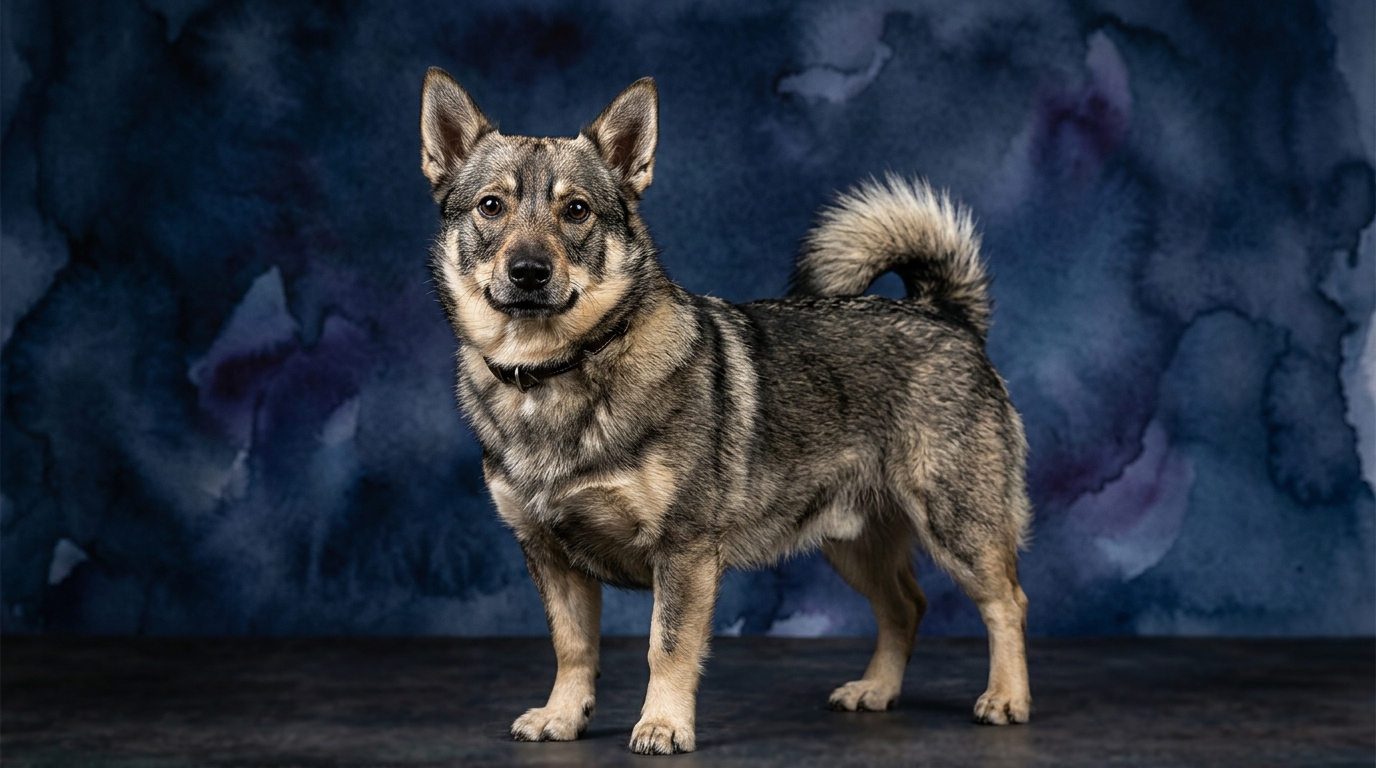

Side-by-Side IQ Profile: Herding Wit vs. Terrier Grit
The Swedish Vallhund, a spirited herding dog, demonstrates its cognitive abilities across five key dimensions. Their Problem Solving (3/5) is rooted in their herding heritage, excelling at understanding and executing complex, multi-step tasks often involving spatial reasoning to control livestock movement; they can quickly assess a situation and devise a strategy to re-direct it. Their Training Speed (3/5) means they typically learn new commands and routines with moderate repetition, driven by a desire to cooperate with their human partners and maintain focus. Social Intelligence (3/5) is evident in their adeptness at reading human body language and vocal cues, often anticipating their owner's intentions and integrating smoothly into family dynamics. The Vallhund's Instinctive Drive (3/5) is strongly tied to herding, manifesting as a desire to gather and control movement, providing persistent motivation for tasks involving organization. Finally, their Memory (3/5) is reliable for learned commands, routines, and environmental layouts, allowing them to recall complex sequences of actions crucial for intricate herding patterns or advanced obedience.
The Rat Terrier, a tenacious terrier breed, showcases its cognitive strengths through a different lens. Their Problem Solving (3/5) is robust and independent, particularly when focused on a goal like finding a hidden toy or navigating obstacles; their terrier tenacity means they will experiment with different approaches until they succeed. Training Speed (3/5) for Rat Terriers involves learning new tasks at a moderate pace, often quickly grasping concepts but sometimes requiring consistent motivation due to their independent streak, responding well to engaging, positive reinforcement. Social Intelligence (3/5) means they are observant of their immediate family's routines and emotional states, forming deep bonds and often anticipating household activities, though they might be reserved with strangers. The Rat Terrier's Instinctive Drive (3/5) is a significant prey drive, motivating them to pursue and 'dispatch' small game, fueling their determination, persistence, and focus in related activities. Their Memory (3/5) is good for places where 'prey' might be found, successful hunting strategies, and territory boundaries, retaining learned commands and routines, especially those with consistent positive outcomes.
Where the Swedish Vallhund Wins Cognitively
The Swedish Vallhund often demonstrates a cognitive edge in tasks requiring cooperative problem-solving and anticipatory decision-making within a structured context. Their herding legacy means they excel at understanding and executing sequences of commands that involve managing multiple moving parts, like guiding a flock or navigating an agility course with precision. This breed's ability to 'read' livestock or human handlers quickly allows them to adjust their strategy on the fly, making them particularly adept at dynamic, collaborative work where quick, coordinated responses are paramount. They often show superior spatial awareness in relation to a group, efficiently positioning themselves to influence movement without direct physical intervention, a nuanced form of intelligent control.
Where the Rat Terrier Wins Cognitively
Conversely, the Rat Terrier shines in cognitive domains that demand independent resourcefulness and tenacious, self-directed problem-solving. Their terrier instincts equip them with a formidable ability to strategize and persist in finding solutions to individual challenges, especially those involving investigation or pursuit. Whether it’s figuring out how to access a prized toy hidden under furniture or devising a method to outsmart a squirrel in the yard, Rat Terriers display an inventive determination. This breed's cognitive strength lies in its ability to focus intensely on a single objective and apply creative, often physical, solutions without constant human guidance, demonstrating a robust, self-reliant form of intelligence.
Which is Easier to Train and Why
When it comes to ease of training, the Swedish Vallhund typically offers a more straightforward experience for the average owner due to their inherent desire to cooperate and their handler-focused nature. Their social intelligence and willingness to engage with their human partner mean they are often eager to please, making them receptive to structured obedience training and various dog sports. They thrive on clear communication and consistent positive reinforcement, generally maintaining focus on the task at hand. In contrast, the Rat Terrier, while certainly capable of learning quickly, often presents a more independent and sometimes stubborn training challenge. Their strong instinctive drive and self-reliant problem-solving mean they might question the necessity of a command or prefer to pursue their own interests if not adequately motivated. Training a Rat Terrier requires more creativity, patience, and high-value rewards to capture and maintain their attention, leveraging their inherent drive into productive learning rather than trying to suppress their independent spirit.
Which Suits Active Owners vs. Relaxed Owners
For active owners seeking a canine partner for diverse pursuits, the Swedish Vallhund is an excellent match. Their balanced cognitive profile, combined with their moderate energy levels and cooperative spirit, makes them suitable for activities like agility, obedience, rally, and even herding trials. They thrive on mental and physical engagement that provides purpose, enjoying long walks, hiking, and interactive games that challenge their problem-solving and memory. A relaxed owner, however, might find the Vallhund's need for mental stimulation and structured activity a bit demanding, potentially leading to boredom-induced behaviors if their cognitive needs are not met. The Rat Terrier, while also requiring regular exercise, might appeal to active owners who appreciate a dog with a robust, independent spirit for focused activities like earthdog trials, barn hunt, or intensive fetch sessions that simulate hunting. Their tenacity and drive mean they excel at tasks requiring sustained effort and determination. A relaxed owner might struggle with the Rat Terrier's persistent energy and need for engaging, often prey-driven, outlets, which can manifest as digging, barking, or relentless pursuit of small critters if not properly channeled. Both breeds demand engagement, but the type of engagement differs significantly.
The Verdict
If you are seeking a cooperative, versatile companion eager to engage in structured learning and collaborative activities, the Swedish Vallhund is an ideal choice.
For those who appreciate an independent, resourceful dog with a tenacious spirit for focused pursuits and self-directed problem-solving, the Rat Terrier will prove a rewarding partner.
🧠 Find Your Pet's IQ Score
Our Pet IQ Lab assessment covers 25+ tests across 5 cognitive dimensions — personalized to your breed.
Take the Full IQ Test →Frequently Asked Questions
Are Swedish Vallhunds good with children?
Swedish Vallhunds, with their social intelligence and herding instinct, can be excellent family dogs, often gently 'herding' children. Early socialization and training are important to ensure they learn appropriate boundaries and interactions with young family members.
Do Rat Terriers need a lot of exercise?
Yes, Rat Terriers are active dogs that require consistent mental and physical exercise to thrive. Daily walks, engaging play sessions, and opportunities for 'hunting' type activities like fetch or scent work are essential to prevent boredom and destructive behaviors.
What are common intelligence challenges for these breeds?
Swedish Vallhunds might become bored or destructive if their cognitive needs for structured tasks and interaction aren't met, potentially using their problem-solving skills to find mischief. Rat Terriers, with their independent nature and strong prey drive, can be prone to selective listening or distraction during training, making consistency and high-value rewards crucial to overcome these challenges.