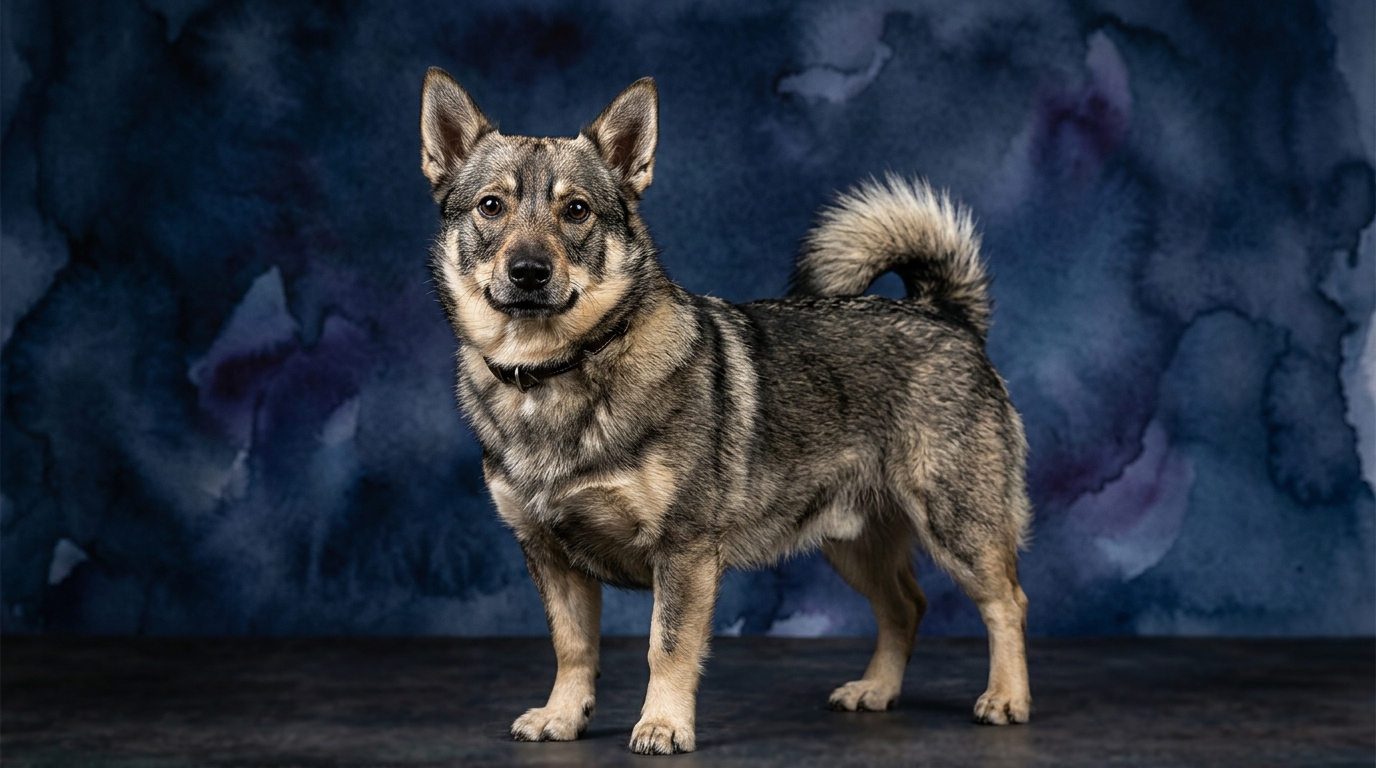
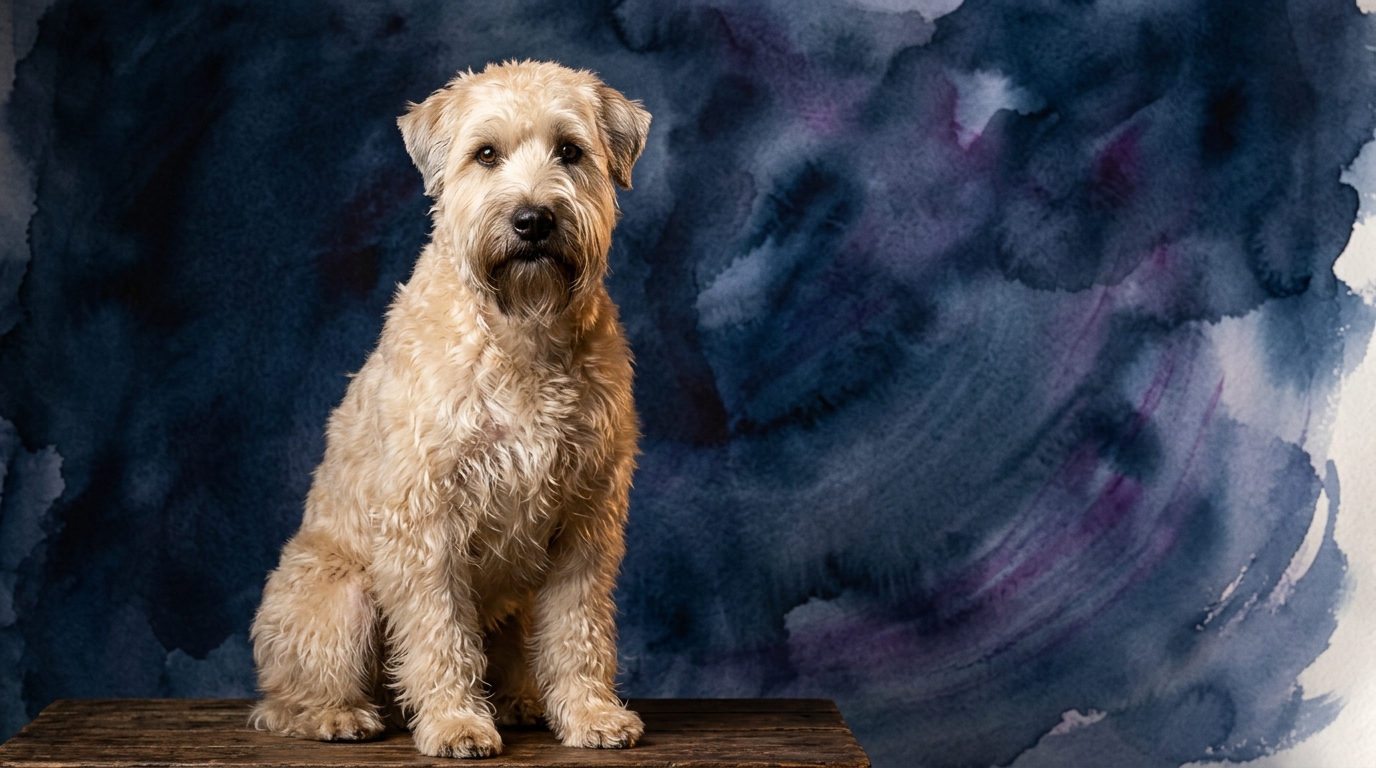
Side-by-Side Cognitive Profile
The Cosmic Pet Pet IQ Lab assesses canine intelligence across five dimensions, and both the Swedish Vallhund and the Soft Coated Wheaten Terrier surprisingly land with identical 3/5 ratings in each category. However, understanding these scores requires looking beyond the numbers to their ancestral functions and how these capacities are expressed.
The Swedish Vallhund's cognitive profile reflects its herding heritage. Its Problem Solving (3/5) manifests in dynamic spatial reasoning, quickly assessing and influencing livestock movements, making independent decisions to manage a fluid environment. Training Speed (3/5) is moderate; they are receptive to direction but retain an independent streak, requiring consistent motivation. Their Social Intelligence (3/5) allows for nuanced interpretation of human cues, crucial for collaborative work. A strong Instinctive Drive (3/5) for herding and minor vermin control shapes their focus. They demonstrate reliable Memory (3/5) for commands, routines, and environmental layouts, aiding in consistent task performance.
The Soft Coated Wheaten Terrier's intelligence is shaped by its versatile farm terrier role. Its Problem Solving (3/5) is characterized by tenacious persistence, figuring out how to extract pests or creatively obtain desired objects through trial-and-error. Training Speed (3/5) is moderate; they learn enthusiastically but their terrier independence can lead to selective hearing, demanding engaging, positive reinforcement. Their Social Intelligence (3/5) is evident in their adeptness at reading human emotions and desire for interaction, exemplified by their "Wheaten Greetin'." A robust Instinctive Drive (3/5) for hunting, digging, and chasing is central to their cognitive makeup. They also show solid Memory (3/5) for past experiences, training, and environmental details.
Where the Swedish Vallhund Excels Cognitively
The Swedish Vallhund's cognitive strengths distinctly align with its herding heritage. While both breeds score 3/5 in problem solving, the Vallhund excels in dynamic spatial reasoning and proactive decision-making within a fluid, living environment. Their ancestral role demanded the ability to predict the movements of a herd, anticipate an animal's escape route, and position themselves strategically to influence direction. This capacity for nuanced environmental manipulation and strategic foresight is a hallmark of their herding intelligence, often appearing more sophisticated in tasks requiring complex, multi-variable solutions involving other living beings.
Where the Soft Coated Wheaten Terrier Excels Cognitively
The Soft Coated Wheaten Terrier, with its terrier background, demonstrates a unique cognitive advantage in tenacious pursuit and resourceful persistence. While their problem-solving score is also 3/5, the Wheaten's manifestation leans towards an unwavering drive to achieve a goal, particularly when it involves investigation or acquisition. Their ancestors were tasked with finding and dispatching vermin, which required an almost obsessive focus, creative burrowing, and an ability to overcome physical obstacles. This translates into a remarkable capacity for sustained effort in tasks they deem rewarding, often employing varied strategies until success is achieved.
Which is Easier to Train and Why
Despite identical 3/5 training speed scores, the perceived ease of training often differs between these two breeds due to their primary motivations and temperaments. The Swedish Vallhund, while having an independent streak from its herding duties, generally possesses a strong desire to work with its handler. Their herding drive, when channeled appropriately, can make them highly attentive and responsive to commands that mimic their natural inclinations, such as 'stay' or 'come' if framed as 'gathering.' They thrive on structured tasks and appreciate having a "job," which can make them quite biddable for obedience training, especially when consistency is maintained.
Conversely, the Soft Coated Wheaten Terrier, though eager to please its family, often couples this with a robust terrier independence and a powerful prey drive. Their problem-solving might lead them to find creative ways around commands if a more enticing alternative (like chasing a squirrel) presents itself. Training a Wheaten requires significant patience, humor, and a diverse range of positive reinforcement techniques to keep them engaged. While they learn quickly, their willingness to comply can be more variable than the Vallhund's, as their strong-willed nature means they are more likely to test boundaries or follow their nose if not consistently managed with engaging, reward-based methods.
Suitability for Active vs. Relaxed Owners
Both the Swedish Vallhund and the Soft Coated Wheaten Terrier are breeds suited for active owners, though their ideal forms of activity diverge. The Swedish Vallhund thrives on structured physical and mental engagement. An active owner for a Vallhund is someone who enjoys activities like herding trials, agility, obedience, or long, purposeful walks that allow for exploration and scent work. They benefit from having a "job" or a consistent routine that taps into their herding intelligence and keeps their minds occupied. A more relaxed owner might find a Vallhund becomes restless or resorts to "herding" household members or children if their innate drives are not adequately satisfied through appropriate outlets.
The Soft Coated Wheaten Terrier also requires an active lifestyle, but their energy often manifests in a more boisterous and playful manner. An active owner for a Wheaten enjoys energetic play sessions, running, hiking, and engaging in activities that allow for bursts of speed and exploratory sniffing. While they can participate in dog sports, their terrier zest often means they are equally content with vigorous games of fetch in the yard or adventurous outings. A relaxed owner might struggle with a Wheaten's persistent need for physical exertion and mental stimulation, which, if unmet, can lead to destructive behaviors, excessive barking, or a general state of restless mischief. Neither breed is truly suited for a sedentary lifestyle, but the type of activity they prefer differs.
The Verdict
Opt for a Swedish Vallhund if you appreciate a dog with a nuanced herding intelligence, a desire for structured work, and an independent spirit that thrives on collaborative tasks and consistent training.
Select a Soft Coated Wheaten Terrier if you seek a joyful, persistent companion with a robust terrier drive, a playful demeanor, and are prepared for a consistent, engaging training approach to manage their independent spirit.
🧠 Find Your Pet's IQ Score
Our Pet IQ Lab assessment covers 25+ tests across 5 cognitive dimensions — personalized to your breed.
Take the Full IQ Test →Frequently Asked Questions
Do Swedish Vallhunds bark a lot?
Vallhunds can be vocal, using barks to communicate and alert, a trait stemming from their herding and farm guardian roles. Consistent training and early socialization can help manage excessive barking, but they retain a natural inclination to voice their observations.
Are Soft Coated Wheaten Terriers good with children?
Wheatens are generally known for their friendly and playful nature, often doing well with children, especially if raised with them. Their boisterous energy requires supervision with very young children to prevent accidental knocking over during enthusiastic play.
Which breed is better for first-time dog owners?
Both breeds present challenges for first-time owners due to their distinct drives and need for consistent training and socialization. However, an owner willing to commit to early, positive, and consistent training, understanding the breed's specific needs, can successfully manage either.