Side-by-Side Cognitive Profiles
The Swedish Vallhund, a herding breed, and the Standard Schnauzer, a working breed, each bring a unique set of cognitive strengths to the table, influenced by their historical roles. Our Pet IQ Lab assesses five key dimensions of canine intelligence to offer a granular view of their mental capabilities.
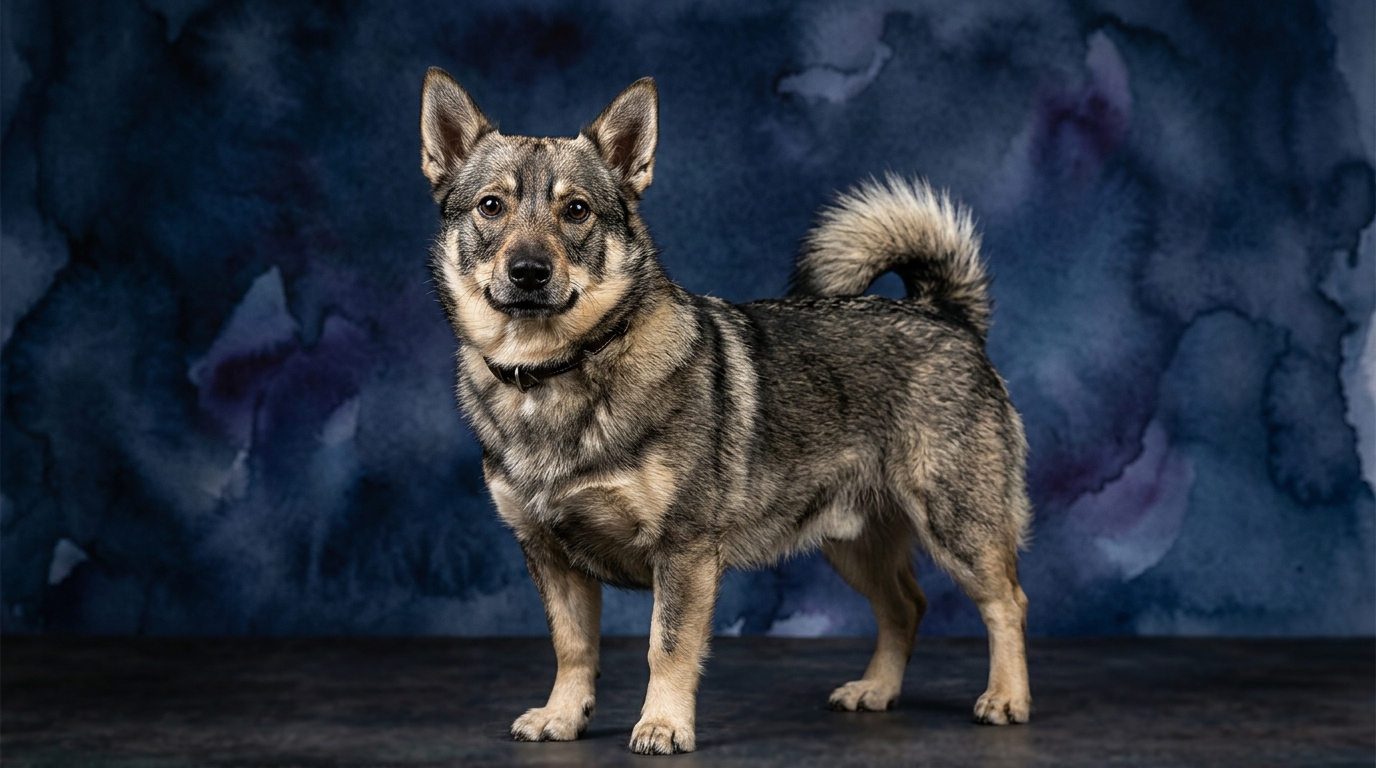
For the Swedish Vallhund, problem-solving registers at 3/5. This herding breed demonstrates a practical, on-the-spot problem-solving approach, adept at maneuvering livestock or navigating varied terrains. Their solutions often reflect an independent, context-specific assessment rather than abstract reasoning. Training speed for the Vallhund is also 3/5; they are capable learners, though their training might require consistent, engaging methods to capture their attention fully. They respond well to positive reinforcement but may need varied repetitions to solidify new commands, reflecting their independent working style. Social intelligence stands at 3/5, as Vallhunds are observant of their human companions and their immediate "pack" dynamics, understanding routines and emotional cues. While attentive to their family, they often maintain a discerning distance with strangers, typical of a watchful herding dog. Their instinctive drive is 3/5, strongly rooted in herding, manifesting as a desire to gather, control movement, and keep their "flock" (family) together. This drive fuels their engagement with work and purposeful activity. Lastly, memory for the Vallhund is 3/5; these dogs possess a functional memory for learned tasks and established routines, recalling commands and learned boundaries efficiently, particularly when these are reinforced by consistent application and positive experiences.
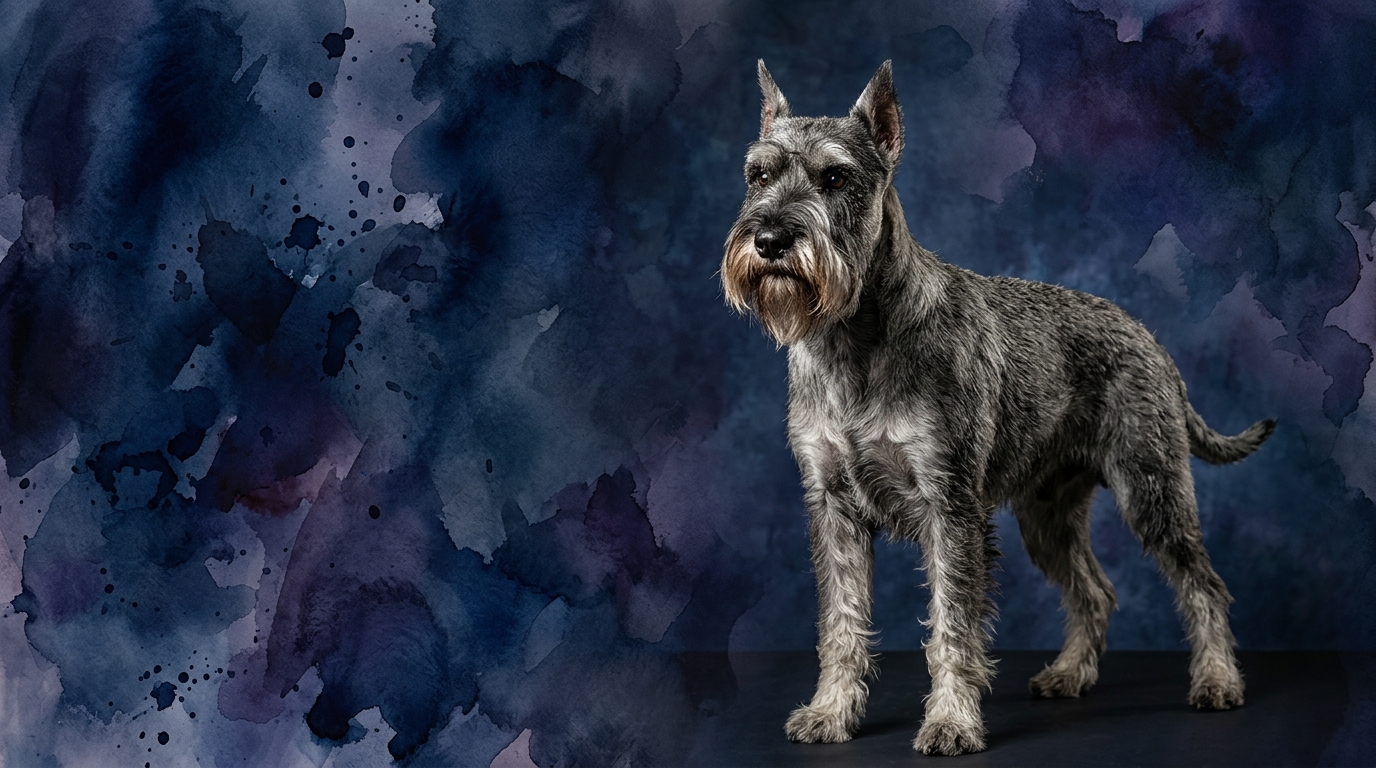
In contrast, the Standard Schnauzer, with its Working group heritage and Coren rank of #22, presents a different cognitive landscape. Its problem-solving ability scores 4/5, exhibiting a robust capacity for figuring out complex tasks, often approaching challenges with strategic thought and persistence. They are adept at navigating novel situations and finding effective solutions to achieve their goals. Training speed is also 4/5 for the Schnauzer; possessing a keen desire to learn and a quick grasp of new concepts, they often pick up commands rapidly. Their eagerness to engage mentally makes them highly responsive to structured training and mental challenges. Social intelligence, at 3/5, shows Schnauzers are deeply attuned to their family's moods and intentions, forming strong bonds. They are discerning observers of social situations, capable of differentiating between familiar and unfamiliar individuals, often displaying a reserved demeanor towards strangers. Their instinctive drive is 3/5, primarily rooted in their working heritage, encompassing guarding, companionship, and a desire for purpose. This manifests as vigilance, loyalty, and an eagerness to participate in family activities or assigned tasks. Finally, the Schnauzer's memory is 4/5, demonstrating excellent retention of information, remembering a wide array of commands, routines, and past experiences, which allows them to build upon prior learning and apply it effectively in various contexts.
Where the Swedish Vallhund Wins Cognitively
While the Standard Schnauzer generally scores higher across several cognitive dimensions, the Swedish Vallhund's specific herding intelligence offers a distinct advantage in certain scenarios. Its 3/5 problem-solving ability, though not as high as the Schnauzer's, is acutely focused on dynamic, environmental challenges. Vallhunds excel at independent decision-making in fluid situations, such as anticipating livestock movement or navigating complex terrain without constant human direction. Their low-to-the-ground perspective and agility allow them to identify and solve spatial problems that might elude a taller dog, making them uniquely resourceful in confined or obstacle-rich environments. This breed's instinctive drive, while scoring the same as the Schnauzer's, is channeled into a very specific type of work: the subtle art of gathering and controlling. This focused drive means they can apply their cognitive resources with intense dedication to tasks that mimic herding, showcasing a specialized mental endurance for repetitive, yet variable, herding-like activities. Their practical memory (3/5) is highly efficient for recalling the precise movements and cues needed for these specific tasks, making them masters of their herding craft.
Where the Standard Schnauzer Wins Cognitively
The Standard Schnauzer clearly demonstrates cognitive strengths across multiple dimensions, particularly in areas that involve complex learning and retention. With a 4/5 rating in both problem-solving and memory, Schnauzers display a superior capacity for understanding and retaining intricate sequences of commands and tasks. They are adept at generalizing learned behaviors to new situations, meaning they can apply a solution learned in one context to a similar, but novel, challenge. This makes them highly adaptable to various roles beyond their traditional working duties, such as advanced obedience, agility, or scent work. Their faster training speed (4/5) reflects a greater eagerness and ability to grasp new concepts quickly, often requiring fewer repetitions to solidify a command. This cognitive efficiency allows them to progress rapidly through training levels and master a wider repertoire of behaviors. The Schnauzer's robust memory ensures that once a task is learned, it is retained effectively, leading to reliable performance over time, which is invaluable for structured work and consistent companionship.
Which is Easier to Train and Why
Based on our IQ metrics, the Standard Schnauzer is generally considered easier to train than the Swedish Vallhund. The Schnauzer's 4/5 training speed and 4/5 memory ratings indicate a dog that picks up new commands and concepts quickly and retains them well. They often thrive on structured training sessions, viewing them as engaging mental challenges. Their working breed background means they typically possess a strong desire to have a job and please their owner, which translates into a focused and responsive student. They are quick to understand cause-and-effect in training, making progress feel rewarding for both dog and handler.
The Swedish Vallhund, with a 3/5 rating in both training speed and memory, is certainly trainable but may require more patience and creative approaches. Their independent herding mindset means they might evaluate a command's utility before complying, rather than simply obeying. While they respond well to positive reinforcement, their attention might need more consistent redirection, and they may require more varied repetitions to solidify new behaviors. Their strong instinctive drive for herding can sometimes be a distraction in training if not properly channeled, as they might try to 'herd' children, other pets, or even moving objects, requiring a handler to incorporate this drive into training rather than suppress it entirely. Owners of Vallhunds often find success by making training feel like a game or a puzzle, tapping into their practical problem-solving skills rather than rote memorization.
Which Suits Active Owners vs. Relaxed Owners
Both the Swedish Vallhund and the Standard Schnauzer are active breeds that thrive on engagement and purpose, meaning neither is ideally suited for truly 'relaxed' owners who prefer minimal interaction or exercise. However, the nature of their activity requirements differs. The Swedish Vallhund, with its herding background, needs consistent outlets for its instinctive drives. This translates to a need for regular physical exercise that involves movement and problem-solving, like agility, herding games, or active walks where they can explore and 'manage' their environment. Without sufficient mental and physical engagement, a Vallhund might invent its own 'work,' which can manifest as persistent nipping at heels, excessive barking, or attempts to herd family members, requiring an owner who is proactive in providing structured activities.
The Standard Schnauzer also requires significant activity, but its higher problem-solving and memory scores mean it benefits immensely from structured mental stimulation alongside physical exercise. This could include advanced obedience, dog sports like rally or flyball, or puzzle toys that challenge their intellect. While they need ample physical activity, a well-exercised Schnauzer, given its capacity for independent thought and retention, might be more content with quiet indoor puzzle play or a focused training session after a good walk, compared to a Vallhund who might continue seeking out 'herding' opportunities. An owner who enjoys consistent training, structured activities, and a dog that thrives on learning new skills would find the Schnauzer a more fitting companion, whereas an owner who appreciates a nimble, independent thinker that excels in dynamic, less structured physical play might lean towards the Vallhund.
The Verdict
Choose the Swedish Vallhund if you seek a compact, agile companion with a keen herding instinct, an independent problem-solving style for dynamic situations, and appreciate a dog that thrives on physical engagement and unique mental challenges.
Opt for the Standard Schnauzer if you desire a highly trainable partner who excels at quickly learning and retaining complex tasks, enjoys structured work, and offers a strong protective presence, thriving on consistent mental engagement and diverse activities.
🧠 Find Your Pet's IQ Score
Our Pet IQ Lab assessment covers 25+ tests across 5 cognitive dimensions — personalized to your breed.
Take the Full IQ Test →Frequently Asked Questions
Are Swedish Vallhunds good family dogs despite their herding drive?
Yes, Swedish Vallhunds can be excellent family dogs. They are loyal and affectionate with their family members, though their herding drive means they might try to 'herd' children or other pets, which requires early training and appropriate outlets for their instincts to ensure harmonious living.
Do Standard Schnauzers require a lot of mental stimulation?
Absolutely, Standard Schnauzers require substantial mental stimulation to thrive. Their high problem-solving ability and memory mean they quickly become bored without engaging activities, leading to potential destructive behaviors. Daily training sessions, puzzle toys, and dog sports are crucial for their well-being.
How do their herding/working instincts manifest in a home environment?
A Vallhund's herding instinct might manifest as nipping at heels, circling family members, or trying to 'organize' the household. A Schnauzer's working instinct often appears as vigilance, a desire to guard their family and home, and an eagerness to participate in any task, whether it's fetching the mail or accompanying you on chores.