Side-by-Side IQ Profile
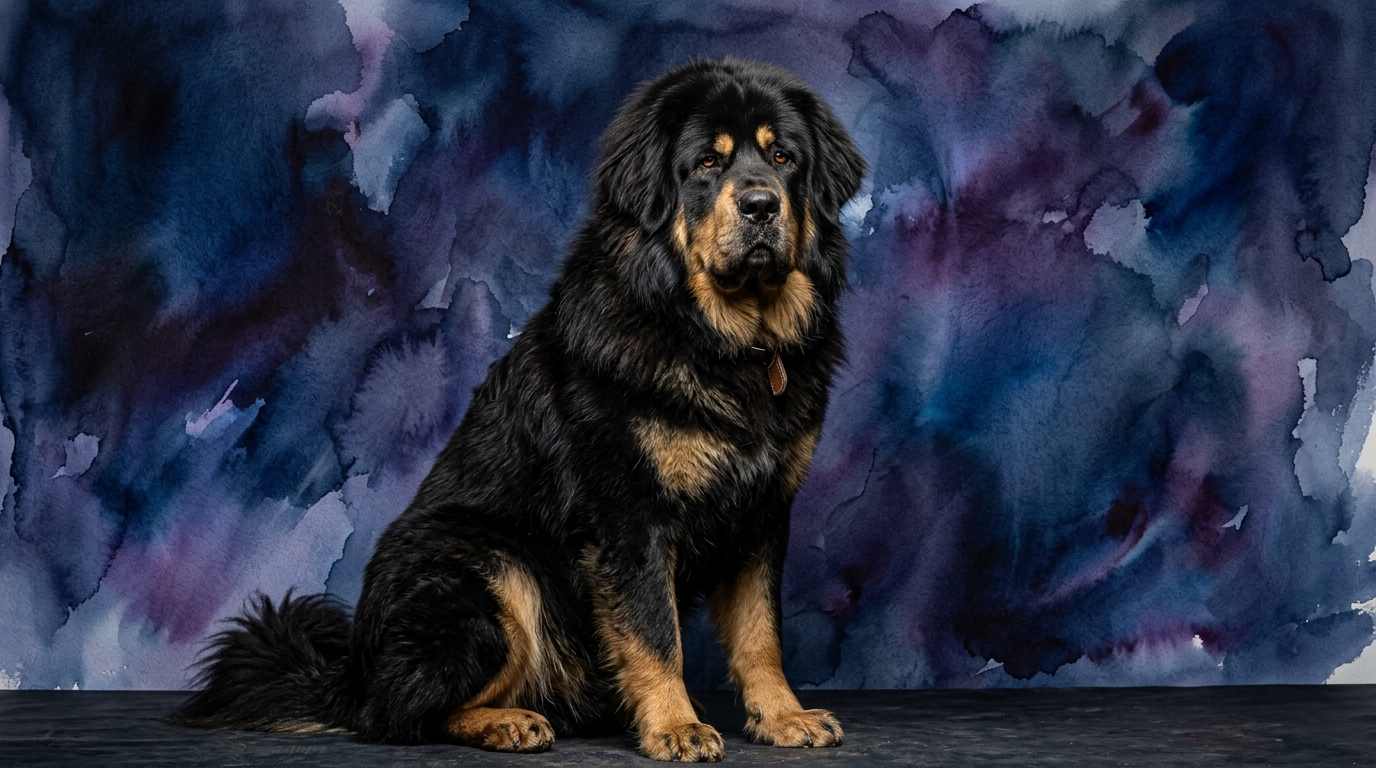
**Tibetan Mastiff:**
*Problem Solving (3/5):* This breed demonstrates moderate problem-solving abilities, often relying on established patterns and independent judgment rather than rapid, novel solutions. They can assess situations and make decisions, particularly concerning their territory and family, but might not be quick to improvise outside familiar contexts.
*Training Speed (3/5):* Learning new commands takes a moderate pace for the Tibetan Mastiff, requiring patience and consistent reinforcement. They are capable of learning, but their independent nature means they often need to understand the 'why' behind a command before offering eager compliance.
*Social Intelligence (3/5):* Exhibiting moderate social intelligence, Tibetan Mastiffs are deeply attuned to their immediate family unit, interpreting their cues and emotional states with precision. However, they are typically reserved with strangers, taking time to assess new individuals within their social sphere.
*Instinctive Drive (3/5):* Their instinctive drive is moderate, primarily focused on guarding and territorial protection, manifesting as watchful observation rather than constant, high-energy activity. This drive is purposeful and directed, rather than an overwhelming need for constant stimulation.
*Memory (3/5):* Tibetan Mastiffs possess a moderate memory, retaining routines and important lessons, especially those related to their daily lives and family interactions. Complex or infrequently practiced commands may require refreshers, but core learned behaviors persist.
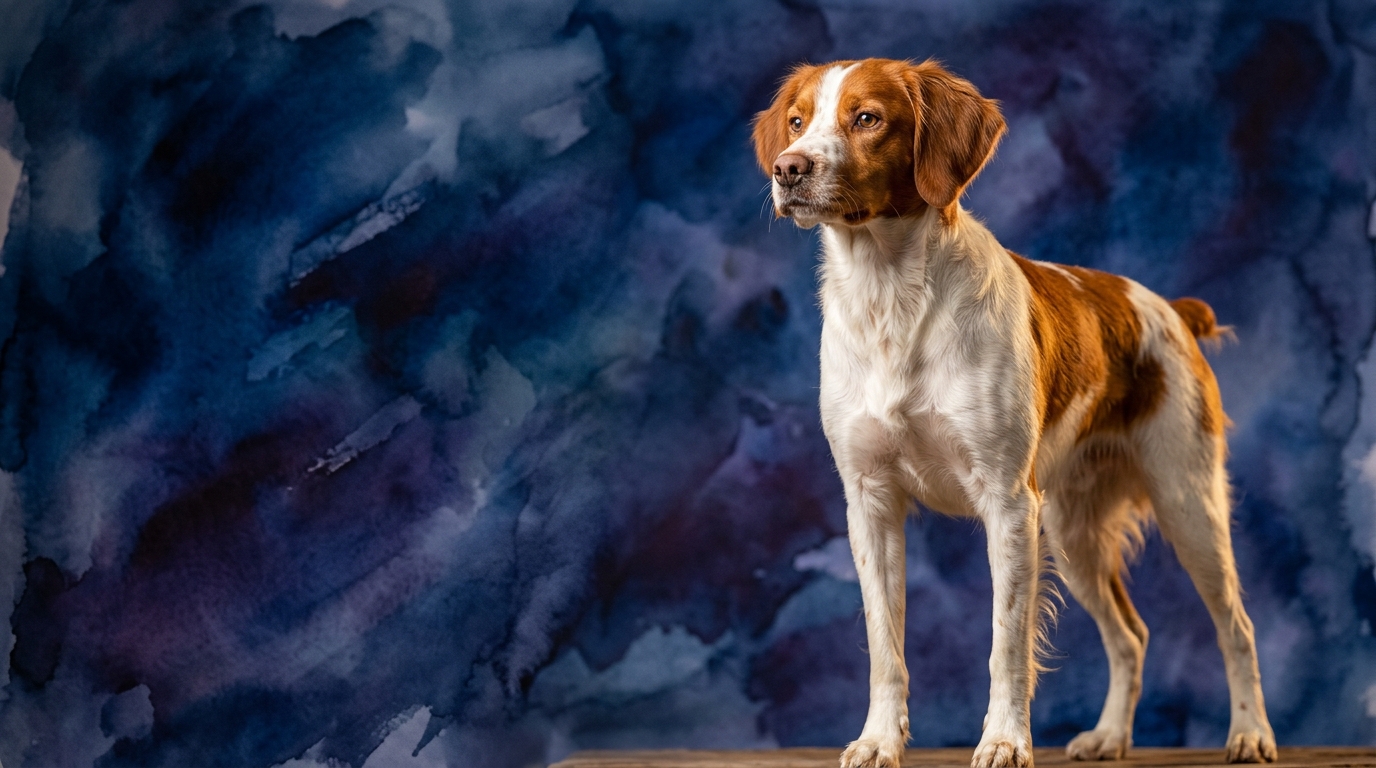
**Brittany:**
*Problem Solving (4/5):* The Brittany showcases above-average problem-solving skills, adept at navigating complex outdoor environments to locate game or solve practical tasks. They demonstrate flexibility in their approach, quickly adapting strategies to overcome obstacles and achieve their objectives.
*Training Speed (4/5):* With an above-average training speed, Brittanys are eager and quick to absorb new commands and skills, thriving on structured learning and positive reinforcement. Their responsiveness makes them highly rewarding partners for obedience and performance activities.
*Social Intelligence (3/5):* Brittanys exhibit moderate social intelligence, forming strong bonds with their human companions and generally interacting well with familiar people and other animals. They are typically affable but may not possess the same discerning social caution as a guardian breed with strangers.
*Instinctive Drive (3/5):* Their instinctive drive is moderate, centered on their strong prey drive for scent work and retrieving, a hallmark of their sporting heritage. This drive is purposeful and channeled through activities like hunting or dog sports, rather than manifesting as undirected hyperactivity.
*Memory (5/5):* Brittanys excel with an exceptional memory, allowing them to recall vast amounts of information, from complex command sequences to intricate scent trails and field layouts. This superior retention is a significant asset in their working roles and daily life, making them highly reliable.
Where Tibetan Mastiff Wins Cognitively
The Tibetan Mastiff's cognitive strengths lie in its self-reliant judgment and discerning social awareness. While its problem-solving scores a 3/5, this isn't a deficit but an adaptation for independent decision-making in its traditional guardian role; it can assess potential threats and respond without awaiting explicit human command, a crucial trait for a livestock protector. Its moderate social intelligence, also 3/5, translates into a profound, albeit reserved, understanding of its immediate family, allowing it to interpret subtle cues and form deep, protective bonds, acting as a discerning sentinel rather than a universally outgoing companion. This breed excels in quiet observation and autonomous assessment, making it a master of subtle vigilance.
Where Brittany Wins Cognitively
The Brittany shines with its superior cognitive agility, particularly in problem-solving and memory. Scoring 4/5 in problem-solving, this breed is adept at figuring out complex scenarios, whether it's navigating dense cover to flush game or mastering intricate agility courses, demonstrating a flexible and strategic mind. Its exceptional memory, rated 5/5, is a standout trait, enabling it to retain an extensive repertoire of commands, remember specific locations, and recall intricate scent patterns with remarkable accuracy, making it an incredibly reliable and consistent performer in the field. This combination of quick learning and enduring recall allows the Brittany to excel in tasks requiring precision and sustained mental effort.
Which is Easier to Train and Why
The Brittany is unequivocally the easier breed to train, primarily due to its higher training speed (4/5) and exceptional memory (5/5). These traits mean a Brittany will pick up new commands rapidly and retain them with minimal reinforcement, making training sessions productive and rewarding. Their natural eagerness to engage with their human partners, combined with their problem-solving ability (4/5) to understand the objective of a task, further contributes to their trainability. In contrast, the Tibetan Mastiff, with moderate scores for training speed (3/5) and memory (3/5), requires a more patient, consistent, and often creative training approach. Their inherent independence and tendency to weigh commands against their own judgment mean they may not always offer immediate or enthusiastic compliance, viewing training as a collaborative effort rather than a directive. Their cognitive strength lies in independent thought, which can sometimes manifest as a challenge to traditional obedience training methods.
Which Suits Active Owners vs Relaxed Owners
For active owners seeking a dynamic and engaged companion, the Brittany is an ideal match. Its cognitive profile, marked by above-average problem-solving and exceptional memory, means it thrives on mental and physical stimulation, excelling in activities like hunting, dog sports, extensive hiking, or advanced obedience training. This breed needs a "job" to keep its keen mind and athletic body satisfied, making it a superb partner for those who enjoy a highly interactive lifestyle. Conversely, the Tibetan Mastiff, with its moderate instinctive drive and more independent nature, is better suited for owners who appreciate a discerning, watchful presence rather than constant, high-octane engagement. While they require regular exercise and mental engagement through patrolling their territory or observing their surroundings, they are not typically demanding of constant directed activity. Owners who value a self-sufficient guardian and a calm, steadfast companion, and who can provide ample space and security, will find the Tibetan Mastiff a fitting choice, even if their lifestyle is more relaxed in terms of structured "work" with their dog.
The Verdict
Choose the Tibetan Mastiff if you seek an independent, discerning guardian who offers a calm, watchful presence and excels at autonomous assessment rather than constant direction.
Opt for the Brittany if you desire a highly trainable, enthusiastic partner for active pursuits, valuing exceptional recall and a keen mind for problem-solving in dynamic environments.
🧠 Find Your Pet's IQ Score
Our Pet IQ Lab assessment covers 25+ tests across 5 cognitive dimensions — personalized to your breed.
Take the Full IQ Test →Frequently Asked Questions
Is a Tibetan Mastiff difficult to live with due to its intelligence?
Its intelligence isn't about difficulty, but independence; it thinks for itself, requiring an owner who understands its guardian instincts and provides clear, consistent leadership. It's a discerning companion, not one that constantly seeks direction, which can be perceived as challenging if one expects eager obedience.
How does the Brittany's memory specifically aid its hunting abilities?
Its exceptional memory allows it to recall complex scent patterns, remember the layout of a field, and retain intricate command sequences, making it incredibly efficient and reliable in tracking and retrieving game over long periods. This superior recall means fewer missed opportunities and more consistent performance in the field.
Do both breeds require mental stimulation?
Absolutely, though the type differs; the Brittany thrives on directed tasks and learning new skills to engage its problem-solving and memory, while the Tibetan Mastiff benefits from tasks that allow it to utilize its natural guarding instincts and independent observation, even if at a slower pace. Both need their minds occupied to prevent boredom and undesirable behaviors.