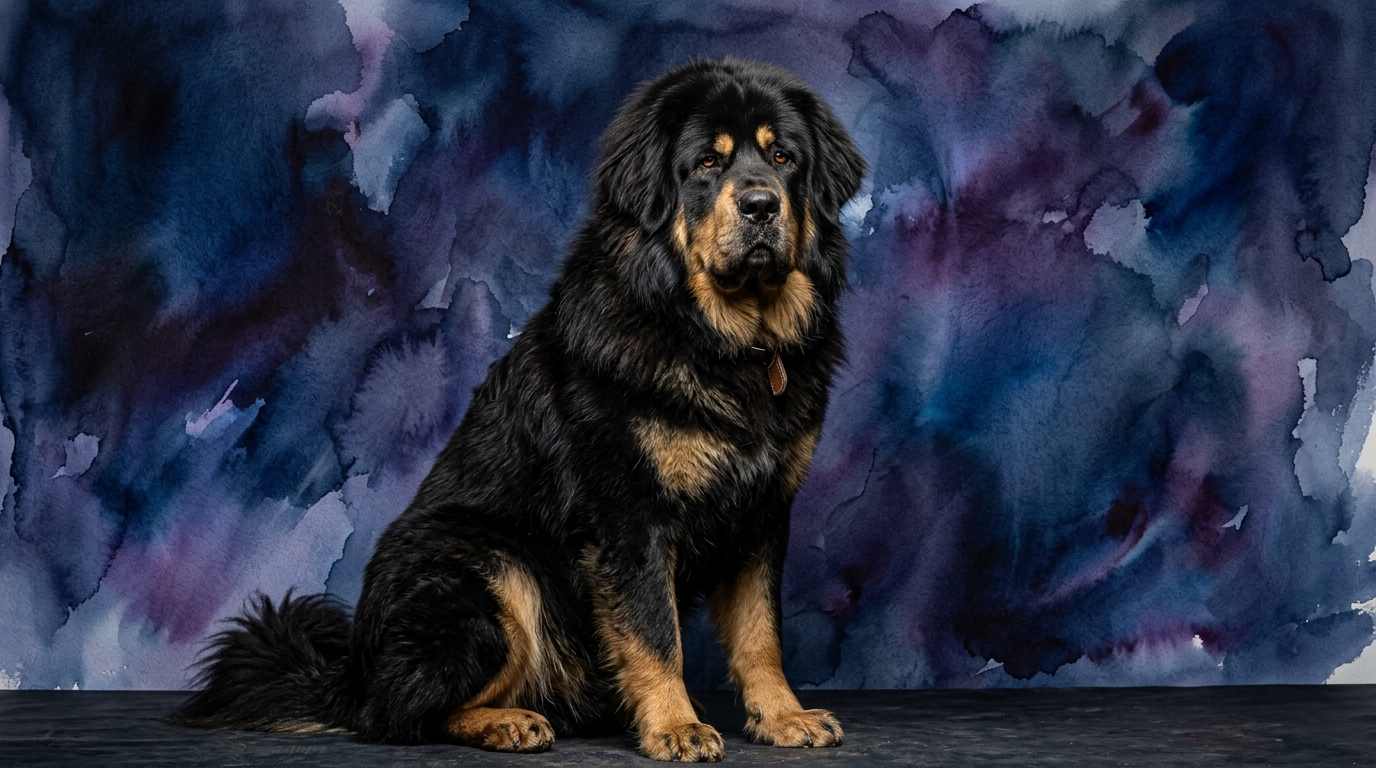
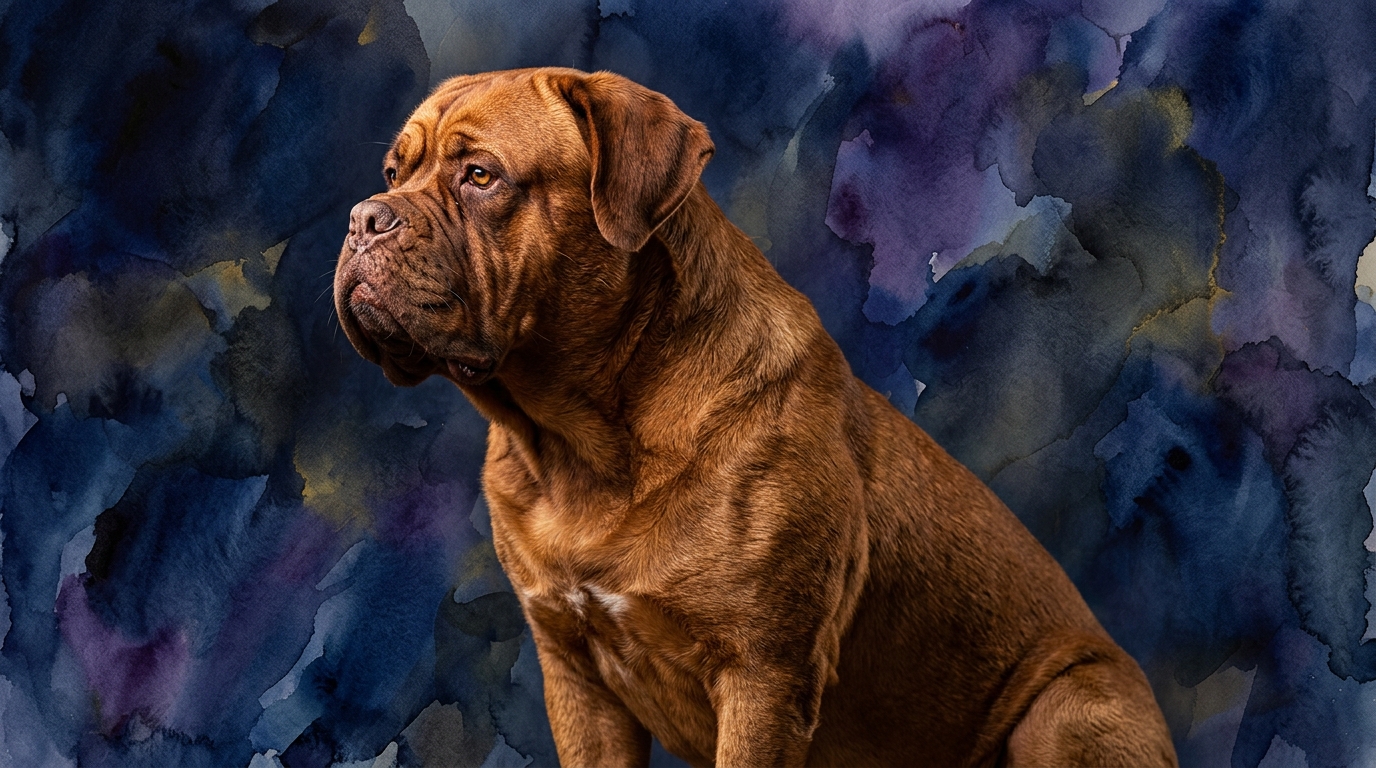
Side-by-Side IQ Profile: Unpacking Identical Scores
At The Cosmic Pet Pet IQ Lab, we assess canine intelligence across five key dimensions: problem-solving, training speed, social intelligence, instinctive drive, and memory. Intriguingly, both the Tibetan Mastiff and the Dogue de Bordeaux register a consistent 3/5 across all these categories. However, identical scores do not signify identical cognitive manifestations; rather, they highlight how each breed's intellect is uniquely shaped by its historical role and inherent temperament.
For the Tibetan Mastiff, a 3/5 in Problem Solving reflects its capacity for independent guardian tasks, where it assesses environmental factors and makes autonomous decisions regarding perceived threats or territorial boundaries. This isn't about solving complex puzzles, but rather about practical, situational judgment crucial for self-sufficient protection.
The Dogue de Bordeaux, also scoring 3/5 in Problem Solving, applies its intelligence differently. Its cognitive efforts often focus on navigating complex social dynamics within a family or subtly manipulating owners for comfort and attention. This breed's problem-solving is typically geared towards achieving desired outcomes within its human pack, often through observation and strategic charm.
Regarding Training Speed, the Tibetan Mastiff's 3/5 indicates that while it absorbs commands, its compliance is often conditional on perceived value, necessity, or its independent assessment of the situation. This breed learns, but its execution reflects a strong-willed nature and a tendency to act at its own discretion rather than an eager-to-please obedience.
The Dogue de Bordeaux's 3/5 in Training Speed similarly suggests a moderate learning pace, yet its motivation often stems from a desire to please its beloved family members and receive positive reinforcement. While capable of stubbornness, their deep affection and social intelligence generally make them more responsive to reward-based training, though consistency remains paramount.
The Tibetan Mastiff's Social Intelligence, also at 3/5, is primarily geared towards discerning friend from foe, understanding subtle cues from its charges, and maintaining a reserved, watchful demeanor. Its social awareness is fundamentally protective, allowing it to interpret intentions within its defined territory.
A 3/5 in Social Intelligence for the Dogue de Bordeaux emphasizes its deep connection to its human family, enabling it to read emotions and understand household dynamics with remarkable empathy. This breed actively seeks to be an integral part of the family unit, interpreting social cues for bonding and maintaining harmony.
The Tibetan Mastiff's Instinctive Drive, rated 3/5, is powerfully expressed through its potent territorial guarding instincts, intense protective drive towards its family, and unwavering vigilance. This inherent drive is central to its historical role as a livestock and property guardian, influencing much of its natural behavior.
For the Dogue de Bordeaux, a 3/5 in Instinctive Drive manifests as a protective nature toward its family, often expressed as a calm, watchful presence rather than overt aggression unless provoked. This drive also includes a strong desire for companionship and a keen sense of belonging within its home environment.
Finally, the Tibetan Mastiff's Memory, at 3/5, allows for strong recall of territory, routines, and individuals, particularly those it perceives as threats or allies. It retains experiences that inform its protective duties and reinforces its understanding of boundaries and hierarchy.
The Dogue de Bordeaux, with a 3/5 in Memory, possesses an excellent recall for family members, established routines, and specific positive or negative interactions. This strong memory impacts its future social engagements and reinforces its bond with those it trusts and loves.
Where the Tibetan Mastiff Wins Cognitively
The Tibetan Mastiff's cognitive strengths are particularly evident in its capacity for independent assessment and decision-making within its guardian role. Its 3/5 problem-solving and social intelligence are finely tuned for autonomously evaluating environmental cues and discerning potential threats, allowing it to maintain vigilance and boundaries without constant human directives. This breed excels at a form of practical, situational judgment crucial for self-sufficient protection, making it adept at managing its territory with a discerning and reserved intellect.
Where the Dogue de Bordeaux Wins Cognitively
The Dogue de Bordeaux demonstrates a distinct cognitive advantage in its nuanced understanding of human social structures and emotional states. Its 3/5 social intelligence allows for a deep connection with its human family, enabling it to read subtle emotional cues and integrate seamlessly into household dynamics as a companion. This breed's problem-solving is often applied to navigating social interactions for comfort and affection, making it particularly skilled at fostering strong emotional bonds and becoming an empathetic, integral part of the family unit.
Which is Easier to Train and Why
When considering ease of training, the Tibetan Mastiff's 3/5 training speed is coupled with a strong independent streak and a tendency to question commands if they don't perceive a clear purpose or threat. Training requires immense patience, consistency, and establishing clear leadership, as they are not inherently eager to please in the conventional sense. They learn, but compliance is often a negotiation, demanding an owner who understands their guardian mindset.
The Dogue de Bordeaux, also 3/5 in training speed, typically finds motivation in a desire to please their beloved family members and receive positive reinforcement. While they can exhibit stubbornness, their deep affection and social intelligence generally make them more responsive to reward-based training and less likely to disregard a command if they understand it and are motivated by their bond. Their training success often hinges on positive methods and a strong, trusting relationship.
Which Suits Active Owners vs. Relaxed Owners
Despite their imposing size, Tibetan Mastiffs are not hyperactive but require significant mental engagement and a clear 'job,' even if it's guarding the property. They need owners who are consistent in training and provide mental stimulation, but not necessarily for intense physical exercise. Their ideal owner is a calm, confident leader who appreciates their independent nature and can provide a secure, defined territory, suiting those relaxed in daily pace but active in commitment to their dog's mental and behavioral needs.
Dogue de Bordeaux dogs are generally more relaxed and enjoy lounging with their family, often preferring comfort over extensive activity. While they need regular, moderate exercise to maintain health, they are not built for endurance or high-intensity sports. They suit relaxed owners who enjoy companionship and are content with shorter walks and ample time spent together at home. Their cognitive strengths make them excellent family companions who thrive on being close to their people.
The Verdict
Select a Tibetan Mastiff if you seek an independent, vigilant guardian with a profound sense of territory and a nuanced understanding of their protective role, prepared for a long-term commitment to their unique cognitive and behavioral needs.
Opt for a Dogue de Bordeaux if you desire a deeply affectionate, socially astute companion who thrives on close family bonds and offers a calm, watchful presence within the home, appreciating their desire for comfort and companionship.
🧠 Find Your Pet's IQ Score
Our Pet IQ Lab assessment covers 25+ tests across 5 cognitive dimensions — personalized to your breed.
Take the Full IQ Test →Frequently Asked Questions
Do these breeds learn quickly?
Both breeds are rated 3/5 for training speed, meaning they learn at a moderate pace, but their willingness to apply learned commands can vary significantly based on individual temperament and the perceived value of the task. Consistency and motivation are key to their learning success.
Are they good with strangers?
The Tibetan Mastiff's social intelligence (3/5) is geared towards discerning threats, often making them reserved or wary of strangers. The Dogue de Bordeaux's (3/5) allows them to assess social situations, but they generally require careful introductions, typically accepting trusted friends of the family once introduced properly.
How do their problem-solving skills differ?
While both score 3/5, the Tibetan Mastiff applies its problem-solving to independent guardian tasks, assessing environmental cues for protection. The Dogue de Bordeaux often uses its skills to navigate social dynamics within the family or to achieve comfort and attention from its owners.