Side-by-Side Cognitive Profile
The Cosmic Pet Pet IQ Lab assesses five key cognitive dimensions, and interestingly, both the Tibetan Mastiff and the Ibizan Hound register a 3/5 across the board. This numerical parity, however, belies significant qualitative distinctions in how these breeds express their intelligence, deeply rooted in their historical roles and inherent temperaments.
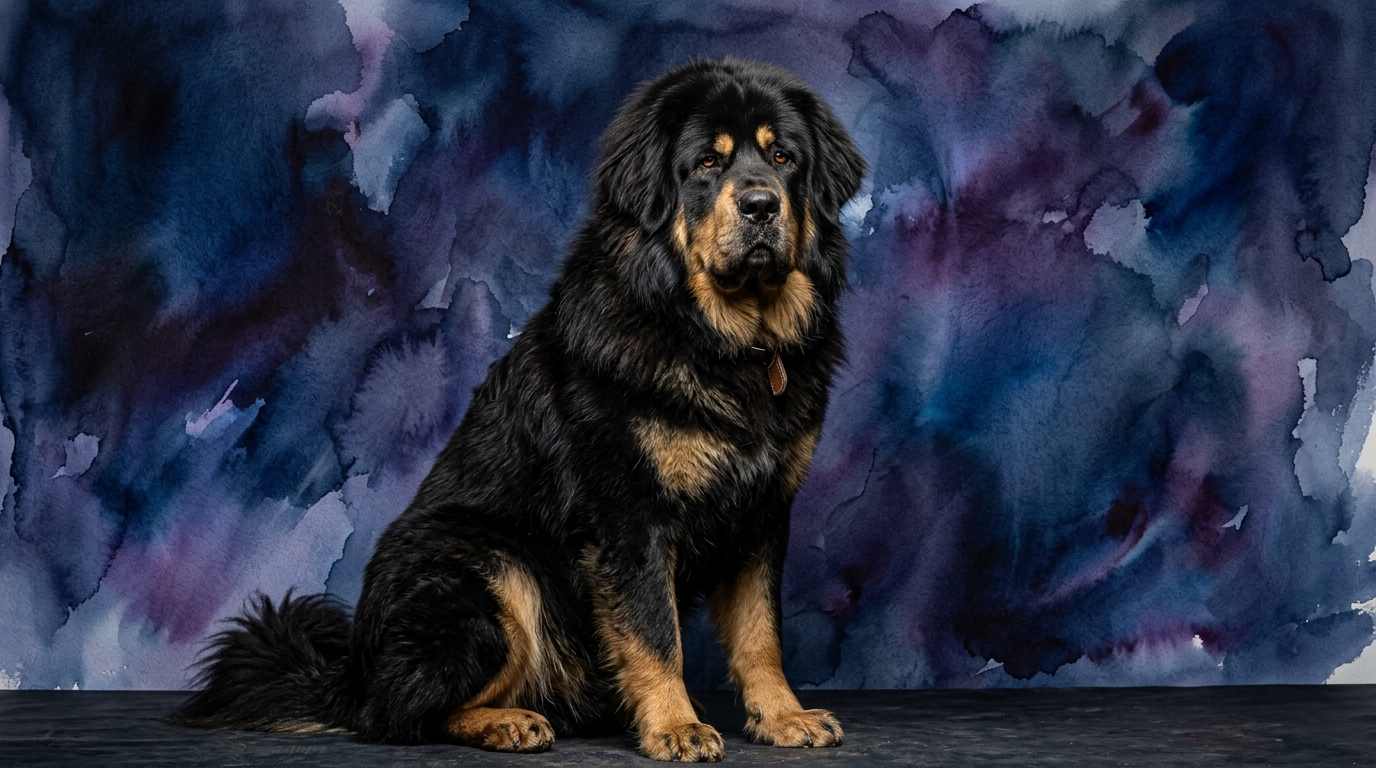
For the Tibetan Mastiff, a 3/5 in **Problem Solving** reflects a capacity for independent, strategic thought, particularly in scenarios related to guarding territory or livestock. This breed often assesses threats and determines responses without direct command, relying on an inherent understanding of its protective role rather than seeking human guidance for every decision. Their problem-solving leans towards self-reliance in defense. Their **Training Speed** at 3/5 is influenced by their independent nature and strong will; they absorb commands, but compliance is often predicated on their perception of the command's value or necessity, rather than an eager desire to please. Consistency and patience are paramount to embed new behaviors effectively. A 3/5 in **Social Intelligence** indicates a nuanced understanding of social hierarchies and group dynamics within its own family unit. They are adept at reading intentions and boundaries, though their social circle tends to be carefully curated and often reserved towards strangers, prioritizing the safety of their inner circle. The core of the Tibetan Mastiff's being is its strong **Instinctive Drive** (3/5), primarily focused on guardianship and territory. This signifies a powerful, innate urge to protect, survey, and alert to perceived dangers, an instinct about maintaining order and security. Their **Memory** at 3/5 is robust, particularly for established routines, learned commands, and, critically, for identifying individuals or situations that pose a threat or are deemed safe, contributing significantly to consistent protective behaviors.
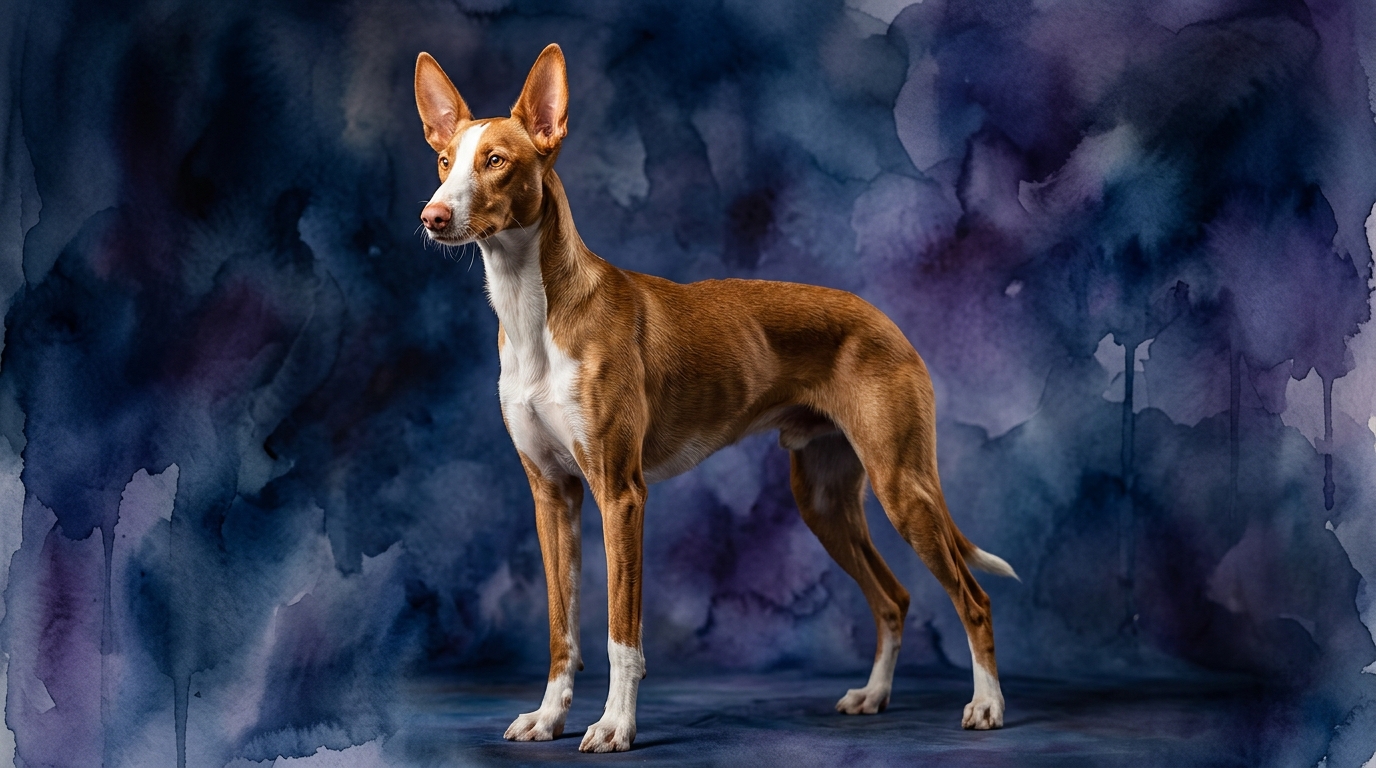
The Ibizan Hound's 3/5 **Problem Solving** manifests in its acute ability to strategize during a hunt, navigating complex terrain or outsmarting fast-moving prey. They exhibit cleverness in pursuit, adapting tactics on the fly and using their senses to track. Their ingenuity is often directed towards achieving a goal, like finding a hidden toy or escaping a perceived confinement, rather than guarding. While they learn efficiently, their **Training Speed** (3/5) is tempered by their sighthound independence and a strong drive for self-gratification, often preferring to follow their nose or eyes. They grasp concepts quickly, yet executing them reliably can depend on high-value motivation and a trainer who understands their sensitive, free-spirited nature. A 3/5 in **Social Intelligence** reflects an ability to form deep bonds with their chosen humans and often other dogs, displaying sensitivity to mood and subtle cues. They are generally polite, sometimes aloof with strangers, but possess a clear understanding of social dynamics within their immediate pack. The Ibizan Hound's 3/5 **Instinctive Drive** is overwhelmingly geared towards its sighthound heritage: chasing and hunting. This manifests as a powerful urge to pursue anything that moves quickly, leveraging their speed, agility, and keen senses, and can easily override other learned behaviors. Their **Memory**, also a 3/5, is strong for spatial awareness, routes, and the location of favored spots or objects. They recall training cues and routines, but their independent streak means that recalling a command in the face of a compelling chase opportunity might be selectively overridden by their immediate, powerful instinct.
Where the Tibetan Mastiff Excels Cognitively
The Tibetan Mastiff's cognitive strengths shine particularly in areas requiring unwavering vigilance and autonomous decision-making in a protective context. Their problem-solving (3/5) is uniquely adapted for assessing and neutralizing perceived threats to their territory or family, often without needing explicit direction. This involves complex environmental scanning, identifying anomalies, and determining appropriate responses, from a warning bark to a more assertive stance, all based on an internal risk assessment rather than a pre-programmed command.
Their social intelligence (3/5) is finely tuned for understanding and maintaining the integrity of their immediate social unit. They excel at discerning who belongs and who doesn't, reading subtle cues from their family members to anticipate needs or potential dangers. This manifests as a profound loyalty and a deep-seated understanding of their role as guardian, where their memory (3/5) serves to categorize individuals as friend or foe, ensuring consistent protective behavior. This deep-seated commitment to their 'flock' and their independent, yet context-aware, problem-solving in security matters truly sets them apart.
Where the Ibizan Hound Excels Cognitively
The Ibizan Hound's cognitive advantages are most evident in situations demanding swift, agile, and independent action, particularly in pursuit scenarios. Their problem-solving (3/5) is geared towards dynamic environments, allowing them to rapidly assess and adapt to changing conditions during a chase or while exploring. This includes navigating complex physical spaces, finding optimal routes, and anticipating the movements of small, fast-moving objects with remarkable precision.
Their instinctive drive (3/5) is a finely honed tool for their original purpose, making them exceptionally adept at tasks requiring high focus and determination in tracking and pursuit. Coupled with their memory (3/5) for terrain, scents, and successful hunting strategies, they exhibit a specialized form of intelligence that optimizes their performance in activities requiring speed, observation, and quick, decisive action. This makes them particularly effective in sports like lure coursing or anything that taps into their natural sighthound abilities, where their focus and strategy are unparalleled.
Training Dynamics: Tibetan Mastiff vs. Ibizan Hound
Neither the Tibetan Mastiff nor the Ibizan Hound are typically described as 'easy' to train in the conventional sense, largely due to their independent natures, both scoring 3/5 in training speed. However, the *nature* of their training challenge differs significantly. The Tibetan Mastiff, with its guardian instincts, often questions commands that don't align with its protective agenda or perceived necessity. Training requires immense patience, consistency, and establishing clear leadership, as they respect authority that is firm, fair, and logical from their perspective. They are not inclined to blindly obey but to cooperate when they understand the rationale and trust their leader. Their strong protective drive means socialization must be extensive and early to ensure appropriate responses to novel situations and people, preventing unwarranted suspicion.
The Ibizan Hound's training challenges stem from its sighthound independence and powerful prey drive. While they absorb information quickly, their compliance is often voluntary, especially if a more engaging scent or movement captures their attention. Training needs to be highly motivating, positive, and varied to keep their interest. Recall, in particular, can be a lifelong endeavor, as their instinctive drive to chase can easily override a verbal command once something captures their eye. Unlike the Mastiff's thoughtful deliberation, the Ibizan Hound's independence often manifests as selective hearing when more exciting stimuli are present, making consistent, reliable obedience a more significant hurdle. Therefore, an Ibizan Hound might appear quicker to grasp a concept, but less reliable in execution due to their highly distractible nature.
Matching Breeds to Owner Lifestyles
The choice between these two breeds largely depends on an owner's lifestyle and how they define 'active' or 'relaxed.' A Tibetan Mastiff, despite its imposing size, is not a dog requiring constant, vigorous exercise. Their activity needs are moderate; they are content with regular, deliberate walks and patrolling their territory. However, 'relaxed' owners might struggle with their strong territorial instincts and need for consistent, firm guidance. They need owners who are 'active' in terms of mental engagement, consistent training, and proactive socialization, but not necessarily running marathons daily. Owners must be prepared for a dog that needs to understand its place and purpose within the family, and who will assert its independence if boundaries are unclear.
Conversely, an Ibizan Hound is built for speed and agility, and they thrive with genuinely active owners who can provide outlets for their physical energy. Daily opportunities for running in a secure, fenced area or participating in sighthound-specific sports like lure coursing are crucial. While they enjoy lounging at home, their 'relaxed' periods are earned after sufficient physical exertion. Owners who are 'relaxed' about exercise or consistent mental stimulation will find themselves with an antsy, potentially destructive hound. Their mental stimulation often comes from problem-solving related to their environment or engaging in playful pursuits, rather than deep, complex obedience tasks. They need space to stretch their legs and an owner who understands their innate need to run and chase.
The Verdict
Choose the Tibetan Mastiff if you seek a vigilant, independent guardian with a deep loyalty to its family, and are prepared for consistent, patient leadership in training. They excel with owners who appreciate a thoughtful, reserved companion dedicated to protecting its domain.
Opt for the Ibizan Hound if your lifestyle involves active pursuits like running or hiking, and you appreciate a sensitive, agile companion with a strong independent spirit and a keen hunting drive. They thrive with owners who can provide ample physical outlets and engage their playful, curious nature.
🧠 Find Your Pet's IQ Score
Our Pet IQ Lab assessment covers 25+ tests across 5 cognitive dimensions — personalized to your breed.
Take the Full IQ Test →Frequently Asked Questions
Do Tibetan Mastiffs learn quickly?
Tibetan Mastiffs learn at a moderate pace (3/5 training speed), often absorbing commands and routines. Their independent nature means they process information and decide on compliance based on their own assessment of the command's value or necessity, rather than immediate eagerness to please.
Are Ibizan Hounds good at problem-solving?
Ibizan Hounds exhibit a practical problem-solving ability (3/5), particularly in situations requiring agility and strategy, like navigating complex environments or outsmarting prey. Their ingenuity is often directed towards achieving a goal or satisfying their strong instinctive drives.
How do their social intelligence scores (3/5) differ?
While both score 3/5, a Tibetan Mastiff's social intelligence focuses on understanding and protecting its immediate family unit, often with reservation towards strangers. An Ibizan Hound's social intelligence involves deep bonds with its chosen humans and sensitivity to their moods, while also being somewhat independent or aloof with newcomers.