Side-by-Side IQ Profile: A Deeper Look
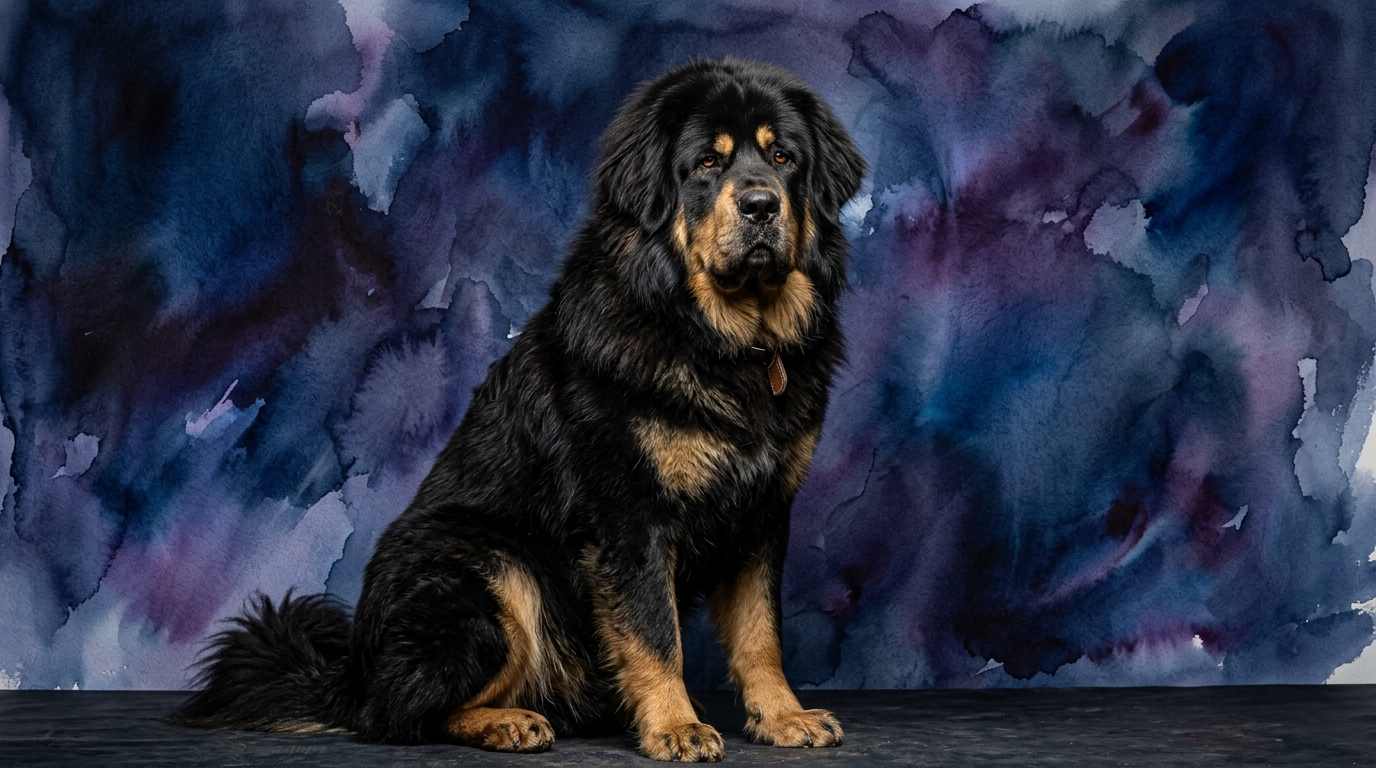
**Tibetan Mastiff (Working Breed)**
**Problem Solving (3/5):** This breed's problem-solving manifests as independent decision-making in protective scenarios. They assess threats and decide on deterrents without constant human direction, demonstrating practical, situation-specific judgment in their guarding role.
**Training Speed (3/5):** The Tibetan Mastiff's training speed reflects a thoughtful, independent learner. Their motivation isn't always immediate compliance; they process commands and decide if they align with their purpose, requiring immense patience and consistency.
**Social Intelligence (3/5):** A 3/5 in social intelligence is rooted in their hierarchical understanding. They form strong, discerning bonds with family but are exclusive with strangers, reading cues to determine friend or foe rather than seeking broad interaction.
**Instinctive Drive (3/5):** Their instinctive drive is powerfully geared towards guardianship. This translates to an unwavering urge to protect territory and family, exhibiting vigilance and a natural deterrent presence, dictating much of their behavior.
**Memory (3/5):** Memory is strong for specific people, places, and perceived threats. They recall who belongs and who doesn't, remembering territorial boundaries and routines, supporting their discerning and protective instincts.
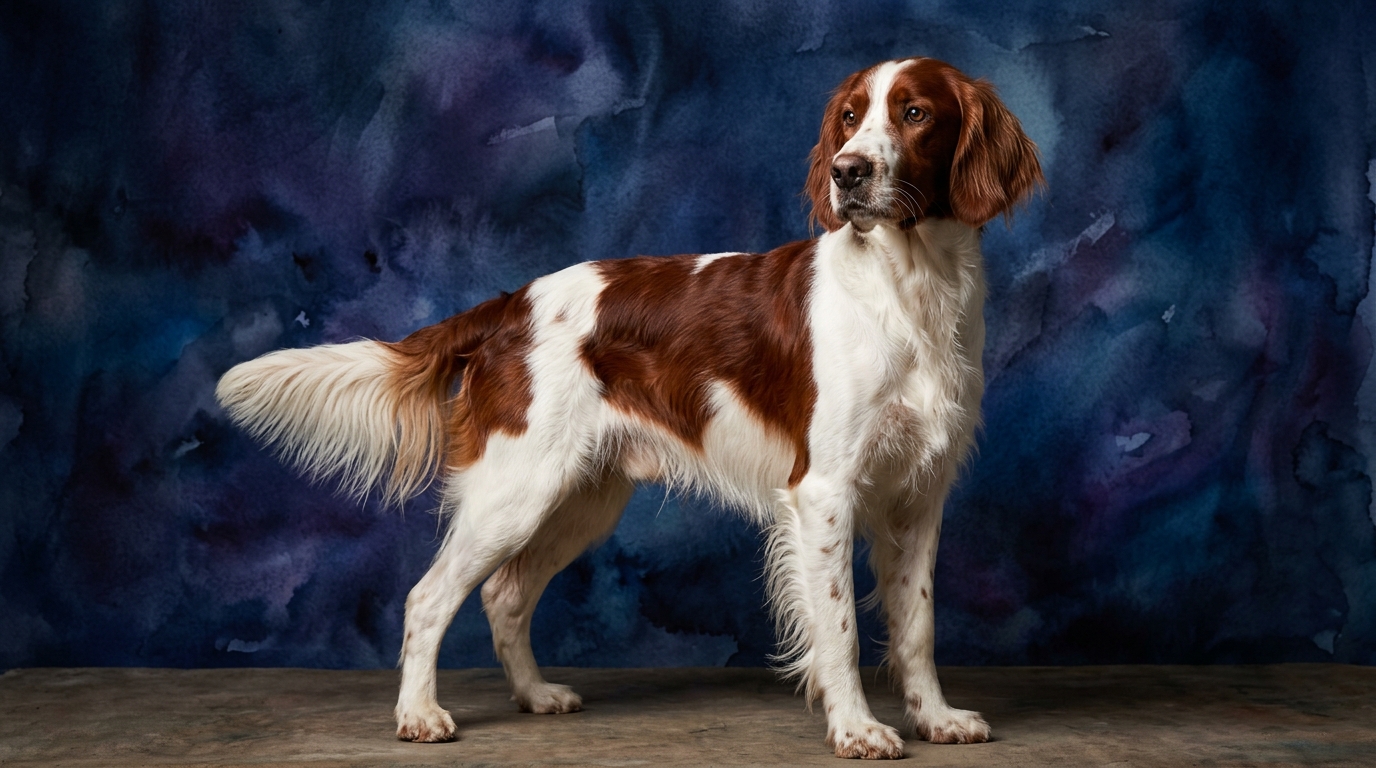
**Irish Red and White Setter (Sporting Breed)**
**Problem Solving (3/5):** This breed's problem-solving shines in field tasks, like navigating challenging terrain or retrieving from complex environments. They adeptly use senses for practical solutions, demonstrating intelligence in pursuit of working goals, often involving scent and spatial reasoning.
**Training Speed (3/5):** For the Irish Red and White Setter, 3/5 training speed suggests a capable, cooperative learner thriving on engagement. Responsive to positive reinforcement, they enjoy participating with human partners, making them steady and enjoyable to train, especially for tasks aligning with natural drives.
**Social Intelligence (3/5):** They exhibit 3/5 social intelligence through a companionable, amiable nature. Attuned to human emotions, they seek interaction and read body language well, fostering strong relationships and responding appropriately to familiar social cues.
**Instinctive Drive (3/5):** Their instinctive drive is strongly rooted in bird-dog heritage. This manifests as a persistent, focused urge to hunt, point, and retrieve, including keen scenting and a desire to work collaboratively with a hunter.
**Memory (3/5):** Memory is effective for recalling commands, routines, and favored objects or hunting grounds. They remember intricate scent patterns and territory layouts, crucial for field work and supporting their ability to learn and execute complex actions.
Where the Tibetan Mastiff Wins Cognitively
The Tibetan Mastiff truly excels in cognitive areas related to independent judgment and territorial defense. Their problem-solving, rated at 3/5, manifests as a self-reliant assessment of threats, making autonomous decisions to protect their family and property without constant human oversight. This cognitive strength is distinct from a breed that might wait for a command; the Mastiff’s intellect is geared towards proactive guardianship. Furthermore, their social intelligence, also 3/5, is finely tuned to discerning friend from foe, allowing them to accurately interpret subtle cues from strangers to determine potential risks, a critical asset for a guardian breed.
Where the Irish Red and White Setter Wins Cognitively
Conversely, the Irish Red and White Setter shines in cognitive tasks demanding partnership and environmental navigation. Their 3/5 problem-solving is particularly strong in applying sensory information to practical tasks, such as tracking complex scent trails or maneuvering through varied terrain during a hunt. This spatial and olfactory reasoning is a distinct cognitive advantage. Their 3/5 social intelligence, while rated the same, is expressed through an eagerness to connect and cooperate with their human handler, making them exceptionally responsive to shared activities and cues during collaborative work.
Training Dynamics: Independence vs. Cooperation
Determining which breed is 'easier' to train is nuanced, as both hold a 3/5 rating in training speed, but their motivations differ significantly. The Irish Red and White Setter, with its strong desire to collaborate and please its human companion, generally presents as more amenable to traditional obedience training. Their instinctive drive, focused on working alongside a handler in the field, means they often find satisfaction in learning commands that facilitate this partnership. They are responsive to positive reinforcement and typically enjoy the interactive process of training. In contrast, the Tibetan Mastiff’s 3/5 training speed is colored by their independent nature and guardian instincts. While capable of learning, their primary motivation isn't always compliance for its own sake. They often weigh commands against their own judgment or perceived purpose. Training a Tibetan Mastiff requires immense patience, consistency, and a deep understanding of their inherent independence. What might be perceived as stubbornness is often a thoughtful, self-directed decision-making process. Therefore, for an owner seeking a dog that readily engages in and enjoys structured obedience, the Irish Red and White Setter will likely feel 'easier' to train due to their intrinsic cooperative drive.
Matching Canine Cognition to Lifestyle
The choice between these two breeds depends heavily on an owner's lifestyle. The Irish Red and White Setter, a sporting breed, is undeniably suited for active owners. Their 3/5 instinctive drive for hunting and their energetic disposition mean they thrive on daily vigorous exercise, mental stimulation, and activities that engage their natural abilities, such as long runs, hiking, or dog sports. A relaxed owner might struggle to meet their substantial needs for physical and cognitive engagement, potentially leading to boredom and undesirable behaviors. Conversely, the Tibetan Mastiff, despite its imposing size, can be a better fit for a more relaxed owner, provided that 'relaxed' means attentive and understanding, rather than inactive. While they require regular, moderate exercise for their health, their 3/5 instinctive drive for guarding doesn't necessitate constant high-intensity activity. They are often content to patrol their territory, observe, and spend time with their family, valuing a stable, predictable routine. Their independence means they don't constantly demand entertainment, making them suitable for owners who appreciate a more self-contained companion after their foundational needs are met.
The Verdict
The Tibetan Mastiff is the ideal companion for an owner seeking an independent, discerning guardian who values their space and requires a confident, patient leader to guide their strong protective instincts.
The Irish Red and White Setter is best for an active owner who desires an enthusiastic, cooperative partner for outdoor adventures, field activities, and shared engagement, thriving on a consistent outlet for their sporting drives.
🧠 Find Your Pet's IQ Score
Our Pet IQ Lab assessment covers 25+ tests across 5 cognitive dimensions — personalized to your breed.
Take the Full IQ Test →Frequently Asked Questions
Do both breeds require significant socialization despite their 3/5 social intelligence score?
Yes, despite their identical social intelligence scores, both breeds benefit immensely from early and consistent socialization. For the Tibetan Mastiff, it helps them learn appropriate discernment between true threats and everyday occurrences, while for the Irish Red and White Setter, it fosters their naturally amiable disposition and confidence in various environments.
Can a Tibetan Mastiff excel in dog sports like agility, or an Irish Red and White Setter be a good guard dog?
While a Tibetan Mastiff might participate in some sports, their independent nature and physical build aren't optimally suited for agility; their 3/5 training speed often leans towards deliberate thought over rapid execution. Similarly, an Irish Red and White Setter's 3/5 instinctive drive is focused on hunting, not guarding; they lack the inherent territoriality and suspicious nature required for effective protection, generally preferring to greet strangers.
How do their 3/5 memory scores influence their suitability as family pets?
Their 3/5 memory scores translate differently in a family setting. The Tibetan Mastiff's memory is crucial for recognizing family members and remembering boundaries, contributing to their reliable guardianship. The Irish Red and White Setter's memory supports learning family routines and commands, making them adaptable and enjoyable companions who recall past positive interactions and training.