The Cosmic Pet Pet IQ Lab: Side-by-Side Cognitive Profiles
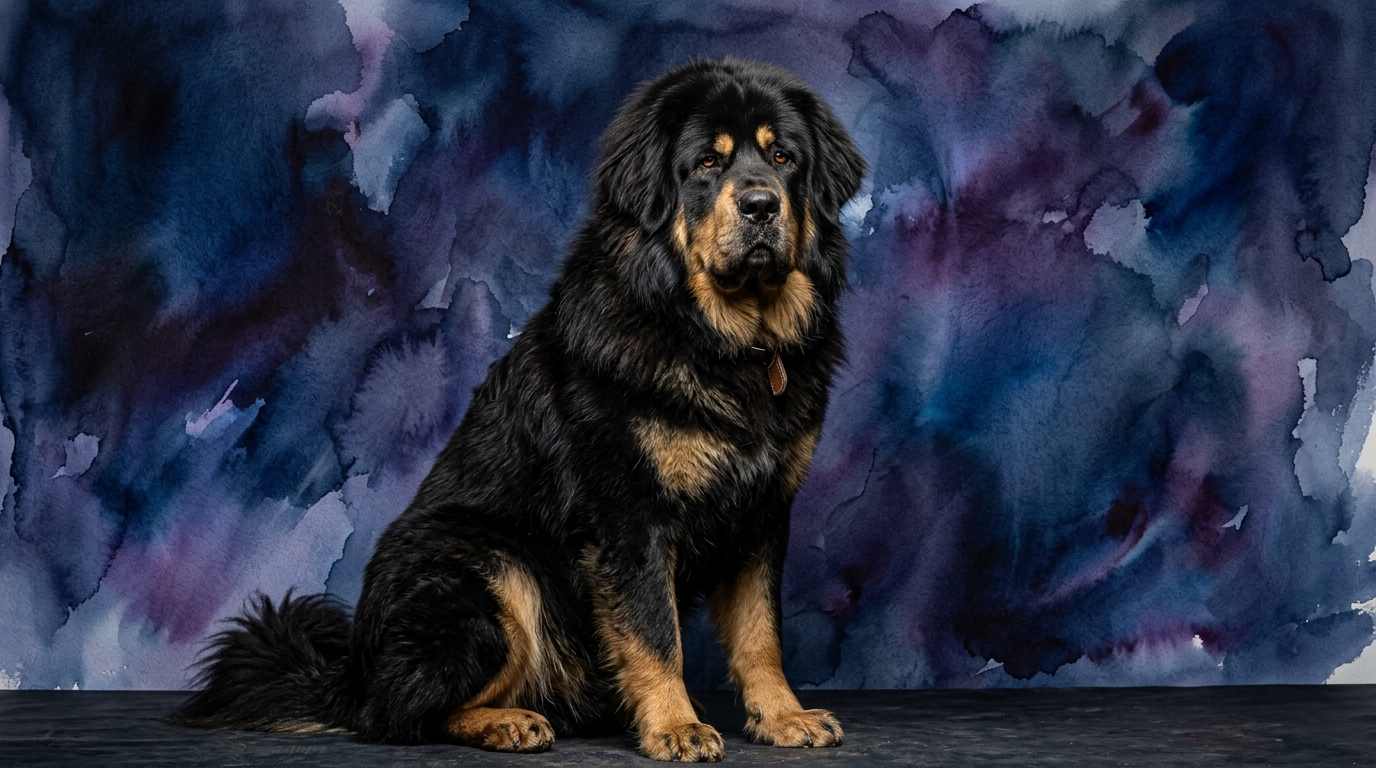
The Tibetan Mastiff, a breed from the Working group, presents a consistent cognitive profile across all five dimensions measured by The Cosmic Pet Pet IQ Lab. With a score of 3/5 for Problem Solving, this breed demonstrates a steady, methodical approach to challenges, preferring to assess situations independently rather than seeking immediate human guidance. Their Training Speed, also at 3/5, suggests they learn at a moderate pace, often requiring patient and consistent methods, and may not always perceive the immediate utility of every command. Social Intelligence, rated 3/5, indicates a discerning nature; they are capable of forming strong bonds but are not overtly gregarious, often preferring to observe and evaluate interactions. An Instinctive Drive of 3/5 points to a foundational, perhaps territorial, motivation that guides their actions, rather than an intense, specialized drive. Finally, their Memory at 3/5 shows a reliable capacity to retain learned behaviors and experiences over time, though perhaps not with the rapid acquisition seen in some other breeds. This balanced, self-contained profile reflects their historical role as watchful, independent guardians.
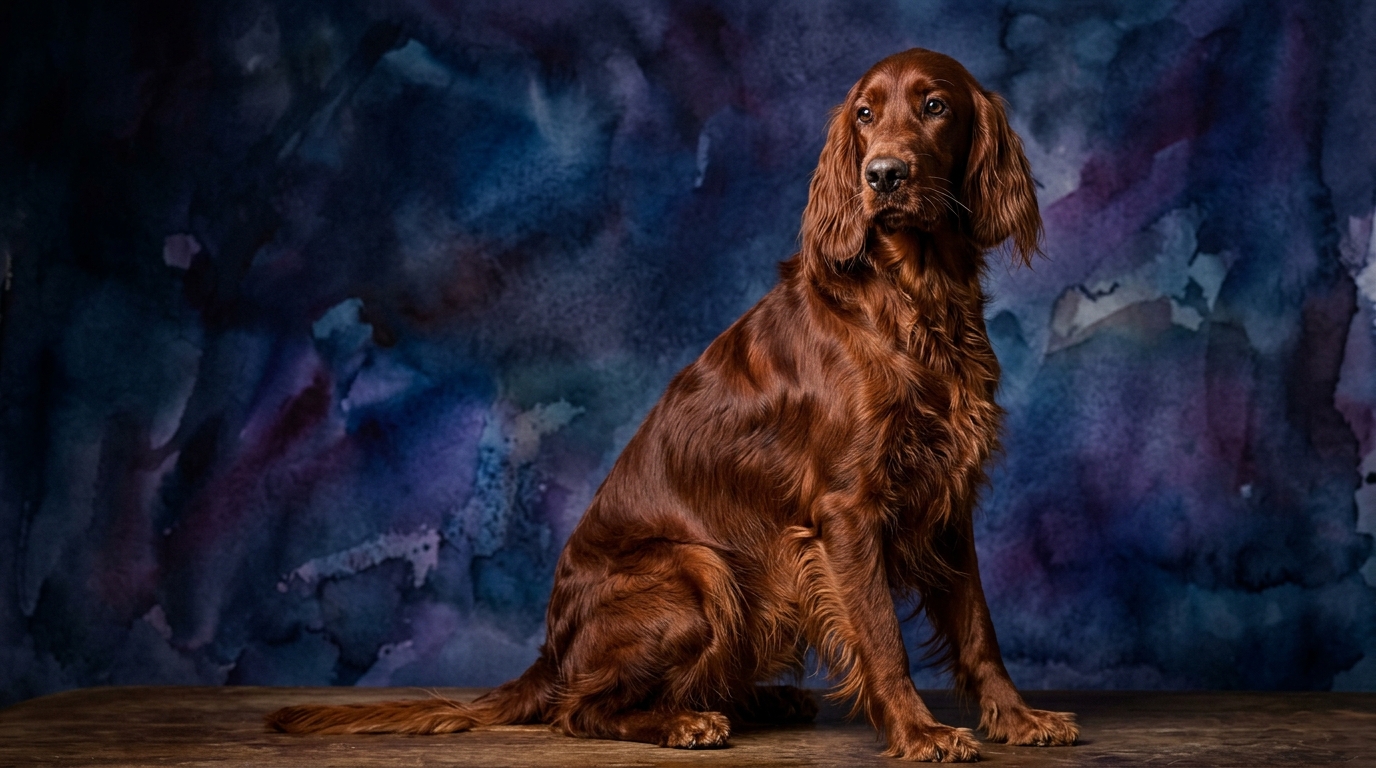
In contrast, the Irish Setter, a vibrant member of the Sporting group and ranked #35 by Coren, showcases a different set of cognitive strengths. Their Problem Solving ability is rated 4/5, indicating a quicker, more adaptable mind capable of navigating novel situations effectively and creatively. This is complemented by a Training Speed score of 4/5, signifying a keen willingness and capacity to learn new commands and routines with relative ease and enthusiasm. Social Intelligence for the Irish Setter stands at 3/5, suggesting a friendly and engaging disposition that enjoys interaction, though perhaps not with the profound depth of discernment seen in some highly specialized social breeds. Their Instinctive Drive, also 3/5, reflects their strong prey drive and desire to work in the field, guiding their energetic pursuits. Crucially, their Memory is rated 4/5, highlighting an excellent ability to recall a wide array of commands, experiences, and learned associations, making them highly responsive partners in various activities.
Where the Tibetan Mastiff Shines Cognitively
While the Tibetan Mastiff’s IQ scores are consistently 3/5, their cognitive strengths are uniquely tailored to their ancestral role. Their 'win' lies in a specific type of independent problem-solving and social discernment. For instance, in situations demanding autonomous decision-making without constant human input, such as guarding livestock or property against unknown threats, their 3/5 problem-solving isn't about speed but about robust, self-reliant judgment. They excel at assessing a situation, processing information, and acting decisively based on their innate understanding of their territory and perceived danger, often without needing explicit commands. Their 3/5 social intelligence, rather than indicating a lack of connection, signifies a profound ability to distinguish between accepted family members and potential intruders, prioritizing vigilance and protection. This isn't a dog that looks to its owner for every cue; instead, it processes its environment and makes calculated, independent judgments. Their moderate training speed and memory mean that once they grasp the importance of a task or boundary, they adhere to it with unwavering conviction, making them formidable, self-directed guardians whose cognitive package is perfectly suited for long-term, independent vigilance.
Where the Irish Setter Excels Cognitively
The Irish Setter’s cognitive profile clearly points to strengths in areas requiring quick learning, adaptability, and responsiveness. Their 4/5 Problem Solving score means they are adept at figuring out new challenges, whether it's navigating an agility course or understanding complex sequences of commands. This quick mental agility allows them to adapt rapidly to changing situations, making them excellent candidates for various dog sports and activities. The 4/5 Training Speed score is a significant advantage, as Irish Setters are typically eager to engage with their handlers and absorb new information efficiently. They thrive on structured learning and positive reinforcement, often picking up new tasks after just a few repetitions. Furthermore, their 4/5 Memory ensures that once a lesson is learned, it is retained effectively, enabling them to perform complex routines reliably over time. This combination of quick thinking, rapid learning, and strong recall makes the Irish Setter a highly trainable and versatile companion, particularly for owners who enjoy engaging in interactive, goal-oriented activities with their dogs.
Training Dynamics: Tibetan Mastiff vs. Irish Setter
The ease of training starkly differentiates these two breeds. The Irish Setter, with a Training Speed of 4/5 and Memory of 4/5, is generally far easier to train using conventional methods. They possess a natural eagerness to please their human companions and quickly grasp new commands, often enjoying the process as a form of engagement. Their high responsiveness means they are amenable to positive reinforcement and can excel in obedience, agility, and field work, where quick reactions and precise execution are valued. Their cognitive makeup favors partnership and instruction, making them a rewarding experience for owners committed to consistent, positive training.
Conversely, the Tibetan Mastiff, with a Training Speed of 3/5 and Memory of 3/5, presents a different training challenge. This breed is not inherently stubborn but is profoundly independent and possesses a strong self-will, often questioning the necessity of commands that don't align with their ancient guardian instincts. They learn at a more deliberate pace and require immense patience, consistency, and a deep understanding of their unique motivations. Training a Tibetan Mastiff involves convincing them that a command is worthwhile or beneficial, rather than simply expecting blind obedience. They respect leadership that is calm, consistent, and fair, and will respond best when they feel a command makes sense in their world. Owners must be prepared for a longer, more nuanced training journey, focusing on building a strong, respectful relationship rather than aiming for rapid mastery of complex tricks.
Matching Breeds to Owner Lifestyles
The distinct cognitive profiles of the Tibetan Mastiff and Irish Setter naturally align with different owner lifestyles. The Irish Setter is an ideal match for active owners who relish engaging in varied activities with their dog. Their higher problem-solving, training speed, and memory mean they thrive on mental stimulation alongside physical exercise, making them excellent companions for hiking, running, obedience trials, or field work. Owners who enjoy teaching new skills, participating in dog sports, or simply having a highly interactive and responsive companion will find the Irish Setter's energetic and cooperative nature to be a perfect fit. They require consistent engagement and can become bored or restless without sufficient outlets for their intelligent minds and robust bodies.
The Tibetan Mastiff, on the other hand, suits owners who appreciate a more self-reliant and watchful companion, perhaps those with a 'relaxed' approach to constant interaction but not to responsibility. While they require regular exercise and mental engagement, their independent nature means they are less inclined to participate in constant, high-energy activities or complex obedience routines. Owners who value a calm, majestic presence, a discerning guardian, and a dog that makes its own decisions within established boundaries will find a deep connection with the Tibetan Mastiff. They are best suited for those who understand and respect their ancient instincts, providing ample space and a secure environment, and who are prepared for a long-term commitment to a dog that operates on its own terms, offering loyalty that is earned through mutual respect rather than constant instruction.
The Verdict
Choose the Tibetan Mastiff if you seek an independent, discerning guardian who values their own judgment and offers unwavering loyalty once a bond of mutual respect is established.
Opt for the Irish Setter if you desire an eager, highly trainable companion for an active lifestyle, thriving on partnership, varied activities, and quick learning.
🧠 Find Your Pet's IQ Score
Our Pet IQ Lab assessment covers 25+ tests across 5 cognitive dimensions — personalized to your breed.
Take the Full IQ Test →Frequently Asked Questions
Is the Tibetan Mastiff difficult to train?
The Tibetan Mastiff's 3/5 training speed means they are not difficult in a malicious sense, but they are independent and require patient, consistent training that respects their self-willed nature. They respond best when they understand the purpose of a command.
Do Irish Setters need a lot of mental stimulation?
Yes, with 4/5 problem-solving and memory, Irish Setters thrive on mental stimulation. They benefit greatly from activities like obedience training, puzzle toys, and dog sports to keep their intelligent minds engaged and prevent boredom.
Which breed is better for a first-time dog owner?
Given its higher training speed and eagerness to please, the Irish Setter is generally a more suitable choice for a first-time dog owner willing to commit to an active companion. The Tibetan Mastiff's independence and specific needs make it better suited for experienced owners.