Side-by-Side IQ Profile: Tibetan Mastiff vs. Irish Water Spaniel
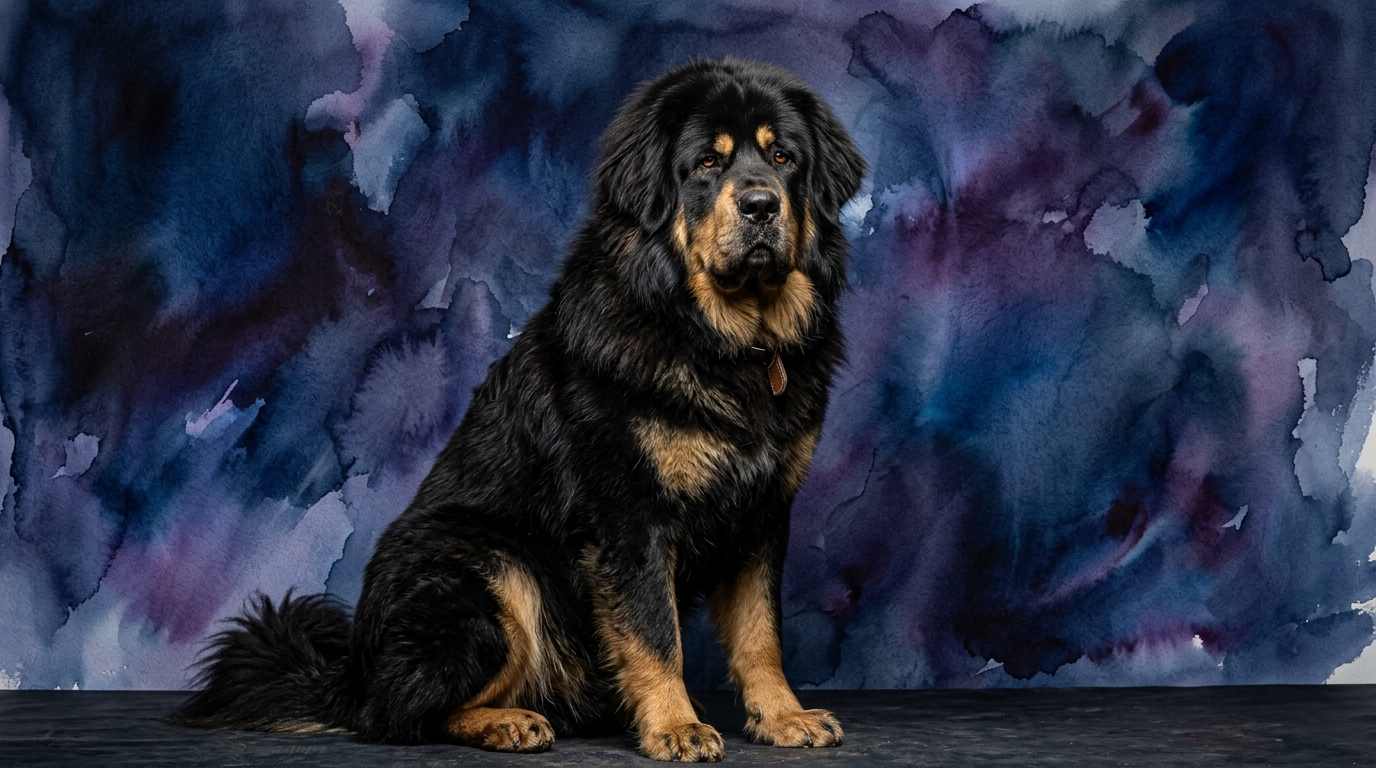
At The Cosmic Pet Pet IQ Lab, we evaluate canine cognition across five key dimensions. For the Tibetan Mastiff, a Working breed not ranked by Coren, its IQ profile shows Problem Solving at 3/5, Training Speed at 3/5, Social Intelligence at 3/5, Instinctive Drive at 3/5, and Memory at 3/5. This profile suggests a thoughtful, self-reliant approach to the world, reflecting its historical role.
The Tibetan Mastiff approaches challenges with a deliberate, often independent, strategy. They are not quick to react but will assess situations, relying on their own judgment rather than immediate human direction, which manifests in their ability to guard effectively without constant supervision. They learn at a moderate pace, but their strong will and independent nature mean they require consistent, patient, and motivating methods, as they are not driven by a strong desire to please but rather by understanding the benefit of compliance or the logic behind a command. Their social intelligence is reserved; they are acutely aware of their family unit and potential threats, exhibiting loyalty and protective instincts, but are often aloof with strangers and other animals. Their primary instinctive drive is guarding and territorial protection, a deeply ingrained motivation that dictates much of their behavior. They possess a solid, functional memory, particularly for routines, boundaries, and individuals, contributing to their cautious nature and ability to recall past interactions.
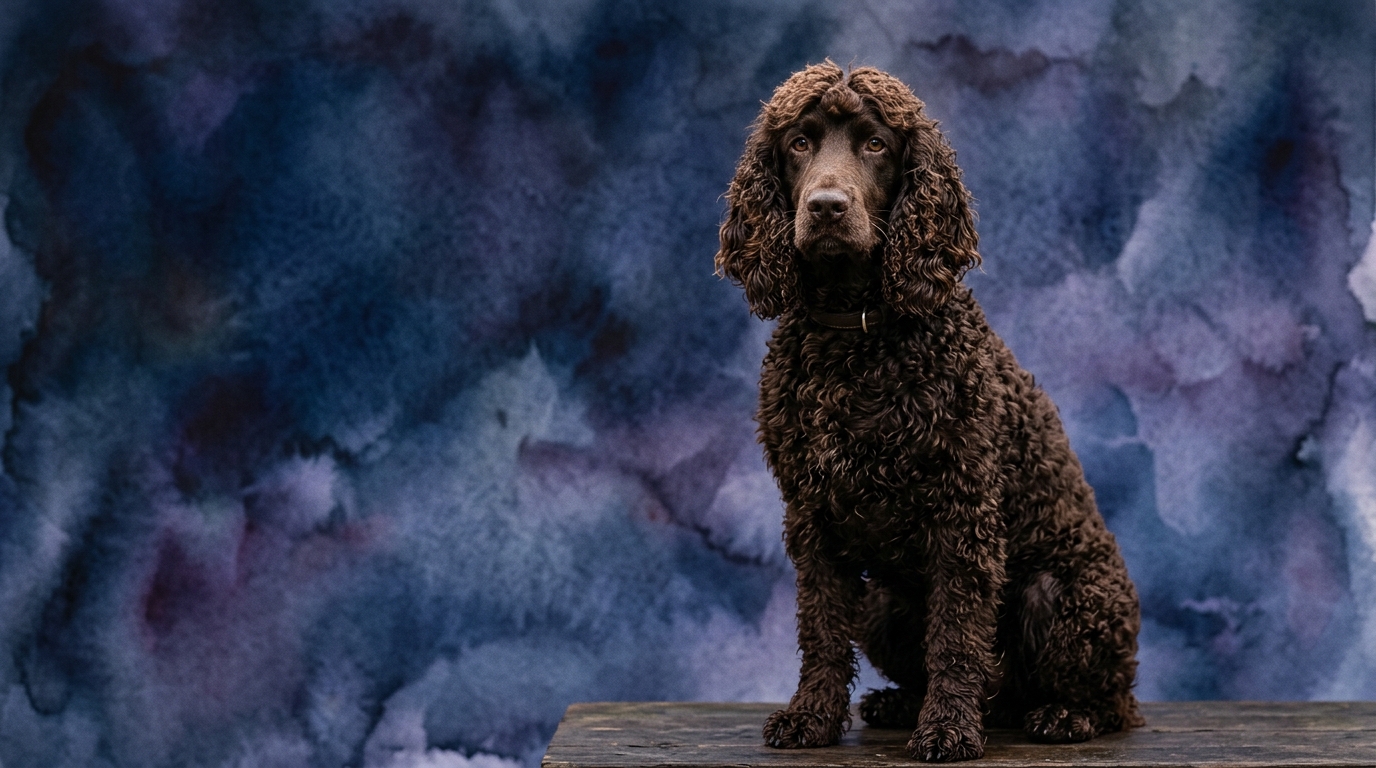
In contrast, the Irish Water Spaniel, a Sporting breed ranked #24 by Coren, presents a different cognitive blueprint: Problem Solving at 4/5, Training Speed at 4/5, Social Intelligence at 3/5, Instinctive Drive at 3/5, and Memory at 4/5. This reflects a breed eager for engagement and collaboration.
The Irish Water Spaniel demonstrates a keen ability to navigate and solve problems, especially those related to their working heritage like retrieving or navigating complex terrain. They are often quick to analyze and adapt, using their environment and available tools to achieve a goal, often with an enthusiastic, trial-and-error approach. They learn rapidly, eager to engage and respond to human direction, picking up new commands and sequences with impressive speed, thriving on positive reinforcement and structured learning. Their social intelligence is balanced; they are generally outgoing and friendly, capable of forming strong bonds with their human companions and often good with other animals, reading human cues well. Their primary instinctive drive is retrieving and working closely with humans in various sporting contexts, manifesting as a strong desire to fetch, swim, and engage in activities that mimic their historical role. They exhibit excellent memory, crucial for remembering complex scent trails, retrieve locations, and multi-step commands, allowing them to build upon past training experiences and apply learned behaviors effectively.
Where the Tibetan Mastiff Wins Cognitively
The Tibetan Mastiff's cognitive strengths are deeply rooted in its heritage as an autonomous guardian. Their Problem Solving at 3/5 is geared towards independent action. In situations requiring a guardian to make a judgment call without human input, such as assessing a perceived threat to their territory, the Tibetan Mastiff often excels. They process environmental cues and determine appropriate responses based on an inherent understanding of threats and boundaries, rather than waiting for a command. This self-reliance in critical moments is a distinct cognitive advantage for their specific role.
While their training speed might be moderate, their Social Intelligence (3/5) and Instinctive Drive (3/5) combine to give them superior situational awareness within their perceived domain. They are adept at assessing the nuances of an approaching stranger or an unusual sound, distinguishing routine from potential threat with a calm, deliberate process. This careful, measured analysis is a critical cognitive function for a livestock guardian. Furthermore, unlike breeds designed for rapid, energetic bursts, the Tibetan Mastiff's cognitive style includes a capacity for sustained, patient observation. Their Memory (3/5) solidifies their understanding of routines and expectations, allowing them to maintain vigilance over long periods without becoming bored or distracted by non-threats, a unique form of cognitive endurance.
Where the Irish Water Spaniel Wins Cognitively
The Irish Water Spaniel's cognitive profile highlights its aptitude for rapid learning and cooperative work. Their superior Training Speed (4/5) and Problem Solving (4/5) make them exceptionally quick studies. They grasp new concepts and commands with fewer repetitions, and can adapt learned behaviors to novel situations swiftly. This cognitive nimbleness is invaluable for diverse tasks, from complex obedience routines to navigating challenging retrieve scenarios, where quick thinking and execution are paramount.
Their Memory (4/5) is a significant advantage for remembering intricate sequences of commands or multi-stage tasks. An Irish Water Spaniel can be taught a series of actions and recall them accurately, even after a period, making them adept at advanced dog sports or working roles that require precise execution of multiple steps. While the Tibetan Mastiff excels at independent problem solving, the Irish Water Spaniel shines in collaborative problem-solving. Their desire to please and strong bond with their handler means they actively seek human input and work *with* their owner to overcome challenges, demonstrating a different, equally valuable form of cognitive engagement. They are adept at understanding and responding to subtle human cues, making them highly responsive partners. This combination of problem-solving, training speed, and memory allows them to excel across a wider range of cognitive challenges, from scent work to agility, and from retrieving to advanced obedience. Their mental flexibility allows them to switch between tasks and learn new skills efficiently.
Which is Easier to Train and Why
The Irish Water Spaniel is generally easier to train due to several key cognitive factors. Their Training Speed (4/5) is notably higher than the Tibetan Mastiff's (3/5), driven by a strong desire to please their handler and a natural inclination towards cooperative work. They respond enthusiastically to positive reinforcement and pick up new commands with impressive rapidity. Their focus on their human partner means they are less likely to become distracted by environmental stimuli during training sessions, making the process smoother and more rewarding. This innate willingness to engage and learn collaboratively significantly streamlines the training journey.
In contrast, the Tibetan Mastiff's Training Speed (3/5) is moderate, and their independent nature means they require a different approach. They are not inherently driven by a desire to please but rather by understanding the *purpose* or *logic* behind a command. Training a Tibetan Mastiff demands immense patience, consistency, and a deep understanding of their guardian instincts. They may question commands or choose to ignore them if they perceive no immediate benefit or if it conflicts with their protective duties. For example, a Tibetan Mastiff might choose to remain vigilant at a property boundary rather than immediately recall to a handler if they sense something amiss. While capable of learning, their strong will and self-reliance mean training is a longer, more nuanced journey, requiring an owner who can establish trust and respect without resorting to force, recognizing that their compliance comes from respect, not eagerness to please.
Suited for Active vs. Relaxed Owners
The Irish Water Spaniel is a better fit for active owners. Their strong Instinctive Drive (3/5) for retrieving and their general zest for life mean they require significant physical and mental stimulation. They thrive on activities like long walks, swimming, fetching, agility, and obedience training, all of which satisfy their need for engagement and partnership. An Irish Water Spaniel left without sufficient outlets can become bored or destructive, often manifesting as excessive chewing or attention-seeking behaviors. Owners who enjoy outdoor adventures, dog sports, or dedicated training sessions will find a highly motivated and joyful companion in the Irish Water Spaniel, as they eagerly participate in shared activities.
The Tibetan Mastiff, while requiring regular exercise for health, is generally a better fit for owners who appreciate a more relaxed, observant companion once their foundational needs are met. Their Instinctive Drive (3/5) is primarily focused on guarding and territorial patrol, which often involves quiet observation rather than high-energy bursts. They are not typically suited for intense, prolonged athletic activities in the same way a sporting breed is. While they need space to roam and "patrol" their territory, they are often content to spend much of their day observing their surroundings from a vantage point. Relaxed owners, or those with large, secure properties, who understand and respect the Tibetan Mastiff's independent and watchful nature, will find a steadfast, calm presence. They are not a breed for casual walks around the block but benefit from structured, purposeful outings that engage their senses, followed by periods of quiet companionship and vigilance.
The Verdict
Choose a Tibetan Mastiff if you seek an independent, steadfast guardian who excels at autonomous decision-making and patient observation within a secure home environment, and you are prepared for a long-term commitment to consistent, understanding training that respects their protective instincts.
Choose an Irish Water Spaniel if you desire an enthusiastic, highly trainable, and collaborative companion for an active lifestyle, thriving on varied physical and mental challenges, and you are ready to engage in consistent positive reinforcement training and participate in dog sports or outdoor adventures.
🧠 Find Your Pet's IQ Score
Our Pet IQ Lab assessment covers 25+ tests across 5 cognitive dimensions — personalized to your breed.
Take the Full IQ Test →Frequently Asked Questions
Are Tibetan Mastiffs difficult to train?
Tibetan Mastiffs can be challenging to train due to their independent nature and strong will. They respond best to patient, consistent, and positive reinforcement methods from an owner who understands their guardian instincts, rather than expecting immediate obedience.
Do Irish Water Spaniels need a lot of exercise?
Yes, Irish Water Spaniels are an active sporting breed that requires significant daily exercise and mental stimulation to thrive. They enjoy activities like swimming, retrieving, long walks, and dog sports to satisfy their energy levels and collaborative drive.
Which breed is better with children?
Both breeds can be good with children in the right environment, but with different caveats. The Irish Water Spaniel is often more outwardly playful and tolerant with family children, while the Tibetan Mastiff is fiercely protective of 'their' children but requires careful socialization and supervision due to their size and guardian instincts, especially with unfamiliar children.