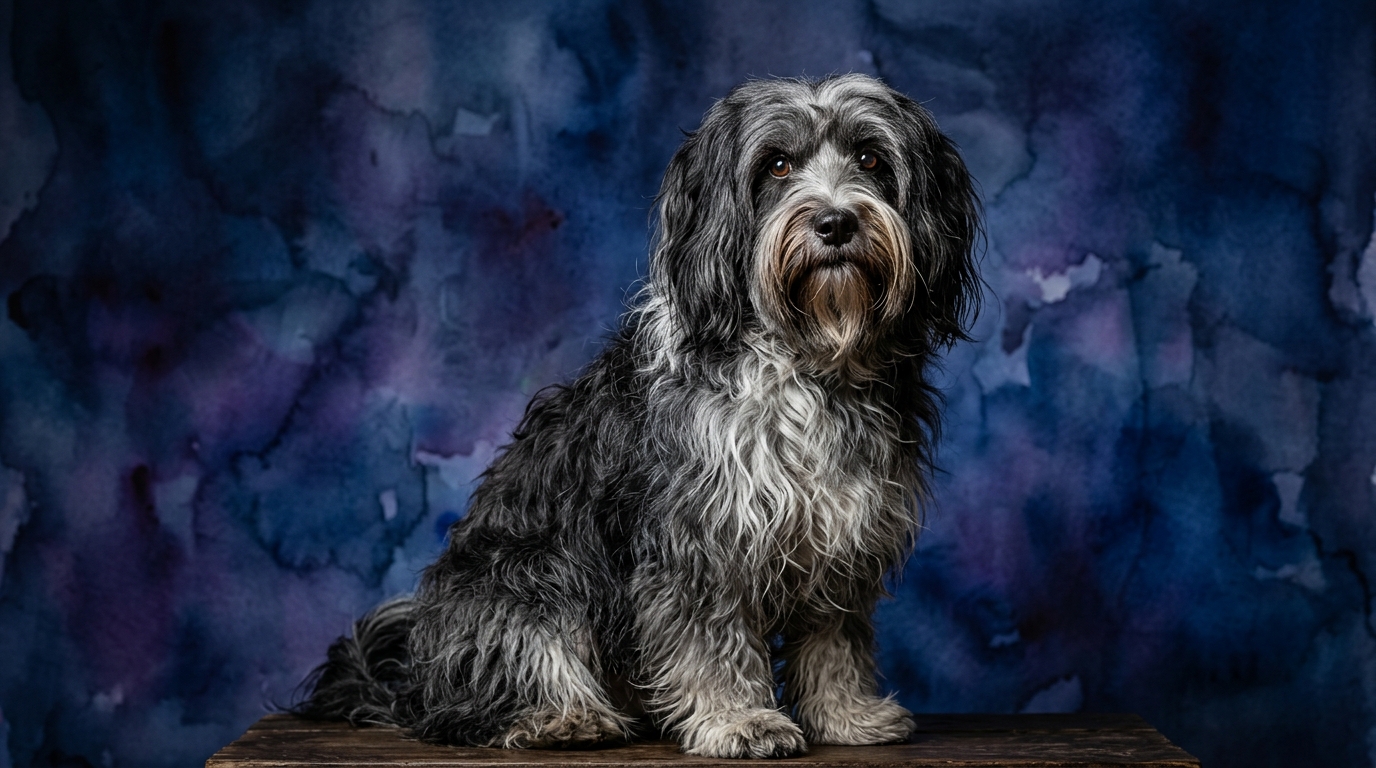
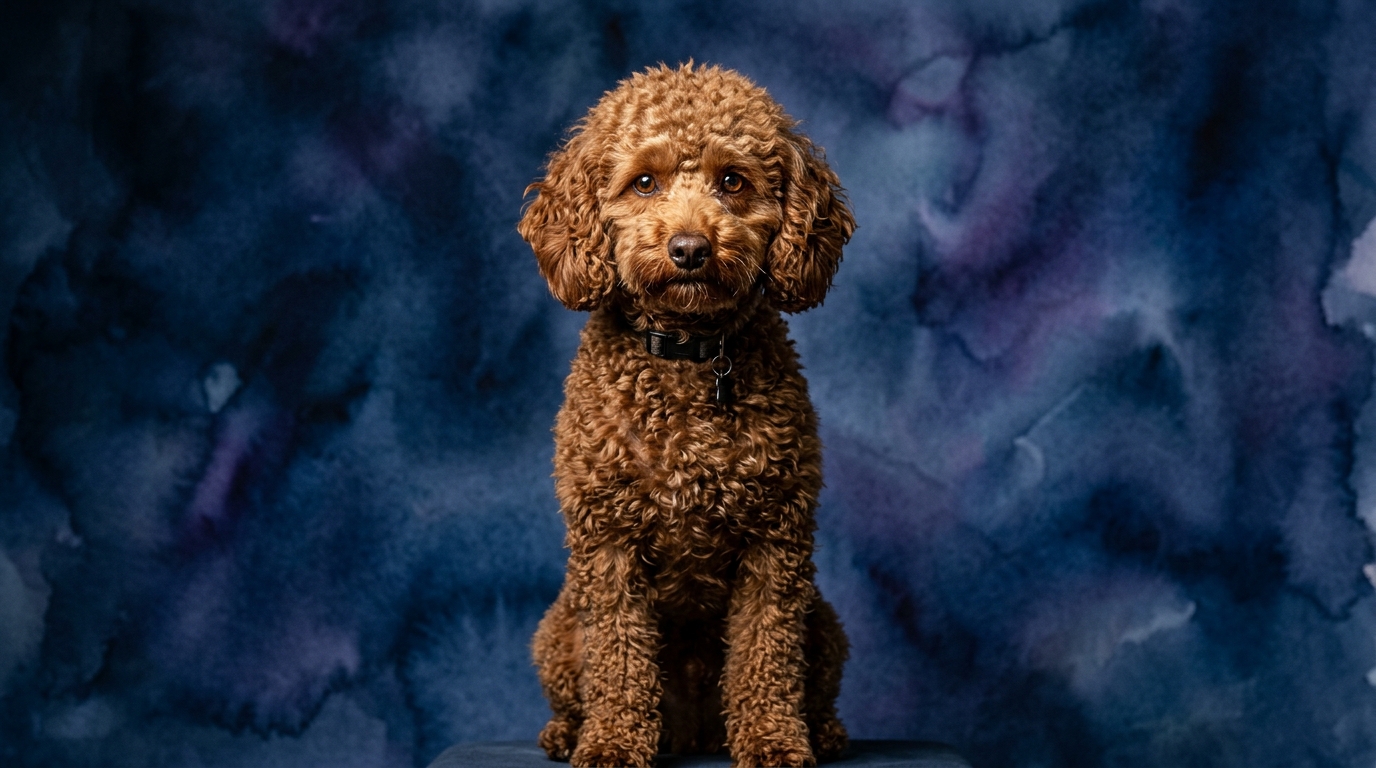
Side-by-Side IQ Profile: Tibetan Terrier vs. Miniature Poodle
The Cosmic Pet Pet IQ Lab employs a multi-dimensional framework to assess canine cognition, moving beyond simple obedience to explore the nuances of a dog's mental landscape. For the Tibetan Terrier, ranked #63 on the Coren scale, we observe a balanced cognitive profile. Their Problem Solving is rated at 3/5, indicating a capacity to navigate moderate challenges, often with thoughtful consideration rather than immediate, reactive solutions. Training Speed also registers at 3/5, suggesting they acquire new cues and behaviors at a steady, deliberate pace, benefiting most from consistent, positive reinforcement methods.
Social Intelligence, at 3/5, reflects a solid understanding of pack dynamics and human communication, allowing them to form strong, reciprocal bonds without excessive dependency. Their Instinctive Drive is also 3/5, signifying a moderate expression of inherent breed behaviors like guarding or herding, which are present but typically manageable. Finally, Memory stands at 3/5, meaning they retain learned information and experiences adequately, though occasional refreshers might be helpful for less frequently practiced tasks.
In stark contrast, the Miniature Poodle, a breed recognized for its exceptional cognitive abilities and ranked #2 by Coren, presents a distinctly different picture. Their Problem Solving is a remarkable 5/5, showcasing an aptitude for quickly deciphering complex puzzles and adapting strategies to novel situations with considerable mental agility. Training Speed mirrors this at 5/5, indicating an extraordinary capacity for rapid learning, often grasping new commands and sequences with minimal repetition.
Social Intelligence, surprisingly, aligns with the Tibetan Terrier at 3/5, demonstrating a competent understanding of social cues and forming deep connections, but perhaps with a stronger focus on human interaction as part of their working partnership. Their Instinctive Drive, like the Tibetan Terrier, is rated 3/5, suggesting a moderate expression of innate behaviors often channeled into constructive activities like retrieving or sport. The Miniature Poodle’s Memory, however, soars to 5/5, reflecting an outstanding ability to retain a vast repertoire of learned behaviors, routines, and past experiences with long-term precision.
Where the Tibetan Terrier Wins Cognitively
While the Miniature Poodle exhibits higher scores in several cognitive dimensions, the Tibetan Terrier’s unique blend of moderate attributes translates into distinct cognitive advantages, particularly for certain lifestyles. Their 3/5 Problem Solving, for instance, often manifests as a more independent approach to new situations. Rather than immediately seeking human guidance or rushing to a solution, a Tibetan Terrier might observe, process, and then devise its own method, which can be less prone to over-reliance on external cues. This thoughtful observation fosters a self-sufficient mental engagement, allowing them to adapt to varied environments with a calm resilience.
The balanced 3/5 in Instinctive Drive means these dogs are less likely to exhibit intense, singular-focused drives that require constant management or highly specialized outlets. Their cognitive energy is distributed, making them less prone to obsessive behaviors stemming from an underutilized specific instinct. Furthermore, their 3/5 Social Intelligence, combined with moderate training speed, suggests a companion who understands social nuances without being overly sensitive or demanding of constant validation. This fosters a relationship built on mutual respect and observation rather than relentless performance, allowing for a more relaxed and less mentally intensive partnership, where the dog can be content within its own thoughts and surroundings.
Where the Miniature Poodle Wins Cognitively
The Miniature Poodle’s cognitive profile clearly excels in areas demanding rapid acquisition, complex understanding, and precise recall. Their perfect 5/5 in Problem Solving signifies an exceptional ability to grasp multi-step challenges, analyze situations quickly, and formulate effective solutions. This manifests in their capacity to master intricate puzzle toys, navigate agility courses with precision, and even learn sophisticated sequences of behaviors, often anticipating the next step. Coupled with a 5/5 Training Speed, the Miniature Poodle absorbs new information with remarkable efficiency, requiring significantly fewer repetitions to solidify a command. This cognitive agility allows them to build an extensive vocabulary of cues and perform them reliably across diverse contexts.
Their 5/5 Memory further amplifies this advantage, ensuring that once a behavior or concept is learned, it is retained with enduring accuracy. This robust memory means they can recall complex tasks after long periods, making them incredibly versatile for advanced obedience, performance sports, or even service work where consistency and long-term retention are paramount. For owners seeking a canine partner capable of mastering a wide array of mental tasks and consistently demonstrating learned behaviors, the Miniature Poodle’s cognitive architecture provides an unparalleled foundation.
Training Dynamics: Which is Easier to Train and Why
Comparing ease of training between these two breeds reveals a clear distinction rooted in their cognitive profiles. The Miniature Poodle, with its 5/5 Training Speed and 5/5 Memory, offers a significantly smoother and faster training experience for most owners. They pick up new commands with astonishing rapidity, often understanding the intention behind a cue after just a few repetitions. Their exceptional memory ensures these learned behaviors stick, reducing the need for constant refreshers. This combination means handlers can progress quickly through foundational obedience and move onto more advanced tasks, making the training journey feel incredibly rewarding and efficient. Their inherent attentiveness to their human companions further contributes to their trainability, as they are often eager to engage and respond.
The Tibetan Terrier, by contrast, with 3/5 in both Training Speed and Memory, presents a more deliberate training path. They are certainly capable of learning and becoming well-mannered companions, but they require greater patience, consistency, and positive reinforcement. Their moderate training speed means commands may need more repetitions to solidify, and their memory, while adequate, benefits from regular practice to maintain recall accuracy. They can be more independent thinkers during training, sometimes requiring creative motivation strategies to engage their focus rather than simply repeating commands. While equally capable of forming strong bonds, their moderate social intelligence might mean they are less intensely driven by human approval during training sessions, preferring to process information at their own pace.
Matching Canine Intellect to Owner Lifestyles
The differing cognitive demands of the Tibetan Terrier and Miniature Poodle make them suitable for distinct owner lifestyles. Active owners, who thrive on providing consistent mental and physical engagement, will find a superb match in the Miniature Poodle. Their 5/5 Problem Solving and Training Speed mean they don't just tolerate mental challenges; they actively seek and flourish on them. Owners who enjoy participating in dog sports like agility, obedience, rally, or even scent work will find the Miniature Poodle’s cognitive agility and eagerness to learn incredibly rewarding. They require daily opportunities to use their sharp minds, whether through structured training sessions, complex puzzle toys, or learning new tricks. Without adequate mental stimulation, a Miniature Poodle might channel its considerable cognitive energy into less desirable behaviors.
Conversely, relaxed owners who appreciate a companion capable of self-amusement and a less demanding mental routine might gravitate towards the Tibetan Terrier. Their balanced 3/5 scores across all cognitive dimensions suggest a dog that enjoys activity and companionship but doesn't necessarily demand constant, high-intensity mental 'work.' They are content with regular walks, engaging play, and a consistent routine, often observing their environment thoughtfully. While they certainly benefit from training and mental enrichment, the intensity and frequency required are typically lower than for the Miniature Poodle, making them a good fit for those who prefer a more laid-back, yet still engaged, canine presence.
The Verdict
Choose the Tibetan Terrier if you seek a companion with a balanced, independent intellect, who appreciates thoughtful observation and a less demanding mental engagement rhythm, and who is prepared for a more gradual, patient training journey.
Opt for the Miniature Poodle if you relish the process of teaching complex behaviors, seek a dog capable of excelling in performance activities, and can provide consistent, stimulating mental challenges for a highly attentive learner.
🧠 Find Your Pet's IQ Score
Our Pet IQ Lab assessment covers 25+ tests across 5 cognitive dimensions — personalized to your breed.
Take the Full IQ Test →Frequently Asked Questions
Do Tibetan Terriers get bored easily if not constantly stimulated?
While active, Tibetan Terriers, with their 3/5 problem-solving and instinctive drive, are generally less prone to boredom than breeds requiring constant mental input. They appreciate routine and can often entertain themselves, but still benefit from regular walks and engaging play to keep their balanced minds content.
Are Miniature Poodles prone to anxiety if they aren't mentally challenged?
Miniature Poodles, with their 5/5 problem-solving and memory, thrive on mental stimulation. If their sharp minds aren't adequately engaged through training, puzzle toys, or dog sports, they can indeed develop undesirable behaviors or anxiety stemming from under-stimulation, making consistent mental work crucial for their well-being.
How does 'social intelligence' differ between these two breeds with the same score?
Despite both scoring 3/5 in social intelligence, their expression might vary. The Tibetan Terrier's social intelligence could manifest as more independent observation and discernment, while the Miniature Poodle's might lean towards understanding handler cues for performance, both indicating a solid, but not overly dependent, grasp of social dynamics.