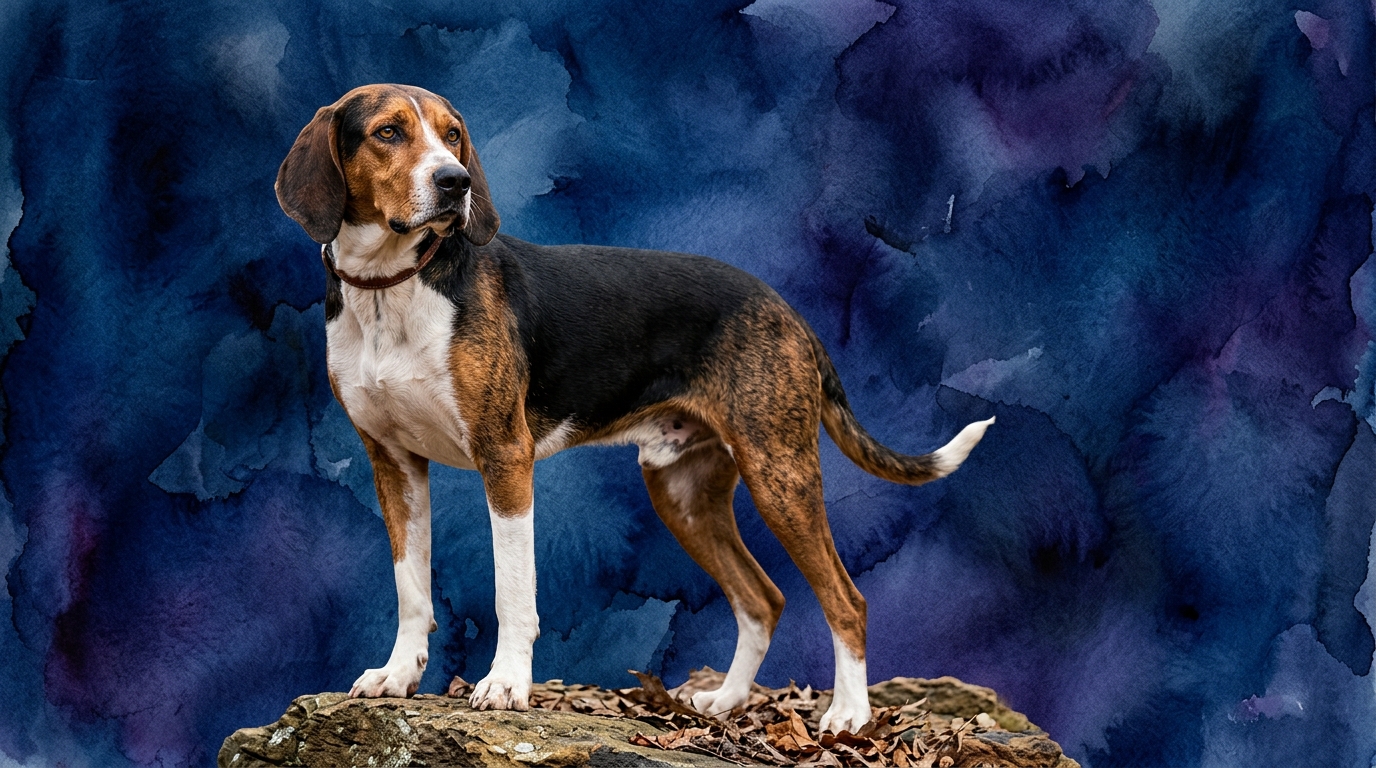

Side-by-Side IQ Profile: Treeing Walker Coonhound
**Problem Solving 3/5:** This breed demonstrates its problem-solving acumen primarily in the pursuit of a scent. A Treeing Walker Coonhound excels at deciphering complex scent trails, navigating varied terrain, and devising strategies to locate and "tree" quarry. Their cognitive efforts are often directed towards persistent, independent fieldwork, requiring sustained focus to overcome obstacles in the hunt. They might figure out how to bypass a fallen log or backtrack to a lost trail, exhibiting practical, goal-oriented thinking rather than abstract puzzle-solving.
**Training Speed 3/5:** Treeing Walker Coonhounds possess a moderate training speed, often influenced by their strong independent streak and powerful scent drive. While capable of learning commands and routines, their motivation frequently stems from the reward of a successful hunt or the pleasure of engaging their nose. Training success often hinges on making the process engaging and aligning it with their natural instincts, rather than expecting immediate, consistent obedience in the face of a compelling scent.
**Social Intelligence 3/5:** As pack animals, Treeing Walker Coonhounds are generally amiable with other dogs and form strong bonds with their human families. Their social intelligence often manifests in understanding pack dynamics and communicating within their hunting group. With humans, they read familiar cues and routines well, demonstrating affection and loyalty. However, their primary focus during a hunt means their social awareness in that context is geared towards the task, not necessarily subtle human emotional states.
**Instinctive Drive 3/5:** The instinctive drive of the Treeing Walker Coonhound is their defining characteristic. This strong 3/5 score reflects an unwavering commitment to scent work, characterized by an intense desire to track, bay, and tree game. Their entire cognitive framework is heavily influenced by this drive, making them tireless workers when a scent is present. This instinct is not merely a preference but a deeply ingrained behavioral imperative that shapes their perception and interaction with the world.
**Memory 3/5:** Treeing Walker Coonhounds exhibit a robust memory, particularly concerning scent patterns, successful hunting grounds, and established routines. They can recall complex scent trails over time and remember the locations where quarry was previously found. This memory is crucial for their effectiveness in the field, allowing them to build a mental map of their environment and refine their tracking strategies based on past experiences.
Side-by-Side IQ Profile: Chinese Crested
**Problem Solving 3/5:** The Chinese Crested's problem-solving skills shine in their domestic environment and social interactions. They are adept at figuring out how to gain human attention, manipulate toys, or navigate household challenges, such as finding the warmest spot or getting onto a preferred lap. Their cognitive efforts are often directed towards achieving comfort, companionship, or a desired treat, demonstrating cleverness in social maneuvering and adapting to their human's routines.
**Training Speed 3/5:** Chinese Cresteds typically display a moderate training speed, often motivated by their desire for human approval, treats, and affection. They can be quite responsive to positive reinforcement and enjoy engaging in activities that involve their human companions. While they can pick up commands readily, their sensitive nature means training methods must be gentle and consistent, as harsh approaches can hinder their progress and enthusiasm.
**Social Intelligence 3/5:** Chinese Cresteds possess a refined social intelligence, particularly attuned to human emotions and subtle cues. They form deep, devoted bonds with their families and often act as sensitive barometers of household moods. Their ability to read and respond to human expressions and tones is a hallmark of their companion nature. While sometimes reserved with strangers, their social acumen within their trusted circle is highly developed, enabling close, reciprocal relationships.
**Instinctive Drive 3/5:** For the Chinese Crested, instinctive drive is primarily centered around companionship, comfort, and play. While they may exhibit a moderate chase drive for small toys or insects, their fundamental instincts are geared towards maintaining close proximity to their human family, seeking warmth, and engaging in interactive play. This drive is less about primal hunting and more about fostering connection and thriving in a domestic, social setting.
**Memory 3/5:** Chinese Cresteds demonstrate a strong memory for routines, specific commands, and the preferences of their human companions. They recall past interactions, both positive and negative, and can anticipate events based on established patterns. This memory aids their adaptability within a home environment, allowing them to learn and adhere to household rules and schedules, contributing to their role as a harmonious family member.
Where Treeing Walker Coonhound Wins Cognitively
The Treeing Walker Coonhound's cognitive strengths distinctly emerge in tasks demanding sustained, independent focus and a powerful olfactory memory. Their problem-solving (3/5) in navigating intricate scent puzzles across varied landscapes, often over long periods, is unparalleled by many breeds. This isn't about solving a puzzle box for a treat, but about processing vast amounts of environmental data through scent to achieve a specific, ingrained goal. Their memory (3/5) for complex scent trails and the successful application of tracking strategies allows them to build a sophisticated mental map of their hunting grounds, an ability deeply tied to their instinctive drive (3/5) for the chase. This specialized cognitive application, honed over generations for a specific purpose, allows them to operate with a remarkable degree of autonomy and persistence in the field.
Where Chinese Crested Wins Cognitively
Conversely, the Chinese Crested excels in cognitive domains centered around nuanced social interaction and adaptability within a domestic setting. Their social intelligence (3/5) allows them to keenly interpret subtle human emotional shifts, making them exceptionally responsive and empathetic companions. This isn't merely recognition of basic commands but a deeper understanding of interpersonal dynamics. Their problem-solving (3/5) is often applied to social situations, figuring out the most effective way to solicit comfort, attention, or a desired resource from their human, demonstrating a cleverness rooted in their companion role. Their memory (3/5) for specific routines and individual human preferences allows them to seamlessly integrate into family life, anticipating needs and reinforcing bonds through consistent, predictable behavior.
Which is Easier to Train and Why
Despite both breeds holding a 3/5 for training speed, the practical experience of training them can differ significantly due to their primary motivations and breed-specific challenges. A Chinese Crested often presents as easier to train in a typical home setting because their primary drive (3/5) is towards human companionship and approval. They generally respond well to positive reinforcement, eager to please their person, and their social intelligence (3/5) means they are attuned to human feedback. They tend to be sensitive and thrive on gentle, consistent methods, making them receptive learners for obedience, tricks, and house manners.
The Treeing Walker Coonhound, while equally capable of learning, often requires a different approach. Their powerful instinctive drive (3/5) for scent work means that when a compelling scent is present, their focus can be singularly directed towards that stimulus, often overriding learned commands. Their independent problem-solving (3/5) in the field also translates to an independent streak during training; they are not always motivated by human approval alone, but by the satisfaction of engaging their natural instincts. Training a Treeing Walker Coonhound often involves harnessing their drive, perhaps through scent-based games or allowing them structured opportunities to use their nose, making it a more specialized endeavor compared to a companion breed. Consistency and understanding their innate motivations are paramount.
Which Suits Active Owners vs. Relaxed Owners
The choice between these two breeds depends heavily on an owner's lifestyle and their capacity to meet specific cognitive and physical needs. The Treeing Walker Coonhound is unequivocally better suited for active owners. Their strong instinctive drive (3/5) and need for extensive physical activity, coupled with opportunities to engage their problem-solving (3/5) through scent work, demand a lifestyle that embraces outdoor adventures, long walks, or participation in dog sports like tracking or agility. Owners who can provide consistent mental and physical stimulation, ideally involving their nose, will find a deeply fulfilled companion. A relaxed owner might struggle with their boundless energy and potential for destructive behaviors if their needs are unmet.
The Chinese Crested, conversely, typically suits more relaxed owners, though they still benefit from regular activity. Their primary instinctive drive (3/5) is for companionship and comfort, and their social intelligence (3/5) thrives on close human interaction within the home. While they enjoy walks and playtime, their exercise requirements are generally moderate, making them suitable for apartment living or owners with less intense outdoor pursuits. They are content to be lap dogs but also appreciate engaging in short bursts of play, learning tricks, or participating in indoor dog sports like rally or agility. Their adaptability means they can adjust to a variety of home environments, as long as they receive consistent affection and mental engagement through interaction.
The Verdict
Choose the Treeing Walker Coonhound if you are an active, outdoors-oriented individual eager to engage a dog's powerful scenting abilities and independent problem-solving in the field.
Opt for the Chinese Crested if you seek a devoted, sensitive companion who thrives on close human interaction and adapts well to a more relaxed, home-centric lifestyle.
🧠 Find Your Pet's IQ Score
Our Pet IQ Lab assessment covers 25+ tests across 5 cognitive dimensions — personalized to your breed.
Take the Full IQ Test →Frequently Asked Questions
Can a Treeing Walker Coonhound be a good family pet?
Yes, Treeing Walker Coonhounds can be affectionate and loyal family pets, especially when their significant exercise and mental stimulation needs are consistently met. Their social intelligence allows them to bond well, but their strong instincts require understanding and management in a home environment.
Are Chinese Crested dogs good with children?
Chinese Crested dogs can be good with older, respectful children who understand their delicate nature and sensitivity. Their social intelligence makes them attuned to family dynamics, but supervision is key to ensure positive interactions and prevent accidental injury to the smaller dog.
Do Treeing Walker Coonhounds bark a lot?
Treeing Walker Coonhounds are known for their distinctive "baying" vocalization, which is a natural part of their hunting instinct. While not constant, they can be quite vocal, especially when excited, tracking a scent, or feeling bored, which is an expression of their strong instinctive drive.