
Side-by-Side Cognitive Profiles
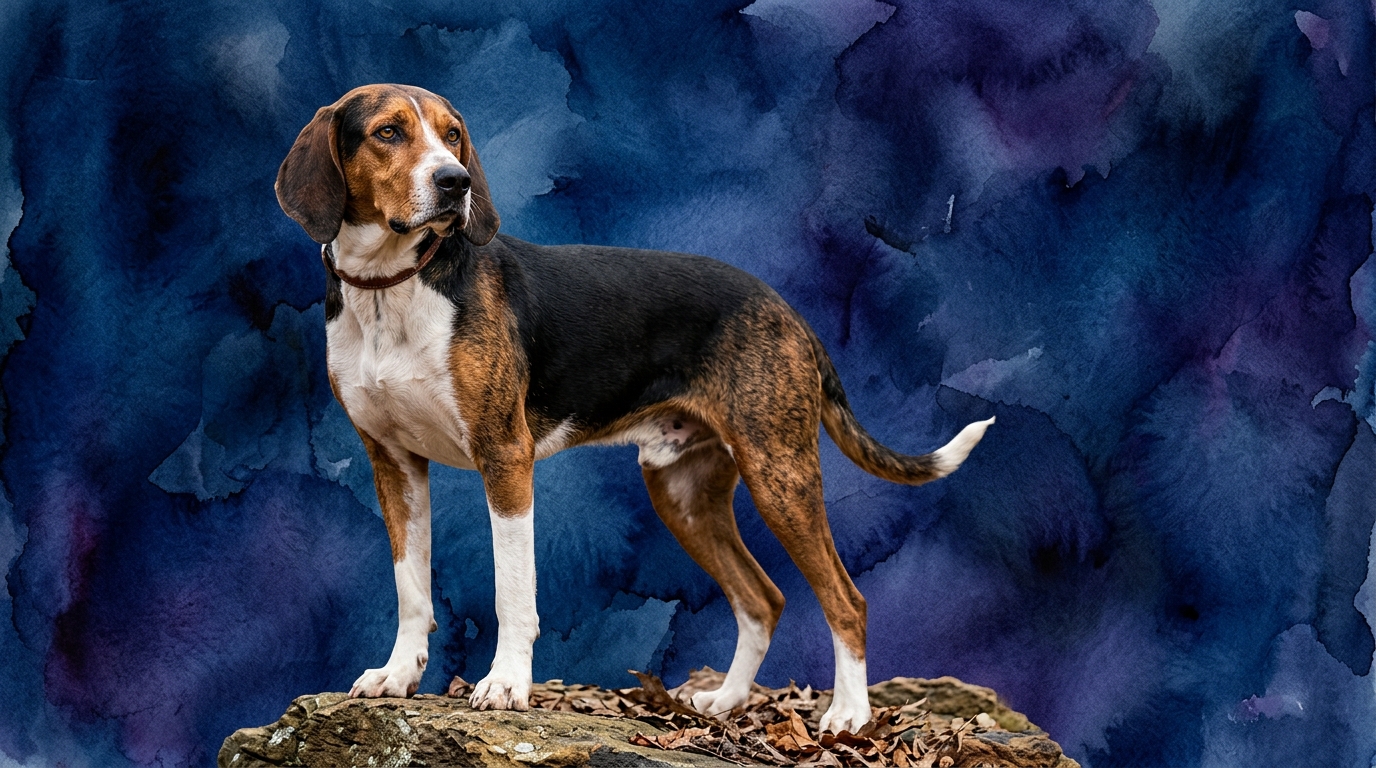
Our Cosmic Pet Pet IQ Lab data offers a granular look into the cognitive dimensions of these two distinct breeds. For the Treeing Walker Coonhound, we observe a profile balanced around its working heritage, scoring 3/5 in Problem Solving, Training Speed, Social Intelligence, Instinctive Drive, and Memory. This indicates a consistent, functional intelligence geared towards its primary purpose.
In stark contrast, the Miniature Poodle presents a striking cognitive architecture, achieving 5/5 in Problem Solving, Training Speed, and Memory. Its Social Intelligence and Instinctive Drive are rated at 3/5, suggesting a well-rounded and highly adaptable mind, particularly in areas valued for companionship and performance tasks. This Coren rank #2 position underscores its capacity for rapid learning and recall.
Where the Treeing Walker Coonhound Excels Cognitively
The Treeing Walker Coonhound’s cognitive strengths are deeply rooted in its ancestral role as a scent hound, making it a master of olfactory navigation and persistent pursuit. Its problem-solving, while rated at 3/5, manifests uniquely in complex tracking scenarios, where it can independently interpret subtle scent changes and navigate varied terrains to locate quarry, demonstrating a specialized intelligence for its specific tasks. This breed exhibits remarkable endurance and single-minded focus when on a trail, a cognitive trait that allows it to maintain concentration despite environmental distractions and physical exertion. Their memory, also 3/5, is particularly strong for established scent paths and the locations of previous finds, enabling them to return to productive areas or recall the specifics of a hunt. Furthermore, their social intelligence, also 3/5, is expertly applied within a pack dynamic, understanding canine hierarchy and communication during a hunt, which is crucial for cooperative work.
Their instinctive drive, rated 3/5, is a powerful engine for their cognitive function, providing the unwavering motivation needed to follow a scent for miles, often disregarding human directives if a compelling trail presents itself. This powerful drive, while sometimes posing training challenges, is a testament to their specialized mental fortitude and purpose. The Coonhound’s cognitive success isn't about generalized adaptability but rather about profound expertise in its chosen domain, showcasing a robust, practical intelligence honed by generations of selective breeding for hunting prowess.
Where the Miniature Poodle Stands Out Cognitively
The Miniature Poodle shines with exceptional cognitive versatility, particularly in areas of abstract thought and learning. Its Problem Solving score of 5/5 highlights an impressive ability to analyze novel situations, understand complex sequences, and devise creative solutions, often generalizing learned principles to entirely new contexts. This manifests as a dog that can figure out how to open gates, solve puzzle toys quickly, or adapt a learned command to a slightly different scenario without extensive reteaching. Their Training Speed, also 5/5, is phenomenal; they grasp new commands and multi-step routines with remarkable rapidity, often requiring only a few repetitions to achieve mastery. This makes them highly responsive and eager participants in diverse training disciplines, from obedience to agility and even complex trick training.
The Miniature Poodle’s Memory, rated at a perfect 5/5, ensures that these learned behaviors are retained for extended periods, allowing them to build an extensive repertoire of skills and commands. They recall specific verbal cues, hand signals, and even the names of objects or people with impressive accuracy. While their Instinctive Drive is 3/5, it's often expressed as a keen desire for engagement and a retrieving inclination, which is highly trainable and easily channeled into constructive activities. Their Social Intelligence (3/5) is particularly attuned to human communication, enabling them to pick up on subtle cues, anticipate intentions, and form deep, responsive bonds, making them highly perceptive companions who thrive on collaborative interaction.
Ease of Training: Treeing Walker Coonhound vs. Miniature Poodle
When considering ease of training, the Miniature Poodle is undeniably the more straightforward candidate. Their top scores in Training Speed (5/5), Problem Solving (5/5), and Memory (5/5) translate directly into a dog that not only learns commands quickly but also understands the underlying concepts and retains them. Miniature Poodles thrive on positive reinforcement and mental challenges, often eager to engage in training sessions as a collaborative activity with their human. They are highly motivated by praise and treats, and their capacity for understanding complex sequences means they can progress rapidly through advanced obedience or competitive dog sports.
The Treeing Walker Coonhound, with a Training Speed of 3/5, requires a different approach. While capable of learning, their strong instinctive drive (3/5) for scent work means they can be easily distracted by compelling odors in the environment, making off-leash reliability a significant challenge. Their independent nature, a valuable trait in a hunting dog expected to work autonomously, often means they may prioritize a fascinating scent over a human command. Training a Coonhound demands immense patience, consistency, and high-value rewards, often requiring the trainer to make lessons more engaging than the allure of the natural world. While they can achieve a good level of obedience, it typically takes more repetition and a deeper understanding of their hound psychology to integrate commands effectively into their daily behavior.
Matching Breeds to Lifestyles: Active vs. Relaxed Owners
For active owners, both breeds can be suitable, but they cater to different types of activity. An owner who enjoys extensive outdoor pursuits like long-distance hiking, trail running, or engaging in scent work and tracking trials will find a fantastic partner in the Treeing Walker Coonhound. This breed requires significant physical exertion to satisfy its deep-seated instinctive drive and stamina, thriving in environments where it can explore and utilize its powerful nose. Their ideal owner is prepared for consistent, vigorous exercise, often in varied terrain, and understands the need to manage a dog with a strong prey drive and a propensity for vocalization. They are not suited for owners who prefer short, leisurely strolls.
The Miniature Poodle also suits active owners, but their activity often encompasses a broader range of mental and physical engagement. Owners interested in agility, competitive obedience, rally, or trick training will discover the Poodle’s exceptional aptitude for these activities. While they enjoy physical exercise like brisk walks and runs, they equally crave mental stimulation and thrive on learning new skills and interacting playfully with their humans. For more relaxed owners, the Miniature Poodle can adapt better than the Coonhound, provided their mental needs are met through puzzle toys, regular short training sessions, and interactive games, preventing boredom-induced behaviors. However, even a relaxed owner must commit to daily walks and consistent mental engagement to keep a Poodle content and well-behaved, as their cognitive capacity demands regular input.
The Verdict
Choose the Treeing Walker Coonhound if you are an active, outdoors-oriented individual who appreciates a resilient, independent companion with a profound, specialized intelligence for scent work and pursuit, prepared to invest in consistent, purpose-driven training.
Select the Miniature Poodle if you desire a highly adaptable, eager-to-learn partner for a wide array of activities, from advanced obedience to canine sports, valuing a dog that thrives on collaborative mental engagement and readily adapts to diverse living situations.
🧠 Find Your Pet's IQ Score
Our Pet IQ Lab assessment covers 25+ tests across 5 cognitive dimensions — personalized to your breed.
Take the Full IQ Test →Frequently Asked Questions
Are Treeing Walker Coonhounds good family dogs?
Treeing Walker Coonhounds can be devoted family members, especially with active families who understand their need for physical exercise and mental stimulation. They are generally good with children if properly socialized, but their vocal nature and scent drive require consistent management and outlets to prevent frustration.
Do Miniature Poodles bark a lot?
Miniature Poodles can be prone to barking, particularly if bored, not adequately exercised, or left alone frequently, using their voice to alert or express themselves. Early training focused on appropriate vocalization and consistent mental and physical engagement can help manage this tendency effectively.
Which breed is better for apartment living?
The Miniature Poodle is generally better suited for apartment living due to their smaller size and adaptable nature, provided their significant mental and physical exercise requirements are consistently met indoors and out. Treeing Walker Coonhounds, with their strong vocalizations and need for extensive outdoor space to satisfy their scent drive, are less ideal for apartment environments.