Side-by-Side IQ Profile: Vizsla vs. Airedale Terrier
The Cosmic Pet Pet IQ Lab provides a detailed lens through which to examine the cognitive strengths of the Vizsla and the Airedale Terrier. While the Airedale Terrier holds a slightly higher Coren rank at #29 compared to the Vizsla's #31, this minor difference in working and obedience intelligence belies more profound distinctions in their cognitive makeup across five key dimensions. Understanding these specific scores helps us appreciate how each breed processes information, interacts with their environment, and forms bonds.
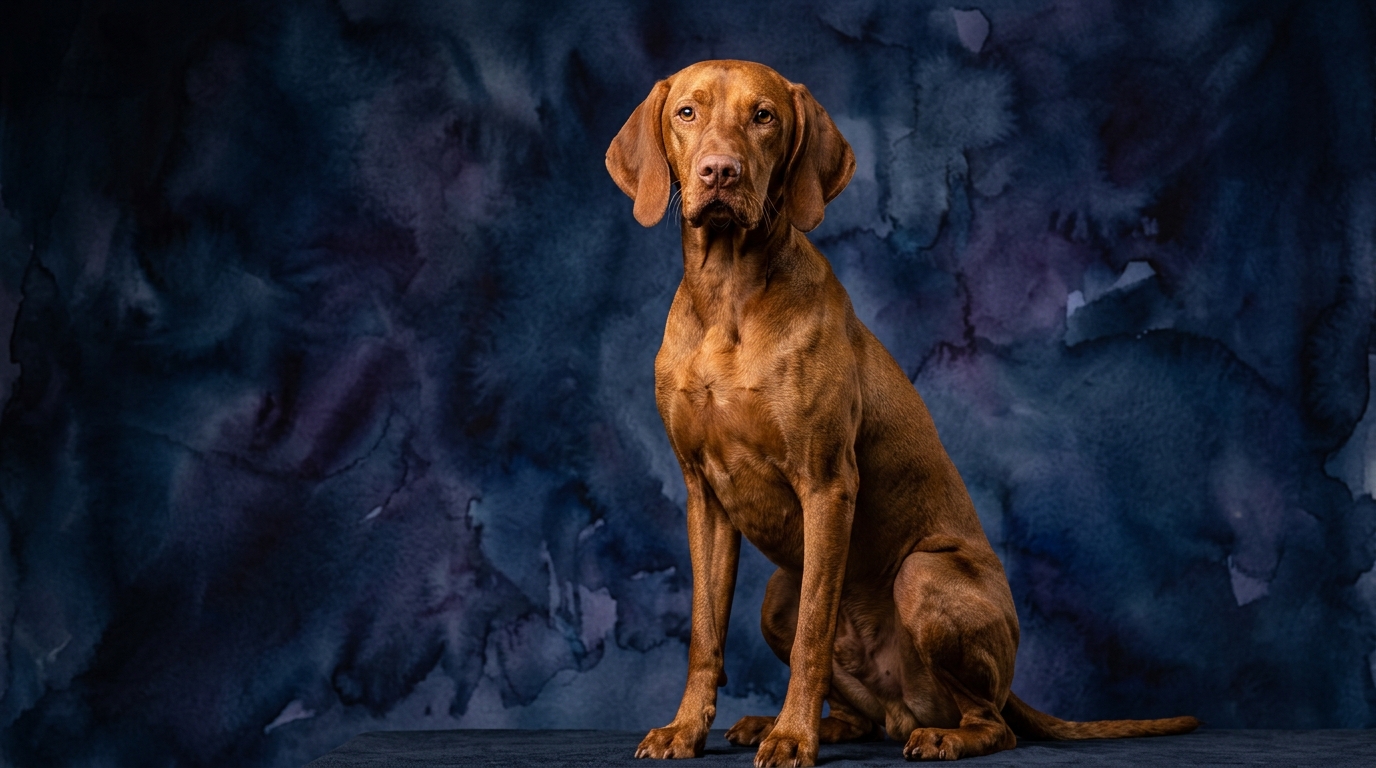
For the Vizsla, a Sporting dog, their profile is marked by strong cooperative intelligence. Their Problem Solving is rated at 4/5, indicating a capacity for navigating complex situations, often with an eye towards collaborative outcomes. Training Speed also sits at 4/5, reflecting their quick grasp of new commands and routines. Where the Vizsla truly shines is in Social Intelligence, scoring a perfect 5/5, demonstrating an exceptional ability to read human cues, anticipate needs, and form deep emotional connections. Their Instinctive Drive, also 5/5, is geared towards partnership in pursuit, making them highly motivated to work alongside their human companions. Finally, their Memory is solid at 4/5, allowing them to retain learned behaviors and experiences effectively.
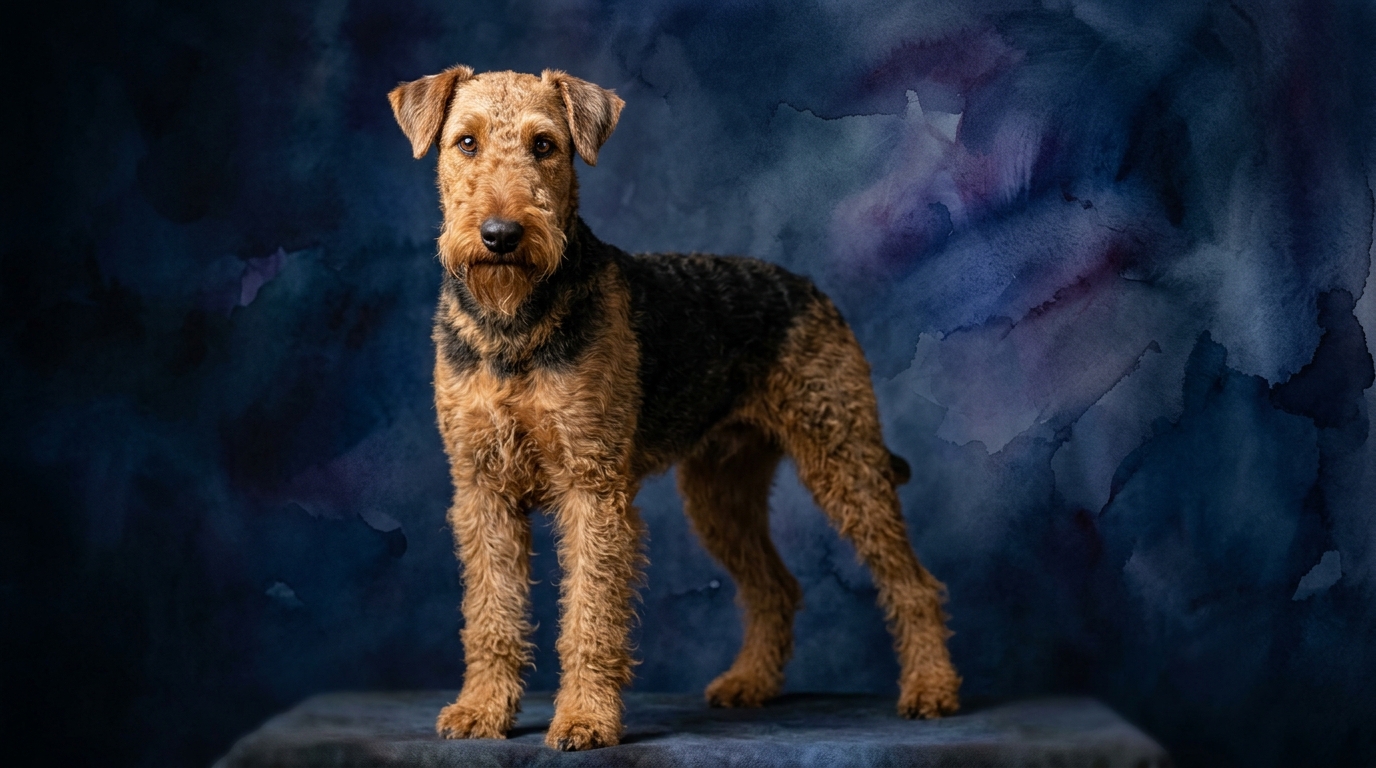
The Airedale Terrier, the 'King of Terriers,' presents a cognitive profile rooted in independence and tenacity. Like the Vizsla, their Problem Solving is rated 4/5, though their approach often leans towards self-reliance in overcoming obstacles. Their Training Speed also matches at 4/5, showing they can learn new tasks with efficiency. However, a key distinction appears in Social Intelligence, where the Airedale scores 3/5. While capable of forming bonds, they typically exhibit a more self-contained and less overtly people-pleasing demeanor compared to the Vizsla. Their Instinctive Drive, rated 3/5, is strong but directed more towards independent vermin control and guarding, rather than collaborative hunting. Their Memory, like the Vizsla, is rated 4/5, enabling them to recall information and strategies effectively, particularly those serving their self-directed goals.
Where the Vizsla Wins Cognitively
The Vizsla's primary cognitive advantage lies in its unparalleled Social Intelligence (5/5) and robust Instinctive Drive (5/5), which are deeply intertwined. This breed possesses an extraordinary capacity for attunement to human emotional states and intentions, making them exceptionally responsive partners. Their problem-solving (4/5) and training speed (4/5) are amplified by this desire to collaborate, as they are inherently motivated to understand and execute tasks presented by their human. For instance, a Vizsla is not just learning a command; they are internalizing a shared goal, often anticipating the next step in a sequence due to their acute social awareness. This translates into a seamless partnership, where the dog actively seeks to engage and cooperate, making them incredibly intuitive companions in complex activities like advanced obedience, agility, or field work. Their drive isn't just about performing a task, but performing it *with* their person, fostering a deep cognitive synergy.
Where the Airedale Terrier Wins Cognitively
Despite scoring lower in social intelligence and instinctive drive for human partnership, the Airedale Terrier possesses distinct cognitive strengths, particularly in independent problem-solving and resilient tenacity. Their Problem Solving (4/5) is characterized by a self-directed approach; an Airedale will often methodically work through a challenge without constant human guidance, relying on their own ingenuity and determination. This independence, stemming from their terrier roots, allows them to excel in situations requiring sustained focus and resourcefulness. For example, while a Vizsla might look to its owner for the next cue when faced with a barrier, an Airedale is more likely to assess the situation and devise its own strategy to bypass or overcome it. Their slightly higher Coren rank of #29, compared to the Vizsla's #31, suggests a marginal edge in understanding new commands, perhaps due to a focused, less emotionally dependent learning style that values efficiency in acquiring knowledge for their own purposes. This breed exhibits a cognitive resilience, persisting in tasks even when immediate rewards or human approval are not overtly present, relying on internal motivation and self-satisfaction.
Which Is Easier to Train and Why?
When it comes to ease of training, the Vizsla generally holds an edge, primarily due to their superior Social Intelligence (5/5) and Instinctive Drive (5/5) for cooperative work. Vizslas are often described as 'velcro dogs' because of their intense desire to be involved with their humans, which directly translates into an eagerness to please and a high responsiveness to cues. They are deeply motivated by interaction, praise, and the opportunity to work alongside their owner, making them highly receptive to positive reinforcement training. Their capacity to read subtle body language and vocal tones means they often anticipate what is expected of them, accelerating the learning process. This inherent drive for partnership minimizes distractions and fosters a strong working relationship, allowing them to grasp complex sequences and commands with notable speed (4/5 training speed).
The Airedale Terrier, while possessing an equal 4/5 Training Speed and Problem Solving, can present more challenges in training due to their lower Social Intelligence (3/5) and Instinctive Drive (3/5) for human-centric cooperation. Their independence means they are less inherently driven to 'please' and more inclined to assess situations for their own benefit. Training an Airedale requires consistency, firm but fair leadership, and a deep understanding of their self-motivated nature. They may question commands or try to find loopholes, requiring an owner to be patient and persuasive, demonstrating the value of compliance. While they learn quickly, their independence means they are more likely to make their own decisions if not thoroughly convinced or if the training isn't engaging enough. Their intelligence manifests as cleverness and sometimes stubbornness, demanding a more nuanced and persistent approach from the trainer.
Which Suits Active Owners vs. Relaxed Owners?
Both the Vizsla and the Airedale Terrier are breeds that thrive with active owners, but the *nature* of that activity and partnership differs significantly. The Vizsla, with its 5/5 Instinctive Drive and 5/5 Social Intelligence, is an ideal fit for owners who are deeply committed to an active, shared lifestyle. They excel in activities like running, hiking, hunting, agility, and competitive obedience, particularly when these pursuits involve constant interaction and collaboration with their human. A Vizsla needs an owner who can dedicate substantial time to exercise, training, and companionship, as their strong desire for connection means they can become anxious or destructive if left alone or under-stimulated. They are not suited for relaxed owners who prefer a more sedentary lifestyle or minimal engagement, as their high energy and need for partnership will lead to frustration for both dog and owner.
The Airedale Terrier also requires an active owner, but one who appreciates a dog with a more independent spirit and robust personality. Their 3/5 Instinctive Drive, while lower than the Vizsla's, still means they possess considerable energy and a need for mental and physical exertion. They enjoy activities like long walks, jogs, earthdog trials, and scent work, often demonstrating a tenacious focus. However, their lower Social Intelligence (3/5) suggests they are more comfortable with periods of self-directed activity and might not constantly seek the intense, 'velcro-like' companionship of a Vizsla. They suit owners who are active and confident, willing to engage in consistent training and provide ample outlets for their terrier instincts, but who also respect a dog that sometimes prefers to do things on its own terms. While they need activity, they might tolerate slightly more independent downtime than a Vizsla, making them a fit for active owners who understand and respect their unique blend of loyalty and self-sufficiency.
The Verdict
Choose the Vizsla if you seek an exceptionally social, highly cooperative canine partner who thrives on constant engagement and shared activities, valuing a deep, intuitive bond above all else. They are ideal for owners ready to integrate their dog fully into an active, interactive lifestyle.
Opt for the Airedale Terrier if you appreciate a clever, independent, and tenacious companion who excels at self-directed problem-solving and offers a loyal, yet less overtly dependent, partnership. They suit active owners who enjoy a dog with a strong personality and are prepared for consistent, engaging training.
🧠 Find Your Pet's IQ Score
Our Pet IQ Lab assessment covers 25+ tests across 5 cognitive dimensions — personalized to your breed.
Take the Full IQ Test →Frequently Asked Questions
Are Vizslas or Airedale Terriers better for first-time owners?
Vizslas are generally recommended for first-time owners who are committed to providing ample exercise and companionship, due to their eagerness to please and high social intelligence. Airedale Terriers, with their independent nature and strong will, can be more challenging for novice owners, requiring consistent, confident handling and a deep understanding of terrier traits.
Do Airedale Terriers really learn faster than Vizslas, given their Coren ranks?
While the Airedale Terrier has a slightly higher Coren rank (#29 vs. #31), indicating a marginal edge in understanding new commands, both breeds have a 4/5 Training Speed. The difference in 'ease' of training often comes down to their social intelligence and drive for cooperation, where the Vizsla's willingness to partner can make the learning process feel smoother and faster to an owner.
How does 'instinctive drive' differ between a Sporting dog and a Terrier?
For a Sporting dog like the Vizsla (5/5 instinctive drive), it typically manifests as a cooperative drive for hunting, retrieving, and working collaboratively with a human partner. For a Terrier like the Airedale (3/5 instinctive drive), it's often directed towards independent pursuits such as vermin control, digging, and patrolling, showcasing tenacity and self-reliance rather than partnership.