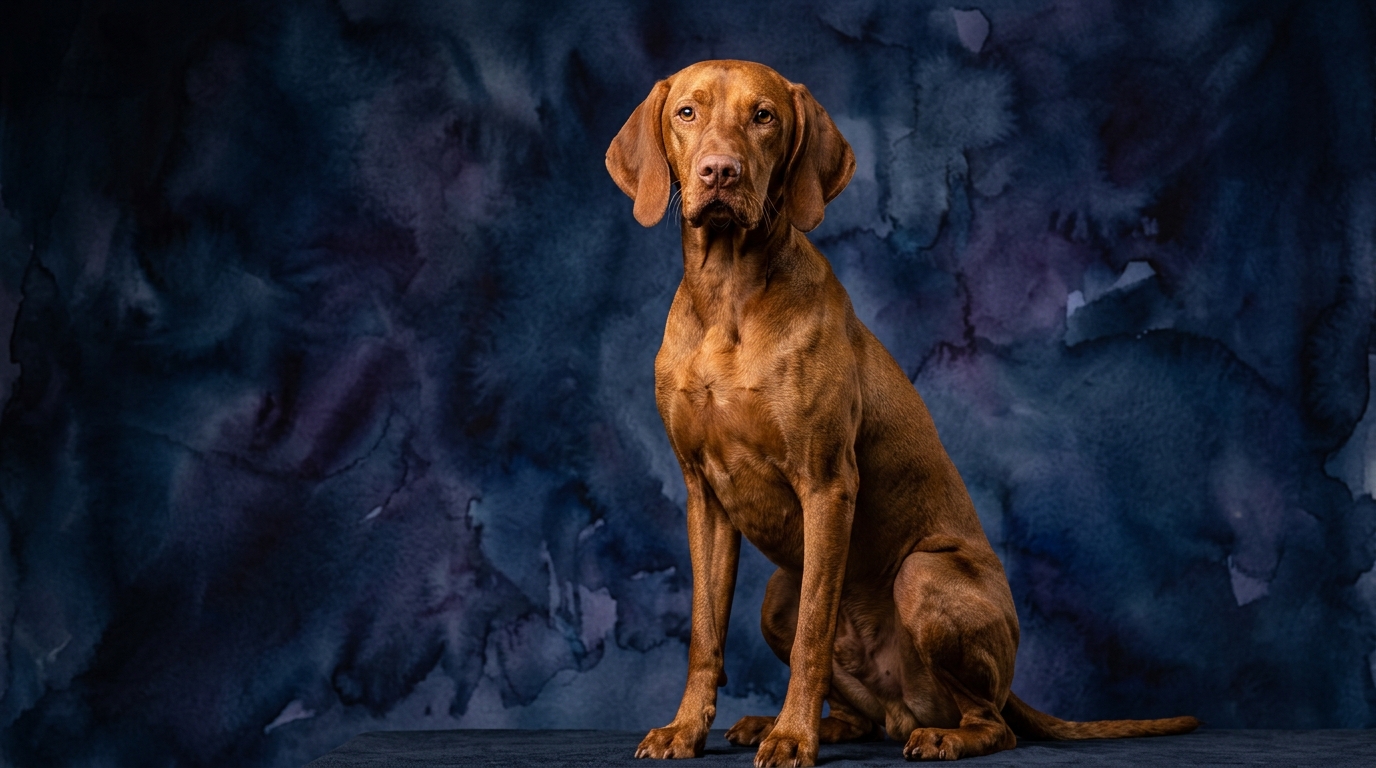

Side-by-Side IQ Profile: Vizsla vs. Manchester Terrier
The Vizsla, a member of the Sporting Group, registers at Coren rank #31, indicating a solid foundation in adaptive intelligence and obedience. Our Pet IQ Lab assessment further breaks down their cognitive strengths: they score a 4/5 in Problem Solving, suggesting a capacity for figuring out novel situations and navigating complex environments. Their Training Speed also stands at 4/5, reflecting a readiness to absorb and execute new commands efficiently. Social Intelligence, crucial for harmonious living and cooperative tasks, is exceptionally high at 5/5. Their Instinctive Drive, characteristic of their hunting heritage, is also a perfect 5/5, while Memory is strong at 4/5, allowing them to recall learned behaviors and experiences over time.
In contrast, the Manchester Terrier, from the Terrier Group, does not appear on Coren's ranking, yet our Pet IQ Lab provides valuable insights into their cognitive makeup. This breed consistently scores 3/5 across all five dimensions: Problem Solving, Training Speed, Social Intelligence, Instinctive Drive, and Memory. A 3/5 in Problem Solving indicates a moderate ability to tackle new challenges, often preferring established routines or methods. Their Training Speed at 3/5 suggests they are capable learners, though perhaps requiring more repetition or motivation than some other breeds. Social Intelligence at 3/5 implies they can form bonds and understand social cues, but might exhibit more independence. Their Instinctive Drive at 3/5 points to a specific, focused prey drive, typical of their terrier heritage, rather than a broad, cooperative drive. Finally, a 3/5 in Memory means they retain information adequately, but might not recall complex sequences with the same precision as breeds with higher scores.
Where the Vizsla Wins Cognitively
The Vizsla's cognitive profile demonstrates clear advantages in areas demanding collaborative effort and dynamic adaptation. Their superior Social Intelligence (5/5) means they are exquisitely attuned to human emotions and intentions, making them exceptional partners in activities requiring close cooperation, such as advanced obedience or agility. This high social acumen allows them to quickly interpret human cues, fostering a deep, symbiotic bond that is highly rewarding for owners seeking a responsive companion.
Furthermore, the Vizsla's elevated scores in Problem Solving (4/5) and Instinctive Drive (5/5) combine to create a dog adept at navigating complex field work. Whether tracking game or performing intricate scent work, their ability to independently assess situations and apply their powerful natural drives to achieve a goal is remarkable. This translates into a dog that not only understands what is asked of it but also possesses the internal motivation and cognitive flexibility to execute tasks effectively, even when faced with environmental variables or unexpected obstacles. Their strong memory (4/5) further supports this, allowing them to recall specific scent trails or complex search patterns with precision.
Where the Manchester Terrier Wins Cognitively
While the Manchester Terrier's scores are consistently moderate, their cognitive strengths lie in their focused determination and self-reliant nature, which are hallmarks of the terrier group. Their Instinctive Drive (3/5), though not as broad as the Vizsla's, is intensely focused on specific tasks, particularly vermin control. This drive manifests as unwavering persistence when pursuing a target, a significant asset for their original purpose. They exhibit a distinct, tenacious form of problem-solving (3/5) when engaged in these ingrained tasks, demonstrating efficiency in their specialized domain.
The Manchester Terrier's moderate Social Intelligence (3/5) and Problem Solving (3/5) mean they are capable of forming strong bonds and learning, but often with a more independent streak. This independence can be a cognitive 'win' for owners who appreciate a dog that isn't constantly seeking direction. They are less prone to separation anxiety and can be content with their own company for periods, making them suitable for individuals who might have fluctuating schedules, provided their exercise and mental stimulation needs are met. Their moderate memory (3/5) is entirely sufficient for recalling the routines and boundaries established within their home environment, ensuring a stable and predictable daily life.
Which is Easier to Train and Why
When considering ease of training, the Vizsla clearly holds an advantage due to its higher scores in Training Speed (4/5) and Social Intelligence (5/5). Their innate desire to cooperate and strong understanding of human communication means they are highly receptive to instruction. They pick up new commands with fewer repetitions and are eager to please, making positive reinforcement methods exceptionally effective. This eagerness to engage and their ability to generalize learned behaviors to new situations make the training process a fluid and rewarding experience for both dog and owner. Owners will find Vizslas actively seeking to understand and comply, often anticipating cues.
The Manchester Terrier, with a Training Speed of 3/5, is certainly trainable, but the process may require more patience and consistency. Their moderate social intelligence means they are less inherently driven to comply purely for human approval; instead, they often need stronger motivation, such as high-value treats or engaging play. Their problem-solving (3/5) is often applied to figuring out how to get what they want, which can sometimes manifest as clever attempts to outsmart their handler if training isn't clear and firm. Owners should expect to invest more time in proofing commands in various environments and understand that a Manchester Terrier might occasionally test boundaries, requiring a confident and consistent approach to training.
Which Suits Active Owners vs. Relaxed Owners
The Vizsla's cognitive profile, coupled with its sporting group heritage, makes it an ideal companion for active owners. Their high instinctive drive (5/5) and problem-solving abilities (4/5) demand outlets for both physical exertion and mental engagement. They thrive in environments where they can participate in activities like running, hiking, hunting, or dog sports such as agility and obedience. Owners who can dedicate significant time daily to structured exercise and mental challenges will find the Vizsla to be a joyful and well-adjusted partner. Their social intelligence (5/5) also means they genuinely enjoy being involved in family activities and are not content to be left alone for extended periods.
The Manchester Terrier, while possessing a terrier's energy, can be a more suitable fit for owners who appreciate an active dog but perhaps one that doesn't require the same intensity or duration of highly collaborative activities as a Vizsla. Their moderate instinctive drive (3/5) means they need regular exercise to prevent boredom and destructive behaviors, but their independence allows for more varied forms of engagement, including vigorous play in a secure yard or brisk walks. While they enjoy company, their moderate social intelligence (3/5) suggests they are generally more self-reliant than a Vizsla, making them potentially better suited for owners with slightly less demanding daily schedules, provided they receive consistent attention and mental stimulation tailored to their terrier instincts, such as puzzle toys or supervised digging opportunities.
The Verdict
Choose the Vizsla if you seek a highly cooperative, intelligent partner for active sports, hunting, or constant companionship, thriving on deep social bonds and complex tasks.
Opt for the Manchester Terrier if you desire a self-reliant, tenacious companion who excels in focused activities and appreciates an owner with a consistent, confident approach to training.
🧠 Find Your Pet's IQ Score
Our Pet IQ Lab assessment covers 25+ tests across 5 cognitive dimensions — personalized to your breed.
Take the Full IQ Test →Frequently Asked Questions
Do Vizslas suffer from separation anxiety more than Manchester Terriers?
Vizslas, with their high social intelligence and strong desire for companionship, are generally more prone to separation anxiety if not properly conditioned or if left alone for extended periods. Manchester Terriers, exhibiting more independence, tend to handle solitude better, though no dog should be left isolated excessively.
Are Manchester Terriers difficult to train due to their independence?
Manchester Terriers are not difficult to train, but they require a different approach than a highly cooperative breed. Their independence means training needs to be engaging, consistent, and reward-based, focusing on clear communication and establishing trust rather than relying solely on their desire to please.
Which breed is better for a first-time dog owner?
For a first-time owner, the Vizsla's eagerness to please and high trainability might seem appealing, but their significant exercise and mental stimulation needs can be overwhelming. The Manchester Terrier, while requiring consistency, might be more manageable for a first-timer who understands terrier traits and can provide structured routines without the same intensity of social demand.