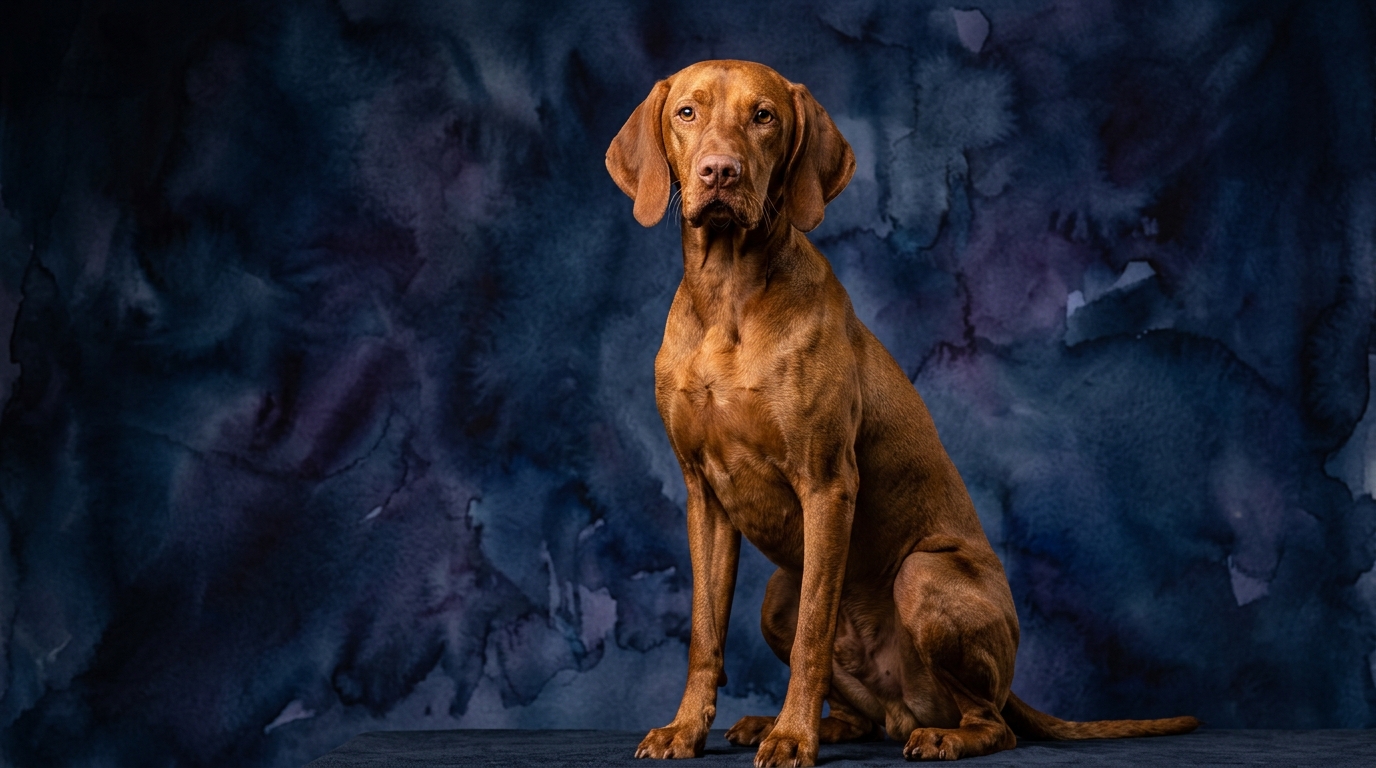
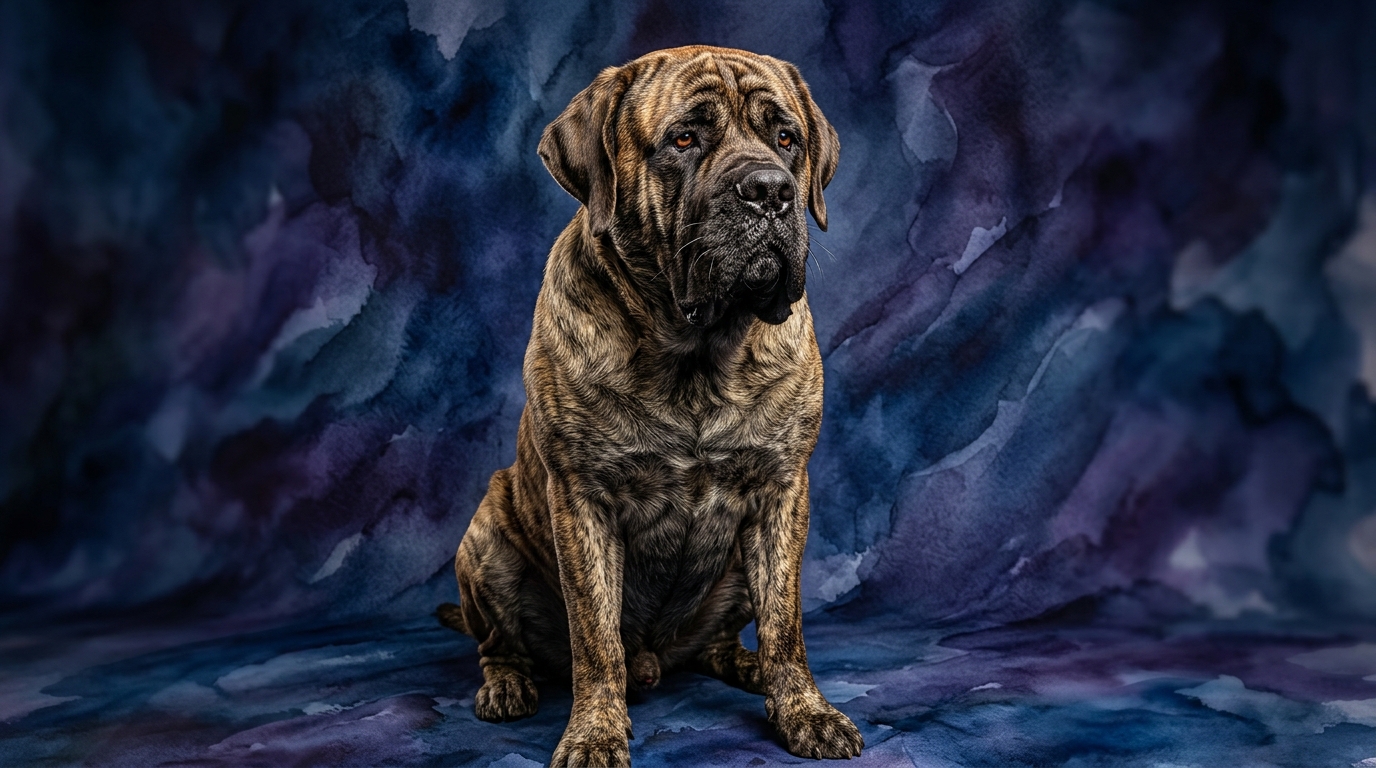
Side-by-Side IQ Profile: Vizsla vs. Mastiff
The Cosmic Pet Pet IQ Lab employs a five-dimensional cognitive framework to assess canine intelligence, providing a nuanced understanding beyond simple obedience. For the Vizsla, a Sporting breed ranked #31 by Coren, its profile highlights a dynamic and highly interactive mind. Its Problem Solving is rated 4/5, indicating an adeptness at navigating complex environments and finding creative solutions to obstacles, often displaying ingenuity in new situations. Training Speed is 4/5, reflecting its remarkable alacrity in absorbing new commands and routines, driven by an eagerness to engage. Social Intelligence scores an exceptional 5/5, showcasing its profound ability to read human emotions and intentions, fostering deeply intuitive bonds. Instictive Drive is also 5/5, underscoring its powerful innate motivation for scent work, retrieving, and sustained physical activity. Finally, Memory is 4/5, demonstrating strong recall for learned behaviors and environmental details.
In contrast, the Mastiff, a Working breed with a Coren rank of #72, presents a more measured and deliberate cognitive blueprint. Its Problem Solving capacity is 3/5, suggesting a thoughtful, cautious approach rather than rapid improvisation, preferring established methods over spontaneous experimentation. Training Speed is 3/5, meaning it learns at a more gradual pace, requiring patience and consistent repetition to embed commands effectively. Social Intelligence is 3/5, indicating deep loyalty and a quiet understanding of its family's moods, though less overtly expressive or anticipatory than some breeds. Instictive Drive is 3/5, predominantly focused on watchful guardianship and territorial awareness rather than high-energy pursuits. Memory is 3/5, capable of retaining commands and routines, particularly those reinforced consistently over time, supporting its steady nature.
Where the Vizsla Wins Cognitively
The Vizsla's cognitive profile consistently outpaces the Mastiff in domains demanding quick assimilation and dynamic engagement. Their problem-solving capacity, rated 4/5, means they swiftly analyze novel situations, figuring out how to open a child-proof gate or retrieve a toy with minimal intervention. This contrasts with a breed preferring to wait for guidance. Their training speed (4/5) translates into a significantly faster learning curve for complex command sequences or agility courses; a Vizsla often grasps new concepts in few repetitions, driven by eagerness to collaborate and robust recall (4/5). Furthermore, their exceptional social intelligence (5/5) allows them to perceive subtle human mood shifts, fostering an almost intuitive bond, enabling them to offer comfort or adjust behavior based on owner's emotional state. Their instinctive drive (5/5) for work makes them naturally motivated self-starters in many training contexts.
Where the Mastiff Wins Cognitively
While the Mastiff's cognitive metrics are generally more measured, their particular blend of attributes translates into distinct advantages for certain lifestyles. Their problem-solving at 3/5, combined with a deliberate training speed of 3/5, means they excel when consistency and clear, patient instruction are provided, leading to deeply ingrained, reliable behaviors. They may not leap to conclusions, but their solutions are often well-considered and stable. The Mastiff's social intelligence (3/5) manifests as profound, unwavering loyalty and a calm, protective presence; they may not exhibit overt emotional expressiveness, but their understanding of their family unit is deep-seated and steadfast. Their instinctive drive (3/5) primarily focuses on guarding and watchful vigilance, making them inherently less prone to restlessness or destructive behaviors born of boredom, preferring to observe and protect their domain with quiet confidence. This deliberate, steady cognitive approach results in a dog less reactive and more predictable, offering calm reliability.
Which is Easier to Train and Why
Assessing trainability reveals a clear distinction between the two breeds. The Vizsla, with its problem-solving (4/5) and training speed (4/5) metrics, is generally considered far easier to train for a wide array of commands and complex tasks. Their inherent desire to work closely with human companions, bolstered by high social intelligence (5/5), means they actively seek to understand and comply. They respond quickly to positive reinforcement, and their strong memory (4/5) ensures learned behaviors are retained effectively. This translates into fewer repetitions and a more enthusiastic, engaged participant in training sessions.
In contrast, the Mastiff, with its 3/5 ratings across problem-solving, training speed, and memory, presents a different training challenge. They are capable of learning, but progress is typically more gradual, requiring greater patience and consistency. Their deliberate nature means they may take longer to process commands, and an independent streak can lead to selective hearing. While loyal, their motivation isn't always driven by the same intense desire to please or high-energy engagement. Training a Mastiff is about building trust and respect through clear, fair communication, understanding their learning pace is slower but their learned behaviors, once solid, are often deeply ingrained and reliable.
Which Suits Active Owners vs. Relaxed Owners
The disparity in energy levels and instinctive drives makes the choice between a Vizsla and a Mastiff largely dependent on an owner's lifestyle. A Vizsla is an ideal match for active owners who relish outdoor adventures and can provide consistent, vigorous mental and physical stimulation. Their instinctive drive (5/5) propels them towards activities like running, hiking, scent work, and field trials; without sufficient outlets, their problem-solving acumen might be directed towards less desirable behaviors. They thrive when given a 'job' and require an owner who commits to daily exercise and interactive play, often for several hours.
Conversely, the Mastiff is better suited for relaxed owners who appreciate a calm, steadfast companion and a more sedate pace. Their instinctive drive (3/5) is geared towards watchful guardianship rather than high-energy pursuits, making them content with moderate daily walks and ample lounging time. While still requiring regular exercise, their needs are significantly lower. A Mastiff's ideal owner enjoys a quiet evening by the fire as much as a gentle stroll, providing a stable, predictable environment where their loyal, deliberate nature can flourish without constant activity pressure.
The Verdict
Choosing a Vizsla is ideal for individuals or families seeking an exceptionally engaged, active, and responsive canine partner for outdoor pursuits, dog sports, or a deeply bonded 'Velcro dog' companion who thrives on constant interaction and mental challenges.
Opt for a Mastiff if you desire a tranquil, immensely loyal guardian who offers a steadfast presence, is content with a more relaxed lifestyle, and whose calm demeanor and deliberate pace align with a quieter household.
🧠 Find Your Pet's IQ Score
Our Pet IQ Lab assessment covers 25+ tests across 5 cognitive dimensions — personalized to your breed.
Take the Full IQ Test →Frequently Asked Questions
Are Vizslas good with children?
Yes, Vizslas are typically excellent with children due to their high social intelligence and gentle nature, often forming strong, protective bonds. However, their boundless energy and exuberance mean supervision is always necessary to prevent accidental knocks during play.
Do Mastiffs require a lot of grooming?
Mastiffs have short coats and relatively low grooming needs, primarily requiring weekly brushing to remove loose hair and occasional baths. Their significant size, however, means regular attention to nail trims, ear cleaning, and dental hygiene is crucial.
Which breed is more prone to separation anxiety?
Vizslas, with their exceptionally high social intelligence and strong desire for companionship, are generally more prone to developing separation anxiety if left alone for extended periods. Mastiffs, while loyal, tend to be more independent and less likely to suffer from severe separation distress, though they still cherish their family's presence.