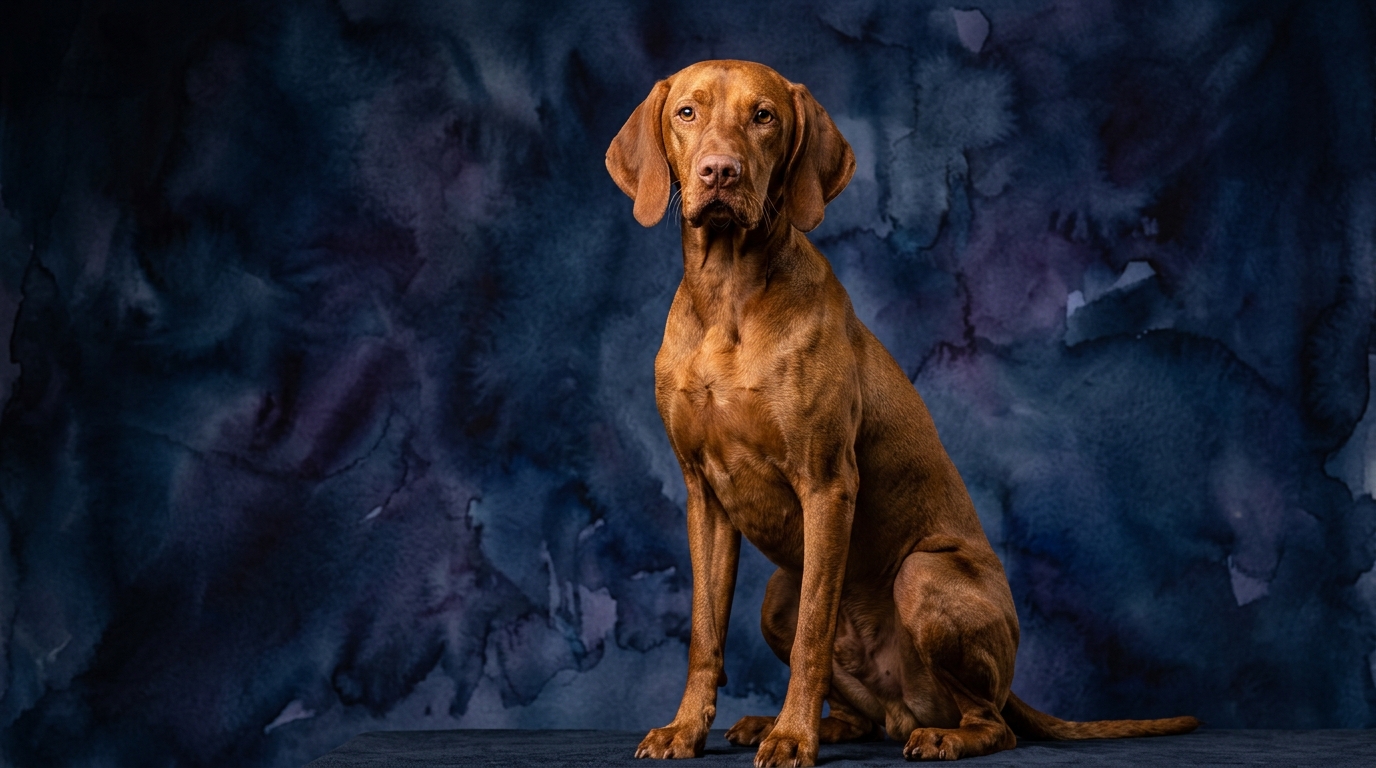

Side-by-Side IQ Profile: Vizsla vs. Old English Sheepdog
At The Cosmic Pet Pet IQ Lab, we evaluate canine cognition across five crucial dimensions. The Vizsla, a Sporting breed, holds a Coren rank of #31, indicating a strong capacity for working and obedience. Their profile includes Problem Solving (4/5), reflecting a sharp ability to independently navigate complex situations and devise solutions. Training Speed (4/5) highlights their rapid learning curve and responsiveness to consistent instruction. Social Intelligence (5/5) signifies an exceptional capacity to read human emotions and intentions, fostering deep, empathetic bonds. An Instinctive Drive (5/5) underscores their intense, innate desire for purpose-driven activities like tracking and retrieving. Finally, their Memory (4/5) ensures good retention of learned tasks and experiences.
In contrast, the Old English Sheepdog, a Herding breed, is ranked #44 by Coren, suggesting a different cognitive emphasis. Their Problem Solving (3/5) indicates a more deliberate approach to challenges, often relying on learned patterns rather than spontaneous innovation. Training Speed (3/5) suggests they require more patience and repetition to solidify new commands, though once learned, these behaviors are well-established. Social Intelligence (3/5) points to affectionate loyalty, but perhaps less nuanced interpretation of subtle human emotional shifts. Their Instinctive Drive (3/5) manifests as a desire to keep their 'flock' (family) together, rather than the intense, focused drive of a hunting dog. Notably, their Memory (4/5) is robust, matching the Vizsla in recalling routines, people, and past experiences.
Where the Vizsla Excels Cognitively
The Vizsla exhibits a clear cognitive advantage in several key areas. Their superior Social Intelligence (5/5) means they are exceptionally attuned to human emotional states and intentions, often anticipating their owner's next move or mood, fostering an incredibly empathetic bond. This translates into a dog that feels deeply connected and responsive to subtle cues. Furthermore, their high Problem Solving (4/5) and Training Speed (4/5) scores indicate a mind that not only grasps concepts quickly but also independently devises solutions to novel challenges, making them adaptable and quick learners in diverse environments. The intense Instinctive Drive (5/5) means they possess a powerful internal motivation for engaging in activities that satisfy their natural urge to work and explore, leading to a dog that thrives on purpose and collaboration, often outperforming the Old English Sheepdog in tasks requiring sustained focus and intricate cooperation.
Where the Old English Sheepdog Shines Cognitively
While the Old English Sheepdog might not match the Vizsla's scores across all cognitive dimensions, they demonstrate a distinct strength in Memory (4/5), equalling the Vizsla in this crucial aspect. This robust recall contributes significantly to their reliability and consistency, ensuring that once a behavior or routine is learned, it is deeply ingrained and readily accessible. Their cognitive profile, particularly their instinctive drive (3/5) which focuses on flock management rather than intense pursuit, suggests a more deliberate and consistent approach to tasks, where steady adherence to established patterns is valued. This makes them excellent at remembering complex routes or long-term schedules, a cognitive asset that underpins their traditional role as diligent herders who needed to recall vast territories and flock movements over extended periods. Their social intelligence (3/5), while lower, still supports strong family bonds, albeit through more straightforward affection and loyalty rather than complex emotional anticipation.
Training Dynamics: Which is Easier?
Based on their cognitive profiles, the Vizsla is generally easier to train. Their Training Speed (4/5) and Problem Solving (4/5) scores indicate a dog that picks up new commands and concepts rapidly and can independently apply learned principles to new situations. Coupled with their exceptional Social Intelligence (5/5), Vizslas are highly motivated by human interaction and approval, making them eager participants in training sessions and quick to understand what is expected of them. Their strong Instinctive Drive (5/5) means they are naturally inclined towards purpose-driven activities, making positive reinforcement training highly effective as it taps into their intrinsic desire to 'work' alongside their human.
In contrast, the Old English Sheepdog's moderate Training Speed (3/5) suggests they require more repetition and patience to solidify new behaviors. While they have good memory, their slightly lower Problem Solving (3/5) and Social Intelligence (3/5) scores mean they might be less inclined to figure things out independently or be as acutely tuned to subtle human cues, necessitating clearer, more direct instruction and consistent reinforcement over a longer period. Their herding instincts may also mean they try to 'herd' family members, a behavior that requires specific guidance to manage effectively.
Matching Canine Cognition to Owner Lifestyle
The Vizsla, with its high Instinctive Drive (5/5) and robust problem-solving abilities, is an ideal match for active owners who can provide ample physical exercise and mental stimulation. These dogs thrive on activities like running, hiking, dog sports, and engaging in complex training tasks that challenge their quick minds and satisfy their innate desire to work. They require a lifestyle that actively incorporates their need for purpose and exploration, and without sufficient engagement, their keen intellect and energy can lead to boredom and undesirable behaviors. Owners prepared for consistent, stimulating interaction will find an incredibly rewarding partnership.
Conversely, while no dog is truly 'relaxed' without appropriate engagement, the Old English Sheepdog's cognitive profile, particularly its more moderate instinctive drive (3/5) and slightly slower training speed, makes it potentially more suitable for owners seeking a companion that, while still needing regular exercise and mental engagement, may not demand the same intensity or constant high-level stimulation as a Vizsla. They are content with consistent routines, leisurely walks, and being a steadfast part of the family 'flock,' rather than constantly seeking out the next challenging adventure. Owners who appreciate a steady, loyal presence and are prepared for consistent, patient training will find a rewarding companion in the Old English Sheepdog, especially if they are comfortable with grooming commitments.
The Verdict
Opt for a Vizsla if you are an active, experienced owner eager for a highly interactive, quick-learning companion that thrives on complex challenges, intense physical activity, and a deep, empathetic connection.
Select an Old English Sheepdog if you value a loyal, steadfast family member who appreciates consistent routines, requires patient training, and offers affectionate companionship without the demanding cognitive intensity of a working sporting breed.
🧠 Find Your Pet's IQ Score
Our Pet IQ Lab assessment covers 25+ tests across 5 cognitive dimensions — personalized to your breed.
Take the Full IQ Test →Frequently Asked Questions
Do Vizslas need more mental stimulation than Old English Sheepdogs?
Yes, Vizslas generally require more intricate mental stimulation due to their higher problem-solving and instinctive drive scores, thriving on complex tasks, puzzles, and interactive training that challenges their quick minds.
How does Coren rank relate to these IQ scores?
Coren rank broadly reflects a dog's general working and obedience intelligence, aligning with the Vizsla's higher rank (#31) compared to the Old English Sheepdog (#44), as the Vizsla scores higher in most specific cognitive dimensions.
Is an Old English Sheepdog a good choice for a first-time dog owner?
While Old English Sheepdogs are loyal and affectionate, their moderate training speed and need for consistent, patient guidance might present a challenge for first-time owners who are not prepared for a dedicated training commitment.