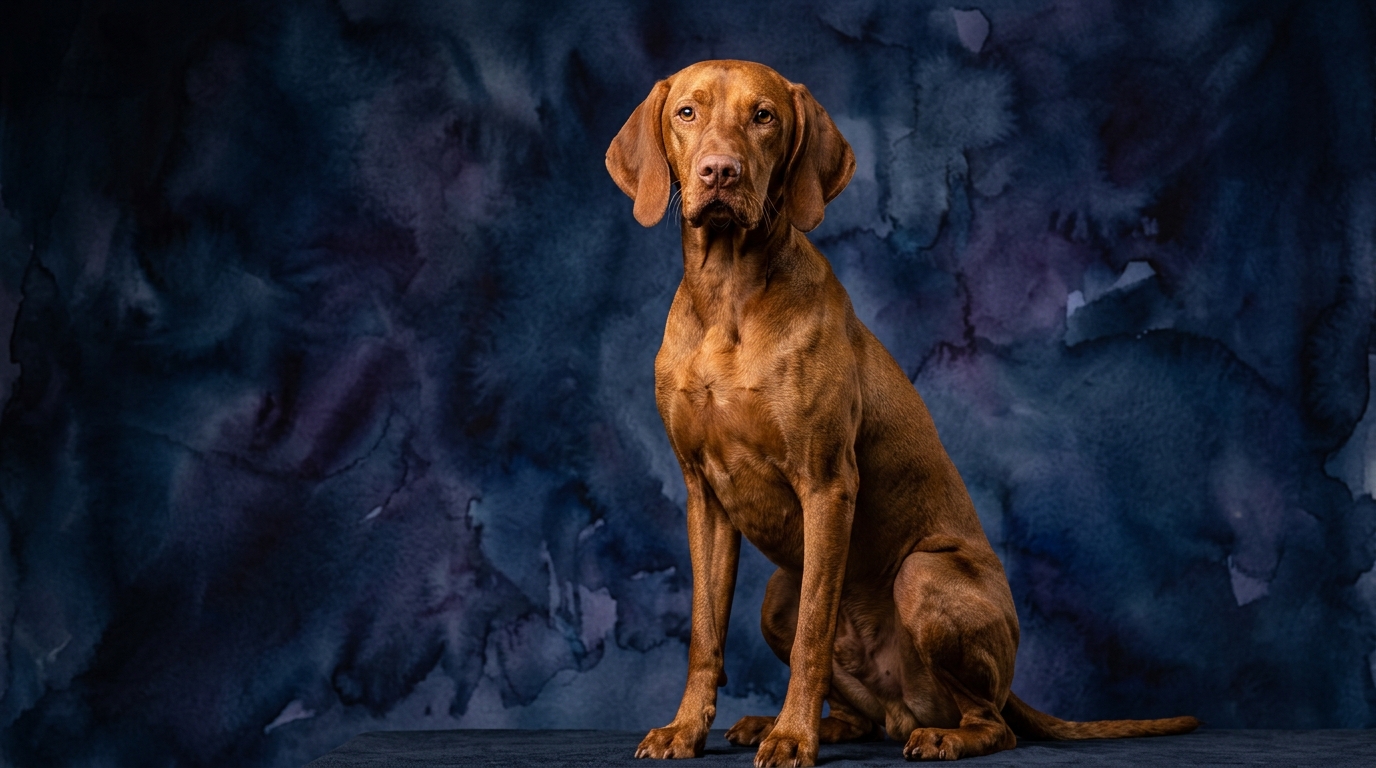
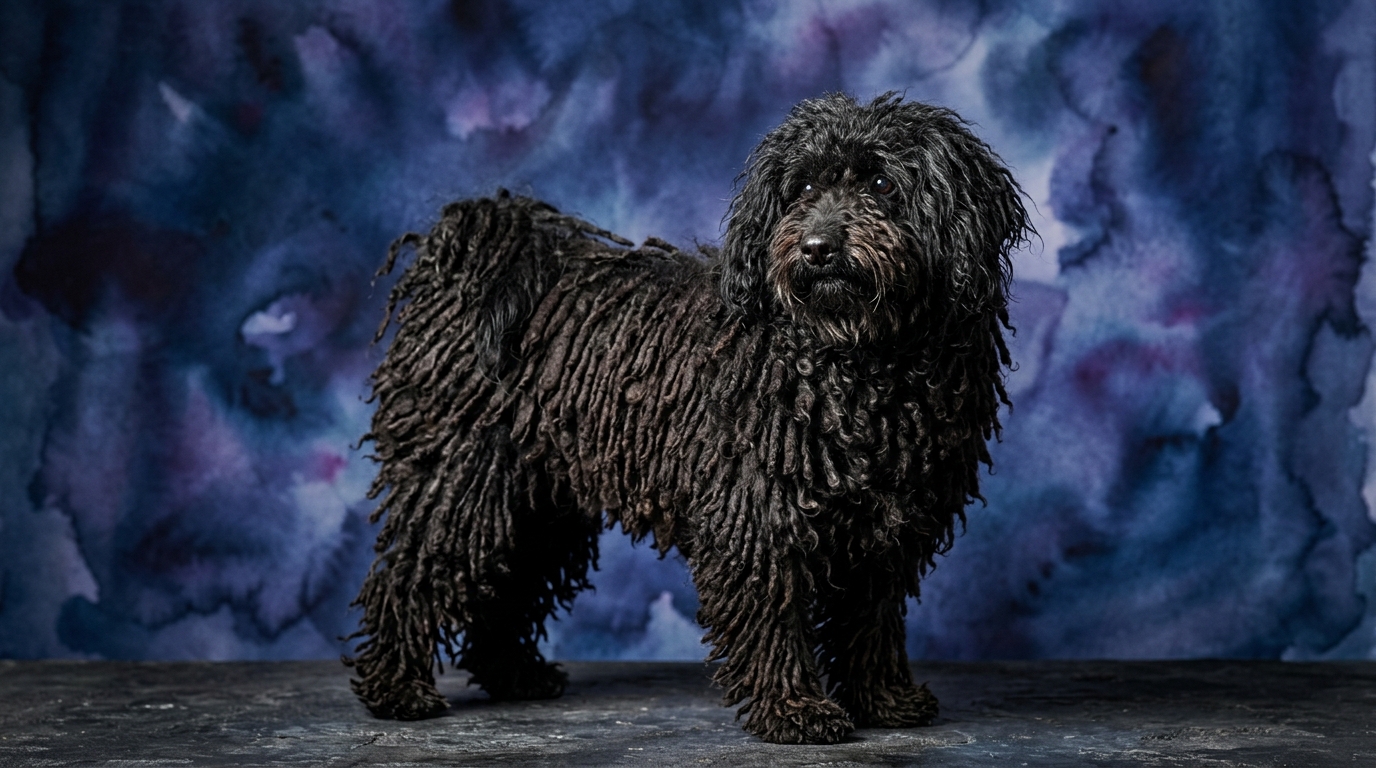
Side-by-side IQ Profile: Vizsla vs. Puli
The Cosmic Pet IQ Lab evaluates canine intelligence across five key dimensions: Problem Solving, Training Speed, Social Intelligence, Instinctive Drive, and Memory. For the Vizsla, a Sporting breed, these scores reflect its heritage as an agile, collaborative hunter. Its Problem Solving is rated 4/5, indicating an ability to navigate complex environments and devise strategies to achieve goals, such as flushing game or retrieving waterfowl from challenging terrain. Training Speed also scores 4/5, as Vizslas typically grasp new commands and routines quickly, driven by a strong desire to work alongside their human companions. Their Social Intelligence is exceptional at 5/5, showcasing an innate attunement to human emotions, intentions, and subtle cues, fostering deep, intuitive partnerships. The Vizsla's Instinctive Drive is a robust 5/5, characterized by an intense prey drive, a natural retrieve instinct, and tireless endurance in pursuit. Finally, Memory stands at 4/5, allowing them to retain learned behaviors, track game routes, and recall specific locations with impressive accuracy.
In contrast, the Puli, a Herding breed, presents a different cognitive blueprint, shaped by centuries of managing livestock independently. Its Problem Solving also registers 4/5, but this manifests in resourceful decision-making on the field, such as strategically positioning itself to guide a flock or anticipating animal movements to prevent strays. Training Speed is likewise 4/5, indicating a quick learner, though often with a more independent approach that requires clear, consistent, and purpose-driven instruction. The Puli's Social Intelligence is rated 3/5; while observant and capable of forming bonds, their focus often leans towards their immediate task or environment rather than constant human collaboration, exhibiting a more self-reliant disposition. Instinctive Drive scores 3/5, reflecting a powerful herding instinct to control and gather, distinct from a sporting dog's pursuit, and often expressed with tenacious determination. Memory for the Puli is 4/5, crucial for remembering intricate herding patterns, flock dynamics, and established boundaries over vast areas.
Where the Vizsla Wins Cognitively
The Vizsla’s cognitive strengths shine brightest in areas demanding profound partnership and focused, physical application. Their unparalleled 5/5 Social Intelligence allows them to form an almost telepathic bond with their owners, anticipating commands and reacting to the slightest shifts in body language or tone. This deep attunement makes them exceptional collaborators, whether tracking game, navigating an agility course, or simply responding to a quiet request at home. This social acumen translates into a dog that not only understands but genuinely seeks to align its actions with human intent. Furthermore, the Vizsla’s 5/5 Instinctive Drive, specifically its potent prey and retrieve drive, is a cognitive advantage for specific tasks. This isn't just about energy; it's about a hardwired, relentless focus on a task, making them incredibly efficient and driven in pursuits like bird hunting or competitive retrieving, where sustained, purposeful action is key. Their ability to maintain intense concentration on a scent trail or a thrown dummy for extended periods showcases a specific type of cognitive endurance and goal-orientation that is truly remarkable.
Where the Puli Wins Cognitively
The Puli's cognitive edge lies in its capacity for independent thought and autonomous decision-making within complex, dynamic environments. While its Problem Solving score is shared with the Vizsla (4/5), the Puli's manifestation of this trait is distinctly self-directed. A Puli excels at assessing fluid situations, such as a scattering flock or an unfamiliar pasture, and devising solutions without constant human intervention. Their historical role demanded them to be strategic thinkers, capable of managing livestock across vast landscapes, often out of sight or earshot of a shepherd. This requires a robust internal compass and a confidence in their own judgment. Their 3/5 Instinctive Drive, while lower numerically than the Vizsla's, represents a different kind of cognitive tenacity—a persistent, sometimes stubborn, application of their herding impulse. This drive isn't about rapid pursuit but about control, containment, and the strategic manipulation of movement. A Puli cognitively 'wins' in scenarios requiring a dog to think for itself, to be resourceful in unpredictable circumstances, and to apply its innate drives with a calculated, self-assured independence.
Which is Easier to Train and Why
When considering ease of training, the Vizsla generally presents a more straightforward path for the average owner due to its higher Social Intelligence (5/5). Vizslas possess an inherent desire to please and a profound need for connection, making them highly receptive to positive reinforcement and eager to comply with commands. Their attentiveness to human cues means they often pick up new behaviors quickly, not just because of their 4/5 Training Speed, but because the act of learning and working alongside their person is intrinsically rewarding. They thrive on praise and interaction, making them highly motivated partners in training sessions.
The Puli, while also scoring 4/5 in Training Speed, often requires a different approach due to its more independent nature (Social Intelligence 3/5) and its distinct type of Instinctive Drive (3/5). Pulik are intelligent learners, but their herding background instilled a self-reliance that can sometimes be perceived as stubbornness. They are less driven by overt human approval and more by a desire to understand the *purpose* of a command, or to apply their own judgment. Training a Puli often involves convincing them that your command aligns with their innate drives or makes logical sense in their world. They may test boundaries and require consistent, firm, but fair guidance. While they learn quickly, they might not always offer the same enthusiastic, collaborative compliance as a Vizsla, requiring an owner who understands and respects their independent spirit. For instance, a Vizsla might retrieve a ball repeatedly for the joy of partnership, while a Puli might do it a few times and then decide there's a more important 'job' to be done, like patrolling the yard.
Which Suits Active Owners vs. Relaxed Owners
For active owners seeking a constant companion in their adventures, the Vizsla is an ideal match. Their 5/5 Instinctive Drive fuels an almost boundless energy requirement, necessitating significant daily exercise that often includes high-intensity activities like running, hiking, or field sports. Their 5/5 Social Intelligence means they thrive on being an integral part of family outings and activities, preferring to be constantly engaged with their human partners. A Vizsla isn't content to simply observe; it wants to participate fully and often leads the charge. Owners who enjoy frequent, long, and vigorous outdoor pursuits will find a Vizsla to be an enthusiastic and tireless partner, both physically and mentally.
The Puli, while certainly not a couch potato, caters to a different kind of active owner. Its 3/5 Instinctive Drive, primarily focused on herding, means it needs purposeful activity and mental engagement rather than just endless physical exertion. They are well-suited for owners who appreciate a dog with a 'job,' whether that's agility, herding trials, or simply patrolling a secure yard with a keen eye. While they need regular walks and opportunities to stretch their legs, their mental stimulation often comes from problem-solving and establishing order, rather than relentless physical output. A Puli can be more content observing its surroundings and managing its territory, making it suitable for owners who might prefer structured activities and intellectual challenges over constant, high-octane companionship, though they still require consistent engagement. A 'relaxed owner' might struggle with either breed's needs, but a Puli might be a better fit for an owner whose 'active' lifestyle involves less constant, direct interaction and more independent work.
The Verdict
For owners seeking a deeply connected, highly collaborative canine partner for active pursuits like running, hunting, or intense dog sports, where social attunement and a strong retrieve drive are paramount, the Vizsla offers an unmatched partnership.
For those who appreciate a self-reliant, watchful companion with a strong sense of purpose, capable of independent problem-solving and suited to structured activities like herding or agility, valuing a dog with a distinct, sometimes independent, character, the Puli is an excellent choice.
🧠 Find Your Pet's IQ Score
Our Pet IQ Lab assessment covers 25+ tests across 5 cognitive dimensions — personalized to your breed.
Take the Full IQ Test →Frequently Asked Questions
Are Vizslas or Pulis better with children?
Vizslas, with their 5/5 social intelligence, are generally very tolerant and seek interaction, often forming strong bonds and enjoying play with children. Pulis, while protective of their 'flock,' can be less overtly affectionate and might try to 'herd' children, requiring careful supervision and training to ensure appropriate interactions.
Do Vizslas and Pulis need similar amounts of exercise?
Both breeds are active, but their exercise needs differ in type. Vizslas require intense, sustained physical activity for their 5/5 instinctive drive, often off-leash running or retrieving. Pulis need regular, purposeful activity and mental challenges, but their energy output is often directed more towards patrolling or structured tasks rather than relentless sprinting.
Which breed is more prone to separation anxiety?
Vizslas, due to their 5/5 social intelligence and strong desire for human companionship, are more susceptible to separation anxiety if left alone for extended periods. Pulis, with their more independent nature (3/5 social intelligence), can tolerate solitude better, provided their needs for mental stimulation and security are met.