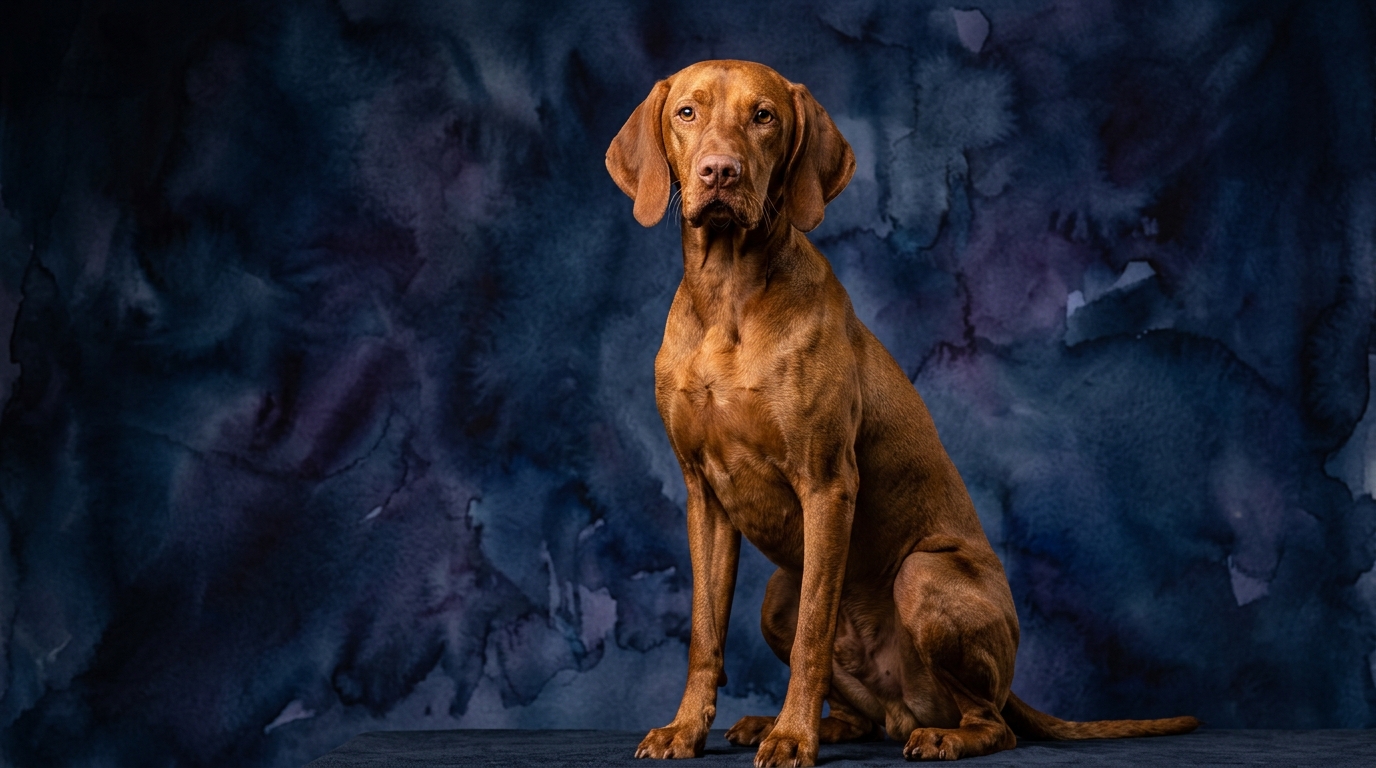
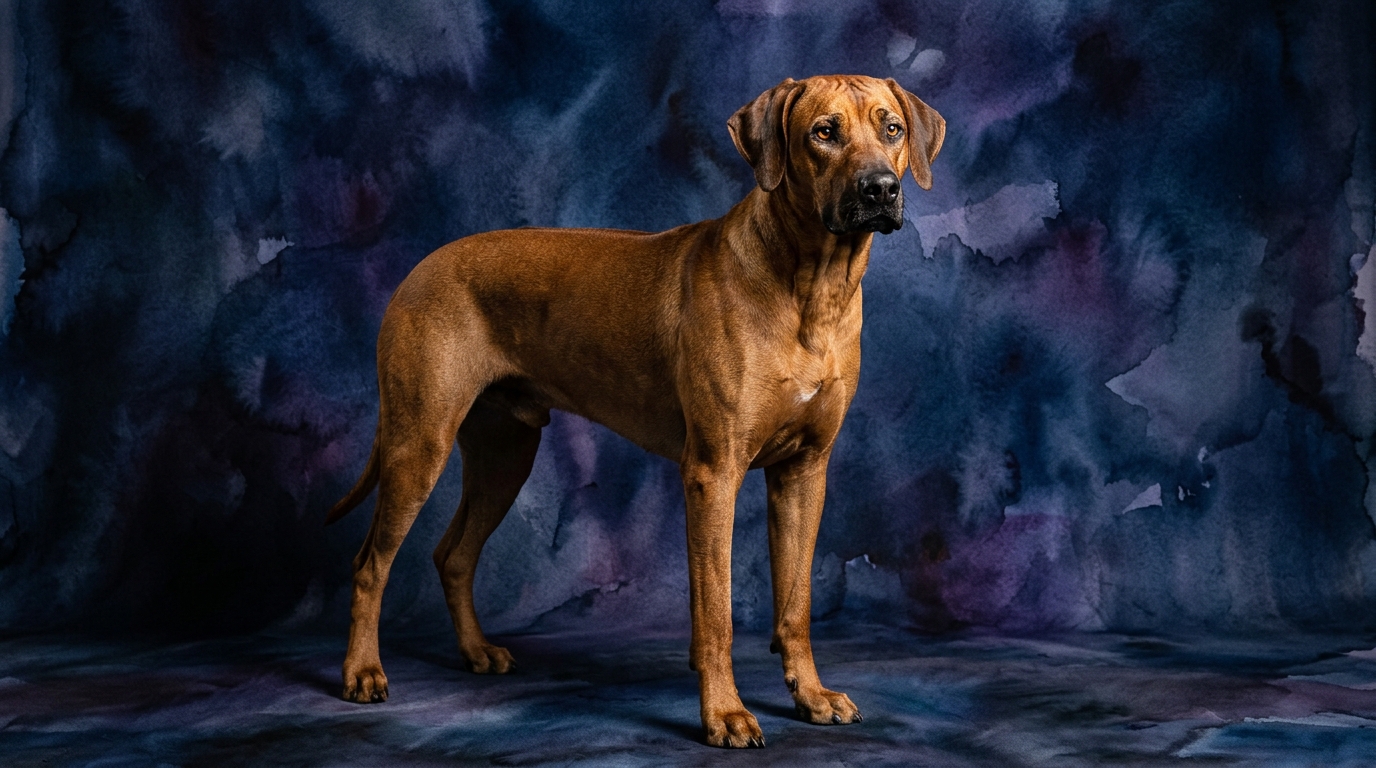
Side-by-Side IQ Profile: Sporting Grace vs. Hound Tenacity
Hailing from the Sporting group, the Vizsla earns a commendable Coren rank of #31, reflecting a robust cognitive toolkit. The Cosmic Pet Pet IQ Lab scores reveal a breed with exceptional social intelligence (5/5), indicating a profound capacity for understanding human cues and forming deep bonds, often earning them the "velcro dog" moniker. Their training speed (4/5) is impressive, allowing them to absorb new commands and routines with relative swiftness, driven by an eager-to-please temperament. Problem-solving skills are strong (4/5), enabling them to navigate complex tasks and adapt effectively, while their memory (4/5) supports long-term retention of learned behaviors. Crucially, their instinctive drive (5/5) is acutely tuned towards cooperative hunting, making them highly motivated partners in field work and active sports.
In contrast, the Rhodesian Ridgeback, a member of the Hound group, holds a Coren rank of #52, suggesting a different cognitive emphasis. The Cosmic Pet Pet IQ Lab assessment shows a more moderate spread across cognitive dimensions. Their social intelligence (3/5) points to a dog that forms strong attachments but often displays a more reserved or independent demeanor, not always seeking constant human interaction or approval. Training speed (3/5) is steady but requires more patience and consistency; they are not as quick to pick up new commands as some breeds, preferring to process information thoroughly. Problem-solving (3/5) is characterized by a thoughtful, sometimes stubborn approach, where they might independently assess situations rather than immediately deferring to human direction. Their memory (3/5) is reliable for practical tasks. The instinctive drive (3/5) in a Ridgeback is powerful, geared towards tracking and independent decision-making, historically vital for their original role as lion hunters, requiring self-reliance and acute observational skills rather than solely cooperative action.
Where the Vizsla Excels Cognitively
The Vizsla's cognitive profile paints a picture of a highly adaptable and cooperative canine partner. Their unparalleled social intelligence (5/5) means they are incredibly attuned to their human companions' moods and intentions, making them intuitive and responsive. This high social acumen, combined with their rapid training speed (4/5), allows for a fluid communication dynamic, where they are not only quick to learn but also eager to engage in shared activities. A Vizsla's problem-solving ability (4/5) shines in agility courses or complex scent work, where they can independently strategize within a framework provided by their handler. Their robust memory (4/5) ensures that once a lesson is learned, it is deeply ingrained, making them reliable performers. Furthermore, their instinctive drive (5/5) is perfectly aligned with active, cooperative pursuits, channeling their energy into productive engagement. This synergy makes the Vizsla a cognitive powerhouse for owners seeking a truly collaborative canine experience.
Where the Rhodesian Ridgeback's Cognitive Strengths Lie
While the Rhodesian Ridgeback's scores might appear lower on paper, their cognitive profile represents a different kind of strength, honed for independence and resilience. Their problem-solving (3/5) is not necessarily slower but often more deliberate and self-reliant; they are capable of making decisions in the absence of human direction, a trait invaluable in their original hunting role. This independence, stemming partly from a moderate social intelligence (3/5), means they are less prone to separation anxiety and can be content with their own company for periods, making them robust companions who don't always demand constant interaction. Their instinctive drive (3/5), though not rated as high for cooperative tasks, is profoundly focused on observation, patrolling, and protection, exhibiting a keen awareness of their surroundings and a strong sense of territory. Training speed (3/5) reflects a dog that processes information thoroughly; once a Ridgeback understands a command and its purpose, they commit it to memory (3/5) with lasting comprehension, making their learned behaviors incredibly stable. This breed excels in situations requiring a thoughtful, self-assured presence.
Ease of Training: A Question of Motivation and Method
When comparing ease of training, the Vizsla clearly stands out as the more readily trainable breed. Their exceptional social intelligence (5/5) means they are highly motivated by human approval and connection, making positive reinforcement incredibly effective. Couple this with a training speed of 4/5, and Vizslas typically pick up new commands and complex sequences with enthusiasm and minimal repetition. They are often described as "velcro dogs" precisely because their cognitive makeup drives them to be constantly engaged with and responsive to their family, translating into a strong desire to please during training sessions.
The Rhodesian Ridgeback, conversely, presents a more nuanced training experience. Their training speed of 3/5 indicates they require more patience and consistency. Their social intelligence (3/5) suggests they are less driven by constant human affirmation and more by their own assessment of a situation. Ridgebacks possess a strong, independent streak; they might question the utility of a command or choose to perform it only if it aligns with their perceived self-interest. This isn't stubbornness, but rather a reflection of their problem-solving (3/5) and instinctive drive (3/5) for independent thought. Effective Ridgeback training involves clear communication, fairness, and establishing trust and respect, often appealing to their logical side rather than relying solely on their desire to please. They are certainly not as "easy" as a Vizsla, demanding a committed, understanding handler.
Active Owners vs. Deliberate Companionship
The choice between a Vizsla and a Rhodesian Ridgeback often comes down to the owner's lifestyle and what they seek in a canine companion's energy and engagement. For owners with an active lifestyle who desire a constant, enthusiastic partner in their adventures, the Vizsla is an ideal match. Their instinctive drive (5/5) means they thrive on consistent physical activity – running, hiking, swimming, or competitive dog sports. Their high problem-solving (4/5) and memory (4/5) also necessitate significant mental stimulation to prevent boredom, making them perfect for owners who enjoy teaching new tricks or engaging in advanced training. They are truly "all-in" partners, demanding daily interaction and cooperative tasks.
The Rhodesian Ridgeback also requires substantial exercise, but their engagement profile is different. Their instinctive drive (3/5) is less about frantic, cooperative activity and more about purposeful exertion, such as long walks, jogs, or patrolling a secure yard. While they enjoy activity, their moderate social intelligence (3/5) means they are often content to observe and guard, rather than constantly seeking human-directed play or tasks. They are better suited for owners who are active but also appreciate a dog with a strong sense of self-possession and a more deliberate pace of interaction. They offer a calmer, more independent presence indoors compared to the often-intense Vizsla, making them suitable for those who prefer a dog that isn't constantly underfoot, yet still demands a committed, active lifestyle.
The Verdict
Opt for a Vizsla if you seek an intensely cooperative, highly trainable, and socially attuned partner for an active lifestyle, thriving on constant engagement and shared pursuits.
Choose a Rhodesian Ridgeback if you appreciate an independent, resilient, and thoughtful companion, willing to invest in patient training, and can provide ample exercise and mental stimulation that respects their self-assured nature.
🧠 Find Your Pet's IQ Score
Our Pet IQ Lab assessment covers 25+ tests across 5 cognitive dimensions — personalized to your breed.
Take the Full IQ Test →Frequently Asked Questions
Do Vizslas get along well with other pets or children?
Vizslas generally exhibit high social intelligence (5/5), making them typically good with other pets and children, especially when socialized early. Their cooperative nature and desire for companionship extend to all family members, fostering harmonious multi-pet households.
Is a Rhodesian Ridgeback a good choice for first-time dog owners?
While intelligent, a Rhodesian Ridgeback's independent nature and moderate training speed (3/5) can present challenges for first-time owners. They require consistent, patient leadership and a thorough understanding of their unique drives, making them better suited for experienced individuals.
How much exercise do these breeds truly need daily?
Both breeds require significant daily exercise, but in different ways. Vizslas, with their 5/5 instinctive drive, need vigorous, cooperative activity for at least 60-90 minutes. Ridgebacks, though less frantic, still require 45-60 minutes of purposeful exercise to satisfy their patrolling and tracking instincts.