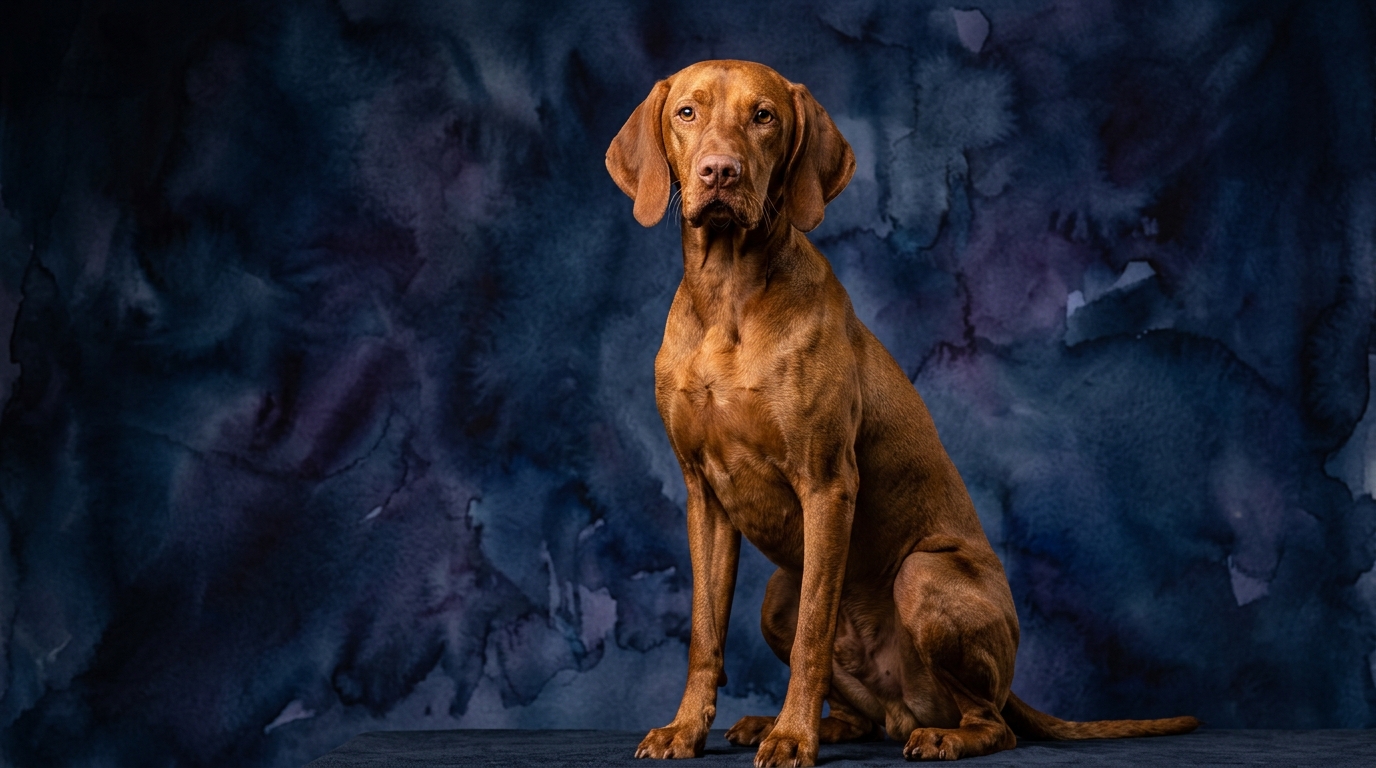

Side-by-Side Cognitive Profiles: Vizsla vs. Russian Toy
The Cosmic Pet Pet IQ Lab provides a granular view of canine intelligence across five critical dimensions. For the Vizsla, a breed often celebrated for its versatility, we observe a robust cognitive blueprint: Problem Solving is rated 4/5, indicating a strong capacity to navigate novel situations and figure out solutions independently. Training Speed also stands at 4/5, suggesting a quick grasp of new commands and routines. Social Intelligence is exceptionally high at 5/5, reflecting a profound attunement to human cues and emotional states. Instinctive Drive, particularly for hunting and retrieving, is equally potent at 5/5, showcasing a powerful innate motivation for specific tasks. Memory, crucial for learning and recall, is solid at 4/5, ensuring lessons learned are retained effectively.
In contrast, the Russian Toy, a breed developed primarily for companionship, presents a different, yet equally fitting, cognitive profile. Its Problem Solving ability is rated 3/5, indicating a moderate capacity to work through challenges, often relying on learned behaviors or human assistance. Training Speed is also 3/5, meaning they learn at a steady pace, requiring consistent and patient instruction. Social Intelligence is rated 3/5, suggesting a pleasant and responsive interaction style, though perhaps not with the intense human focus seen in some working breeds. Instinctive Drive is likewise 3/5, reflecting a moderate level of innate behaviors, less geared towards complex working tasks. Memory is consistently rated at 3/5, indicating a reliable ability to remember routines and commands, albeit not with the same depth as breeds with higher scores.
These ratings illustrate not a hierarchy of 'smartness,' but rather a specialization of mental faculties. The Vizsla's profile points to a dog built for active partnership and complex, drive-motivated tasks, where quick learning, strong recall, and keen social awareness are paramount. The Russian Toy's profile, on the other hand, describes a dog whose cognitive strengths are perfectly aligned with its role as an engaging, manageable companion, thriving on routines and moderate mental engagement rather than intense problem-solving or high-drive activities.
Where the Vizsla's Cognition Excels
The Vizsla's cognitive strengths are evident across nearly all five dimensions. Its 4/5 rating in Problem Solving means these dogs are adept at navigating complex environments, from figuring out how to open a tricky gate to strategizing during a scent work exercise. This capacity for independent thought and resolution makes them excellent partners for advanced obedience, agility, or hunting trials, where adapting to unforeseen circumstances is key. They don't just follow commands; they often understand the underlying goal.
Perhaps the most striking advantage for the Vizsla lies in its perfect 5/5 scores for both Social Intelligence and Instinctive Drive. Their profound social intelligence allows them to form exceptionally deep bonds with their human families, reading subtle body language and emotional shifts with remarkable accuracy. This makes them incredibly responsive and eager to please, creating a seamless partnership. Coupled with a powerful instinctive drive for tasks like pointing and retrieving, the Vizsla possesses an unparalleled internal motivation to work alongside its owner, making complex training feel like an extension of their natural inclinations rather than a chore. Their 4/5 memory ensures that these intricate learned behaviors and social cues are retained over time, building a lasting foundation for their versatile skill set.
Where the Russian Toy's Cognitive Profile Shines
While the Russian Toy's individual cognitive scores are generally moderate compared to the Vizsla, its overall profile presents a unique set of advantages, particularly for specific lifestyles. Its 3/5 rating in Problem Solving, for instance, means it's less likely to independently devise elaborate strategies to escape or get into mischief compared to a high-scoring breed. This can translate to a more manageable household companion, where an owner isn't constantly outwitted by their pet's ingenious schemes.
The Russian Toy's moderate 3/5 in Instinctive Drive is a significant benefit for owners seeking a companion without intense demands for physical or mental 'work.' Unlike breeds with powerful drives that require extensive outlets, the Russian Toy is content with regular walks, playtime, and mental enrichment proportionate to its size. This reduces the risk of drive-related behavioral issues, such as excessive hunting, digging, or restlessness, if daily mental and physical stimulation isn't consistently high-intensity. Similarly, its 3/5 Social Intelligence provides a pleasant, affectionate interaction style that is engaging without being overly demanding of constant human attention, making them wonderfully adaptable to various home environments where owners might not be able to dedicate every waking moment to their dog.
Ease of Training: Behavioral Differences in Focus
When considering ease of training, the Vizsla's cognitive profile suggests a swifter and potentially more complex learning journey. Their 4/5 Training Speed means they pick up commands rapidly, often anticipating what's next. This, combined with their 5/5 Social Intelligence and 5/5 Instinctive Drive, translates into a dog that is highly motivated to cooperate and thrives on task-oriented interaction. They learn quickly not just because they're capable, but because they genuinely enjoy the process of working with their human. However, this also means their training needs to be engaging and consistent; a Vizsla with untapped mental energy or insufficient direction can quickly become bored and channel its problem-solving abilities into less desirable behaviors.
The Russian Toy, with its 3/5 Training Speed, requires a more consistent and patient approach. While capable of learning a wide array of commands, they may not grasp concepts as quickly as a Vizsla. Their moderate 3/5 Instinctive Drive means that while they enjoy training, it might not be the all-consuming passion it is for a Vizsla. Behavioral differences here are crucial: a Vizsla might require varied, challenging training sessions to prevent mental stagnation, always pushing for the next level. A Russian Toy, conversely, benefits from short, positive, repetition-based sessions, focusing on clarity and rewarding success. Their moderate Problem Solving (3/5) means they might not try to 'outsmart' the trainer, but also won't independently figure out complex sequences without clear guidance. For both, positive reinforcement is key, but the *intensity* and *complexity* of engagement differ significantly.
Matching Breeds to Owners: Active vs. Relaxed Lifestyles
The Vizsla's entire cognitive architecture points towards an ideal partnership with active, engaged owners. Their 5/5 Instinctive Drive demands significant outlets, whether it's daily long runs, field work, agility, or extensive hiking. Owners who can channel this drive through consistent training and physical activity will find an incredibly devoted and capable companion. Their 5/5 Social Intelligence means they thrive on close human interaction and can become distressed if left alone for extended periods without sufficient mental and physical engagement. They need owners who are prepared for a 'velcro dog' that wants to be involved in every aspect of their lives, providing mental puzzles and physical challenges to satisfy their 4/5 Problem Solving and 4/5 Memory.
Conversely, the Russian Toy's cognitive profile aligns beautifully with more relaxed owners who appreciate a charming, affectionate presence without the same intensity of demands. Their 3/5 Instinctive Drive means they are content with moderate daily exercise, such as walks around the neighborhood or indoor play sessions, rather than requiring strenuous physical activity. Their 3/5 Social Intelligence makes them wonderful companions who enjoy affection and interaction but are often more independent than a Vizsla, potentially better suited for owners with busy schedules, provided they still receive regular attention. Owners looking for a delightful lap dog that is responsive and enjoys routine, without needing constant, high-level mental stimulation or extensive outdoor adventures, will find the Russian Toy to be a perfect fit.
The Verdict
Choose a Vizsla if you are an active individual or family seeking a highly engaged, versatile partner for outdoor adventures, complex training, and deep, interactive companionship, prepared to meet their significant physical and mental demands.
Opt for a Russian Toy if you desire a charming, affectionate, and relatively low-maintenance companion, ideally suited for apartment living or less active lifestyles, who thrives on consistent routines and moderate mental and physical engagement.
🧠 Find Your Pet's IQ Score
Our Pet IQ Lab assessment covers 25+ tests across 5 cognitive dimensions — personalized to your breed.
Take the Full IQ Test →Frequently Asked Questions
Do Vizslas suffer from separation anxiety more than Russian Toys?
Vizslas, with their 5/5 Social Intelligence and strong desire for companionship, can be more prone to separation anxiety if their needs for interaction and mental stimulation are not adequately met. Russian Toys, with a moderate 3/5 Social Intelligence, might exhibit less intense dependency, though individual temperament always plays a role.
Which breed is better for first-time dog owners?
For first-time dog owners, the Russian Toy's moderate demands in terms of exercise, training complexity, and instinctive drive often make it a more manageable choice. Vizslas, while trainable, require a significant commitment to understanding and channeling their high energy and cognitive needs, which can be challenging for novices.
Can a Russian Toy participate in dog sports like agility?
Yes, a Russian Toy can certainly participate in dog sports like agility, particularly in categories adapted for smaller breeds. While their 3/5 Training Speed and Problem Solving might mean they don't pick up complex sequences as rapidly as a Vizsla, their moderate drive and willingness to please make them capable and enthusiastic participants with consistent, positive training.