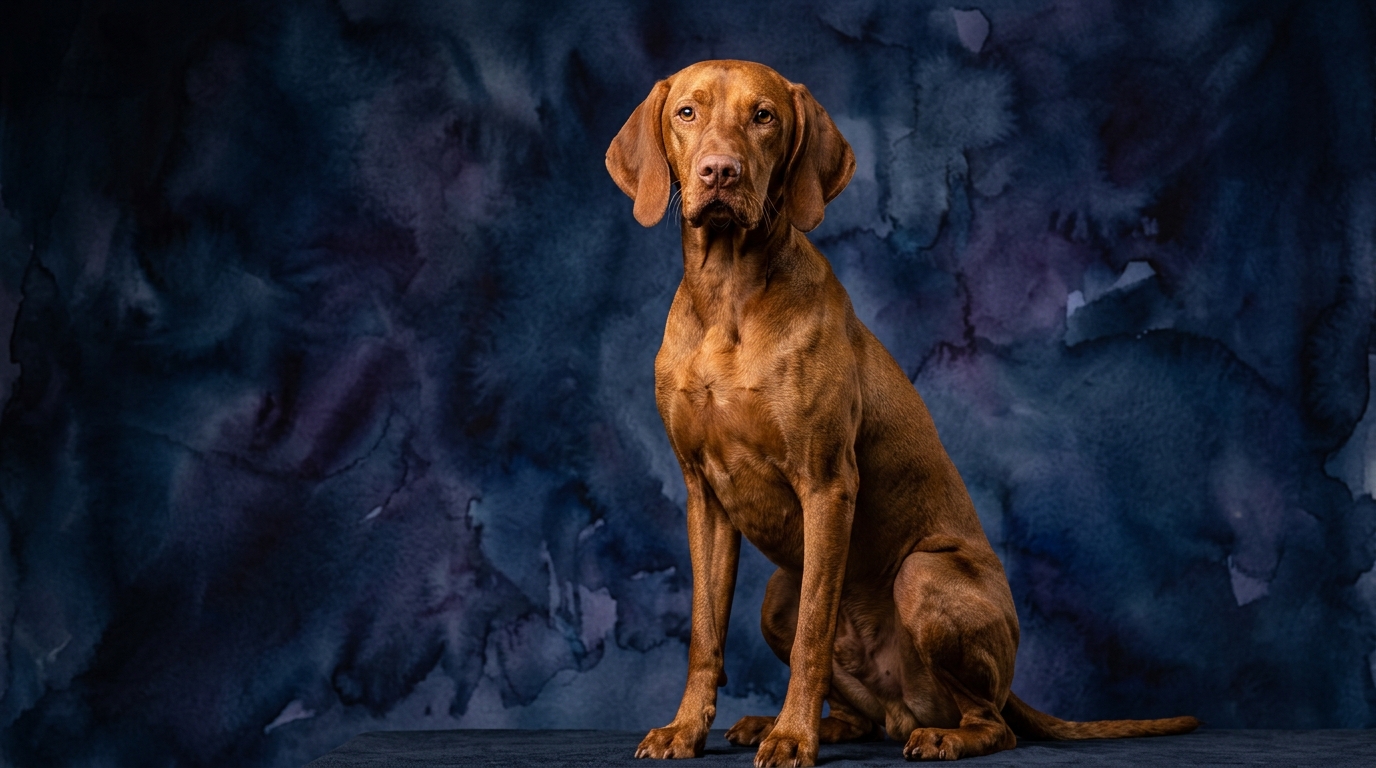
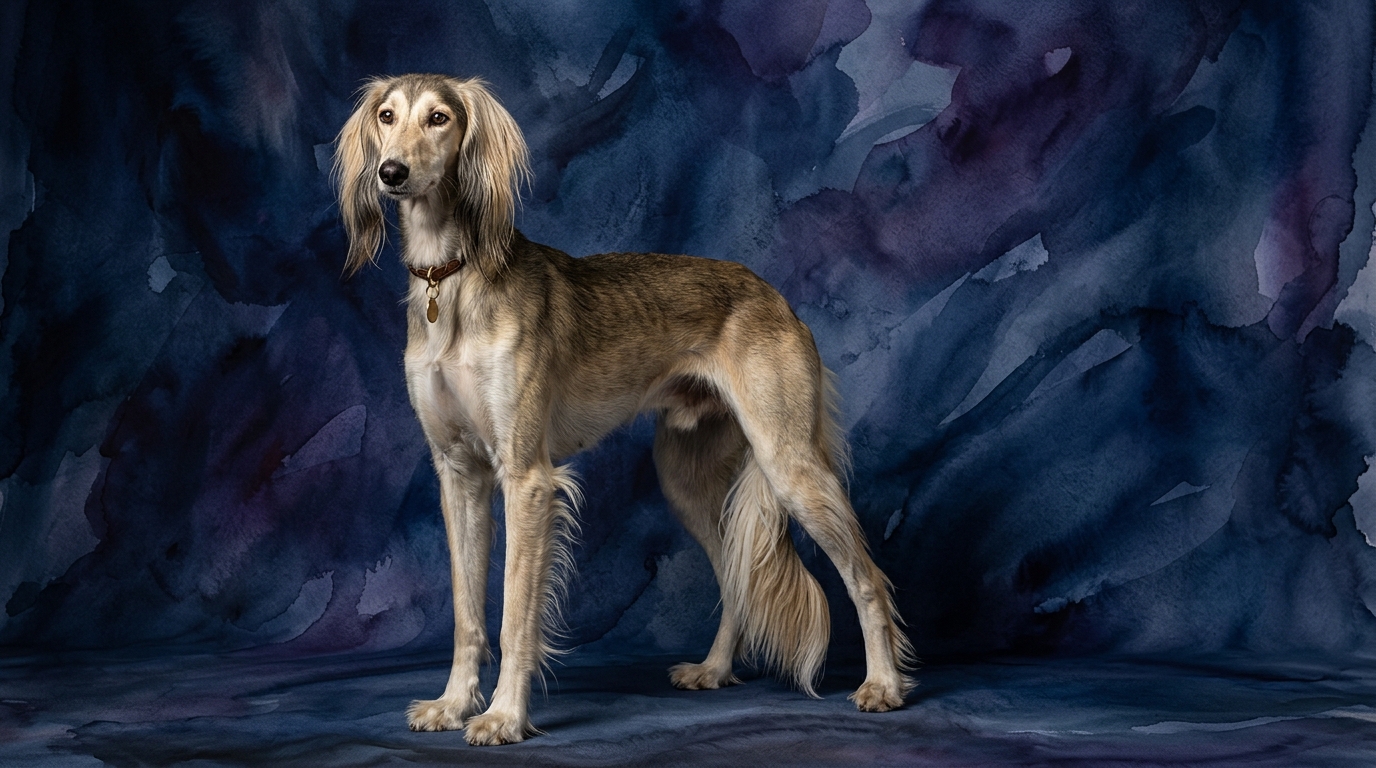
Side-by-Side IQ Profile: Vizsla vs. Saluki
The Cosmic Pet Pet IQ Lab employs five key dimensions to evaluate canine intelligence, offering a nuanced understanding beyond simple obedience. Here's how the Vizsla and Saluki measure up:
**Vizsla (Coren Rank #31)**
**Problem Solving (4/5):** This breed demonstrates a notable capacity for navigating novel situations and independently strategizing solutions to environmental challenges, often showing initiative in understanding cause and effect.
**Training Speed (4/5):** Vizslas typically absorb new commands and routines with efficiency, responding well to consistent, positive reinforcement and often anticipating the next step in a learned sequence.
**Social Intelligence (5/5):** Their exceptional attunement to human emotional states and intentions allows for profound cooperative bonds, making them highly responsive to subtle cues from their handlers.
**Instinctive Drive (5/5):** Possessing a robust prey drive and an inherent inclination for close partnership in hunting tasks, they exhibit a powerful desire to work alongside humans in a purposeful manner.
**Memory (4/5):** Vizslas effectively retain complex sequences of learned behaviors and environmental information, applying past experiences to new, similar contexts with remarkable recall.
**Saluki (Not Coren-Ranked)**
**Problem Solving (3/5):** Salukis are capable of solving direct problems, especially those related to their primary hunting function, but may display less interest in complex, human-devised puzzles or abstract learning unrelated to their instincts.
**Training Speed (3/5):** They learn at a moderate pace, often requiring clear motivation and patient repetition, responding most effectively when training aligns with their intrinsic motivations and offers immediate, valuable rewards.
**Social Intelligence (3/5):** While forming deep attachments to their chosen human family, Salukis can exhibit a reserved demeanor with strangers, demonstrating a more selective and independent approach to social interaction.
**Instinctive Drive (3/5):** Their drive is intensely focused on the visual pursuit of prey, valuing independent action and rapid response over cooperative hunting strategies or scent-based tracking.
**Memory (3/5):** Salukis retain learned behaviors and environmental cues, though their application of memory might be more context-specific, recalling information most strongly when it relates directly to their core interests or routine.
Where the Vizsla Excels Cognitively
The Vizsla's cognitive architecture shines brightest in scenarios demanding intricate collaboration and nuanced understanding of human intent. Their exceptional social intelligence, rated 5/5, means they are masters at reading body language and vocal tones, allowing them to anticipate commands and respond with remarkable precision in activities like advanced obedience or service work.
This is coupled with a powerful instinctive drive, also 5/5, which translates into a strong desire to work *with* their human, rather than independently, making them highly receptive to training that involves shared goals. Their problem-solving capacity (4/5) often manifests in creative solutions within a human-directed context, such as figuring out how to navigate an agility course with a novel obstacle or adapting their retrieve technique to an unusual item.
The Vizsla's memory (4/5) supports this by allowing them to quickly recall complex sequences of commands and apply past successes to new, similar challenges, making them incredibly adaptable and eager learners in diverse environments. Their Coren ranking of #31 further highlights their capacity for understanding new commands efficiently and obeying them reliably.
Where the Saluki Excels Cognitively
The Saluki's unique cognitive strengths are profoundly shaped by its ancient role as a sighthound, where independent decision-making and lightning-fast reactions are paramount. While their problem-solving is rated 3/5 in general terms, this score belies their specialized genius for spatial reasoning and immediate action during a high-speed chase.
They possess an extraordinary ability to scan vast landscapes, identify distant movement, and calculate optimal pursuit trajectories over varied terrain without human intervention. Their instinctive drive (3/5) is a focused, almost single-minded pursuit of visual prey, demanding a distinct form of mental acuity to anticipate a quarry's evasive actions and execute precise maneuvers at full sprint.
This cognitive specialization allows them to excel in environments where self-reliance, rapid visual processing, and instinct-driven responses are more valuable than close human cooperation or complex command sequences. They demonstrate a remarkable capacity for independent decision-making in the field, a testament to their evolved cognitive niche, which is not captured by obedience-focused ranking systems like Coren's.
Trainability: Vizsla vs. Saluki
The Vizsla generally presents as the more straightforward breed to train, a direct consequence of its higher ratings in training speed (4/5), social intelligence (5/5), and instinctive drive (5/5). Their inherent desire to partner with humans, coupled with a keen ability to interpret subtle cues, makes them eager participants in learning new behaviors and routines.
A Vizsla thrives on consistent, positive reinforcement, often seeking out opportunities for engagement and shared activity, quickly grasping complex commands and executing them reliably. For example, teaching a Vizsla a multi-step retrieve or a complex agility sequence is facilitated by their strong memory (4/5) and their intrinsic motivation to please and collaborate.
In contrast, the Saluki, with its 3/5 ratings across these same dimensions, requires a different training philosophy. Their independent nature, honed for autonomous hunting, means they might perceive commands as suggestions rather than absolute directives, especially if the command doesn't align with their immediate instincts or perceived self-interest. While they are capable of learning, their motivation often stems from personal reward or curiosity rather than a strong drive for compliance, demanding immense patience, high-value rewards, and a deep understanding of their sighthound psyche for successful training. A Saluki might learn a recall, but its execution can be conditional on the absence of a compelling visual distraction.
Matching Breeds to Lifestyles: Active vs. Relaxed Owners
The Vizsla is an ideal match for highly active owners who seek a constant companion for shared adventures and intellectual engagement. Their elevated scores in instinctive drive (5/5), social intelligence (5/5), and problem-solving (4/5) signify a profound need for both physical exertion and consistent mental stimulation. Owners who participate in activities like trail running, hiking, advanced dog sports (such as agility or field work), or who simply enjoy long, interactive play sessions will find the Vizsla’s boundless enthusiasm and eagerness to participate deeply rewarding.
A more relaxed owner might find a Vizsla’s persistent need for interaction and activity overwhelming, potentially leading to boredom-driven behaviors like excessive chewing or vocalization if their cognitive and physical needs are not met.
Conversely, the Saluki, despite its incredible bursts of speed and endurance during a chase, often displays a surprisingly calm and self-possessed demeanor within the home, making them potentially suitable for a more relaxed owner *provided* their specialized exercise needs are met. They require consistent, safe opportunities to sprint freely in a securely fenced area to satisfy their intense chase drive.
Once these physical needs are fulfilled, their social intelligence (3/5) and independent nature mean they are less demanding of constant interactive mental stimulation indoors, often content to lounge gracefully. An owner who can accommodate their unique exercise requirements but appreciates a dignified, often aloof presence at home might find a Saluki a gratifying companion.
The Verdict
Choose a Vizsla if you desire an intensely cooperative, highly trainable partner for active lifestyles and shared pursuits, valuing a dog that thrives on deep social connection and diverse mental challenges.
Choose a Saluki if you appreciate an elegant, independent companion with a specialized drive for high-speed chase, and you can provide secure spaces for them to express their natural instincts, understanding they offer a more reserved, self-possessed form of companionship.
🧠 Find Your Pet's IQ Score
Our Pet IQ Lab assessment covers 25+ tests across 5 cognitive dimensions — personalized to your breed.
Take the Full IQ Test →Frequently Asked Questions
Are Vizslas good with children?
Vizslas, with their high social intelligence and desire for companionship, can be excellent family dogs, often forming strong bonds with children. However, their boundless energy and exuberance mean supervision is key, especially with very young children, to ensure interactions are gentle and appropriate.
Do Salukis need a lot of grooming?
Salukis typically have a relatively low-maintenance coat, either feathered or smooth, requiring moderate grooming. Regular brushing helps to minimize shedding and keep their coat healthy, but they generally don't require extensive professional grooming.
Can a Saluki live in an apartment?
A Saluki can adapt to apartment living if their significant exercise requirements, particularly off-leash running in a secure area, are consistently met. They are generally calm and quiet indoors, but without sufficient outdoor activity, their natural instincts can lead to restlessness.