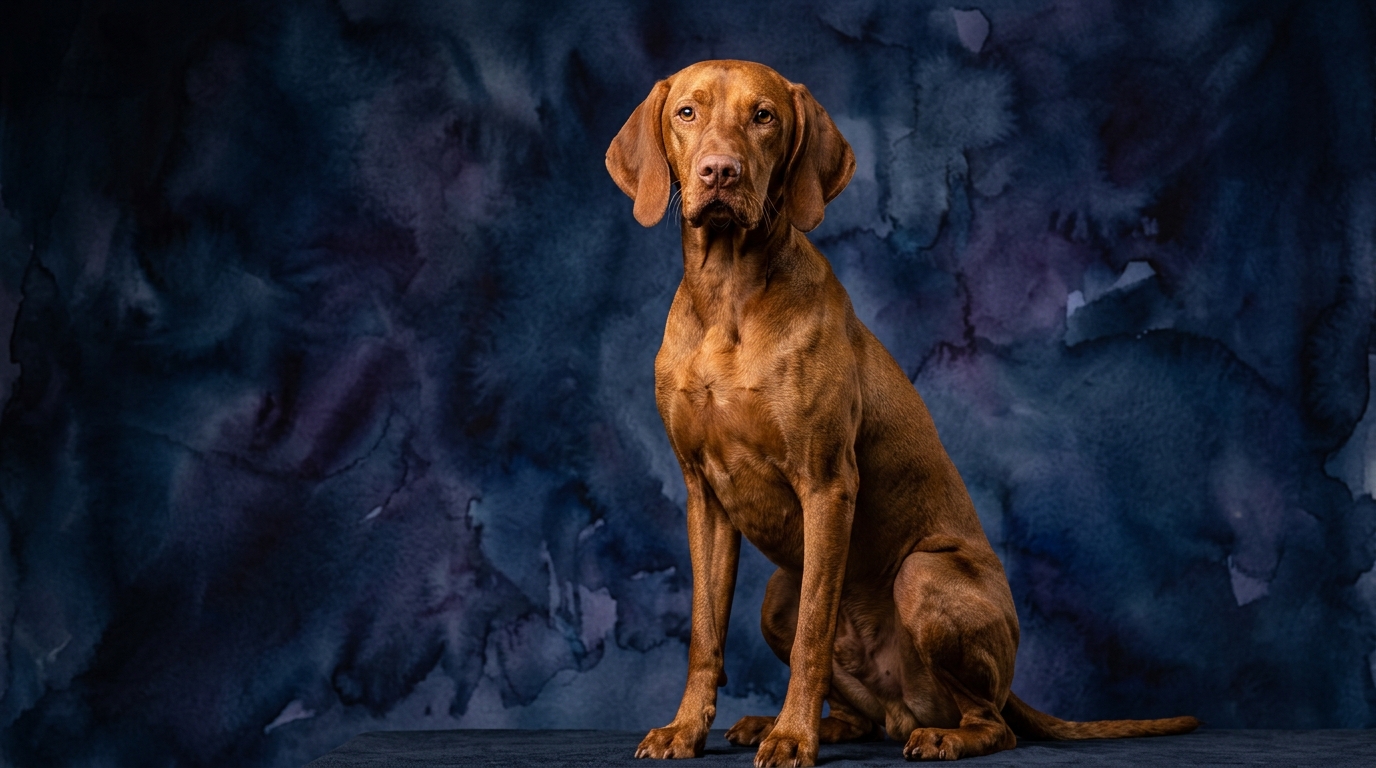
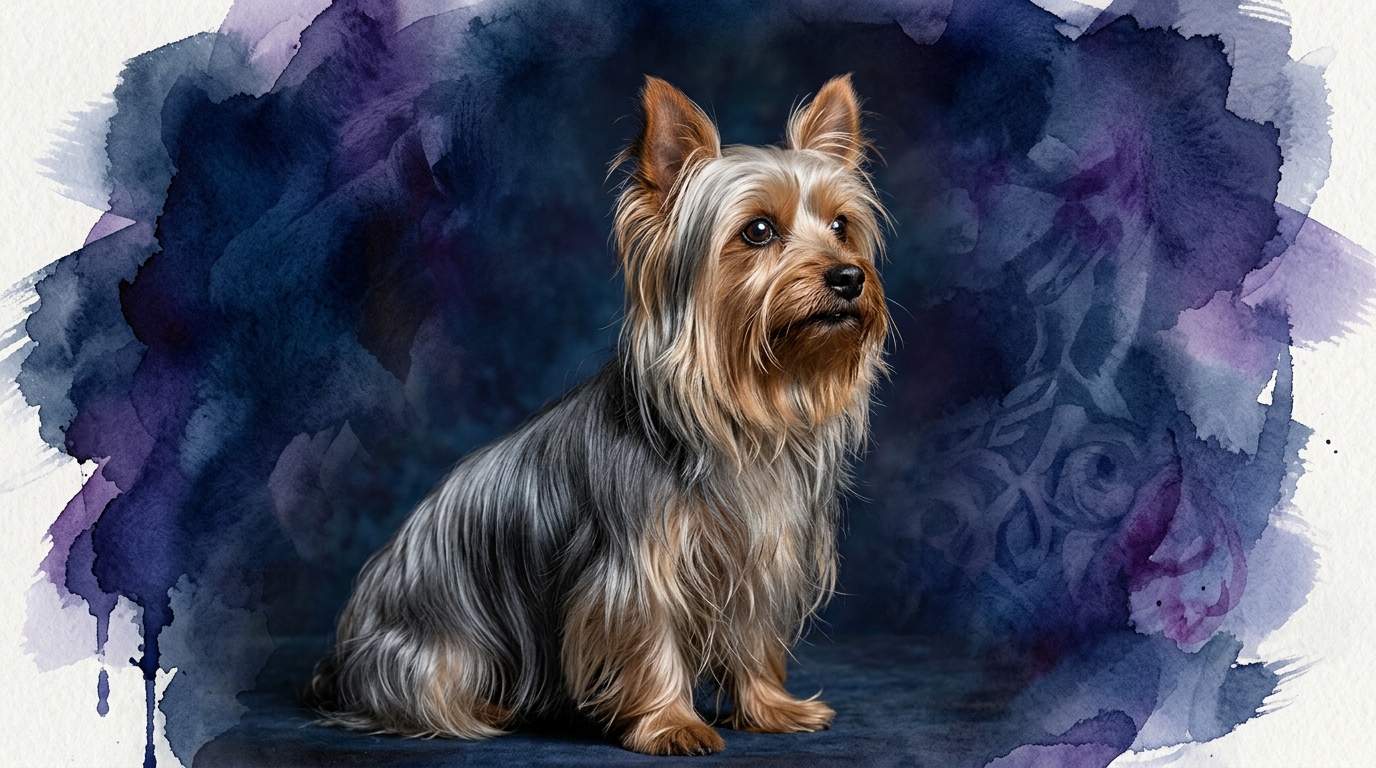
Side-by-Side Cognitive Profiles: Vizsla vs. Silky Terrier
The Cosmic Pet Pet IQ Lab employs a five-dimensional framework to assess canine intelligence, offering a nuanced view beyond simple obedience. Let's apply this lens to our two distinct breeds, the Vizsla and the Silky Terrier, examining how their historical roles have sculpted their cognitive strengths and approaches to the world.
The Vizsla, a versatile gundog ranked #31 by Coren, demonstrates a cognitive profile geared towards cooperative work and complex problem-solving in dynamic environments. Their Problem Solving is rated at 4/5, reflecting an aptitude for navigating intricate scenarios and devising solutions that often involve multiple steps or adapting to changing conditions. Training Speed for the Vizsla stands at 4/5, indicating a quick grasp of new commands and routines, often requiring fewer repetitions due to their eagerness to engage. A standout feature is their Social Intelligence at 5/5; Vizslas are exceptionally adept at interpreting human cues, body language, and emotions, fostering deep, communicative partnerships. Their Instinctive Drive, also 5/5, is profoundly strong, encompassing a powerful prey drive, a persistent desire to retrieve, and an innate motivation for sustained physical and mental engagement. Finally, their Memory is rated at 4/5, allowing them to retain complex sequences, commands, and environmental details crucial for effective field work over extended periods.
The Silky Terrier, a spirited Toy breed not individually ranked by Coren, presents a different, yet equally valid, cognitive blueprint suited to its heritage as a companion and vermin hunter. Their Problem Solving capacity is rated at 3/5, suggesting a practical, often independent approach to immediate, tangible challenges, such as navigating obstacles or outsmarting small prey, rather than abstract or multi-stage tasks. Training Speed for the Silky Terrier is 3/5; while capable of learning, they typically benefit from a patient, consistent approach, as their independent streak means they might not always prioritize human directives over their own assessments. Their Social Intelligence is 3/5, indicating strong bonds with their primary caregivers and an ability to read basic emotions, though they may be more discerning or reserved with strangers compared to the highly outgoing Vizsla. The Silky Terrier's Instinctive Drive is 3/5, primarily focused on their terrier heritage: a keen prey drive for small vermin, territorial alertness, and a desire to dig. Lastly, their Memory is 3/5, providing functional retention of routines, commands, and important sensory information, allowing them to recall training cues and recognize familiar faces and places.
Where the Vizsla's Cognition Excels
The Vizsla's cognitive architecture shines brightest in areas demanding deep partnership and complex task execution. Their superior Social Intelligence (5/5) allows them to anticipate handler intentions, read subtle cues, and engage in a nuanced two-way communication that is fundamental to their cooperative hunting style. This isn't just about obeying commands, but about true collaboration, where the dog actively interprets and responds to the human's evolving strategy in the field. Coupled with their high Problem Solving (4/5) and Memory (4/5), Vizslas excel at multi-stage tasks, like tracking a scent, flushing game, and then retrieving it, all while navigating varied terrain and following handler directions. Their powerful Instinctive Drive (5/5) is not simply an urge, but a highly focused, persistent mental engine that fuels sustained effort and concentration during demanding activities, making them tireless partners in intricate endeavors. This breed's mental prowess is geared towards performing detailed, cooperative work with unwavering focus.
Unique Cognitive Strengths of the Silky Terrier
While not designed for cooperative hunting on a grand scale, the Silky Terrier exhibits distinct cognitive strengths particularly suited to their terrier heritage and companion role. Their Problem Solving (3/5), though numerically lower than the Vizsla's, is often applied with a tenacious independence, excelling at immediate, localized challenges. A Silky might be highly effective at figuring out how to access a forbidden treat or outwit a perceived 'intruder' (like a squirrel in the yard) through sheer persistence and cleverness, rather than relying on human guidance. Their Instinctive Drive (3/5) manifests as a sharp alertness and a focused prey drive for small vermin, requiring quick, decisive mental processing to identify and react to subtle movements or sounds. This isn't a broad, collaborative drive, but a precise, self-directed one. Furthermore, their Social Intelligence (3/5) allows them to be highly discerning within their family unit, often developing a keen sense of who belongs and who doesn't, making them effective, if sometimes vocal, watchdogs who process social situations with a specific loyalty. Their cognitive strengths lie in their self-reliance, sharp local awareness, and focused determination in their immediate environment.
Training Dynamics: Which Breed Learns More Readily?
The Vizsla will generally prove easier to train for a wide array of commands and advanced tasks, largely due to their superior Training Speed (4/5) and exceptional Social Intelligence (5/5). Their inherent desire to work closely with their human and their keen ability to interpret cues mean they grasp new concepts quickly and respond enthusiastically to positive reinforcement. They are often highly motivated by praise and the opportunity to engage with their handler, making training sessions productive and rewarding. A Vizsla's strong Instinctive Drive (5/5) can be channeled effectively into structured activities, providing a powerful internal motivator for learning complex sequences like agility courses or advanced obedience. Their robust Memory (4/5) further aids in retaining these complex learned behaviors over time, reinforcing their reputation as highly trainable partners.
In contrast, the Silky Terrier, with a Training Speed of 3/5 and Social Intelligence of 3/5, presents a different training dynamic. While certainly capable of learning, their independent terrier spirit means they may require more patience, creativity, and consistency from their trainer. They are less likely to offer automatic compliance and may need to be convinced that following a command is in their best interest or leads to a desirable outcome. Their problem-solving often manifests as finding alternative solutions, which can sometimes be perceived as stubbornness in a training context. Successful training with a Silky often involves shorter, engaging sessions, a variety of positive motivators, and a deep understanding of their terrier motivations. Their functional Memory (3/5) ensures they retain what they learn, but the initial acquisition might take more focused effort.
Matching Canine Cognition to Owner Lifestyles
The Vizsla is unequivocally suited for active owners who are prepared to integrate their dog into a highly energetic lifestyle. Their profound Instinctive Drive (5/5) and high energy levels demand substantial daily physical exercise, far beyond a simple walk around the block. They thrive on activities like running, hiking, swimming, and especially dog sports such as agility, flyball, or advanced obedience, which engage both their bodies and their keen minds. Owners must provide consistent mental stimulation through training, puzzle toys, and new experiences to prevent boredom, which can lead to restless or destructive behaviors. A Vizsla without sufficient outlets for its cognitive and physical drives will likely become restless and challenging, leveraging its Problem Solving (4/5) to create its own entertainment, often to the owner's detriment.
Conversely, while the Silky Terrier also possesses an active spirit, their needs are generally more manageable for owners seeking a slightly less demanding pace. Their Instinctive Drive (3/5) for chasing and digging means they still benefit from regular walks, playtime in a secure yard, and opportunities for mental engagement through toys and basic training. They can adapt to apartment living if their exercise needs are met, and they are often content with structured play sessions and companionship rather than requiring hours of intense, high-impact activities. A Silky's Problem Solving (3/5) and independent nature mean they appreciate challenges that allow them to figure things out on their own, even if those challenges are within the confines of a home. A Silky can be a good fit for owners who enjoy daily walks and interactive play but aren't necessarily looking for a running or hunting partner.
The Verdict
Choose a Vizsla if you are an active, dedicated owner seeking a highly cooperative, intelligent partner for advanced training, dog sports, or outdoor adventures, and are prepared to meet their substantial needs for physical and mental engagement.
Opt for a Silky Terrier if you desire a spirited, independent companion who excels at being a loyal family member and vigilant watchdog, and you appreciate a dog with a tenacious, self-reliant approach to life's smaller challenges.
🧠 Find Your Pet's IQ Score
Our Pet IQ Lab assessment covers 25+ tests across 5 cognitive dimensions — personalized to your breed.
Take the Full IQ Test →Frequently Asked Questions
Do Vizslas need a lot of mental stimulation?
Yes, Vizslas have a high Problem Solving (4/5) and Instinctive Drive (5/5), meaning they require consistent mental challenges beyond just physical exercise to prevent boredom and channel their intelligence constructively. Their cognitive needs are as demanding as their physical ones.
Are Silky Terriers good apartment dogs?
Silky Terriers can adapt to apartment living if their moderate exercise needs, including daily walks and indoor play, are consistently met. They still require mental engagement through interactive toys and training to satisfy their Problem Solving (3/5) and Instinctive Drive (3/5), despite their smaller size.
How do Vizsla and Silky Terrier social behaviors differ?
Vizslas (Social Intelligence 5/5) are typically outgoing and highly attuned to human emotions, forming deep, cooperative bonds with their entire family and often strangers. Silky Terriers (Social Intelligence 3/5) are loyal to their family but can be more reserved or discerning with strangers, prioritizing their immediate social circle and acting as vigilant watchdogs.