
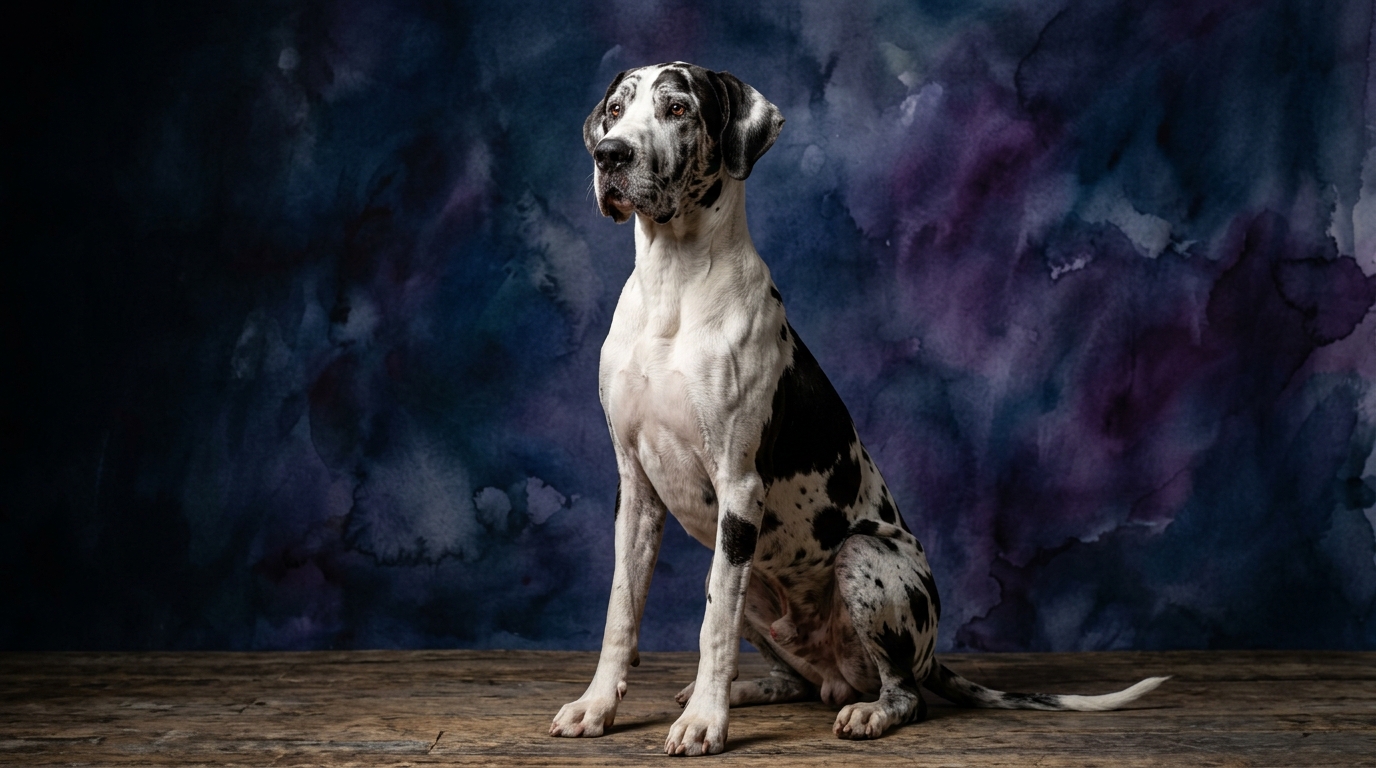
Side-by-Side IQ Profile: Weimaraner vs. Great Dane
At The Cosmic Pet Pet IQ Lab, we evaluate canine intelligence across five key dimensions, providing a nuanced look at what makes each breed unique. The Weimaraner, ranked #21 by Coren, a Sporting breed, demonstrates a distinct cognitive architecture compared to the Working breed Great Dane, ranked #48.
The Weimaraner's profile highlights its keen mental agility: Problem Solving (4/5), indicating a strong capacity to independently figure out solutions to novel challenges, often employing resourceful strategies to achieve goals like retrieving hidden objects or manipulating latches. Its Training Speed (4/5) means it quickly grasps new commands and routines, often requiring fewer repetitions to solidify a behavior, making them highly responsive to consistent instruction. Social Intelligence (4/5) shows a keen awareness of human emotional states and social cues, forming deep bonds and often anticipating owner intentions, which contributes to their 'shadow dog' reputation. Instictive Drive (5/5) reveals an exceptionally powerful innate drive for hunting, tracking, and retrieving, exhibiting relentless focus and stamina when engaged in tasks that align with these predispositions. Finally, Memory (4/5) signifies a strong ability to retain learned behaviors and associations over extended periods, remembering past experiences, people, and locations with notable clarity, which aids in complex training sequences.
The Great Dane's cognitive makeup, while equally valuable, leans towards different strengths: Problem Solving (3/5) suggests it is capable of solving straightforward problems, but may require more guidance or trial-and-error to navigate complex or abstract challenges, preferring established routines over independent strategizing. Its Training Speed (3/5) indicates it learns new commands at a moderate pace, benefiting from patient, consistent training with positive reinforcement, and may need more repetitions to fully master new skills. Social Intelligence (4/5) matches the Weimaraner, showing a good understanding of human emotions and social dynamics, often displaying empathy and a gentle, protective nature towards their family, thriving on companionship. Instictive Drive (3/5) reflects a moderate innate drive, often expressed as a desire for companionship and gentle guardianship rather than intense prey drive or specific working tasks, though their protective instincts are present. Memory (3/5) signifies a solid ability to recall learned commands and routines, though complex sequences or less frequently reinforced behaviors might require occasional refreshers to maintain proficiency.
Where the Weimaraner Wins Cognitively
The Weimaraner's cognitive edge is most apparent in its superior problem-solving acumen and rapid training acquisition. With a 4/5 in problem solving, they are more inclined to independently assess situations and devise strategies, whether it’s figuring out how to open a cabinet or navigate an obstacle course. This resourcefulness, coupled with a training speed of 4/5, means they can process and execute new commands with remarkable efficiency, often needing fewer repetitions than many other breeds. Their instinctive drive (5/5) for tasks like tracking and retrieving is also a significant cognitive strength, indicating a profound capacity for focused, goal-oriented work that taps into their innate predispositions. This combination makes them exceptionally adept at advanced obedience, dog sports, and tasks requiring quick, independent decision-making under pressure.
Where the Great Dane Wins Cognitively
While the Great Dane's scores might appear lower in certain areas, their cognitive strengths lie in their social intelligence and emotional depth, scoring a respectable 4/5. They excel at reading human emotions and are profoundly attuned to their family's well-being, often displaying a gentle empathy that fosters strong, comforting bonds. Their physical presence and calm demeanor, coupled with a moderate instinctive drive (3/5) that leans towards guardianship, make them adept at sensing and responding to potential threats, offering a reassuring protective presence without constant high-wire intensity. Their cognitive profile, though not geared towards rapid-fire task learning, prioritizes a stable, emotionally connected partnership, making them masters of companion-oriented interaction and gentle family integration. They consistently demonstrate a capacity for calm, thoughtful interaction within a domestic setting.
Which Breed is Easier to Train and Why?
Based on their IQ profiles, the Weimaraner generally presents as easier to train due to its higher scores in training speed (4/5) and problem-solving (4/5). These dogs quickly connect actions with consequences and retain information, allowing them to progress through training levels at an accelerated pace. Their strong instinctive drive (5/5) also means they are highly motivated by tasks that engage their natural hunting and retrieving urges, making them eager participants in structured activities. However, their intelligence and drive can also manifest as stubbornness or boredom if not mentally stimulated and challenged appropriately, requiring a consistent and engaging approach from their trainer.
The Great Dane, with a training speed of 3/5 and problem-solving of 3/5, requires a more patient and consistent approach. They learn effectively but typically need more repetitions and a slower progression through new commands. Their moderate instinctive drive (3/5) means they aren't inherently driven by complex tasks in the same way a Weimaraner is, making positive reinforcement and reward-based methods crucial for engagement. While they may take longer to master a skill, once learned, they are generally reliable and eager to please. Their social intelligence (4/5) means they respond well to a kind, gentle trainer they trust, valuing the bond and positive interaction over the task itself.
Suitability for Active vs. Relaxed Owners
The Weimaraner, with its high instinctive drive (5/5) and robust cognitive scores, is unequivocally suited for active owners. These dogs thrive on consistent mental and physical challenges, requiring daily vigorous exercise, such as long runs, advanced obedience, or dog sports like agility and tracking. Owners who enjoy outdoor adventures, provide structured training, and can channel their dog's boundless energy and problem-solving abilities into productive activities will find a highly engaged and fulfilling companion. A sedentary lifestyle will likely lead to frustration, excessive vocalization, and potentially destructive behaviors for a Weimaraner, as their mental and physical needs are not being adequately met.
Conversely, the Great Dane, with its more moderate instinctive drive (3/5) and preference for established routines, is a better match for relaxed owners. While they are large and need regular, moderate exercise (e.g., daily walks, yard play), they are not built for endurance or intense, high-impact activities. Their social intelligence (4/5) means they are content to be close companions, often described as 'lap dogs' despite their size, preferring to be part of family activities rather than undertaking demanding tasks. Owners who appreciate a calm, gentle giant that enjoys lounging with family after a pleasant stroll will find the Great Dane's temperament aligns perfectly with a less demanding, more companion-focused lifestyle.
The Verdict
Choose the Weimaraner if you are an active, experienced owner eager to engage in advanced training, dog sports, or tasks that harness a powerful, intelligent, and driven canine partner. They excel with consistent mental stimulation and physical outlets.
Opt for the Great Dane if you seek a gentle, emotionally attuned companion dog for a relaxed home environment, valuing a calm presence and moderate exercise over high-intensity activities or complex working roles.
🧠 Find Your Pet's IQ Score
Our Pet IQ Lab assessment covers 25+ tests across 5 cognitive dimensions — personalized to your breed.
Take the Full IQ Test →Frequently Asked Questions
Are Weimaraners difficult to live with due to their high energy?
Weimaraners possess a substantial energy level and a strong instinctive drive, making them demanding companions if their needs aren't met. They require significant daily exercise and mental engagement to prevent boredom and potential behavioral issues, thriving with active owners who provide structured outlets.
Do Great Danes need a lot of space despite their calm nature?
While Great Danes are generally calm indoors, their immense size necessitates ample space for comfortable movement and lounging. They are not suited for cramped living conditions and appreciate a secure yard for moderate exercise and stretching, though they are often content to be near their family.
How do their protective instincts compare?
Weimaraners exhibit a protective nature rooted in their alert, observant disposition and strong bond with their family, often responding swiftly to perceived threats. Great Danes, while also protective, tend to be more reserved and imposing due to their size, acting as gentle guardians whose presence alone is often a deterrent, rather than reacting with the same intensity.