Side-by-Side IQ Profile: A Deeper Look at Canine Cognition
At The Cosmic Pet Pet IQ Lab, we assess canine cognition across five crucial dimensions: problem-solving ability, training speed, social intelligence, instinctive drive, and memory. Understanding these facets offers a more comprehensive view of a breed's mental aptitude than a single ranking.
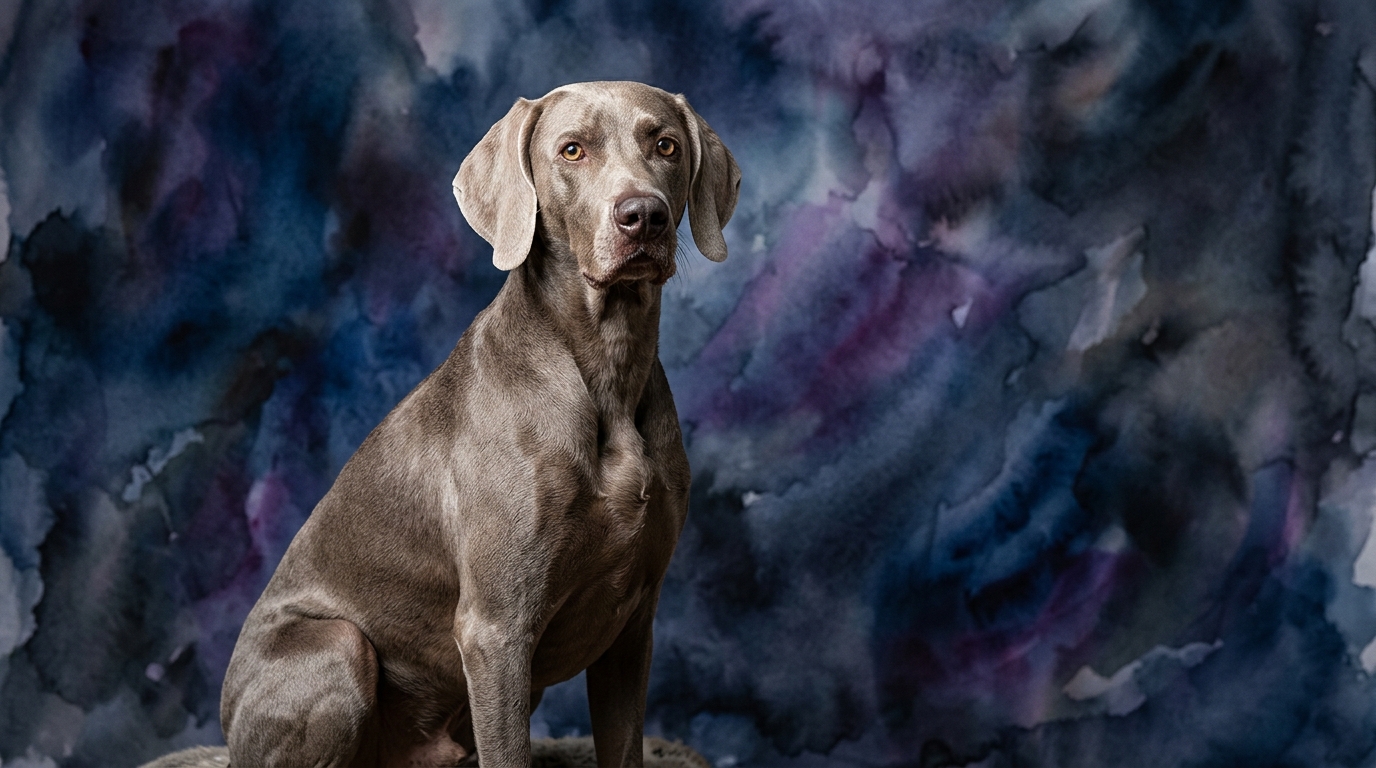
The Weimaraner, a member of the Sporting group and Coren-ranked #21, exhibits a cognitive profile geared for versatility and rapid response in the field. They score 4/5 in problem-solving, training speed, social intelligence, and memory, alongside an exceptional 5/5 in instinctive drive, indicating a powerful inherent motivation for task engagement.
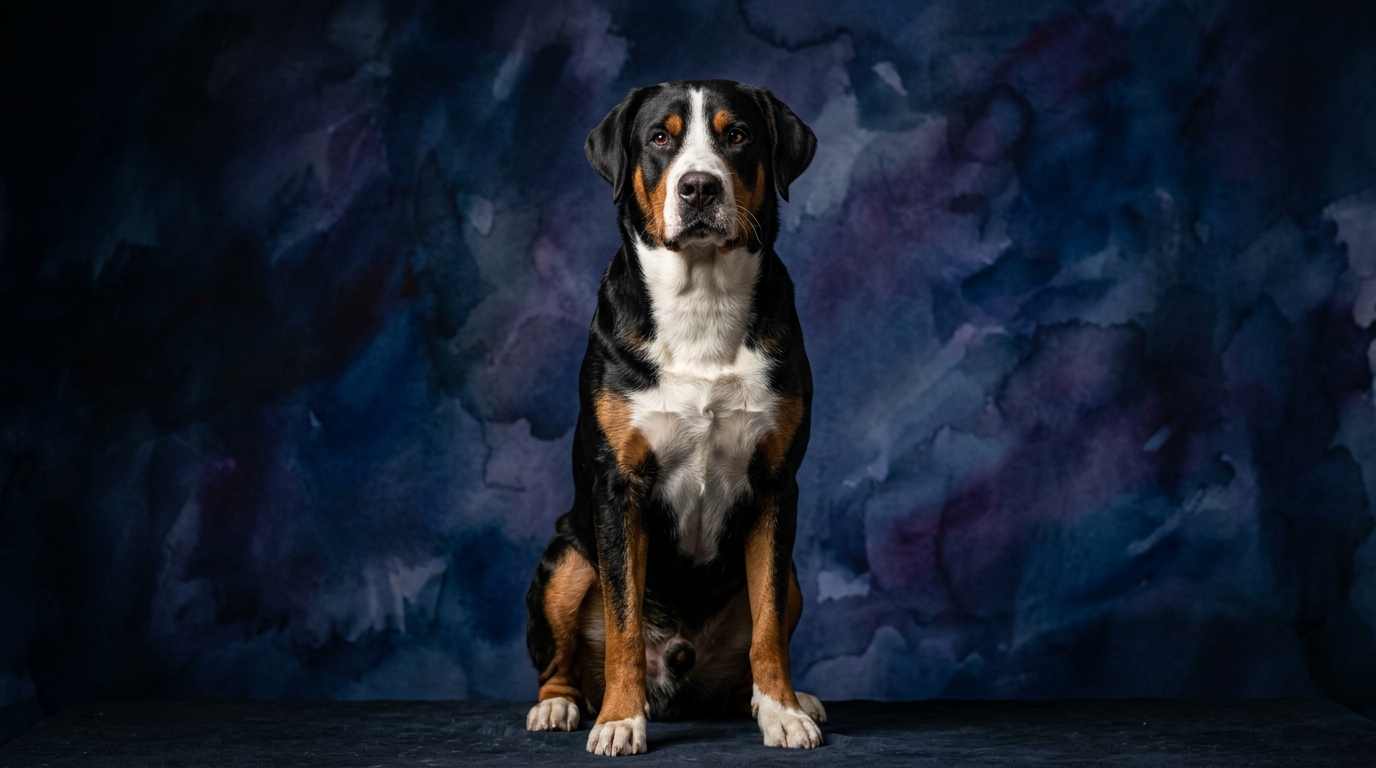
In contrast, the Greater Swiss Mountain Dog, a robust Working breed not listed in Coren's ranking, presents a consistently solid cognitive profile. This breed scores 3/5 across all five dimensions: problem-solving, training speed, social intelligence, instinctive drive, and memory, reflecting a steady, reliable mental approach rather than lightning-fast reactions.
These scores highlight distinct evolutionary paths; the Weimaraner's profile reflects centuries of selective breeding for independent hunting and quick adaptation, while the Greater Swiss Mountain Dog's scores speak to a heritage of strength, vigilance, and dependable utility in more predictable working roles.
Where the Weimaraner Excels Cognitively
The Weimaraner's cognitive strengths are evident in its problem-solving (4/5) and training speed (4/5) scores, suggesting an aptitude for quickly grasping new concepts and adapting to novel situations. This breed often demonstrates a keen observational capacity, allowing them to learn by watching and to apply previous solutions to new challenges with notable efficiency.
Their exceptional instinctive drive (5/5) is a defining cognitive feature, manifesting as an intense motivation to pursue, retrieve, and engage with tasks. This drive isn't solely about prey; it translates into a deep-seated desire for purpose and activity, making them highly focused and persistent when given a job to do.
Furthermore, their social intelligence (4/5) enables them to read human cues with considerable accuracy, facilitating strong partnerships in various activities. Coupled with a robust memory (4/5), Weimaraners are adept at retaining complex sequences of commands and remembering specific locations or learned behaviors over extended periods.
These combined cognitive attributes made the Weimaraner a highly effective hunting companion, capable of making independent decisions in the field while remaining responsive to handler commands. Their mental agility allows them to process information rapidly and react decisively, a trait invaluable in demanding working environments.
Distinct Cognitive Strengths of the Greater Swiss Mountain Dog
While the Greater Swiss Mountain Dog's individual scores of 3/5 across all cognitive dimensions might seem modest compared to the Weimaraner, they represent a consistent and highly functional profile perfectly suited to their historical purpose. Their strength lies in their unwavering reliability and a deliberate, thoughtful approach.
Their instinctive drive (3/5) is not geared towards high-speed pursuit but rather towards protective behaviors, drafting, and unwavering loyalty, which are critical for a guardian and utility dog. This drive ensures they remain steadfast and dependable in their roles, even if they aren't constantly seeking complex tasks.
The Greater Swiss Mountain Dog's social intelligence (3/5) is expressed through a calm, watchful demeanor and a deep connection to their family, often demonstrating a nuanced understanding of household routines and social dynamics. They may not be as quick to adapt to rapidly changing social games, but their loyalty is profound.
Their problem-solving (3/5) and memory (3/5) are optimized for practical, repetitive tasks crucial in their working heritage. They excel at learning and retaining established routines and commands, demonstrating impressive endurance in consistent work, even if they take a bit more time to initially master a new skill or solve an unfamiliar puzzle.
Training Dynamics: Weimaraner vs. Greater Swiss Mountain Dog
When it comes to training, the Weimaraner generally exhibits a quicker learning curve due to their 4/5 training speed and powerful 5/5 instinctive drive. Their eagerness to engage and inherent motivation mean they often pick up new commands and concepts with fewer repetitions, thriving on structured activity and mental challenges.
The 'why' behind the Weimaraner's training ease lies in their intense desire for purpose; they are often intrinsically motivated by the task itself, especially if it involves retrieving, scent work, or agility. Their problem-solving ability also helps them generalize learned behaviors to different contexts, making them adaptable learners.
Conversely, training a Greater Swiss Mountain Dog, with a 3/5 training speed, typically requires a more patient and consistent approach. They are certainly capable of learning a vast array of commands, but they may need more repetitions and a slower pace to fully internalize new information, reflecting their deliberate cognitive style.
Behaviorally, Weimaraners can become restless or destructive if their considerable cognitive and physical needs are not met, demanding constant engagement to prevent boredom. Greater Swiss Mountain Dogs, while not as quick, are often more tolerant of repetition and, once a command is ingrained, demonstrate remarkable reliability and consistency, a testament to their steady working dog heritage.
Matching Cognitive Profiles to Lifestyles: Active vs. Relaxed Owners
The Weimaraner's high instinctive drive (5/5), coupled with strong problem-solving (4/5) and training speed (4/5), makes them an ideal companion for highly active and experienced owners. They thrive in environments where their cognitive abilities are consistently challenged through dog sports, advanced obedience, or demanding outdoor adventures.
Owners who cannot provide consistent mental and physical outlets for a Weimaraner may find themselves dealing with manifestations of boredom, which can include destructive chewing, excessive barking, or anxious behaviors. This breed requires an owner who can not only match their energy but also stimulate their sharp mind regularly.
The Greater Swiss Mountain Dog, with its consistent 3/5 scores across all cognitive dimensions, is better suited for owners seeking a more relaxed yet engaged companion. They appreciate routine and a predictable environment, enjoying moderate exercise and a steady pace of life without the constant need for high-octane mental or physical challenges.
GSMDs are content with regular walks and being an integral, watchful part of family life; their cognitive profile suits an owner who values reliability, a calm demeanor, and a loyal presence over an intensely driven, high-energy partner. They offer steadfast companionship and are less prone to anxiety from under-stimulation, provided they receive adequate attention and exercise.
The Verdict
For owners seeking a dynamic partner eager for complex tasks and rapid learning, the Weimaraner's superior cognitive agility and intense drive make it an excellent choice for active, experienced individuals. They thrive with consistent mental and physical challenges, from advanced obedience to scent work.
The Greater Swiss Mountain Dog is better suited for owners who appreciate a steadfast, reliable companion with a more deliberate learning style and a calmer temperament. They excel in predictable environments with moderate activity, offering unwavering loyalty and a watchful presence.
🧠 Find Your Pet's IQ Score
Our Pet IQ Lab assessment covers 25+ tests across 5 cognitive dimensions — personalized to your breed.
Take the Full IQ Test →Frequently Asked Questions
Does the Weimaraner's high instinctive drive make them difficult to manage?
Their strong instinctive drive (5/5) means Weimaraners possess a powerful urge to chase and work, which can be challenging without proper outlets. This drive, however, also makes them highly trainable and motivated when channeled into appropriate activities like dog sports or field work.
Are Greater Swiss Mountain Dogs difficult to train because of their lower training speed score?
No, their training speed of 3/5 simply indicates they may require more patience and repetition compared to quicker learners. They are capable of learning a wide range of commands and tasks, especially when training is consistent, positive, and routine-based.
How does Coren's ranking relate to The Cosmic Pet's IQ scores?
Coren's ranking primarily assesses 'working and obedience intelligence' based on training speed and command retention. The Cosmic Pet's IQ dimensions offer a broader, multi-faceted view, including problem-solving, social intelligence, and instinctive drive, providing a more comprehensive cognitive profile.