
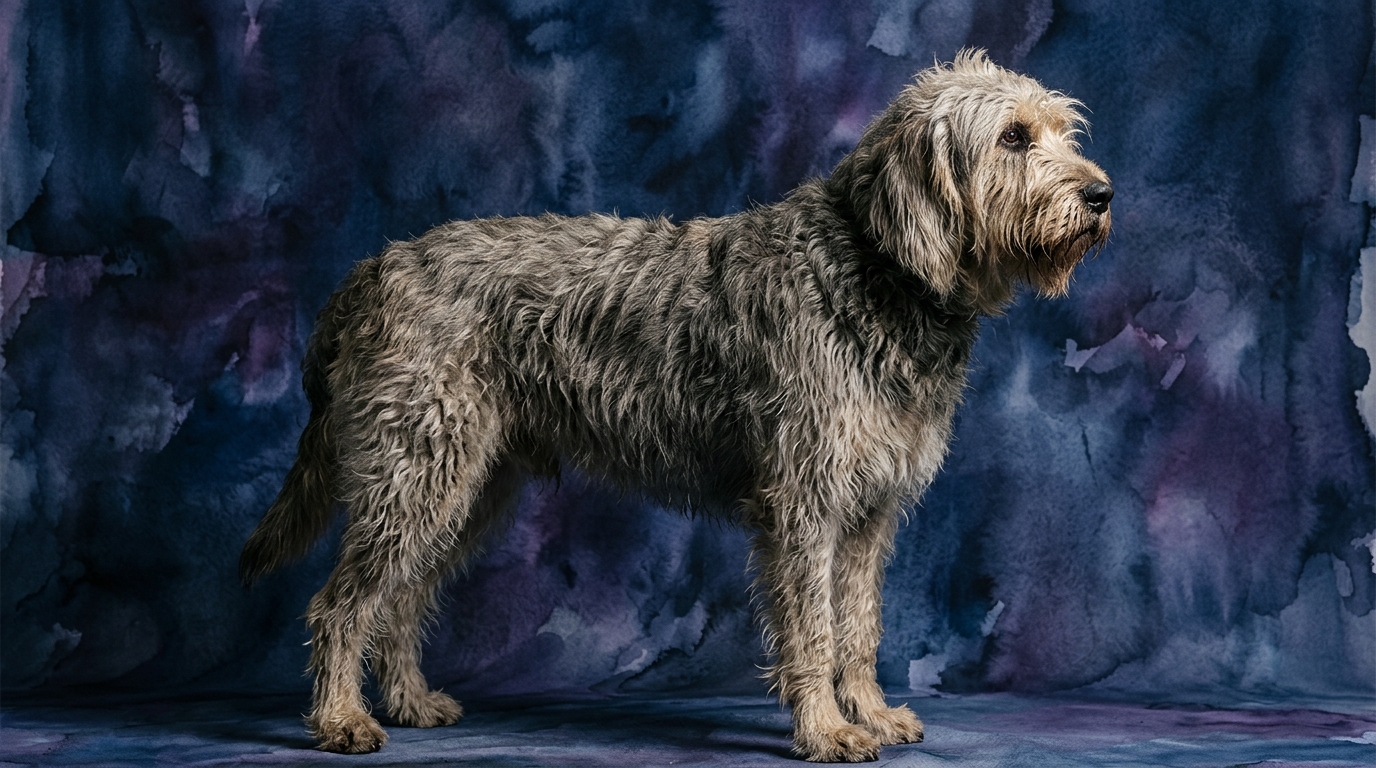
Side-by-Side IQ Profile: Weimaraner vs. Otterhound
Originating from Germany as versatile hunting dogs, Weimaraners exhibit a cognitive profile honed for complex, human-directed tasks. Their Problem Solving is rated 4/5, reflecting their capacity to quickly assess novel situations and devise effective strategies, whether it's navigating complex terrain during a retrieve or figuring out how to open a cabinet. Training Speed, also 4/5, indicates a rapid grasp of new commands and sequences, often requiring fewer repetitions than many other breeds. Social Intelligence at 4/5 highlights their deep attunement to human cues, enabling them to anticipate desires and respond with remarkable sensitivity, though this can also manifest as clever manipulation. Their Instinctive Drive, a formidable 5/5, fuels their relentless pursuit, making them highly motivated for work, but also demanding constant engagement. Finally, their Memory, rated 4/5, allows them to retain intricate learned behaviors, retrieve patterns, and spatial information with impressive accuracy over time.
As an ancient British breed developed solely for hunting otters, the Otterhound's cognitive strengths are deeply rooted in their scenting heritage, distinct from the Weimaraner's generalist hunting role. Their Problem Solving is 3/5, primarily focused on olfactory challenges; they excel at unraveling complex scent trails but show less immediate interest in human-centric puzzles or abstract tasks. Training Speed, rated 3/5, suggests a moderate pace of learning, often requiring more patience and repetition, particularly when competing with their powerful scent drive. Social Intelligence, also 3/5, describes a generally affectionate nature but one that is less intensely focused on human approval; they are companions, but often on their own terms, less prone to the Weimaraner's intense desire to please. Their Instinctive Drive, 3/5, is almost exclusively channeled into scent work, exhibiting remarkable persistence on a trail but a lower general "work ethic" for varied tasks. Memory, at 3/5, is strong for scent associations and established routines, though perhaps less so for rapidly learning and recalling a wide array of obedience commands.
Where the Weimaraner Wins Cognitively
The Weimaraner's cognitive advantages stem from their history as close working partners, requiring them to constantly interpret and respond to human direction in dynamic hunting scenarios. Their superior Problem Solving (4/5) means they adapt to varied training exercises and novel environments with greater ease, quickly grasping the intent behind a command. This adaptability extends to their Social Intelligence (4/5), allowing them to discern subtle shifts in human tone and body language, making them exceptionally responsive to nuanced cues. Unlike the Otterhound, a Weimaraner's Instinctive Drive (5/5) is more broadly applicable, manifesting as a general eagerness for activity and engagement, not solely restricted to scent work. This translates into a higher motivation for diverse tasks, from agility to advanced obedience, making them quicker learners across multiple domains. Their excellent Memory (4/5) also ensures that complex sequences of commands or retrieve patterns are retained effectively, fostering a more polished and consistent performance in structured activities.
Where the Otterhound Wins Cognitively
While the Weimaraner excels in human-directed versatility, the Otterhound's cognitive strengths are profoundly specialized, making them uniquely suited for tasks demanding singular focus and olfactory mastery. Their Problem Solving (3/5), though rated lower overall, is unparalleled when it comes to intricate scent puzzles; they can methodically unravel a cold trail that might overwhelm a more generalist breed. This persistence is directly linked to their Instinctive Drive (3/5), which, while less broad, is incredibly deep and unwavering when pursuing a scent. An Otterhound can maintain focus on a specific odor for hours, tuning out environmental distractions that a high-drive Weimaraner might find too stimulating. Their moderate Social Intelligence (3/5) allows for an independent approach, meaning they are less prone to performance anxiety or over-reliance on handler cues once they are engaged in a task like tracking, trusting their own nose above all else. This self-directed cognitive style means they often exhibit a more stoic resilience in solitary, repetitive tasks, a quality that can be a distinct advantage in specific working roles.
Which Breed is Easier to Train and Why?
Based on their profiles, the Weimaraner is generally easier to train for a wide range of obedience and complex tasks. Their Training Speed (4/5) means they grasp new concepts quickly, often requiring fewer repetitions. This is amplified by their high Social Intelligence (4/5) and powerful Instinctive Drive (5/5), which translates into an eagerness to please their human companions and a strong motivation for engagement. They thrive on positive reinforcement and structured learning, often viewing training as a collaborative game. However, their intense drive also means training must be consistent and stimulating to prevent boredom or the redirection of their energy into unwanted behaviors. Conversely, the Otterhound's Training Speed (3/5) is more moderate, and their Social Intelligence (3/5) means they are less intensely focused on human approval. Their formidable scent drive often competes directly with human commands, making them prone to distraction. Training an Otterhound requires immense patience, creativity, and highly rewarding incentives to capture their attention and motivate them to perform tasks that aren't inherently scent-related. They learn, but often on their own terms and timeline, demanding an owner who understands and respects their independent, hound-like nature.
Suitability for Active vs. Relaxed Owners
The Weimaraner is unequivocally suited for active owners who can match their boundless energy and cognitive needs. Their 5/5 Instinctive Drive demands extensive daily exercise, including vigorous runs, dog sports like agility, or dedicated field work. Owners must be prepared to provide consistent mental stimulation through advanced training, puzzle toys, and engaging activities to prevent boredom, which can lead to destructive behaviors. A Weimaraner thrives when given a job and a purpose, making them ideal for individuals or families with an active, outdoor lifestyle who can integrate their dog into their daily adventures. In contrast, the Otterhound, with its 3/5 Instinctive Drive, is better suited for owners who might be described as "active but relaxed." While they certainly require regular exercise, particularly long, leisurely walks where they can indulge their powerful nose, their energy is less frantic than a Weimaraner's. They are less driven by the need for constant high-intensity activity and are often content to lounge at home after a good sniff-walk. Owners who enjoy exploring nature trails and are patient with a dog that follows its nose, rather than one that constantly seeks human-directed sprints, will find the Otterhound a compatible companion.
The Verdict
Select a Weimaraner if you seek a highly engaged, responsive, and trainable companion for advanced dog sports, demanding outdoor adventures, or as a dedicated working partner, and you are prepared to provide intense daily physical and mental stimulation.
Opt for an Otterhound if you appreciate a more independent, scent-driven companion, possess the patience for consistent, positive reinforcement training, enjoy long exploratory walks, and desire a generally more laid-back home presence after their exercise needs are met.
🧠 Find Your Pet's IQ Score
Our Pet IQ Lab assessment covers 25+ tests across 5 cognitive dimensions — personalized to your breed.
Take the Full IQ Test →Frequently Asked Questions
Are Weimaraners good for first-time dog owners?
Weimaraners are generally not recommended for first-time dog owners due to their intense energy, high intelligence, and strong drive. They require consistent, experienced handling, extensive training, and significant daily exercise to thrive and prevent behavioral issues.
Do Otterhounds shed a lot?
Otterhounds have a dense, rough, and shaggy double coat that sheds moderately throughout the year, with heavier seasonal shedding. Regular brushing is necessary to manage loose hair and prevent matting in their distinctive coat.
How much exercise do these breeds need daily?
Weimaraners require substantial daily exercise, typically 1-2 hours of vigorous activity, including running or high-intensity play, plus mental stimulation. Otterhounds need at least an hour of moderate exercise daily, ideally involving long walks where they can explore scents, though their energy is less frenetic.