
Side-by-Side IQ Profiles: The Cosmic Pet Lab's Insights
At The Cosmic Pet Pet IQ Lab, we evaluate canine intelligence across five key dimensions, offering a granular view of each breed's cognitive strengths. Here's how the Weimaraner and the Petit Basset Griffon Vendéen (PBGV) compare:
Weimaraner (Sporting Group, Coren Rank #21): Problem Solving 4/5, Training Speed 4/5, Social Intelligence 4/5, Instinctive Drive 5/5, Memory 4/5.
Petit Basset Griffon Vendéen (Hound Group, Not Coren-Ranked): Problem Solving 3/5, Training Speed 3/5, Social Intelligence 3/5, Instinctive Drive 3/5, Memory 3/5.
The Weimaraner, often called the 'Gray Ghost,' is a breed whose cognitive profile reflects its heritage as a versatile hunting companion. Their Problem Solving score of 4/5 indicates a capacity for complex thought, often allowing them to devise strategies to achieve goals like retrieving a hidden toy or opening a cabinet. This cognitive flexibility enables them to quickly grasp intricate tasks and overcome environmental obstacles independently. Their Training Speed, also 4/5, highlights their impressive rapidity in learning new commands and routines; their eagerness to engage and focus on their handler contributes to efficient training, often requiring fewer repetitions. Social Intelligence at 4/5 means Weimaraners possess a strong understanding of social dynamics, adept at reading body language and emotional cues, which fosters deep bonds with their families and good integration into social structures. With an Instinctive Drive of 5/5, their powerful prey drive and natural hunting instincts are paramount, driving them to search, point, and retrieve with persistent focus on scent and movement tasks. Finally, their Memory, rated 4/5, ensures excellent recall for commands, routines, and experiences, aiding consistent behavior and long-term learning.
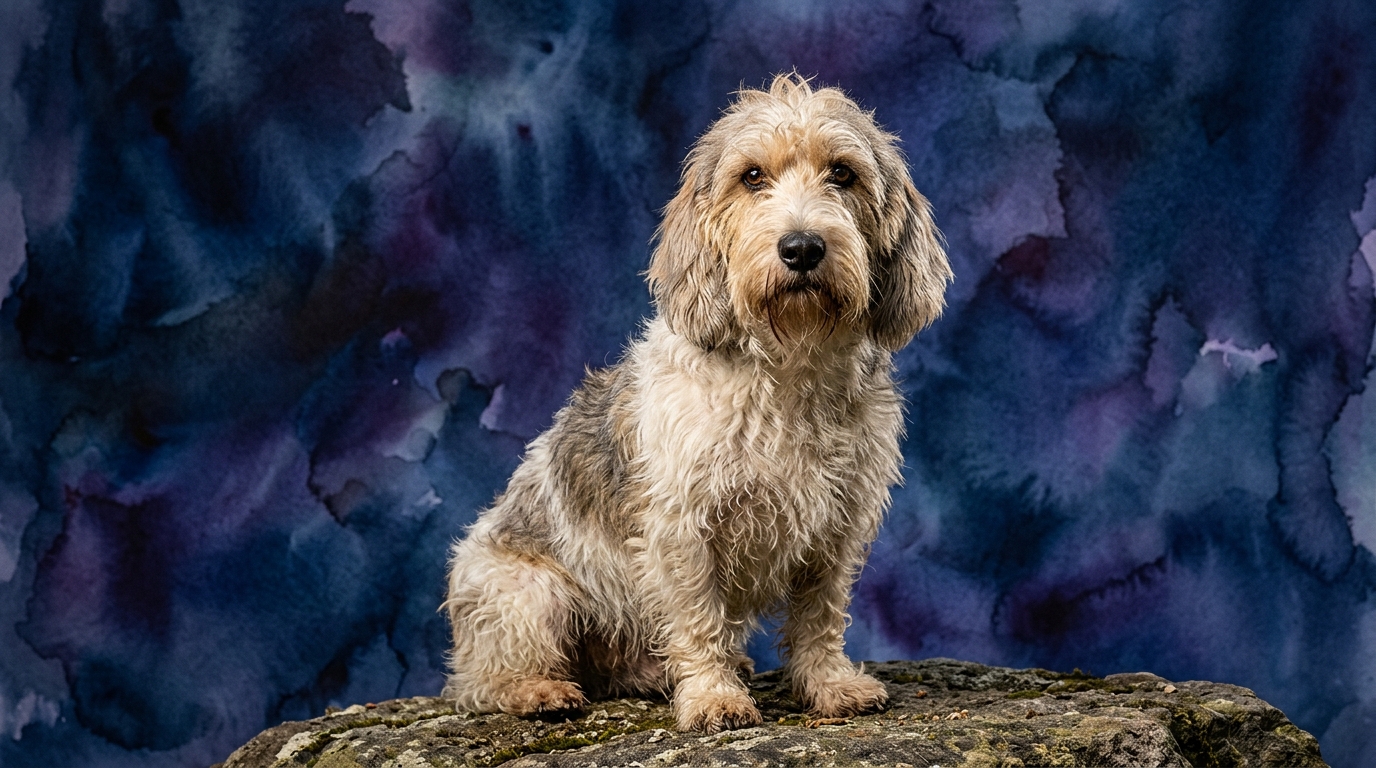
The Petit Basset Griffon Vendéen, or PBGV, presents a different cognitive landscape, shaped by its role as an independent scent hound. Their Problem Solving score of 3/5 shows they approach challenges with curiosity and persistence, though their solutions are often direct and less abstract. Their problem-solving typically revolves around following a trail or accessing interesting scents, rather than complex logical puzzles. Training Speed, also 3/5, suggests PBGVs learn at a moderate pace; their independent, scent-driven nature means they can be easily distracted, requiring more patience and repetition, and they respond best to positive reinforcement that competes with their nose. Their Social Intelligence of 3/5 means PBGVs are generally friendly and outgoing, understanding basic social interactions, but their independent hound mindset often means less concern with pleasing their handler than a Weimaraner. The PBGV's Instinctive Drive, rated 3/5, focuses primarily on scent work and trailing; this strong, singular focus on the chase and follow, rather than retrieve or point, informs their exploration. Their Memory, at 3/5, is functional for routines and familiar commands, but recall might not be as sharp or consistent, as their memory can be overshadowed by immediate sensory input, especially compelling scents.
Where the Weimaraner Cognitively Excels
The Weimaraner’s cognitive strengths shine particularly in areas demanding close collaboration and strategic thinking. Their Problem Solving score of 4/5, coupled with a 4/5 in Training Speed, means they are adept at processing information quickly and applying it to novel situations, often anticipating their handler's next move. This breed excels at tasks requiring multi-step sequences and abstract understanding, like advanced obedience, agility courses, or complex scent discrimination work where specific target identification is crucial. Their 5/5 Instinctive Drive isn't just about raw prey drive; it's a highly refined capacity to work in tandem with a human partner, utilizing their instincts for a shared purpose, such as pointing game and retrieving on command. This partnership-oriented intellect distinguishes them, making them exceptional at understanding and executing intricate directives within a structured framework.
Where the Petit Basset Griffon Vendéen Cognitively Excels
While not designed for the same collaborative precision, the PBGV possesses a unique cognitive advantage rooted in their independent hound heritage. Their 3/5 Instinctive Drive, though lower than the Weimaraner's, represents a profound and specialized intelligence for scent work. PBGVs exhibit an unparalleled ability to focus intensely on a scent trail, meticulously unravelling complex olfactory puzzles through sheer persistence and an almost meditative dedication. This isn't about speed or direct obedience; it's about the detailed, unyielding pursuit of a scent, often over challenging terrain and distractions. Their Problem Solving (3/5) manifests as resourcefulness in navigating environments to maintain a trail, demonstrating a practical, ground-level intelligence for their specific purpose. This breed's strength lies in its ability to operate autonomously, driven by an internal compass of scent, making them masters of independent exploration and tracking.
Training Dynamics: A Tale of Two Temperaments
When considering ease of training, the Weimaraner generally presents a more straightforward experience due to several key cognitive factors. Their 4/5 Training Speed and 4/5 Social Intelligence mean they are inherently more inclined to engage with their handler, understand human intent, and respond quickly to cues. Weimaraners possess a strong desire to please and thrive on consistent interaction, making them highly receptive to positive reinforcement and structured lessons. Their higher Problem Solving ability allows them to generalize commands and apply learned behaviors across different contexts without extensive re-teaching. This makes them excellent candidates for competitive dog sports where precision and rapid learning are prized.
In contrast, the PBGV's 3/5 Training Speed and 3/5 Social Intelligence, combined with their potent scent drive, make training a more patient endeavor. PBGVs are prone to follow their nose rather than a command, requiring trainers to be creative in making lessons more compelling than the surrounding environment. Their independent nature means they may require more repetition and motivation to consistently choose handler interaction over self-directed exploration, making them less instinctively compliant than the highly cooperative Weimaraner. While capable of learning, their cognitive focus is often directed externally towards novel smells rather than internally towards handler directives, necessitating a different training approach that acknowledges and works with their hound instincts.
Lifestyle Match: Active Adventures vs. Scent-Driven Strolls
The choice between these breeds significantly depends on an owner's lifestyle and capacity for engagement. The Weimaraner, with its high energy and 5/5 Instinctive Drive, is unequivocally suited for active owners. These dogs require substantial daily vigorous exercise, challenging hikes, or participation in dog sports like agility, flyball, or advanced obedience. Their cognitive need for mental stimulation, stemming from their 4/5 Problem Solving and 4/5 Memory, means they thrive when given a job or consistent training challenges; a bored Weimaraner can quickly become a destructive one. Owners who enjoy outdoor adventures and are committed to consistent training and intellectual engagement will find a Weimaraner a fulfilling companion, capable of keeping pace with the most energetic lifestyles.
Conversely, while still requiring regular walks and mental engagement, the Petit Basset Griffon Vendéen can be a better fit for owners who appreciate a more relaxed pace, yet still enjoy moderate activity. Their 3/5 Instinctive Drive is strong for scent work but doesn't demand the same high-octane physical output as a Weimaraner. PBGVs are happy with long, sniff-filled walks, a secure yard to explore, and interactive puzzle toys that engage their olfactory senses. Their 3/5 Problem Solving suggests they enjoy figuring things out at their own pace, rather than the relentless pursuit of a task. Owners who enjoy leisurely strolls, appreciate an independent spirit, and are prepared for a dog whose primary focus is the fascinating world of smells will find a delightful companion in the PBGV. They are not couch potatoes, but their intensity is channeled differently, making them suitable for active but less relentlessly driven households.
The Verdict
Choose a Weimaraner if you are an active individual or family seeking a highly trainable, intensely loyal, and physically demanding partner for sports, hunting, or consistent mental challenges, and you can provide daily vigorous exercise and structured engagement.
Choose a Petit Basset Griffon Vendéen if you appreciate an independent, cheerful companion with a keen nose, enjoy moderate daily activity focused on exploration, and are prepared for a dog whose primary motivation is scent, requiring patience and creativity in training.
🧠 Find Your Pet's IQ Score
Our Pet IQ Lab assessment covers 25+ tests across 5 cognitive dimensions — personalized to your breed.
Take the Full IQ Test →Frequently Asked Questions
Are Weimaraners good family dogs?
Weimaraners can be excellent family dogs when properly socialized and exercised, forming deep bonds with their human family members due to their 4/5 social intelligence; however, their energy and intensity require consistent management.
Do PBGVs bark a lot?
PBGVs, being hounds, can be vocal and prone to baying or barking, especially when following a scent or seeking attention; this is a natural expression of their instinctive drive and requires consistent training to manage.
Which breed is better for apartment living?
Neither breed is ideally suited for small apartment living without significant owner commitment; however, a PBGV might adapt better if given ample outdoor time and mental stimulation, while a Weimaraner's high energy and need for space make apartments challenging.