
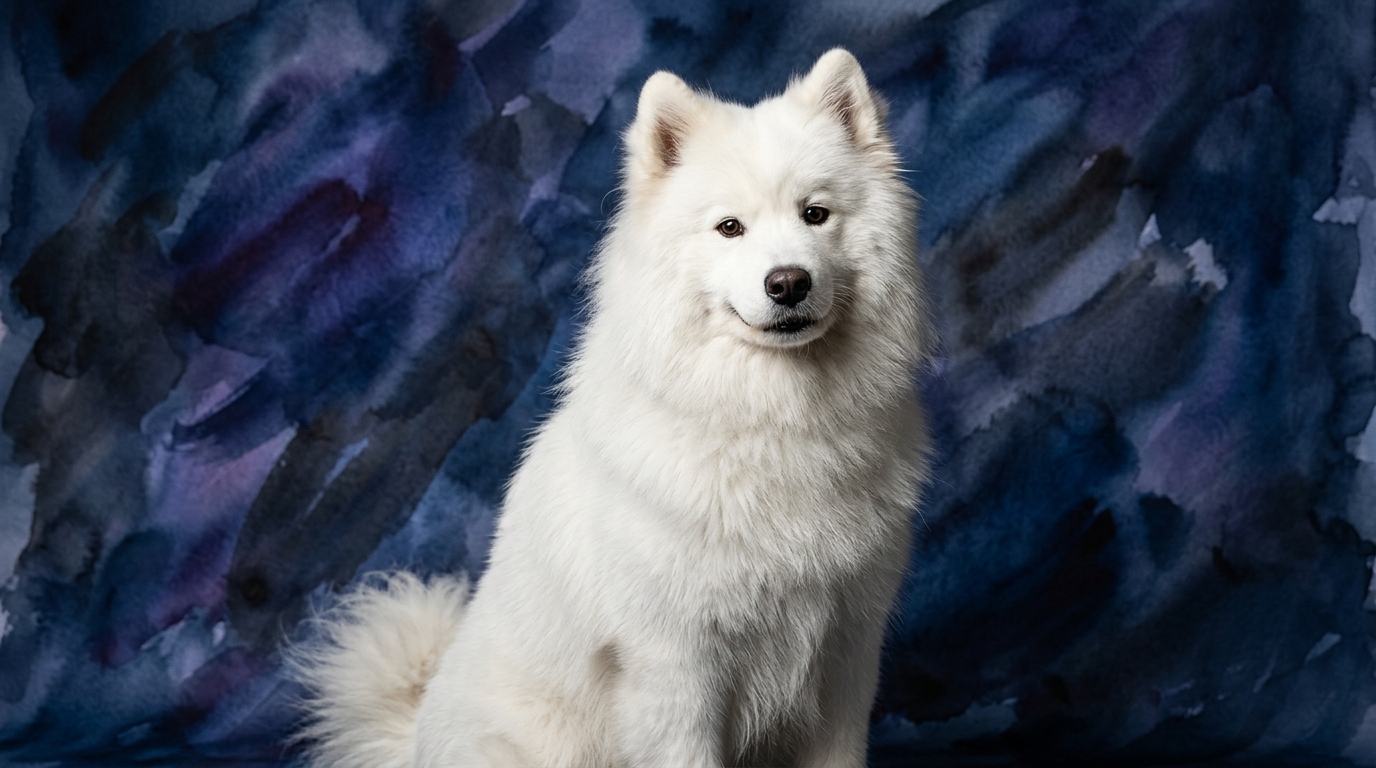
Side-by-Side Cognitive Profiles: Weimaraner vs. Samoyed
The Cosmic Pet Pet IQ Lab employs a five-dimensional framework to assess canine intelligence, moving beyond simple obedience to encompass a broader spectrum of cognitive abilities. For the Weimaraner, a Sporting group dog with a Coren ranking of #21, its profile reveals a potent blend of mental agility and drive. Its Problem Solving is rated at 4/5, indicating a strong capacity for independent thought and strategizing to navigate new situations. Training Speed scores 4/5, reflecting a quick grasp of new commands and routines. Social Intelligence is 4/5, suggesting a good understanding of human cues and emotional states. An impressive 5/5 in Instinctive Drive highlights a powerful innate urge to pursue and work, while its Memory is rated 4/5, demonstrating solid retention of learned information.
The Samoyed, a Working group dog with a Coren ranking of #33, presents a distinct cognitive blueprint. Its Problem Solving is rated 3/5, indicating a competent but perhaps less independently driven approach to complex challenges compared to the Weimaraner. Training Speed also scores 3/5, suggesting it may require more repetition to solidify new behaviors. However, the Samoyed truly shines in Social Intelligence, earning a perfect 5/5, signifying an exceptional ability to connect with and understand human emotions and social dynamics. Its Instinctive Drive stands at 4/5, reflecting a significant, though perhaps less intense, internal motivation for activity, and its Memory is rated 3/5, indicating a steady but not exceptional capacity for recall.
Where the Weimaraner Excels Cognitively
The Weimaraner's cognitive strengths are deeply rooted in its heritage as a German hunting dog, bred for tracking game and working closely with humans. Its 4/5 score in Problem Solving means these dogs are adept at figuring out solutions to environmental puzzles, whether it's navigating a complex scent trail or manipulating a latch to access a desired item. This isn't merely about brute force; it's about applying foresight and learned principles to achieve a goal. For instance, a Weimaraner might quickly understand how to open a specific type of gate after only a few observations, or devise a strategy to retrieve a toy stuck under furniture.
Complementing this is their 4/5 Training Speed, which translates into a rapid acquisition of new commands and a strong aptitude for advanced obedience or specialized tasks. Owners often report that Weimaraners pick up new tricks or complex sequences with fewer repetitions than many other breeds, making them excellent candidates for competitive dog sports or working roles. This quick learning is bolstered by their 4/5 Memory, allowing them to retain vast repertoires of commands, routines, and experiences over extended periods. They can recall intricate scent patterns or multi-step tasks with impressive accuracy, which is crucial for their original purpose. Finally, their formidable 5/5 Instinctive Drive fuels a relentless desire to engage, pursue, and work. This drive isn't just about physical energy; it's a mental engine that pushes them to seek out and engage with stimulating activities, making them highly motivated to learn and perform tasks that satisfy their innate predispositions.
Where the Samoyed Shines Cognitively
The Samoyed's most prominent cognitive advantage lies in its exceptional 5/5 Social Intelligence. This indicates an unparalleled ability to perceive, interpret, and respond to the subtle cues of human emotion and social dynamics. Unlike breeds primarily focused on task completion, Samoyeds are masterful at forming deep, empathetic connections with their human companions. They often seem to anticipate moods, offering comfort or initiating play at just the right moment, demonstrating a profound understanding of the social environment. This social acuity extends beyond their immediate family, often making them amiable and cooperative with strangers and other animals.
Their strong social drive means they thrive on inclusion and collaboration, making them highly attuned to group activities and family life. This isn't just about being friendly; it's a cognitive strength that allows them to integrate seamlessly into a human household, understanding their role within the 'pack' and responding harmoniously to social structures. While their Problem Solving (3/5) and Training Speed (3/5) might not match the Weimaraner's intensity, their high Social Intelligence means they are often eager to please and highly motivated by positive human interaction. They learn best when training feels like a cooperative endeavor, reinforcing their bond with their owner, rather than a strict, task-oriented regimen.
Training Dynamics: Weimaraner vs. Samoyed
When it comes to training, the Weimaraner, with its 4/5 Training Speed and 5/5 Instinctive Drive, generally offers a more straightforward learning curve for commands and tasks. They typically grasp new concepts quickly and possess an inherent eagerness to engage in activities that channel their considerable energy and mental faculties. Their 4/5 Problem Solving means they can often generalize learned behaviors to new contexts, further aiding their training adaptability. However, this powerful drive and problem-solving ability also mean they require consistent, stimulating training to prevent boredom, which can lead to them independently applying their intellect to less desirable activities, like finding creative ways to access forbidden areas or engaging in destructive behaviors.
The Samoyed, in contrast, with a 3/5 Training Speed and 3/5 Memory, may require more patience and repetition during initial training phases. New commands might take longer to solidify, and refresher sessions could be more frequently needed. However, their exceptional 5/5 Social Intelligence makes them highly responsive to positive reinforcement and human connection. They are motivated by the desire to cooperate and be part of the family unit, meaning training that focuses on bonding, play, and mutual respect tends to be most effective. They might not be as driven by the sheer act of completing a task as a Weimaraner, but their strong desire to please their human companions can be a powerful motivator, provided the training method aligns with their social nature. Their lower Instinctive Drive (4/5 compared to 5/5) means they might not relentlessly pursue a task for its own sake, but rather for the social reward it brings.
Matching Breeds to Lifestyles: Active vs. Relaxed Owners
An owner who thrives on consistent activity and enjoys channeling a dog's keen intellect will find a superb match in the Weimaraner. Their high Problem Solving (4/5), Training Speed (4/5), and especially their formidable Instinctive Drive (5/5) demand an owner prepared for daily mental and physical stimulation. This includes lengthy runs, challenging puzzle toys, or structured training for advanced dog sports like tracking, agility, or field work. A Weimaraner left without sufficient mental engagement may independently apply its problem-solving skills to less desirable activities, such as figuring out how to escape the yard or 'redecorate' the house. They are best suited for individuals or families committed to integrating their dog into an active, purpose-driven lifestyle where the dog has a 'job' to do.
Conversely, the Samoyed, while still an active breed, aligns well with owners who prioritize social interaction and companionship over intense, task-oriented pursuits. Their 5/5 Social Intelligence means they flourish in environments where they are integral to family life and receive ample affection and communication. While they still require regular exercise to satisfy their Working breed heritage—such as long walks, hiking, or even carting—their cognitive needs are more centered on cooperative play, family outings, and being a cherished member of the household, rather than the Weimaraner's driven pursuit of a specific job. They are excellent for owners who desire a highly communicative and emotionally attuned companion, willing to dedicate time to social bonding and gentle, consistent engagement rather than high-intensity training regimens.
The Verdict: When to Choose Each
The Verdict
Choose the Weimaraner if you are an active, experienced owner eager to channel a powerful intellect and relentless drive into structured activities, advanced training, and a dynamic, purpose-driven partnership. They thrive with consistent mental challenges and physical exertion.
Opt for the Samoyed if you seek an exceptionally socially intelligent and empathetic companion who thrives on deep family bonds, cooperative play, and being an integral, communicative member of the household, with a willingness for consistent, gentle training.
🧠 Find Your Pet's IQ Score
Our Pet IQ Lab assessment covers 25+ tests across 5 cognitive dimensions — personalized to your breed.
Take the Full IQ Test →Frequently Asked Questions
Which breed is better for first-time dog owners?
Given the Weimaraner's intense drive and problem-solving skills, they generally require more experienced handling to guide their considerable mental and physical energy effectively. The Samoyed's high social intelligence and desire for companionship can make them a more forgiving choice for first-time owners, provided their exercise and grooming needs are met and training focuses on positive reinforcement and bonding.
Do Weimaraners or Samoyeds adapt better to apartment living?
Neither breed is ideally suited for small apartment living without significant owner commitment, but their needs differ. A Weimaraner's high instinctive drive and problem-solving nature demand extensive daily exercise and mental stimulation outside the apartment to prevent boredom and destructive behaviors. A Samoyed's strong social intelligence means they tolerate apartment living better if they receive ample human interaction and regular outdoor activity, but their vocal nature can be a consideration.
Which breed is more prone to separation anxiety?
The Samoyed, with its exceptional 5/5 Social Intelligence and strong desire for companionship, can be more prone to separation anxiety if left alone for extended periods, as they thrive on constant inclusion. While Weimaraners also form strong bonds, their high instinctive drive and independent problem-solving skills mean their anxiety may manifest more as destructive behavior born from boredom rather than purely social distress, though individual temperaments vary greatly.