
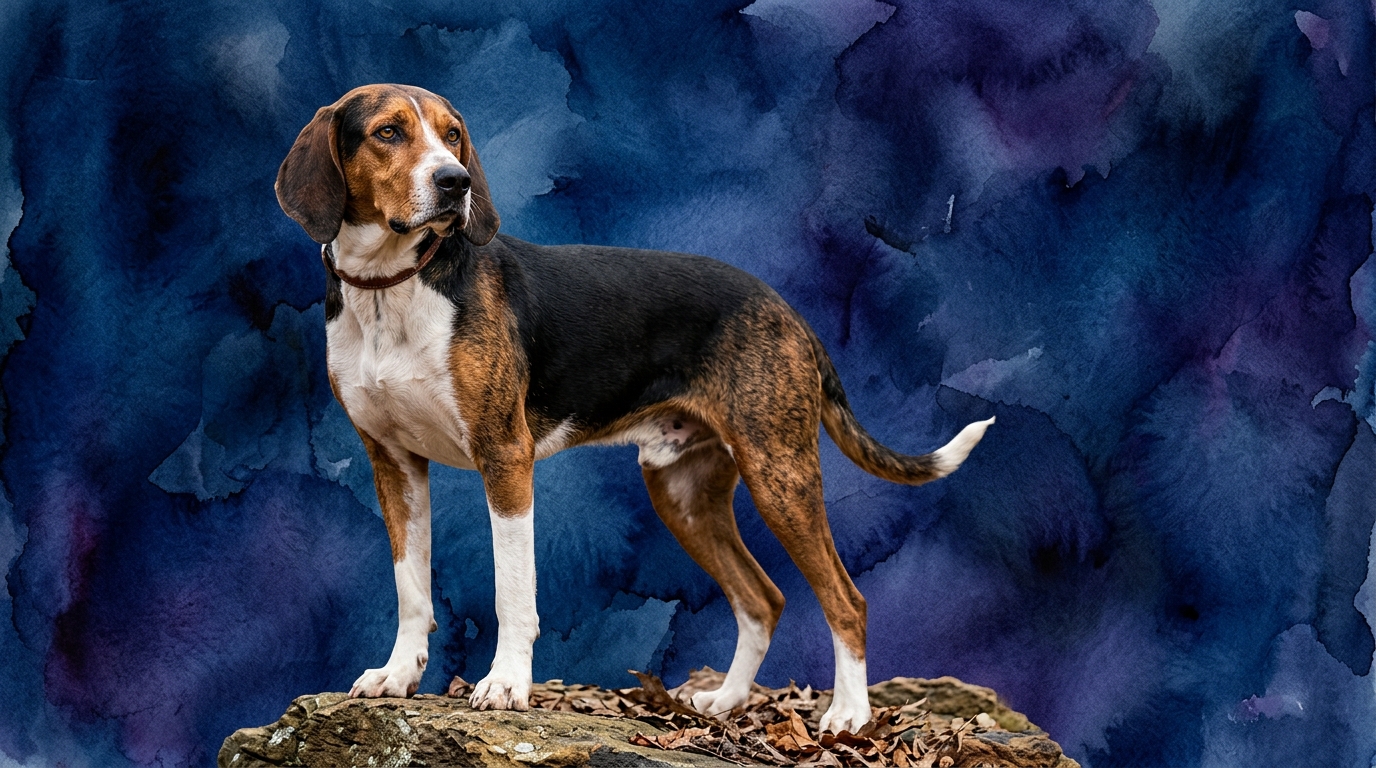
Side-by-Side IQ Profile: Weimaraner vs. Treeing Walker Coonhound
The Weimaraner exhibits a balanced and high-performing cognitive profile, reflective of their versatile sporting background. With a Problem Solving score of 4/5, they demonstrate a keen ability to navigate complex situations and adapt quickly to new challenges. Their Training Speed, also 4/5, means they pick up new commands and routines with impressive swiftness, supported by a 4/5 in Social Intelligence that fosters strong handler cooperation. A powerful 5/5 Instinctive Drive fuels their engagement in diverse activities, while a robust 4/5 Memory ensures excellent retention of learned behaviors and experiences.
Conversely, the Treeing Walker Coonhound possesses a specialized cognitive makeup, optimized for their hunting heritage. Their Problem Solving, rated 3/5, is particularly adept at deciphering intricate scent trails, requiring persistence and focused deduction rather than quick, generalized solutions. Training Speed and Social Intelligence, both 3/5, indicate a steady learning pace and an independent demeanor, often requiring patience and motivation tailored to their natural inclinations. While their Instinctive Drive is 3/5 overall, it's intensely concentrated on scent tracking, providing unwavering focus in their primary role. A functional 3/5 Memory supports their ability to recall scent patterns and routes effectively, crucial for their work.
Where the Weimaraner Wins Cognitively
The Weimaraner's cognitive strengths shine particularly bright in areas requiring generalized adaptability and cooperative engagement. Their 4/5 in Problem Solving indicates a superior ability to process novel situations and formulate solutions across a wider range of challenges, from intricate puzzle toys to navigating new training exercises. This flexibility allows them to excel in diverse roles beyond their traditional hunting tasks, such as agility or service work, where rapid learning and creative thinking are paramount.
Furthermore, their 4/5 in Training Speed highlights a distinct advantage in absorbing and retaining new commands efficiently. This quick uptake, coupled with a 4/5 in Social Intelligence, means Weimaraners are often more attuned to human instruction and eager to please, translating into a smoother and faster training progression for a broad spectrum of behaviors. Their strong memory (4/5) reinforces this, ensuring that once a lesson is learned, it tends to stick, enabling them to build a complex repertoire of skills and responses over time.
Where the Treeing Walker Coonhound Wins Cognitively
While the Treeing Walker Coonhound's overall IQ scores may appear lower in a generalized context, their cognitive profile represents a profound specialization that makes them exceptional in their niche. Their 3/5 in Problem Solving, for instance, is not a lack of cognitive ability but a different kind of intelligence, one hyper-focused on complex scent discrimination and trail following. They demonstrate a relentless, methodical problem-solving approach when presented with a scent puzzle that would overwhelm many other breeds, meticulously working through layers of olfactory information.
The Treeing Walker Coonhound's 3/5 Instinctive Drive, though not as broad as a Weimaraner's, is intensely powerful and singularly directed towards tracking and treeing. This unwavering focus allows them to overcome distractions and persevere through challenging terrain or prolonged efforts, a cognitive feat of endurance and dedication. Their memory, also 3/5, is particularly adept at recalling intricate scent patterns and geographical layouts associated with a trail, a specific and highly effective form of recall that serves their primary purpose. Their social intelligence, while perhaps less focused on human-centric cooperation, makes them highly effective and persistent independent workers in their field.
Which is Easier to Train and Why
The Weimaraner generally presents as the easier breed to train for a wide array of commands and behaviors, primarily due to their higher scores in Training Speed (4/5) and Social Intelligence (4/5). Their inherent eagerness to work alongside their human companions, combined with a quick grasp of new concepts, means they often pick up commands with fewer repetitions. They are also more likely to maintain focus on the handler during training sessions, readily seeking guidance and responding to social reinforcement. This makes them highly adaptable to various training methodologies and capable of excelling in competitive obedience or complex task training.
Conversely, the Treeing Walker Coonhound, with a 3/5 in Training Speed and Social Intelligence, requires a more nuanced approach. Their independent nature and overwhelming instinctive drive (3/5, highly specialized) for scent work mean they can be easily distracted by compelling odors, making consistent focus on abstract commands more challenging. Training a Coonhound often involves significant patience, creative use of scent-based rewards, and a deep understanding of their specialized motivations. While they are capable of learning, their progress might be slower for general obedience, and their training success often hinges on an owner's ability to channel their powerful natural drives rather than attempting to suppress them entirely.
Which Suits Active Owners vs. Relaxed Owners
For active owners seeking a highly engaged and versatile canine companion, the Weimaraner is often the more suitable choice. Their high Instinctive Drive (5/5) and robust Memory (4/5) mean they thrive on consistent mental and physical stimulation, requiring extensive exercise and opportunities for problem-solving activities. Owners who enjoy running, hiking, dog sports like agility, or even advanced obedience will find a Weimaraner to be an enthusiastic and capable partner. Their strong social intelligence also means they generally prefer to be involved in all family activities, making them ideal for owners who want a dog deeply integrated into their active lifestyle.
The Treeing Walker Coonhound, while also active, suits a different kind of owner – one who appreciates their specialized drive and independent spirit, perhaps even a hunter. Their intense focus on scent work means 'active' for a Coonhound often translates to long periods of focused tracking or opportunities to explore scent-rich environments. While they need regular exercise, a 'relaxed' owner who simply wants a quiet companion for short walks might find their strong urge to follow a scent trail overwhelming. Owners who can provide secure, stimulating outdoor environments for scent exploration, or those involved in hunting or tracking sports, will find their intrinsic needs met more effectively.
The Verdict
Opt for a Weimaraner if you seek a highly cooperative, versatile companion who excels at rapid learning across diverse tasks and thrives on deep engagement in an active, family-centric lifestyle.
Select a Treeing Walker Coonhound if you value a specialized, persistent worker with an unparalleled drive for scent, and you are prepared to channel their independent spirit into focused activities like tracking or hunting.
🧠 Find Your Pet's IQ Score
Our Pet IQ Lab assessment covers 25+ tests across 5 cognitive dimensions — personalized to your breed.
Take the Full IQ Test →Frequently Asked Questions
Are Weimaraners difficult for first-time dog owners?
Weimaraners can be a challenge for first-time owners due to their high energy, strong drives, and need for consistent mental and physical stimulation. Their intelligence and quick learning mean they can develop undesirable behaviors just as quickly as good ones if not properly managed without experienced guidance.
Can a Treeing Walker Coonhound live in an apartment?
A Treeing Walker Coonhound can potentially live in an apartment, but it requires an exceptionally dedicated owner who can provide extensive daily outdoor activity, scent work opportunities, and consistent training to manage their strong tracking instincts and vocal tendencies. Lack of stimulation can lead to destructive behaviors.
How do these breeds compare in terms of vocalization?
Weimaraners are generally less prone to excessive vocalization, though they will bark to alert or express excitement. Treeing Walker Coonhounds, as scenthounds, are known for their distinctive "baying" vocalizations, which they use when on a trail or when excited, and this can be a significant consideration for owners in close proximity to neighbors.