
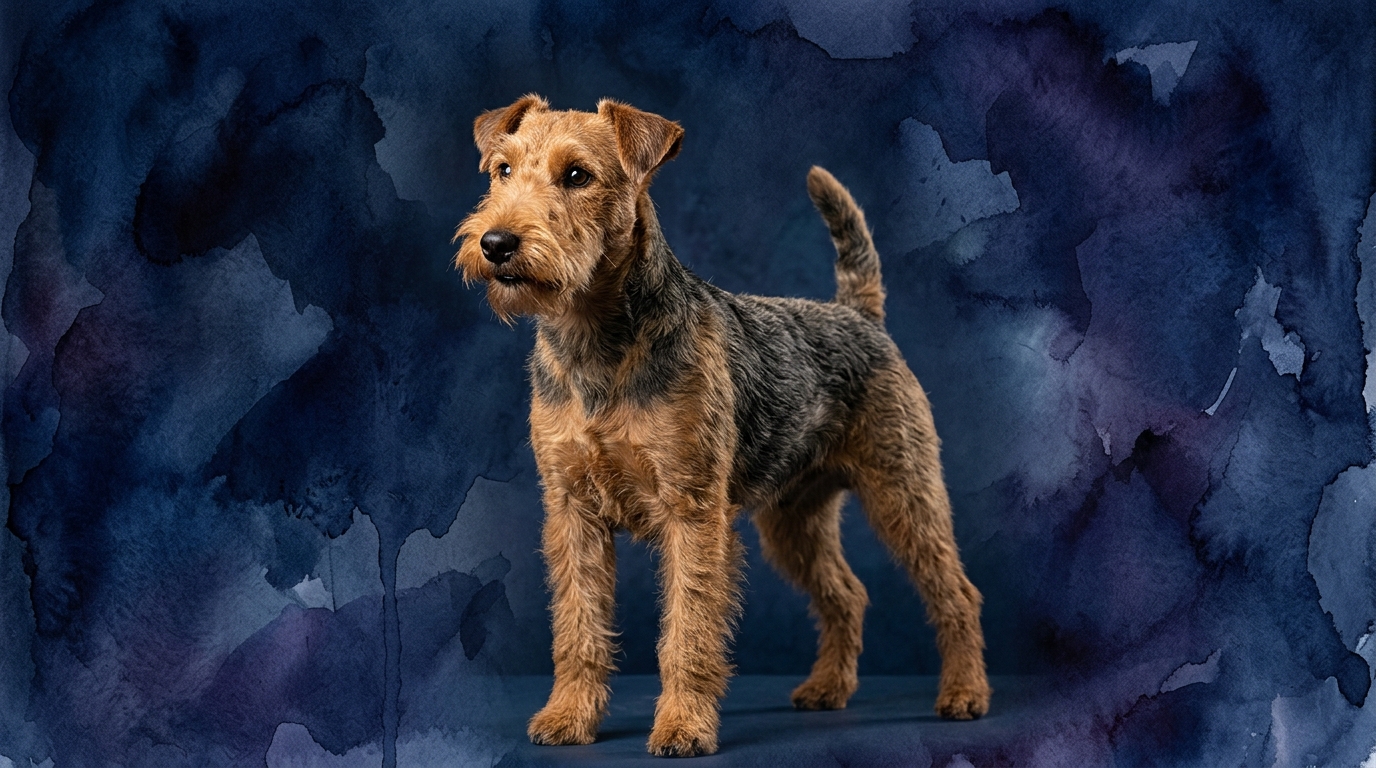
Side-by-Side Cognitive Profiles
The Cosmic Pet Pet IQ Lab employs a five-dimensional framework to assess canine intelligence, offering a nuanced view beyond simple obedience. For the Weimaraner, a Sporting group dog and Coren rank #21, their profile is robust across the board. They score 4/5 in Problem Solving, indicating a strong capacity to navigate novel situations and figure out solutions. Their Training Speed is also 4/5, suggesting a quick grasp of new commands and routines. Social Intelligence, at 4/5, means they are adept at interpreting human cues and intentions. A standout 5/5 in Instinctive Drive highlights their powerful genetic predisposition for hunting and working, while their Memory, at 4/5, ensures they retain learned behaviors and experiences effectively.
In contrast, the Welsh Terrier, a member of the Terrier group and not Coren-ranked, presents a more balanced, albeit slightly lower, cognitive profile. Across all five dimensions—Problem Solving, Training Speed, Social Intelligence, Instinctive Drive, and Memory—they consistently score 3/5. This suggests a solid, functional intelligence that is neither exceptional nor deficient. Their problem-solving is practical, their training speed is moderate, and their social understanding is sufficient for typical family interactions. Their instinctive drive is present but less overwhelming than some breeds, and their memory is reliable for day-to-day learning, offering a consistent and predictable cognitive experience.
Where the Weimaraner Excels Cognitively
The Weimaraner's cognitive strengths are evident in their superior scores, particularly their dominant Instinctive Drive of 5/5. This isn't just a physical attribute; it’s a profound mental engine that fuels their focus, endurance, and determination in tasks requiring sustained effort, such as scent work, retrieving, or agility. Their problem-solving (4/5) is often intertwined with this drive, allowing them to intelligently overcome obstacles in pursuit of a goal, whether it’s figuring out how to open a gate or tracking a complex scent trail. This translates to a dog that actively seeks out mental engagement and thrives on purposeful activity.
Furthermore, the Weimaraner’s higher Social Intelligence (4/5) means they are generally more attuned to human emotions and body language, making them more responsive partners in collaborative tasks. Their strong memory (4/5) and rapid training speed (4/5) combine to create a highly trainable dog that can master complex sequences of commands and adapt quickly to new rules or environments. They recall lessons from previous experiences with clarity, which contributes to their consistency in performance. This combination of drive, social awareness, and learning capacity positions the Weimaraner as a formidable cognitive athlete, eager to engage with their human companions on a deeper, more cooperative intellectual level.
Distinct Cognitive Strengths of the Welsh Terrier
While the Welsh Terrier's scores are consistently 3/5, these numbers highlight a different configuration of cognitive strengths rather than a deficit. Their moderate Problem Solving (3/5) combined with their inherent terrier independence means they often approach challenges with a determined, self-reliant spirit. They are less likely to constantly seek human guidance, instead preferring to work through issues using their own wits, which can be advantageous in scenarios requiring sustained, focused effort without direct supervision. This self-sufficiency is a distinct cognitive trait, enabling them to operate effectively as independent agents.
The Welsh Terrier's Instinctive Drive (3/5), while not as overwhelming as the Weimaraner's, is purpose-built for their heritage. It manifests as a tenacious, focused drive for quarry, a cognitive intensity geared towards specific tasks like vermin control. This focused drive doesn't necessarily require vast, expansive outlets but rather specific, engaging 'work' that taps into their prey drive, often in confined spaces or focused scenarios. Their slightly lower Social Intelligence (3/5) can also be seen as a strength; it often translates to a dog less prone to extreme separation anxiety or over-attachment, suggesting a cognitive resilience in managing their own emotional state and finding self-amusement. This independence can be a practical advantage for owners who appreciate a dog that doesn't constantly demand interaction or direction.
Trainability: Weimaraner vs. Welsh Terrier
When it comes to training, the cognitive profiles clearly indicate the Weimaraner as the more readily trainable breed. Their Training Speed of 4/5 means they absorb new commands quickly, often needing fewer repetitions to achieve proficiency. This is bolstered by their 4/5 Social Intelligence, which makes them highly attuned to their owner's moods, vocalizations, and body language, allowing them to interpret and respond to cues with greater accuracy. They typically exhibit a strong desire to please and engage, making training sessions productive and rewarding. Their 4/5 Memory ensures that once a behavior is learned, it is retained over time, leading to consistent obedience and a reliable understanding of household rules.
The Welsh Terrier, with a Training Speed of 3/5 and Social Intelligence of 3/5, presents a different training experience. Their independence and typical terrier tenacity mean they may require more patience, consistency, and creative motivation from their owners. They are capable of learning, but their enthusiasm for following commands might be less immediate or consistent than a Weimaraner's. Their Instinctive Drive of 3/5, while manageable, can sometimes lead to selective hearing when an interesting scent or movement captures their attention, requiring owners to employ strong recall and management techniques. Successful training with a Welsh Terrier often involves making it a game, leveraging positive reinforcement, and understanding that their focus may not always be solely on their handler.
Matching Breeds to Lifestyles: Active vs. Relaxed Owners
The Weimaraner's cognitive makeup strongly aligns with active owners who can provide substantial physical and mental stimulation. Their 5/5 Instinctive Drive demands purposeful activity, whether it's long runs, advanced obedience, scent work, or dog sports. Their 4/5 Problem Solving means they need mental challenges to prevent boredom, which can manifest as destructive behaviors if unaddressed. Owners who enjoy hiking, running, or engaging in complex training regimens will find the Weimaraner to be an eager and capable partner, thriving on shared adventures and intellectual tasks. They are not suited for a sedentary lifestyle, as their mental and physical energy requires consistent, engaging outlets.
The Welsh Terrier, while still requiring activity, offers a more adaptable fit for owners who are active but perhaps not at the extreme level demanded by a Weimaraner. Their 3/5 Instinctive Drive means they need regular exercise and mental engagement, but their needs might be satisfied with daily brisk walks, interactive play, and puzzle toys, rather than extensive, high-impact activities. Their 3/5 Problem Solving suggests they can be content with varied but not necessarily constant or overly complex mental challenges. They are suitable for owners who enjoy regular outdoor activities and can provide consistent, stimulating engagement without the intensity required for a working sporting dog. They are not 'relaxed' dogs in the sense of being couch potatoes, but their activity demands are generally more contained and manageable than a Weimaraner's.
The Verdict
Choose a Weimaraner if you are an active, experienced owner ready to deeply engage with a highly driven, cooperative, and intelligent canine partner who thrives on complex training and consistent mental and physical challenges.
Choose a Welsh Terrier if you appreciate an independent, tenacious companion with a practical intelligence, offering manageable activity needs and a unique charm for owners who enjoy consistent, engaging interaction and are prepared for a dog with a strong, self-reliant personality.
🧠 Find Your Pet's IQ Score
Our Pet IQ Lab assessment covers 25+ tests across 5 cognitive dimensions — personalized to your breed.
Take the Full IQ Test →Frequently Asked Questions
How does 'Instinctive Drive' differ between these breeds?
The Weimaraner's 5/5 Instinctive Drive is a powerful, broad-spectrum urge for hunting, retrieving, and working, requiring vast outlets. The Welsh Terrier's 3/5 drive is more focused and tenacious, geared towards specific terrier tasks like quarry work, often requiring less expansive but still purposeful engagement.
Which breed is better for a first-time dog owner?
Neither breed is typically recommended for absolute first-time owners due to their energy and training needs. However, the Weimaraner's higher training speed and social intelligence might make them slightly more forgiving for a novice who is committed to extensive training and activity, while the Welsh Terrier's independence can be more challenging without prior experience.
Do Welsh Terriers require less mental stimulation than Weimaraners?
While both need mental stimulation, the Weimaraner's higher problem-solving and drive demand more constant and complex cognitive challenges to prevent boredom. The Welsh Terrier requires consistent mental engagement, but their needs might be satisfied with varied puzzle toys and interactive play rather than the intense, advanced work a Weimaraner craves.