
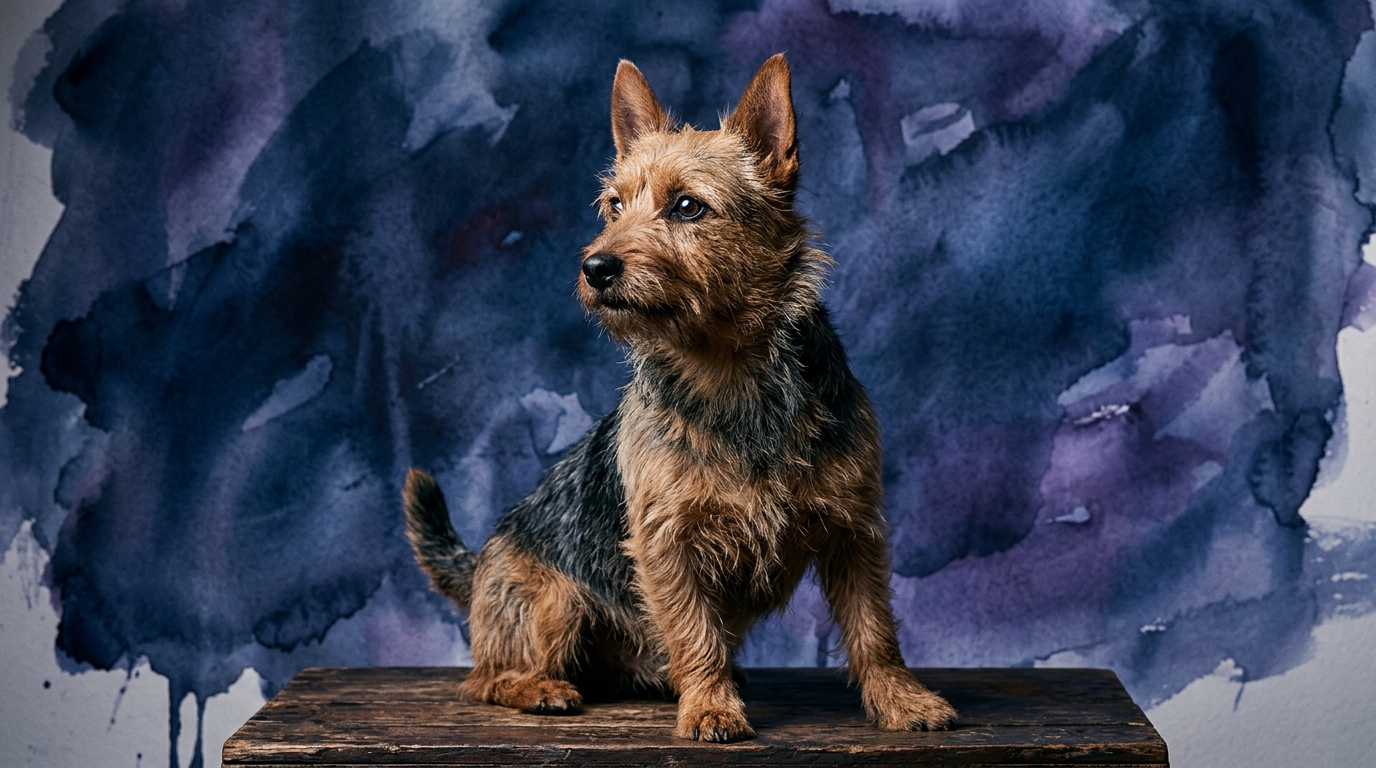
Side-by-Side Cognitive Profile
The Cosmic Pet Pet IQ Lab employs a five-dimensional framework to assess canine intelligence, moving beyond simple obedience to understand a breed's full cognitive landscape. For the Welsh Springer Spaniel, a Sporting group member, its Coren rank of #31 indicates a commendable capacity for understanding new commands efficiently. Its Problem Solving is rated at 4/5, reflecting an ability to navigate multi-step tasks and adapt to novel challenges, often leveraging its excellent Memory, also rated 4/5. The breed's Training Speed stands at 4/5, signifying a quick grasp of new cues and a general eagerness to collaborate with its handler, while its Social Intelligence is 3/5, indicating a solid but not overly nuanced understanding of human social cues. Its Instinctive Drive, at 3/5, is present but typically manageable, focusing on its retrieving and flushing heritage. In contrast, the Australian Terrier, a tenacious member of the Terrier group, is not Coren-ranked, suggesting a different cognitive emphasis rather than a lack of capacity. Its Problem Solving is rated 3/5, meaning it can tackle practical challenges with determination, though perhaps with more reliance on trial-and-error or innate terrier cunning. The Australian Terrier's Training Speed is 3/5, requiring more consistent motivation and repetition compared to its Spaniel counterpart, and its Memory is also 3/5, adequate for retaining information but perhaps not for complex, long-term sequences. Its Social Intelligence is 3/5, similar to the Welsh Springer, understanding basic social dynamics but often prioritizing its independent agenda. The breed’s Instinctive Drive, also 3/5, is strongly geared towards hunting small prey, which can significantly influence its focus and behavior.
Where the Welsh Springer Spaniel Excels Cognitively
The Welsh Springer Spaniel demonstrates clear cognitive advantages in areas demanding structured learning, precision, and sustained recall. Its superior Problem Solving (4/5) combined with an excellent Memory (4/5) means this breed excels in tasks requiring sequential steps and remembering complex patterns over time. For instance, a Welsh Springer Spaniel will likely master an intricate agility course, remembering the exact order and execution of multiple obstacles, or reliably perform multi-stage scent discrimination tasks. Their capacity to retain numerous commands and apply them accurately across varied environments makes them highly effective partners in competitive obedience or advanced field work. This breed’s cognitive strength lies in its ability to process and store information efficiently, then retrieve and apply it reliably under direction, making them adept at learning and performing complex, handler-guided tasks.
Where the Australian Terrier Excels Cognitively
While the Welsh Springer Spaniel shines in structured tasks, the Australian Terrier showcases a distinct cognitive strength rooted in its terrier heritage: resourceful, independent problem-solving. Rated 3/5 in Problem Solving, the Australian Terrier might not learn multi-step commands as quickly, but it possesses a tenacious drive to figure things out on its own terms. This often translates into superior cognitive resourcefulness in novel, unguided situations. For example, an Australian Terrier might cleverly outwit a puzzle toy designed to challenge it, or find an ingenious way to access a hidden treat, using its keen senses and persistent nature rather than relying on learned commands. Their independence and determined spirit allow them to adapt and innovate when faced with unexpected environmental challenges, making them adept at practical, self-directed solutions in real-world scenarios, a testament to their original purpose of independent vermin control.
Trainability: Cooperation vs. Independence
Evaluating ease of training requires understanding a breed's inherent behavioral predispositions. The Welsh Springer Spaniel is generally considered easier to train due to its higher Training Speed (4/5) and strong Memory (4/5). Sporting dogs like the Welsh Springer naturally possess a desire to collaborate and work closely with their handlers, making them highly receptive to positive reinforcement and consistent instruction. They absorb new commands with fewer repetitions and retain them over long periods, which is crucial for advanced training in areas like field trials, competitive obedience, or even service work. Their moderate instinctive drive means their focus can be readily directed towards the trainer, allowing for sustained engagement and precise execution of tasks. Conversely, the Australian Terrier, with its 3/5 ratings in both Training Speed and Memory, and its independent terrier temperament, presents a different training dynamic. While capable of learning, they often require more patience, creative motivation, and consistency. Their strong instinctive drive for hunting and exploring can make them easily distracted by environmental stimuli, leading to less focus on the handler. Training an Australian Terrier often means transforming learning into a game, leveraging their problem-solving skills and prey drive in a controlled, positive manner to maintain engagement. They might test boundaries more frequently, demanding a firm yet fair approach that respects their spirited independence.
Matching Breeds to Lifestyles
Both the Welsh Springer Spaniel and the Australian Terrier are active breeds that require consistent mental and physical engagement, making neither truly suited for genuinely "relaxed" owners seeking a sedentary companion. The Welsh Springer Spaniel is an excellent fit for active owners who enjoy structured activities. Their stamina and desire to work make them superb partners for long hikes, running, and participating in dog sports such as agility, obedience, or scent work. They thrive on having a job to do and excel when their physical energy and cognitive abilities are regularly challenged, making them ideal for individuals committed to consistent training and outdoor adventures. The Australian Terrier also demands an active lifestyle, but perhaps with a different flavor of activity. They suit active owners who appreciate a spirited, tenacious companion for varied, often exploratory activities. This might include off-leash adventures in secure areas, earthdog trials where their natural instincts can shine, or engaging in interactive games that challenge their resourceful problem-solving. While they need significant daily outlets for their energy to prevent boredom and potential mischievousness, their activities can be less formally structured than those preferred by a Welsh Springer. For owners seeking a truly laid-back, low-exercise dog, neither of these breeds would be an appropriate match, as both require daily commitment to their well-being.
The Verdict
Choose the Welsh Springer Spaniel if you desire a cooperative, highly trainable companion eager to master complex commands and excel in structured dog sports or field work, valuing reliable memory and consistent problem-solving aptitude.
Opt for the Australian Terrier if you appreciate a spirited, independent thinker with tenacious resourcefulness, who shines in practical, self-directed problem-solving and offers a determined, engaging presence for active, varied adventures.
🧠 Find Your Pet's IQ Score
Our Pet IQ Lab assessment covers 25+ tests across 5 cognitive dimensions — personalized to your breed.
Take the Full IQ Test →Frequently Asked Questions
Are Welsh Springer Spaniels good at agility?
Yes, with a 4/5 in both problem-solving and training speed, Welsh Springer Spaniels often excel in agility. Their strong memory allows them to quickly learn and execute complex courses, making them competitive partners.
Do Australian Terriers bark a lot?
Australian Terriers can be quite vocal, often using barks to alert their owners to new sights or sounds, a trait stemming from their watchfulness and alert nature. Consistent training from a young age can help manage excessive barking.
Which breed is better for a first-time dog owner?
The Welsh Springer Spaniel's higher trainability, cooperative nature, and desire to please generally make them a more forgiving choice for first-time owners. Australian Terriers, while charming, require a more experienced hand due to their independent, often stubborn terrier spirit.