
Side-by-Side IQ Profile
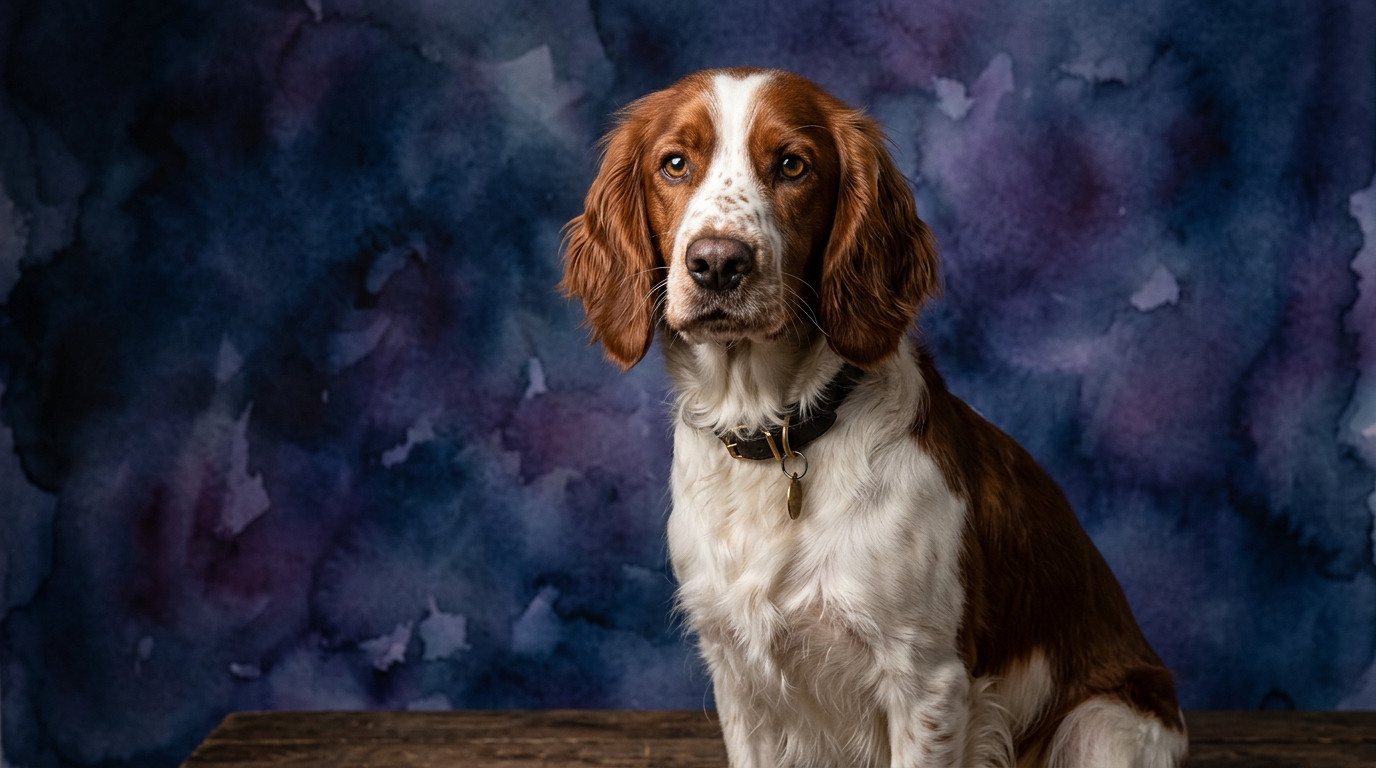
The Cosmic Pet Pet IQ Lab's assessment reveals distinct cognitive profiles for these two breeds. The Welsh Springer Spaniel, ranking #31 on Coren's scale, exhibits a well-rounded and robust set of cognitive abilities. Its Problem Solving is rated 4/5, indicating a strong capacity for independent thought and figuring out solutions to novel challenges. This is complemented by a 4/5 Training Speed, suggesting a quick uptake of new commands, and an impressive 4/5 Memory, ensuring long-term retention of learned information. Its Social Intelligence is a moderate 3/5, reflecting a solid understanding of human cues, while its Instinctive Drive, also 3/5, is geared towards its traditional role as a flushing and retrieving gun dog, manifesting as a desire to work alongside its handler.
In contrast, the Basset Hound, at #71 on Coren's scale, presents a cognitive profile profoundly influenced by its specialized sensory world. Its Problem Solving, Training Speed, and Memory are all rated 3/5, indicating an average capacity for these general cognitive tasks. While capable, they typically require more repetition and patience in training. Like the Welsh Springer, its Social Intelligence is 3/5, suggesting a moderate ability to interpret social signals. However, the Basset's Instinctive Drive, also 3/5, is almost exclusively centered on its extraordinary olfactory prowess. This drive compels it to follow scent trails with unwavering determination, a cognitive strength that defines its interaction with the environment.
Where Welsh Springer Spaniel Wins Cognitively
The Welsh Springer Spaniel's cognitive strengths clearly position it as a versatile and adaptable learner. Its 4/5 Problem Solving score means it's adept at figuring out puzzles, navigating complex environments, and adapting quickly to new training exercises. This inherent curiosity and ingenuity make them excellent candidates for complex tasks and dog sports where strategic thinking is key. Coupled with a 4/5 Training Speed, they grasp new concepts rapidly, often needing only a few repetitions to solidify a command, making advanced obedience and skill acquisition a fluid and enjoyable process. Furthermore, their 4/5 Memory ensures that learned behaviors and solutions are retained effectively, reducing the need for constant refreshers and allowing for a broad and ever-expanding repertoire of skills, from complex retrieve patterns to intricate agility courses.
Where Basset Hound Wins Cognitively
While the Basset Hound's general cognitive scores might appear modest, its unique strengths lie in a profoundly specialized form of intelligence driven by its incredible sense of smell. Its 3/5 Instinctive Drive, though numerically average, is intensely focused on its olfactory capabilities, making it a master tracker. This isn't merely a physical act; it requires a sophisticated cognitive process to interpret a complex tapestry of scents, differentiate target odors, and follow a trail with unwavering persistence. Their "problem-solving" in this context involves piecing together a scent narrative, often over long distances. This singular dedication to a scent, even when it leads them to appear stubborn or oblivious to other commands, is a testament to a highly evolved cognitive ability tailored for its original purpose as a scent hound, allowing them to succeed where other breeds might give up.
Which is Easier to Train and Why
The Welsh Springer Spaniel is unequivocally the easier breed to train. Its superior 4/5 Training Speed means it absorbs and retains commands much faster, requiring fewer repetitions to solidify new behaviors and making training sessions efficient and enjoyable. Their higher Problem Solving ability also enables them to generalize learned commands to new situations more readily. In contrast, the Basset Hound's 3/5 Training Speed and Memory indicate a more deliberate learning pace. Their powerful, scent-driven Instinctive Drive means they are easily distracted by compelling smells, often prioritizing a fascinating trail over a handler's command. This inherent focus on olfactory input, combined with a streak of independent thought, can make them seem stubborn. Training a Basset Hound demands exceptional patience, consistency, and creative, high-value motivation to keep their attention grounded when their nose is pulling them in another direction.
Which Suits Active Owners vs Relaxed Owners
The Welsh Springer Spaniel is an ideal match for active owners who thrive on engagement and outdoor adventures. Its background as a working gun dog means it possesses significant energy reserves and a keen desire for purposeful activity, benefiting greatly from regular, vigorous exercise like long hikes, running, or participation in dog sports. These activities not only fulfill its physical needs but also provide essential mental stimulation for its quick problem-solving mind, preventing boredom. Conversely, the Basset Hound, with its more deliberate pace and profound love for lounging, is better suited for relaxed owners. However, "relaxed" doesn't mean sedentary; Bassets require consistent, sniff-filled walks to satisfy their profound olfactory drive, even if these walks are slower and punctuated by frequent stops to investigate scents. Owners must be prepared for a dog that will stop frequently to investigate every intriguing odor, embracing a less hurried, more exploratory pace.
The Verdict
For owners seeking an energetic, highly trainable companion eager to engage in diverse activities and learn complex tasks, the Welsh Springer Spaniel is the clear choice.
If you appreciate a calm, charmingly independent dog whose primary joy is exploring the world through its nose, and you're prepared for a more patient, scent-focused training approach, the Basset Hound will be a deeply rewarding companion.
🧠 Find Your Pet's IQ Score
Our Pet IQ Lab assessment covers 25+ tests across 5 cognitive dimensions — personalized to your breed.
Take the Full IQ Test →Frequently Asked Questions
Is a Basset Hound truly "not smart" because of lower IQ scores?
No, the Basset Hound possesses a specialized intelligence, particularly in scent work, which standard tests may not fully capture; their cognitive strengths are simply directed differently, emphasizing perseverance and olfactory discrimination.
Can a Welsh Springer Spaniel live in an apartment?
A Welsh Springer Spaniel can adapt to apartment living if its significant exercise and mental stimulation needs are consistently met through daily long walks, runs, and engaging training sessions, otherwise, it may become restless.
How much exercise does a Basset Hound need?
While appearing low-energy, Basset Hounds require at least one long, leisurely walk daily, ideally with opportunities for off-leash sniffing in a secure area, to satisfy their innate need to explore with their nose and maintain physical health.