Side-by-Side Cognitive Profiles
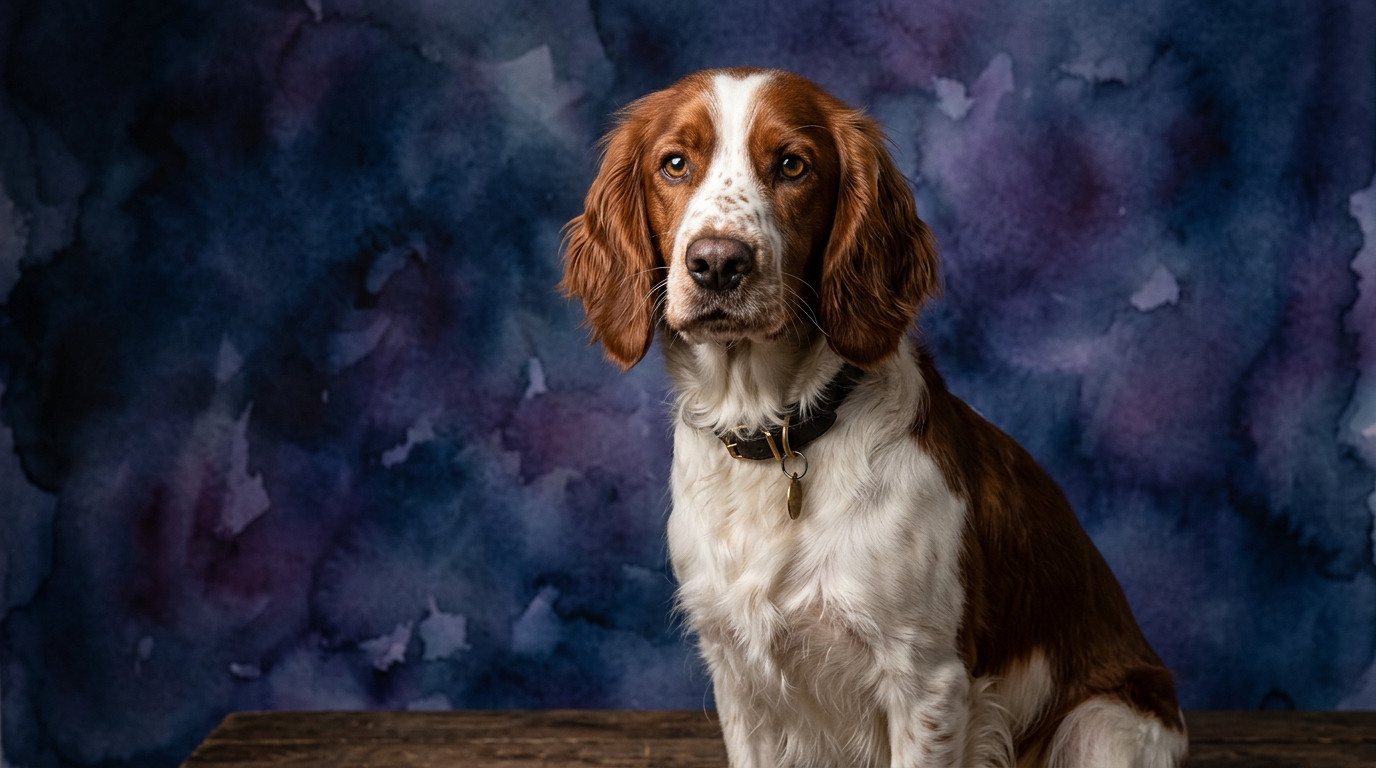
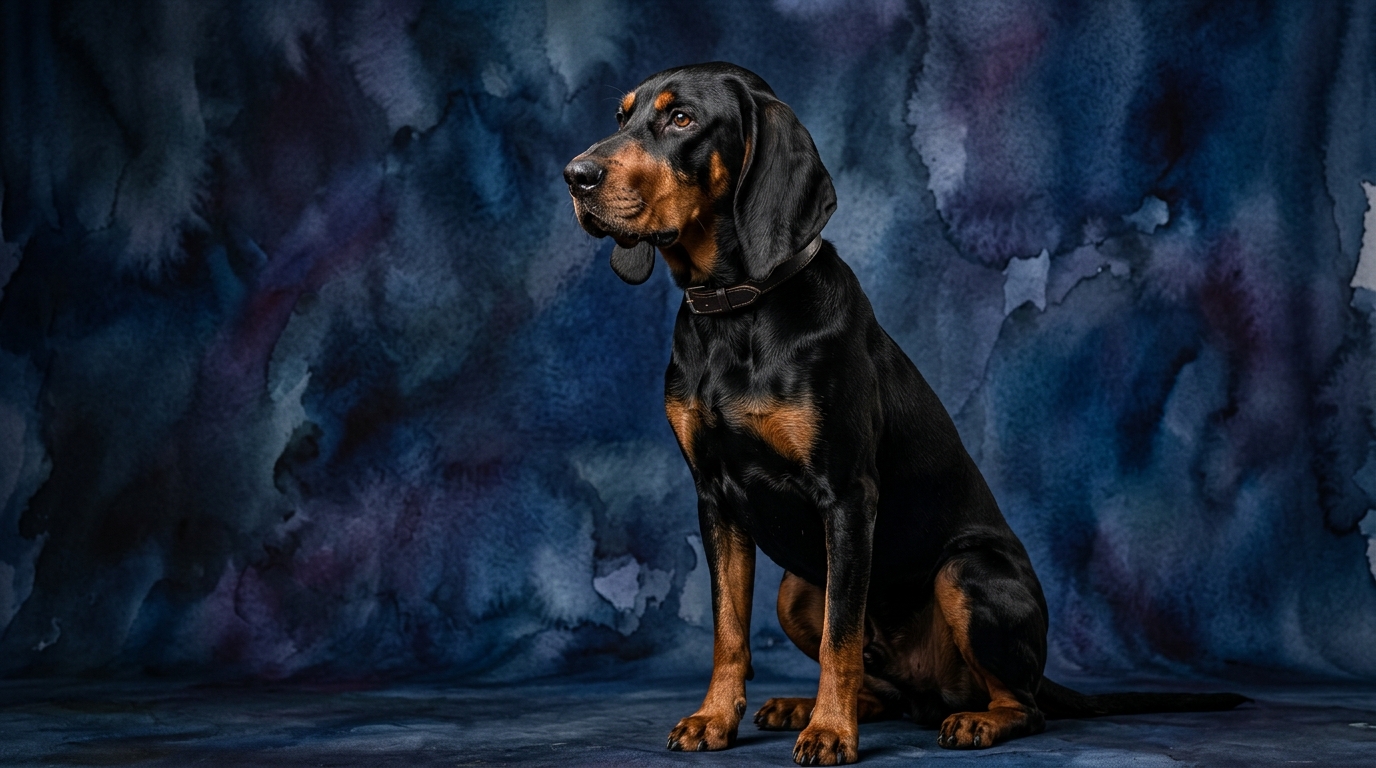
In The Cosmic Pet Pet IQ Lab, we assess canine cognition across five key dimensions. The Welsh Springer Spaniel, a Sporting breed, presents a profile marked by strong general learning capabilities, earning it a Coren rank of #31. The Black and Tan Coonhound, a member of the Hound group, does not appear on the Coren ranking, signifying a different cognitive emphasis, often rooted in its specialized working purpose.
The Welsh Springer Spaniel's profile includes a Problem Solving score of 4/5, indicating a capacity for figuring out novel situations, such as manipulating objects or navigating new environments. Its Training Speed is also 4/5, suggesting it picks up new commands and routines relatively quickly, often needing fewer repetitions. With a Memory score of 4/5, it retains learned information and experiences effectively, making complex sequences manageable. Social Intelligence at 3/5 points to a moderate ability to interpret human cues, while its Instinctive Drive at 3/5 reflects a balanced level of innate hunting or retrieving urges, manageable within a family context.
The Black and Tan Coonhound, in contrast, consistently scores 3/5 across all five dimensions: Problem Solving, Training Speed, Social Intelligence, Instinctive Drive, and Memory. This consistent, moderate rating signifies a steady, rather than rapid, learning pace. Its Problem Solving at 3/5 means it can navigate straightforward challenges but might require more guidance for intricate puzzles. A Training Speed of 3/5 implies it learns, but at a more deliberate pace, necessitating patience and consistent reinforcement. Memory at 3/5 indicates it remembers learned behaviors and experiences, though perhaps not with the same detailed recall as breeds scoring higher. Social Intelligence at 3/5 suggests it can form bonds and interpret basic human interactions, while its Instinctive Drive at 3/5 points to a persistent, but not overwhelming, prey drive primarily focused on scent trailing, a core aspect of its heritage.
Where the Welsh Springer Spaniel Wins Cognitively
The Welsh Springer Spaniel's cognitive profile showcases several distinct advantages, particularly in areas relevant to versatile companionship and performance tasks. Its 4/5 rating in Problem Solving signifies a greater aptitude for independent thought and navigating novel situations. For example, a Welsh Springer might more readily deduce how to retrieve a ball stuck under furniture or figure out how to open a simple latch to access a desired area, demonstrating a flexible application of learned and innate strategies. This capacity allows them to adapt more smoothly to changes in routine or environment, often requiring less explicit guidance than a breed with lower problem-solving scores.
Furthermore, the Welsh Springer Spaniel's superior Memory, also rated at 4/5, complements its problem-solving and training speed. This means they are likely to retain complex sequences of commands or remember specific routes and locations with greater accuracy over time. An owner teaching a multi-step agility course, for instance, would likely find the Welsh Springer Spaniel capable of recalling the entire sequence after fewer repetitions compared to dogs with a 3/5 memory score. This robust memory also contributes to their ability to generalize learned behaviors across different contexts, making their training more durable and applicable in various real-world scenarios. Their Coren rank of #31 further reinforces their capacity for understanding and executing commands reliably.
Where the Black and Tan Coonhound Wins Cognitively
While the Black and Tan Coonhound may not exhibit the same rapid learning or general problem-solving acumen as the Welsh Springer Spaniel, its cognitive strengths lie in a different domain, deeply rooted in its specialized purpose. Its 3/5 Instinctive Drive, while numerically similar, manifests as an unwavering dedication to scent work, a cognitive specialization that overrides many other stimuli. This isn't just a physical trait; it involves complex cognitive processing to discriminate between countless odors, track a specific scent trail over varied terrain, and maintain focus for extended periods despite distractions. While its problem-solving score is 3/5 for general tasks, within the context of scent trailing, the Coonhound exhibits exceptional, specialized problem-solving: how to re-acquire a lost trail, how to navigate obstacles while maintaining scent contact, and how to ignore irrelevant smells.
This breed's cognitive strengths are less about general obedience and more about a profound, singular focus. Their moderate scores in Problem Solving, Training Speed, and Memory, all at 3/5, are perfectly suited to their working role. They possess enough memory to recall scent patterns and terrain, enough training speed to learn the specific cues for tracking, and enough general problem-solving to navigate a chase. The persistent, methodical nature of a Coonhound on a trail demands a different kind of cognitive endurance and selective attention. Their determination to follow a scent, often to the exclusion of other cues, is a testament to a highly developed, albeit specialized, cognitive architecture that prioritizes sensory input and sustained pursuit over rapid, generalized behavioral modifications. This specialized cognitive 'win' allows them to excel in tasks that demand relentless olfactory investigation.
Which Is Easier to Train and Why
When evaluating trainability, the Welsh Springer Spaniel clearly presents an easier path for most owners due to its higher scores in Training Speed (4/5) and Problem Solving (4/5), coupled with its robust Memory (4/5). These traits mean a Welsh Springer typically grasps new commands and concepts more quickly, requiring fewer repetitions and less time to solidify learned behaviors. For instance, teaching a 'stay' command or a complex retrieve sequence will likely progress at a faster rate, as the dog can both understand the task and recall the desired action efficiently. Their moderate Instinctive Drive (3/5) is also generally more manageable, meaning they are less likely to be overwhelmingly distracted by environmental stimuli compared to some other working breeds. Their Coren rank of #31 directly reflects their capacity for obedience and willingness to cooperate with human instruction.
In contrast, the Black and Tan Coonhound, with 3/5 across Training Speed, Problem Solving, and Memory, requires a different approach and a higher degree of owner patience. While capable of learning, their pace will be more deliberate, and they may need more consistent reinforcement over a longer period to achieve the same level of proficiency as a Welsh Springer. Their primary cognitive focus is often on scent, meaning they can be easily distracted by an interesting smell, which can override commands or learned behaviors. This deeply ingrained instinctive drive requires owners to be exceptionally engaging and creative in their training methods, often needing to work in environments with minimal olfactory distractions or integrating scent work into their training to leverage, rather than fight, their natural inclinations. Their lack of a Coren ranking further suggests that while they are trainable for their specific tasks, they are not typically chosen for general obedience competition due to these inherent cognitive priorities.
Which Suits Active Owners vs. Relaxed Owners
The Welsh Springer Spaniel is an excellent match for active owners who enjoy engaging their dogs in a variety of activities beyond just physical exercise. Their 4/5 Problem Solving and 4/5 Training Speed make them eager participants in dog sports like agility, obedience, and even dock diving, where mental engagement is as crucial as physical prowess. These dogs thrive on learning new things and appreciate structured activities that challenge their intellect, making them ideal companions for hikers, runners, or families interested in competitive canine events. Their balanced Instinctive Drive (3/5) means they possess a willingness to work but are also content to relax after adequate stimulation, fitting into a dynamic lifestyle that includes both adventure and downtime.
The Black and Tan Coonhound, while requiring activity, caters to a specific type of active owner, particularly those who appreciate and can channel their extraordinary olfactory drive. These are not dogs for casual strolls; their 3/5 Instinctive Drive, centered around scent, means they need opportunities for extensive sniffing and tracking, whether in structured scent work classes, long walks where they can follow trails, or even participation in search and rescue. Owners who enjoy exploring the outdoors at a more methodical pace, allowing their dog to 'read' the environment through its nose, will find a devoted companion. For more relaxed owners, a Coonhound's persistent vocalizations (baying) and independent nature when on a scent trail might be challenging. They are less suited for owners seeking a purely 'off-switch' companion, as their mental stimulation often revolves around their nose, which is always 'on'.
The Verdict
Choose the Welsh Springer Spaniel if you desire a versatile, eager-to-please companion who learns quickly, excels in diverse activities, and integrates seamlessly into a varied family life with both active and relaxed moments.
Opt for the Black and Tan Coonhound if you are a dedicated owner who appreciates a dog with profound scenting abilities, enjoys methodical outdoor exploration, and is prepared to manage a strong, independent drive with consistent, patient training.
🧠 Find Your Pet's IQ Score
Our Pet IQ Lab assessment covers 25+ tests across 5 cognitive dimensions — personalized to your breed.
Take the Full IQ Test →Frequently Asked Questions
Do Welsh Springer Spaniels need a lot of mental stimulation?
Yes, with a 4/5 in Problem Solving and Memory, Welsh Springer Spaniels benefit significantly from regular mental challenges beyond just physical exercise. Engaging them in puzzle toys, learning new tricks, or participating in dog sports helps satisfy their cognitive needs and prevents boredom.
How does a Black and Tan Coonhound's strong scent drive impact its daily life?
A Black and Tan Coonhound's instinctive drive for scent means daily walks become exploratory scenting missions, requiring a secure leash and awareness of its potential to follow interesting smells. Owners must provide outlets for this drive, such as scent work or long-line walks in safe, fenced areas, to keep them content and prevent undesirable behaviors stemming from unfulfilled instincts.
Can a Black and Tan Coonhound be a good family pet despite its specific cognitive profile?
Absolutely, a Black and Tan Coonhound can be a loyal and affectionate family pet, provided their cognitive needs for scent work and consistent, patient training are met. While they may not be as quick to learn general obedience as some breeds, their calm demeanor indoors and devotion to their family make them wonderful companions for those prepared for their unique traits.