
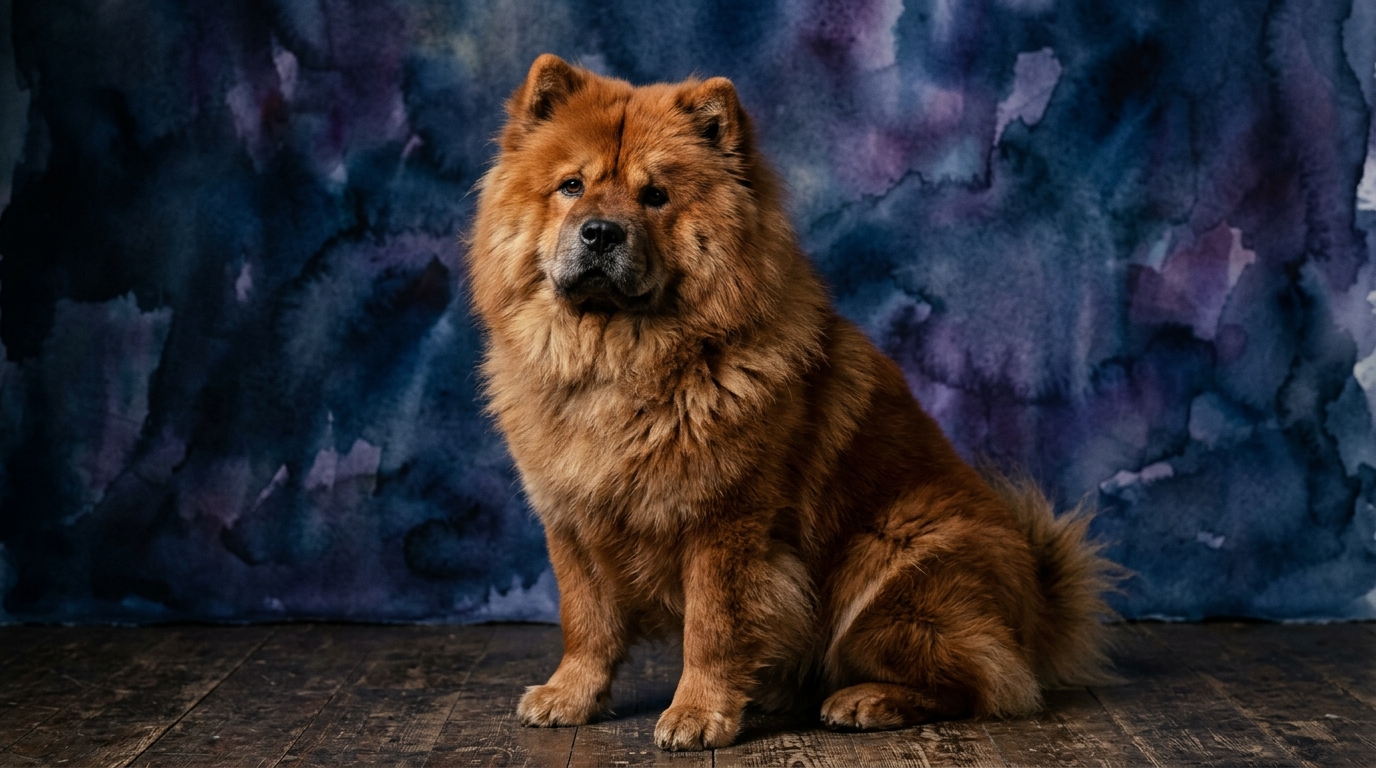
Side-by-Side Cognitive Profiles: Welsh Springer Spaniel vs. Chow Chow
The Cosmic Pet Pet IQ Lab assesses canine intelligence across five key dimensions, providing a granular view beyond general rankings. The Welsh Springer Spaniel, positioned at Coren rank #31, demonstrates a robust cognitive aptitude: Problem Solving is rated 4/5, indicating a strong capacity for navigating novel challenges and strategizing. Their Training Speed also scores 4/5, suggesting they grasp new commands and routines with impressive alacrity. Social Intelligence stands at 3/5, reflecting a solid understanding of human cues and interactions without being overly complex in their social reasoning. Instinctive Drive is 3/5, a moderate level that speaks to their sporting heritage without being overwhelming. Finally, Memory is rated 4/5, showcasing an excellent ability to retain learned behaviors and information over time.
In contrast, the Chow Chow, with a Coren rank of #76, exhibits a more self-contained and consistent cognitive profile across the board. Its Problem Solving ability is rated 3/5, meaning it can effectively work through challenges, though perhaps with less speed or creative flair than the Spaniel. Training Speed also scores 3/5, indicating a steady, albeit slower, learning pace that requires consistent methods. Social Intelligence is 3/5, mirroring the Spaniel, which suggests an understanding of social dynamics, though often expressed through a more reserved demeanor. Instinctive Drive is 3/5, similar to the Spaniel, indicating a moderate level of inherent drives not typically geared towards intense fieldwork. Memory is rated 3/5, signifying an adequate capacity to recall information, though potentially requiring more frequent refreshers than a breed with a higher score.
Where the Welsh Springer Spaniel Excels Cognitively
The Welsh Springer Spaniel's cognitive strengths are particularly evident in its capacity for rapid learning and problem resolution. With a 4/5 in Problem Solving, these dogs are adept at figuring out complex sequences, navigating obstacles, and adapting quickly to new environments or tasks. This translates into a dog that enjoys mental puzzles and thrives on opportunities to use its intellect to achieve goals, whether it’s retrieving a specific item or mastering an agility course. Their 4/5 Training Speed means they form associations between commands and actions very quickly, often requiring fewer repetitions to solidify a new behavior. This makes them highly responsive and a joy to teach, as they visibly engage with the learning process.
Furthermore, the Welsh Springer Spaniel's 4/5 Memory score complements its learning speed. Once a command or routine is learned, it tends to stick, meaning less time spent on reteaching and more time available for advancing to new skills. This robust memory also contributes to their reliability in recall, even after periods of inactivity, making them excellent candidates for advanced obedience or competitive dog sports where precise execution of multiple commands is crucial. Their cognitive profile is geared towards active collaboration and consistent performance.
Where the Chow Chow's Cognitive Strengths Lie
While the Chow Chow's cognitive scores are generally moderate, its strengths lie in its self-reliance and dignified independence, which are cognitive traits often misunderstood. Its 3/5 in Problem Solving indicates a dog capable of making its own assessments and finding solutions, often without constant human direction. This isn't a deficiency; rather, it's a reflection of a breed that historically operated with a degree of autonomy, making decisions based on its own reasoning rather than always seeking human input. This can translate into a dog that is less prone to separation anxiety and more content with its own company, provided its basic needs are met.
The Chow Chow's consistent 3/5 across all categories, including Social Intelligence and Instinctive Drive, suggests a balanced, self-contained cognitive approach. Their social intelligence, while not manifesting as overt eagerness, allows them to understand boundaries and communicate effectively without being overly demanding. Their moderate instinctive drive means they are less likely to be ruled by intense prey drives or an overwhelming need for constant activity, making them predictable companions. Their cognitive profile supports a calm, observant nature that can appreciate routines and a steady environment, preferring to process information and interact on their own terms.
Training Dynamics: Which is Easier to Train?
When considering ease of training, the Welsh Springer Spaniel generally holds a distinct advantage due to its higher scores in Training Speed (4/5) and Problem Solving (4/5). These dogs exhibit a natural eagerness to engage with their handlers and a strong desire to collaborate, which is typical of a Sporting breed bred to work closely with humans. They quickly understand what is being asked of them, form associations rapidly, and are typically motivated by positive reinforcement, praise, and the opportunity to participate in activities with their people. This makes them highly receptive to a wide range of training, from basic obedience to complex tricks and dog sports.
The Chow Chow, with its 3/5 in Training Speed and Problem Solving, presents a different training experience. While certainly trainable, they are known for their independent and somewhat aloof nature, which means they may not always prioritize human directives over their own inclinations. Training a Chow Chow requires immense patience, consistency, and a deep understanding of their unique motivations. They respond best to positive reinforcement, short and engaging sessions, and a trainer who can clearly demonstrate the value of a command from the dog's perspective. Forcing or harsh methods are counterproductive, as they can lead to stubbornness or withdrawal. Their cognitive profile demands a respectful, consistent approach that builds trust rather than relying on an inherent desire to please.
Matching Breeds to Lifestyles: Active vs. Relaxed Owners
For active owners seeking a dynamic and engaged canine partner, the Welsh Springer Spaniel is an excellent match. Their 4/5 in Problem Solving and Training Speed, combined with a moderate Instinctive Drive, means they thrive on consistent mental and physical stimulation. They excel in activities like agility, flyball, obedience, and scent work, where their quick learning and robust memory can be fully utilized. These dogs benefit from regular outdoor adventures, long walks, and opportunities to explore and interact with their environment. An owner who enjoys teaching new skills and participating in dog sports will find a highly collaborative and enthusiastic companion in a Welsh Springer Spaniel.
Conversely, owners with a more relaxed lifestyle who appreciate a dignified and independent companion might find the Chow Chow more suitable. While they still require regular exercise to maintain health, their moderate drives and self-sufficient cognitive profile (consistent 3/5 across the board) mean they are generally not as demanding of constant interactive engagement as a Sporting breed. They are often content with moderate daily walks and do not typically crave elaborate training routines or constant attention. An owner who values a calm presence and respects a dog's independent nature, understanding that affection is given on the Chow Chow's terms, will find a loyal and steady companion.
The Verdict
Choose the Welsh Springer Spaniel if you desire a highly trainable, collaborative dog eager for mental challenges and active engagement in diverse activities. Their quick learning and strong memory make them ideal for owners committed to consistent training and canine sports.
Opt for the Chow Chow if you appreciate a dignified, independent companion that offers a calm presence and requires a more patient, understanding approach to training. They are best suited for owners who respect their self-sufficient nature and seek a less demanding but deeply loyal relationship.
🧠 Find Your Pet's IQ Score
Our Pet IQ Lab assessment covers 25+ tests across 5 cognitive dimensions — personalized to your breed.
Take the Full IQ Test →Frequently Asked Questions
Is a Chow Chow difficult to live with due to its independence?
While independent, a Chow Chow is not inherently difficult. Their self-sufficient nature means they may not be as outwardly affectionate or eager to please as some breeds, but they are loyal and form strong bonds with their families. Understanding and respecting their boundaries is key to a harmonious relationship.
Do Welsh Springer Spaniels require extensive grooming?
Welsh Springer Spaniels have a medium-length coat that requires regular grooming to prevent tangles and mats, especially around their feathering. Weekly brushing and occasional trims are generally sufficient to keep their coat healthy and tidy.
How do their social intelligence scores of 3/5 differ in practice?
Both breeds score 3/5, but its manifestation differs. The Welsh Springer Spaniel's 3/5 often translates to responsiveness and willingness to interact within a family setting, while the Chow Chow's 3/5 typically means they understand social cues but prefer to interact on their own terms, often being more reserved with strangers and less overtly demonstrative with family.