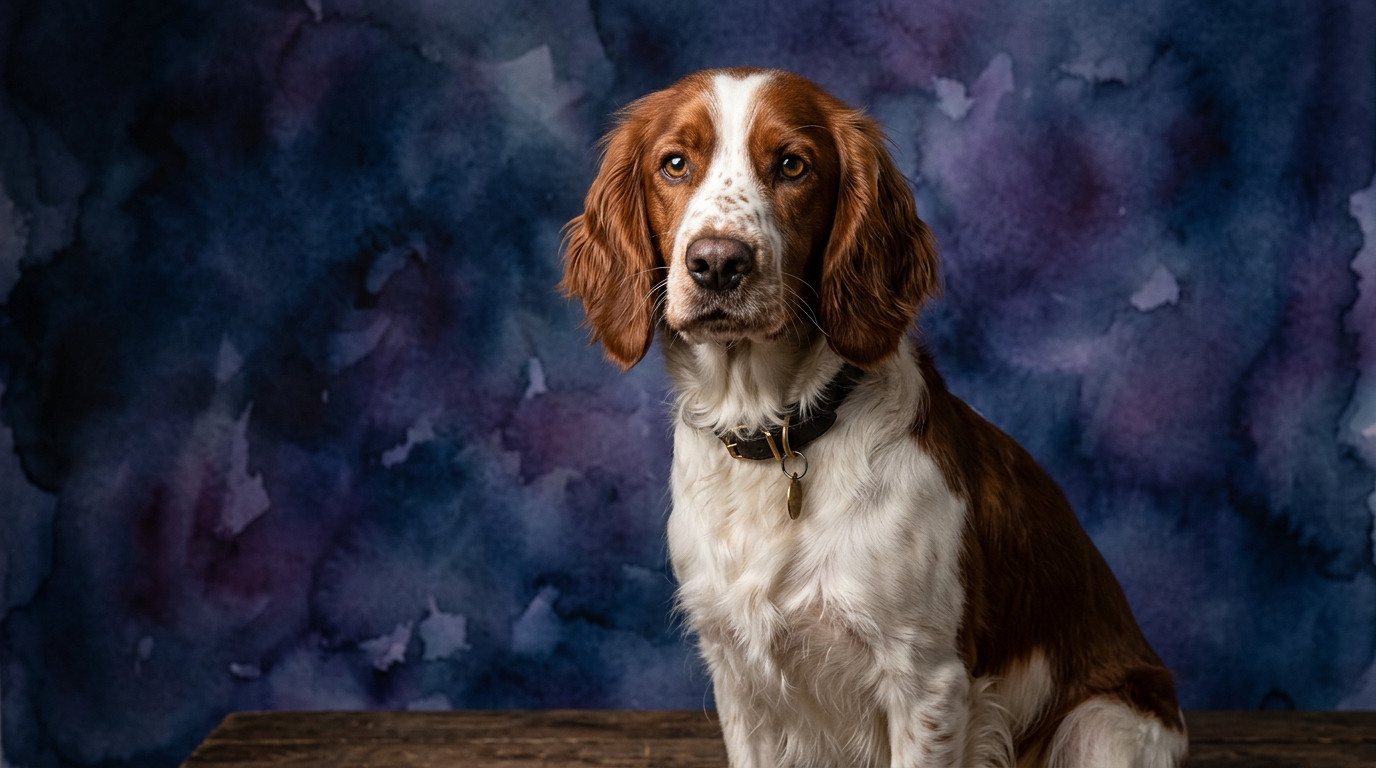
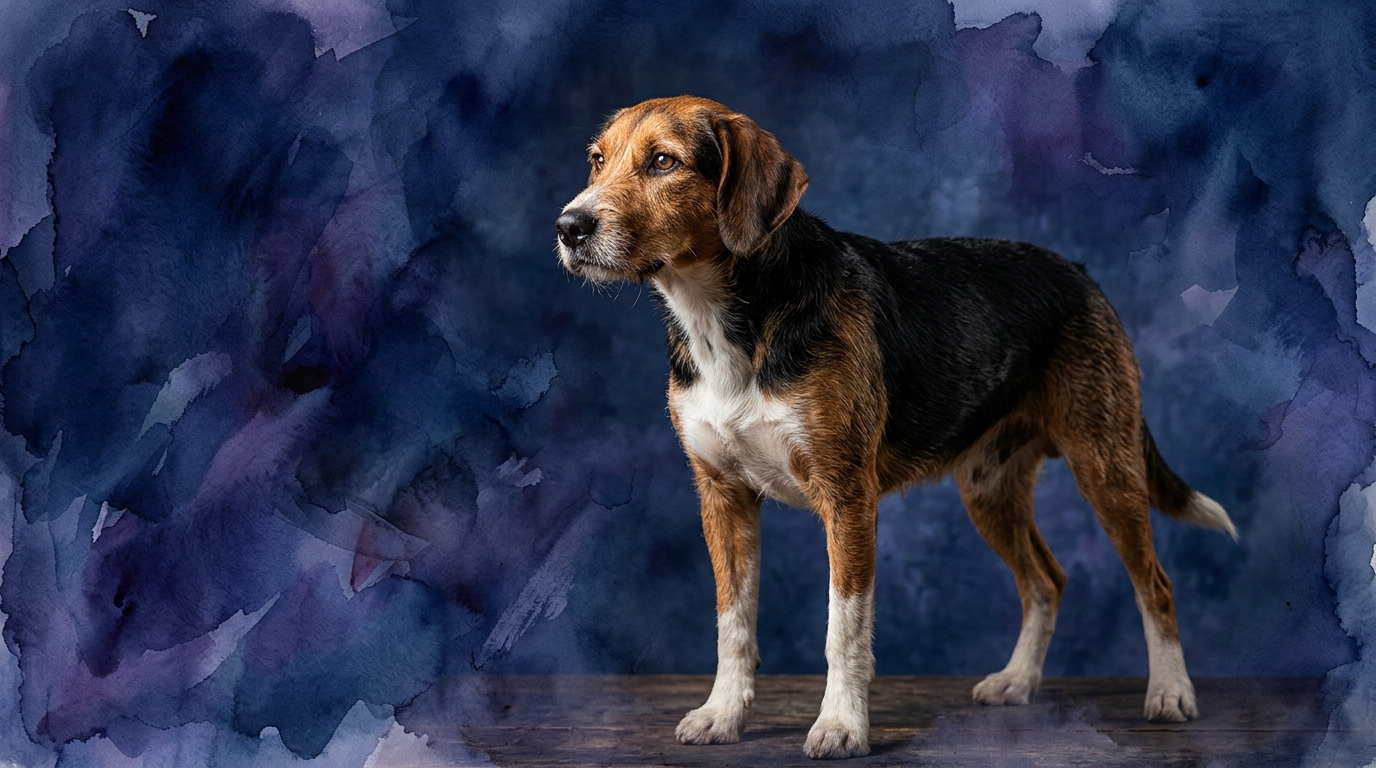
Side-by-Side Cognitive Profiles
The Cosmic Pet Pet IQ Lab employs a five-dimensional framework to assess canine intelligence, providing a nuanced understanding beyond simple 'smart or not' labels. Let's break down how the Welsh Springer Spaniel and the Harrier stack up in these critical areas.
The **Welsh Springer Spaniel**, a Sporting Group member, registers a Coren rank of #31, placing them firmly within the above-average working/obedience intelligence category. Their cognitive scores include: Problem Solving 4/5, indicating a strong capacity to navigate new situations and figure out solutions; Training Speed 4/5, suggesting they grasp commands and routines with relative quickness; Social Intelligence 3/5, reflecting a solid understanding of human cues and a desire for companionship; Instinctive Drive 3/5, denoting a moderate, manageable drive for flushing and retrieving; and Memory 4/5, showcasing their ability to retain lessons and recall information effectively over time. This profile paints a picture of a responsive and adaptable companion.
Conversely, the **Harrier**, a member of the Hound Group, is not listed on Stanley Coren's traditional ranking, which often favors breeds with high obedience scores over those primarily driven by scent work. The Harrier's cognitive breakdown is: Problem Solving 3/5, indicating competence in finding solutions, albeit perhaps through persistence rather than rapid conceptualization; Training Speed 3/5, suggesting they learn at an average pace, requiring consistent reinforcement; Social Intelligence 3/5, demonstrating their ability to interact well within a family unit or pack; Instinctive Drive 3/5, specifically highlighting a powerful, almost singular focus on scent following; and Memory 3/5, meaning they retain information adequately, but might not recall complex sequences with the same fluidity as some higher-scoring breeds. This profile underscores a breed whose cognitive strengths are deeply rooted in their ancestral purpose.
Where the Welsh Springer Spaniel Excels Cognitively
The Welsh Springer Spaniel's cognitive strengths are particularly evident in their problem-solving abilities and rapid learning. With a 4/5 in Problem Solving, these spaniels often demonstrate ingenuity in navigating complex environments or figuring out how to access desired objects, such as opening a cabinet or solving a puzzle toy. This isn't just about trial and error; it involves a degree of foresight and adaptability.
Their 4/5 Training Speed is a significant advantage, meaning they absorb new commands and behaviors swiftly. A Welsh Springer Spaniel can often master a new trick or a complex obedience sequence in fewer repetitions than many other breeds. This quick uptake, combined with a strong memory (4/5), results in a dog that reliably recalls cues even after periods of inactivity, making them highly receptive to ongoing training and dog sports like agility or obedience trials. Their cognitive architecture supports a versatile learning style, allowing them to excel in varied tasks that require both mental agility and consistent recall.
Where the Harrier Shines Cognitively
While the Harrier's scores might appear numerically lower in some areas compared to the Welsh Springer Spaniel, their cognitive triumphs lie in their specialized, instinct-driven intelligence. The Harrier's 3/5 in Instinctive Drive is not a measure of general drive but specifically points to an intense, unwavering focus on scent. This profound olfactory capability and the cognitive processing required to interpret and follow intricate scent trails is a highly sophisticated form of problem-solving unique to scent hounds. They demonstrate exceptional cognitive endurance, maintaining concentration on a trail for extended periods, filtering out myriad other sensory inputs.
Their Social Intelligence, also a 3/5, manifests differently from a spaniel's human-centric cooperation. Harriers, as pack hounds, possess a nuanced understanding of group dynamics, often interacting seamlessly with other dogs and demonstrating a robust ability to work cooperatively in a hunting context. This pack-oriented social cognition allows them to thrive in multi-dog households and contribute effectively to a communal goal, showcasing a distinct form of social problem-solving related to hierarchy and shared effort. Their persistence, while sometimes challenging in training, is a cognitive asset in their specialized field, enabling them to overcome obstacles to achieve a scent-related objective.
Trainability: Welsh Springer Spaniel vs. Harrier
When it comes to ease of training, the Welsh Springer Spaniel generally presents a more straightforward experience for most owners. Their 4/5 Training Speed indicates a natural eagerness to learn and please, often coupled with a responsiveness that makes them quick to pick up on verbal cues and body language. They thrive on positive reinforcement and engagement, viewing training as an interactive activity with their human companion. Their higher problem-solving score means they are more likely to attempt to figure out what is being asked of them rather than relying solely on repetition.
The Harrier, with a 3/5 Training Speed, requires a more patient and persistent approach. Their formidable instinctive drive for scent work is a double-edged sword: it grants them incredible focus on a trail, but it can also make them significantly distracted in other training contexts. A Harrier might struggle to disengage from an interesting smell to attend to a 'sit' command, requiring an owner to find exceptionally high-value rewards and to conduct training in low-distraction environments initially. Their independent hound nature means they often need to be convinced that following a human command is more rewarding than following their nose, a cognitive hurdle that demands consistent, creative, and firm guidance.
Lifestyle Match: Active vs. Relaxed Owners
Both the Welsh Springer Spaniel and the Harrier are inherently active breeds, meaning neither is ideally suited for a truly 'relaxed' owner who prefers minimal physical engagement. However, their activity needs differ in nature.
The Welsh Springer Spaniel, while active (Instinctive Drive 3/5), is often content with varied forms of exercise. They enjoy fetching, swimming, long walks, and participating in dog sports. They thrive on interactive play with their family and appreciate mental stimulation through training and puzzle toys. Owners who enjoy hiking, jogging, or engaging in structured activities like agility will find a Welsh Springer Spaniel to be an excellent match, as their cognitive profile supports versatility in play and work. They are adaptable to a range of active family environments.
The Harrier, on the other hand, demands a specific type of sustained activity driven by their potent scenting instincts. Their 3/5 Instinctive Drive translates into a profound need to run and explore with their nose to the ground. This isn't just about physical exertion; it's a cognitive imperative. They require extensive, vigorous exercise, ideally in a securely fenced area where they can run freely or on long, leash-led scent walks. Owners who enjoy long-distance running, extensive wilderness exploration, or are willing to engage in dedicated scent work or tracking sports will find the Harrier's energy and drive fulfilling. A truly relaxed owner, one who prefers short strolls and minimal outdoor commitment, would struggle to meet the Harrier's fundamental cognitive and physical requirements, potentially leading to behavioral challenges stemming from unfulfilled natural drives.
The Verdict
Choose the Welsh Springer Spaniel if you desire a highly trainable, versatile companion eager to engage in diverse activities and learn quickly, fitting seamlessly into an active family life.
Opt for the Harrier if you are an experienced owner who appreciates a dog with an unparalleled scent drive, possesses the dedication for extensive, consistent training, and is prepared to provide ample opportunities for vigorous, instinct-fulfilling exercise.
🧠 Find Your Pet's IQ Score
Our Pet IQ Lab assessment covers 25+ tests across 5 cognitive dimensions — personalized to your breed.
Take the Full IQ Test →Frequently Asked Questions
Are Harriers considered stubborn during training?
Harriers are not necessarily stubborn, but their profound scent drive and independent hound nature mean they can be easily distracted and require significant motivation to focus on human-directed tasks. Owners must be patient and consistent, using high-value rewards to capture their attention over enticing smells.
Can a Welsh Springer Spaniel live comfortably in an apartment?
A Welsh Springer Spaniel can adapt to apartment living if their significant exercise and mental stimulation needs are consistently met. Daily vigorous walks, playtime, and regular training sessions are crucial to prevent boredom and ensure they remain a well-adjusted companion.
Which breed is better for a first-time dog owner?
For a first-time dog owner, the Welsh Springer Spaniel is generally a more manageable choice due to their higher trainability and eagerness to please. The Harrier's intense prey drive and independent nature often require more experience and a dedicated approach to training and management.