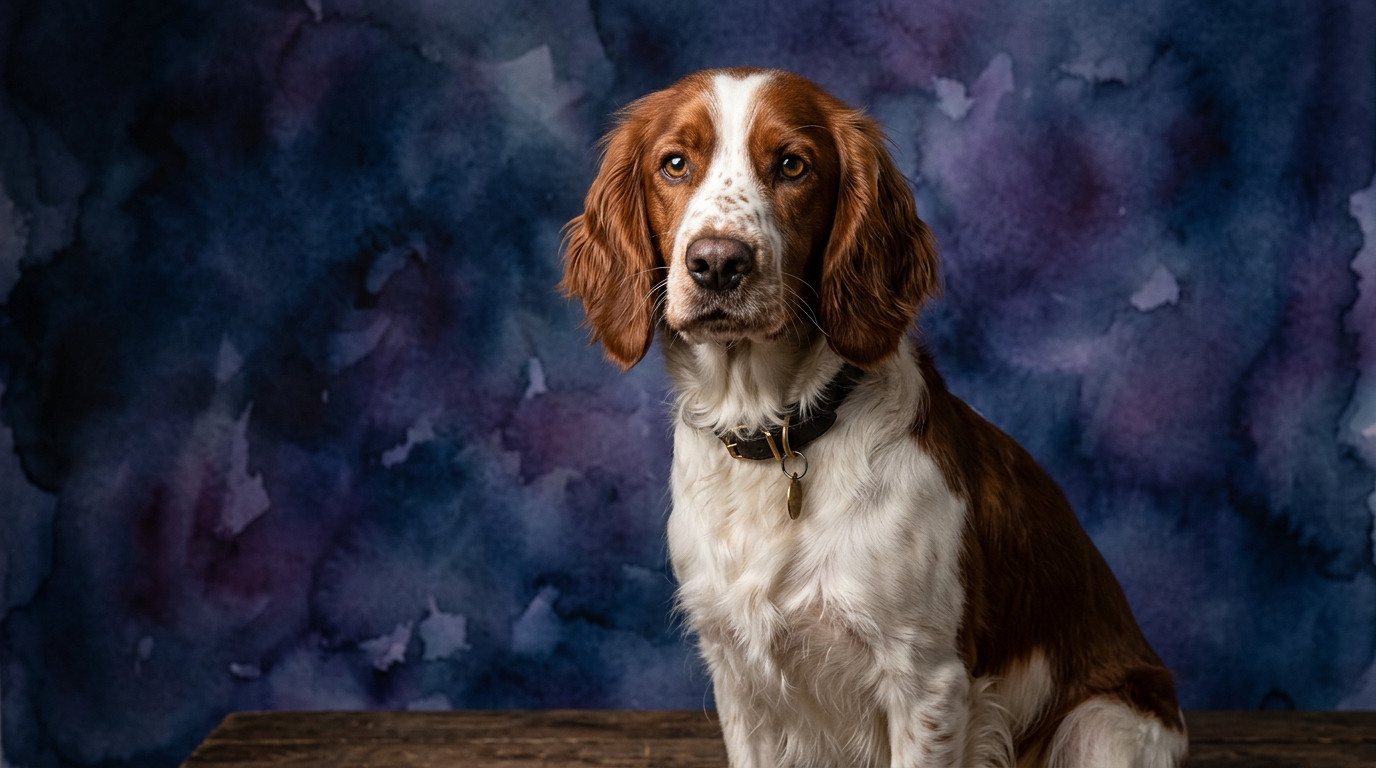

Side-by-Side Cognitive Profile: Welsh Springer Spaniel vs. Irish Terrier
The Cosmic Pet Pet IQ Lab provides a nuanced framework to understand the unique mental makeups of different dog breeds. For the Welsh Springer Spaniel, a Sporting Group member with a Coren rank of #31, and the Irish Terrier, a determined Terrier Group breed not included in Coren's ranking, these metrics reveal distinct intellectual landscapes.
The Welsh Springer Spaniel's profile includes Problem Solving 4/5, Training Speed 4/5, Social Intelligence 3/5, Instinctive Drive 3/5, and Memory 4/5. Their problem-solving capacity signifies a notable ability to figure out novel situations and adapt to complex environments, often devising solutions independently rather than just following cues. Their training speed indicates rapid comprehension and retention of new commands, making them highly responsive to consistent instruction and quick to build a repertoire of learned behaviors. With moderate social intelligence, they form strong bonds and understand human cues, prioritizing partnership without excessive social manipulation. Their instinctive drive to flush and retrieve is purposeful and manageable, allowing for focused task engagement. Finally, their strong memory ensures reliable recall of learned behaviors, locations, and individuals, contributing significantly to training success.
The Irish Terrier's profile shows Problem Solving 3/5, Training Speed 3/5, Social Intelligence 3/5, Instinctive Drive 3/5, and Memory 3/5. Their problem-solving is characterized by tenacity, persistently overcoming challenges with determination rather than always seeking the most elegant solution, often geared towards achieving their own objectives. Their training speed is moderate; while capable of learning, their independent nature means willingness to execute commands often depends on their motivation and perceived value. Similar to the Welsh Springer, their social intelligence is moderate, fostering loyalty and awareness of family dynamics, though their interactions can be more direct and less nuanced. Their instinctive drive is a powerful terrier trait, focused on hunting and dispatching vermin, manifesting as strong prey drive and a propensity for digging, which requires proper outlets. Their memory is competent, allowing recall of commands and routines, but benefits from consistent reinforcement to solidify retention.
Where the Welsh Springer Spaniel Wins Cognitively
The Welsh Springer Spaniel clearly holds an advantage in cognitive areas demanding swift skill acquisition and robust retention. Their superior training speed of 4/5 highlights an impressive ability to process and implement new commands rapidly, making them exceptionally well-suited for intricate training regimens or advanced canine sports. This capability extends beyond basic obedience, demonstrating a cognitive agility essential for complex tasks and competitive activities where quick learning is paramount. Furthermore, their 4/5 problem-solving score indicates a more analytical and strategic approach to novel challenges, allowing them to independently devise effective solutions rather than relying solely on trial and error. This combines with a 4/5 memory score, ensuring that once a lesson is learned, it tends to stick, building a reliable foundation of behaviors that requires less frequent refreshing. For owners seeking a canine partner for sophisticated tasks or those who enjoy the process of teaching complex skills, the Welsh Springer Spaniel's cognitive profile presents a distinct advantage.
Where the Irish Terrier Wins Cognitively
While the Irish Terrier's individual scores might appear lower in direct comparison, their cognitive strengths lie in a different, yet equally valuable, dimension: tenacious self-reliance and a practical, goal-oriented application of their intelligence. Their 3/5 problem-solving isn't about elegant solutions but an unyielding determination to achieve their objectives, whether it's outsmarting a small critter or navigating a physical barrier. This reflects a robust mental fortitude and a capacity for independent action, a hallmark of the terrier spirit. Their moderate instinctive drive, while shared with the Welsh Springer, manifests as a highly focused and undeterred pursuit of their inherent purpose, showcasing a resilient cognitive drive in challenging situations. This breed excels in scenarios where self-sufficiency and persistence are more valuable than strict biddability. The Irish Terrier's intelligence is geared towards unwavering resolve and resourceful action, qualities that make them formidable and uniquely capable companions in their own right, thriving when they can apply their wit to solve problems on their own terms.
Which is Easier to Train and Why
Based on The Cosmic Pet Pet IQ Lab data, the Welsh Springer Spaniel is unequivocally the easier breed to train, primarily due to its superior training speed (4/5) and memory (4/5). These scores signify a dog that processes and retains new information quickly and reliably, often eager to please and highly responsive to positive reinforcement. A Welsh Springer Spaniel typically grasps new commands with fewer repetitions and recalls them consistently, leading to faster progress and less frustration in training sessions for both dog and owner. This inherent biddability and focus on the handler during tasks makes them cooperative students.
In contrast, the Irish Terrier, with its 3/5 training speed and memory, requires a more patient and persistent approach. While capable of learning, their independent terrier spirit means they might not always see the immediate value in complying with a command, especially if it conflicts with their strong internal motivations. Training an Irish Terrier often involves more creative engagement, shorter sessions to maintain focus, and a deeper understanding of their drive to work *with* them rather than simply dictating. Real behavioral differences manifest as the Welsh Springer's consistent attentiveness versus the Irish Terrier's tendency to assess the situation and decide if the command aligns with its own agenda, requiring a more nuanced training strategy.
Which Suits Active Owners vs. Relaxed Owners
Both the Welsh Springer Spaniel and the Irish Terrier are inherently active breeds, making them generally unsuitable for truly 'relaxed' owners seeking a sedentary companion. However, their cognitive profiles dictate different approaches to activity. The Welsh Springer Spaniel, with its higher problem-solving (4/5), training speed (4/5), and memory (4/5), thrives with owners who enjoy structured, engaging activities. They excel in dog sports like agility, obedience, or field trials where complex commands, rapid learning, and consistent performance are key. An active owner who enjoys dedicating time to training, exploring new skills, and channeling their dog's energy into purposeful work will find the Welsh Springer Spaniel a highly rewarding and cooperative partner.
Conversely, the Irish Terrier, with its tenacious spirit and moderate scores, suits an active owner who appreciates a more independent and spirited companion. While they need ample physical exercise, their training might be less about precision and more about channeling their robust drive and problem-solving into activities like challenging hikes, earthdog trials, or engaging scent work where their persistence and self-reliance can shine. A 'relaxed' owner in the sense of someone who prefers less rigorous training demands but still provides plenty of physical exercise and mental stimulation that caters to the terrier's independent nature, might find the Irish Terrier a good fit, provided they understand and appreciate its spirited character. Neither breed is a couch potato, but the Welsh Springer seeks a partnership in structured activity, while the Irish Terrier thrives on independent exploration within an active framework.
The Verdict
Choose the Welsh Springer Spaniel if you desire a highly biddable, quick-learning partner for complex training, dog sports, or a family seeking a cooperative and attentive companion.
Opt for the Irish Terrier if you appreciate a spirited, tenacious, and independently-minded companion who thrives on robust activity and a confident owner capable of channeling its distinctive terrier drive.
🧠 Find Your Pet's IQ Score
Our Pet IQ Lab assessment covers 25+ tests across 5 cognitive dimensions — personalized to your breed.
Take the Full IQ Test →Frequently Asked Questions
Is a Welsh Springer Spaniel good for first-time dog owners?
A Welsh Springer Spaniel can be a good choice for first-time owners due to their high training speed and biddable nature, making them relatively easy to teach. However, their need for consistent exercise and mental stimulation means a first-time owner must be committed to an active lifestyle to prevent boredom.
How much exercise does an Irish Terrier need daily?
An Irish Terrier requires a significant amount of daily exercise, typically at least 60-90 minutes of vigorous activity like running, hiking, or challenging play. Their instinctive drive and energy levels demand consistent outlets to prevent boredom and potential destructive behaviors around the home.
Do Welsh Springer Spaniels and Irish Terriers get along with other pets?
Welsh Springer Spaniels generally have a more moderate social intelligence and can coexist well with other pets, especially if socialized early and raised together. Irish Terriers, with their strong prey drive, might require more careful introductions and supervision around smaller pets like cats or rodents, though they can form strong bonds with canine companions when properly socialized.