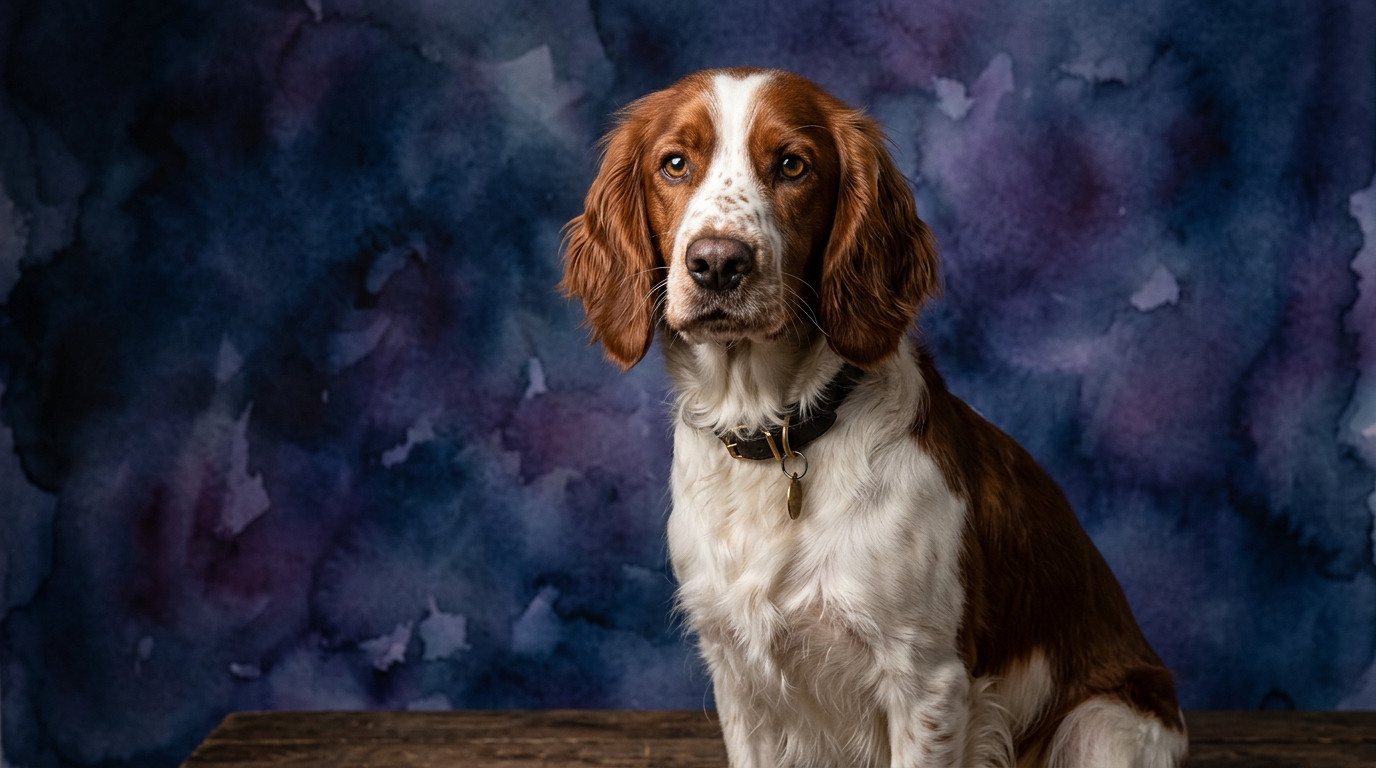

Side-by-Side IQ Profile: Welsh Springer Spaniel vs. Lhasa Apso
The Cosmic Pet Pet IQ Lab uses five dimensions to map a breed's cognitive landscape. For the Welsh Springer Spaniel, Coren ranked #31, these dimensions reveal a bright, responsive intellect. Their Problem Solving is rated 4/5, indicating a strong capacity to independently navigate new situations and devise solutions, whether retrieving a toy or adapting to a novel training challenge. Training Speed also scores 4/5, meaning they grasp new commands and routines efficiently, often with fewer repetitions. Social Intelligence is 3/5; while forming deep bonds and understanding family cues, their focus is less on broad social interaction. Their Instinctive Drive, at 3/5, reflects a manageable desire for purposeful work like retrieving or scenting. Finally, Memory is 4/5, showcasing a robust ability to retain commands and experiences over time.
In contrast, the Lhasa Apso, Coren ranked #68, presents a different cognitive blueprint. Their Problem Solving stands at 3/5, suggesting a moderate ability to tackle new challenges; they adapt but might not display the same swift innovation, often preferring a more guided approach. Training Speed is also 3/5, indicating that learning new commands requires more patience, consistency, and motivation. Social Intelligence is 3/5, but expressed differently; it's centered on their role as a discerning companion and alert sentinel, highly attuned to family but reserved with strangers. Instinctive Drive, also 3/5, manifests as innate alertness and watchdog tendency. Memory is 3/5, meaning they retain information, but recall might not be as immediate or consistently perfect without regular reinforcement.
Where the Welsh Springer Spaniel Wins Cognitively
The Welsh Springer Spaniel clearly outshines the Lhasa Apso in domains emphasizing active learning and adaptive thinking. Their 4/5 Problem Solving score means they possess a greater natural inclination to independently analyze and overcome obstacles. A Welsh Springer might more readily figure out how to retrieve a toy or navigate a complex agility course, exhibiting a proactive curiosity that seeks solutions. Furthermore, the Welsh Springer Spaniel's 4/5 Training Speed is a significant advantage, as they process and internalize new commands and routines at a faster pace. This quick uptake is supported by their robust 4/5 Memory, allowing them to retain learned behaviors over extended periods. A Welsh Springer is likely to remember a command learned weeks ago with minimal prompting, whereas a Lhasa Apso might need more frequent refreshers. These combined strengths make the Welsh Springer Spaniel a more agile and responsive learner.
Where the Lhasa Apso Wins Cognitively
While the Welsh Springer Spaniel excels in active problem-solving and rapid learning, the Lhasa Apso’s cognitive profile, though numerically lower in some areas, offers distinct advantages rooted in their historical purpose. Their 3/5 Social Intelligence, for example, is highly specialized. It's finely tuned to discerning nuances within their immediate family and identifying potential outsiders, translating to an exceptional ability to act as a discerning guardian. Their social understanding is less about eager participation and more about protective observation. Similarly, their 3/5 Instinctive Drive, while not focused on retrieving or hunting, is powerfully expressed through their territorial and watchdog tendencies. This cognitive wiring means they possess a keen awareness of their surroundings and a strong internal motivation to protect their home and family. They excel in scenarios where a vigilant, independent sentinel is desired, often displaying quiet confidence and unshakeable resolve that doesn't rely on constant human direction.
Which is Easier to Train and Why
Given their respective IQ profiles, the Welsh Springer Spaniel is unequivocally the easier breed to train for a wide range of tasks and commands. Their 4/5 Training Speed means they absorb new information with fewer repetitions, making training sessions more productive. This is further bolstered by their 4/5 Problem Solving ability; they are more likely to attempt different strategies to figure out new exercises, showing initiative. Their strong Memory (4/5) ensures that once a command is learned, it is retained effectively. The Lhasa Apso, with 3/5 scores in both Training Speed and Problem Solving, presents a different training dynamic. While capable of learning, they often require more patience and consistency. Their independent nature means they may not always see the immediate value in complying unless clearly reinforced or aligned with their purpose, demanding a more nuanced, reward-heavy methodology.
Suitability for Active vs. Relaxed Owners
The Welsh Springer Spaniel, with its robust Problem Solving, Training Speed, and Instinctive Drive, is an ideal match for active owners. Their cognitive makeup thrives on mental stimulation alongside physical exertion, making them excellent companions for activities like hiking, dog sports, or scent work. Owners prepared to channel their dog's moderate instinctive drive and problem-solving curiosity into structured play and training will find a highly responsive partner. Their need for engagement means they are not content to be mere couch potatoes, making them less suitable for purely low-activity households. Conversely, the Lhasa Apso's cognitive strengths make them a better fit for more relaxed owners seeking a devoted, observant companion. While they benefit from regular walks, their instinctive drive is less about vigorous physical work and more about vigilance. Their moderate problem-solving and training speed mean they don't constantly demand complex tasks, aligning well with a calmer, more predictable lifestyle.
The Verdict
Choose the Welsh Springer Spaniel if you seek an agile, responsive partner eager for training and mental challenges, ready to join an active lifestyle and engage in diverse activities.
Opt for the Lhasa Apso if you prefer a discerning, independent companion whose loyalty and watchful nature thrive in a calmer, more predictable home environment.
🧠 Find Your Pet's IQ Score
Our Pet IQ Lab assessment covers 25+ tests across 5 cognitive dimensions — personalized to your breed.
Take the Full IQ Test →Frequently Asked Questions
Does Coren's rank directly reflect a dog's overall intelligence?
Coren's rank primarily measures "working and obedience intelligence," focusing on a dog's ability to learn and obey human commands. It doesn't fully encompass other aspects like problem-solving, social intelligence, or instinctive drives, which our IQ Lab metrics evaluate more broadly.
Can a Lhasa Apso be trained for complex tasks despite its lower training speed score?
Absolutely. While a Lhasa Apso may require more repetitions and patience due to their 3/5 training speed, they are fully capable of learning complex tasks. Success hinges on consistent, positive reinforcement methods and understanding their independent, sometimes stubborn, nature.
Is a Welsh Springer Spaniel always highly active due to its instinctive drive?
A Welsh Springer Spaniel does possess a moderate instinctive drive (3/5) and thrives on activity, but this doesn't mean they are constantly hyperactive. Their drive is best channeled through regular exercise and mental engagement like fetching or scent games, after which they can settle contentedly.