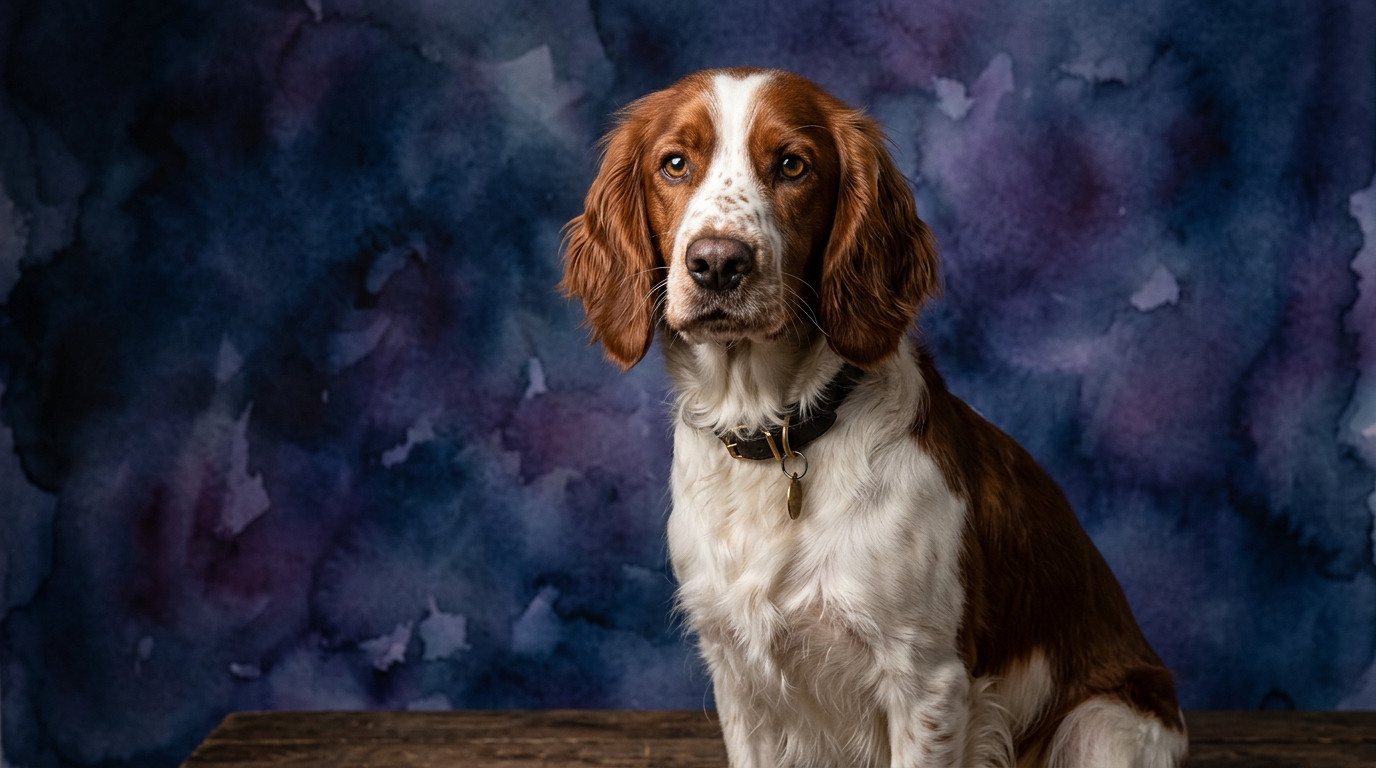
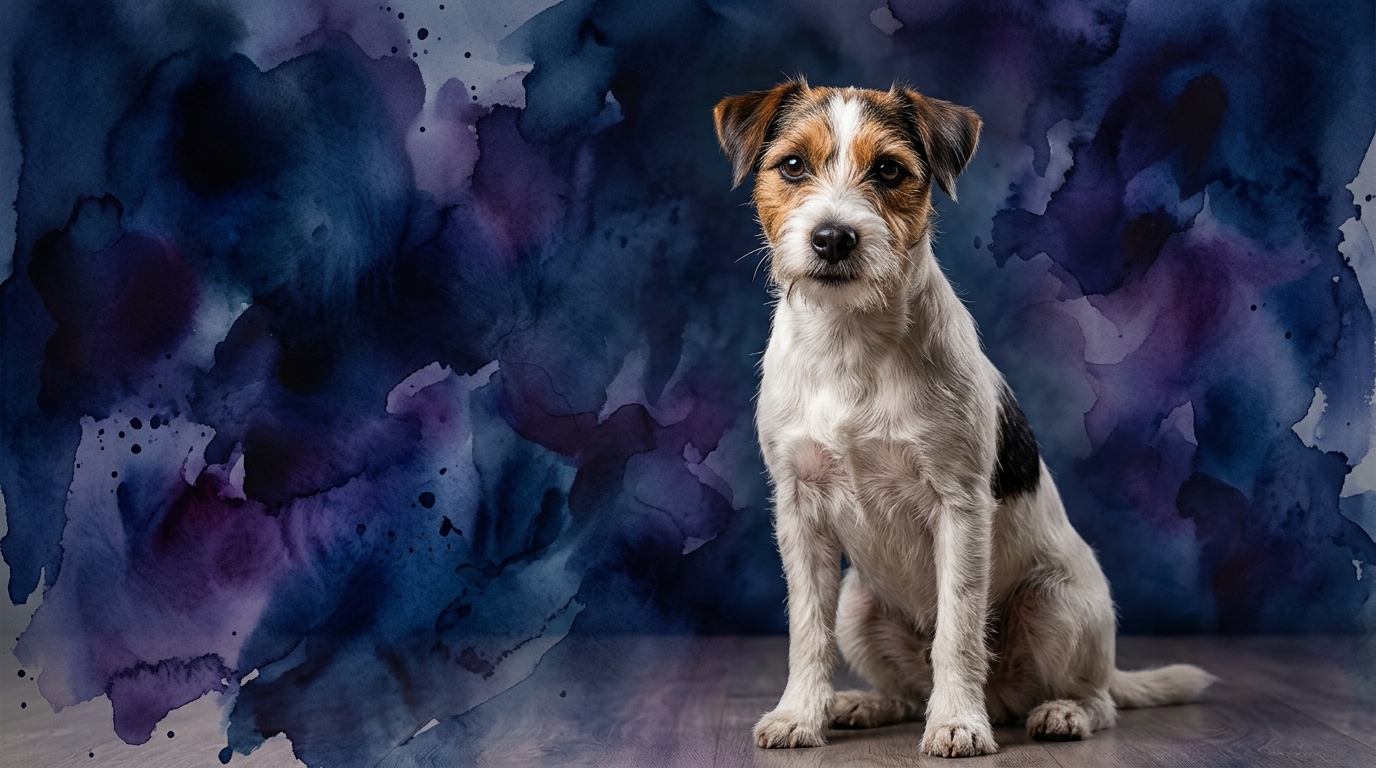
Side-by-Side IQ Profile
**Welsh Springer Spaniel: The Cooperative Mind** The Welsh Springer Spaniel, recognized by Stanley Coren as ranking #31 among dog breeds for obedience and working intelligence, exhibits a cognitive profile geared towards partnership and sequential tasks. Our Pet IQ Lab assessment gives them a Problem Solving score of 4/5, indicating an adeptness at understanding multi-step commands and navigating complex environments to achieve a goal. Their Training Speed also stands at 4/5, reflecting their quick grasp of new cues and an eagerness to comply, making them responsive learners. Social Intelligence is rated 3/5; they are capable of reading human emotions and intentions, fostering strong bonds, but perhaps not with the nuanced perceptiveness of some other breeds. An Instinctive Drive of 3/5 points to a moderate, yet focused, prey drive directed towards finding and retrieving game, rather than independent pursuit. Finally, their Memory is strong at 4/5, allowing them to retain a vast repertoire of commands and recall learned behaviors consistently over time.
**Parson Russell Terrier: The Independent Thinker** The Parson Russell Terrier, though not individually ranked by Coren, presents a distinct cognitive makeup shaped by its need for independent action in the field. Our Pet IQ Lab assesses their Problem Solving at 3/5, suggesting they can navigate challenges and figure out solutions, often through persistence and physical action rather than complex strategic planning. Their Training Speed is 3/5; while capable of learning, they may require more engaging methods and patience due to their independent streak and potential for distraction by environmental stimuli. Social Intelligence is also 3/5, meaning they can form strong connections with their human companions but often prioritize their own agenda or instincts. An Instinctive Drive of 3/5 in the Parson Russell Terrier manifests as a powerful urge to chase, dig, and pursue, a core element of their terrier heritage that drives much of their behavior. Their Memory score of 3/5 indicates they retain information adequately, though their focus might shift quickly if something more stimulating captures their attention.
Where Welsh Springer Spaniel Wins Cognitively
The Welsh Springer Spaniel demonstrates a clear cognitive advantage in areas demanding cooperative learning, sequential problem-solving, and reliable recall. With a Problem Solving score of 4/5, they excel at tasks requiring them to follow a series of steps, such as retrieving specific objects from a group or navigating an agility course with precision. This capacity for methodical thought is further bolstered by their 4/5 Training Speed, allowing them to absorb new commands and routines with remarkable efficiency. An owner will often observe them quickly connecting a verbal cue with an action, eager to please and repeat the correct behavior. Their superior Memory (4/5) reinforces these strengths, enabling them to retain a large vocabulary of commands and recall complex sequences, making them particularly adept at advanced obedience or working trials where consistency over time is crucial. This combination fosters a dog that is not only capable but also a willing and predictable partner in various activities.
Where Parson Russell Terrier Wins Cognitively
While the Parson Russell Terrier's scores might appear lower across the board, their cognitive strengths lie in their specialized application and independent tenacity, which were paramount for their original purpose. Their Problem Solving at 3/5, though not as high as the Welsh Springer, is characterized by a quick, reactive intelligence essential for navigating tight spaces and making swift decisions underground without human direction. This isn't about complex, multi-step planning, but rather immediate, effective action in unpredictable environments, often driven by their strong Instinctive Drive (3/5). This drive, focused on persistence and pursuit, endows them with a remarkable mental toughness, allowing them to concentrate intensely on a task like digging or tracking for extended periods, overcoming obstacles through sheer will and physical problem-solving. Their independence, a facet of their Social Intelligence (3/5), means they are adept at making decisions for themselves, a valuable trait when working alone to bolt quarry, requiring a self-reliance that some more cooperative breeds might lack.
Which is Easier to Train and Why
When it comes to ease of training, the Welsh Springer Spaniel generally presents a more straightforward experience for most owners. Their Training Speed of 4/5 means they absorb new commands rapidly, often requiring fewer repetitions to solidify a behavior. This is intrinsically linked to their cooperative nature and historical role as a partner in the field, where responding promptly to a handler's cues was essential. They tend to be eager to please, thriving on positive reinforcement and finding satisfaction in a job well done alongside their human. In contrast, the Parson Russell Terrier, with a Training Speed of 3/5, can be more challenging. Their independent spirit, while a cognitive asset in certain hunting scenarios, can translate into a "what's in it for me?" attitude during training sessions. They may quickly become bored with repetitive drills and are more easily distracted by their environment or their strong instinctive drives. Training a Parson Russell Terrier demands immense consistency, creativity, and patience, often requiring the owner to make the training feel like a game or an engaging puzzle to hold their attention and harness their tenacity effectively.
Which Suits Active Owners vs Relaxed Owners
Neither the Welsh Springer Spaniel nor the Parson Russell Terrier is suited for a truly relaxed, sedentary owner; both breeds demand substantial daily engagement. However, the *type* and *intensity* of activity required differ. The Welsh Springer Spaniel, with its Sporting dog heritage, thrives with consistent physical exercise like long walks, runs, and particularly retrieving games that engage its moderate instinctive drive and problem-solving skills. They are excellent companions for active families who enjoy hiking, cycling, or participating in dog sports like agility or obedience, where their cooperative nature and trainability shine. While they need mental and physical stimulation, they are generally adaptable to a varied routine, enjoying both active outings and periods of calm companionship.
The Parson Russell Terrier, on the other hand, requires an owner whose lifestyle is not just active, but intensely so, and who can channel their deep-seated terrier drives. Their high energy levels, combined with their strong instinctive drive for chasing, digging, and exploring, mean they need more than just a walk around the block. They excel in environments where they can engage in vigorous play, earthdog trials, extensive scent work, or high-energy dog sports like agility. A relaxed owner would quickly find a Parson Russell Terrier inventing its own "work," which often manifests as destructive digging, incessant barking, or relentless pursuit of small animals. Their cognitive profile demands constant mental and physical outlets to prevent boredom and ensure a well-adjusted companion.
The Verdict
Choose the Welsh Springer Spaniel if you seek a cooperative, responsive companion eager to learn and participate in varied activities, thriving on partnership and consistent mental engagement. Their higher problem-solving and training speed make them a rewarding choice for those who enjoy structured training and dog sports.
Opt for the Parson Russell Terrier if you're an experienced, highly active individual prepared to channel intense energy and an independent, tenacious spirit into focused activities like earthdog trials or extensive outdoor adventures. Their unique cognitive strengths shine when provided with consistent, engaging outlets for their strong instinctive drives.
🧠 Find Your Pet's IQ Score
Our Pet IQ Lab assessment covers 25+ tests across 5 cognitive dimensions — personalized to your breed.
Take the Full IQ Test →Frequently Asked Questions
Does a higher Coren ranking mean a dog is universally smarter?
Not necessarily; Coren's ranking primarily assesses obedience and working intelligence, reflecting a dog's ability to learn and execute commands. It doesn't fully encompass other aspects of canine intelligence, such as independent problem-solving or adaptive intelligence, which can be crucial for breeds like the Parson Russell Terrier.
How does 'instinctive drive' differ between these two breeds?
For the Welsh Springer Spaniel, instinctive drive (3/5) typically manifests as a focused desire to find and retrieve game, working cooperatively with a handler. For the Parson Russell Terrier, the same 3/5 score indicates a powerful, independent urge to chase, dig, and pursue quarry, often with relentless tenacity and less reliance on human direction.
Can a Parson Russell Terrier be trained for complex tasks despite its lower training speed score?
Yes, a Parson Russell Terrier can certainly learn complex tasks, but it often requires more patience, consistency, and creative, engaging training methods to maintain their interest. Their independent nature means they may need stronger motivation and varied approaches compared to breeds with higher training speed scores.