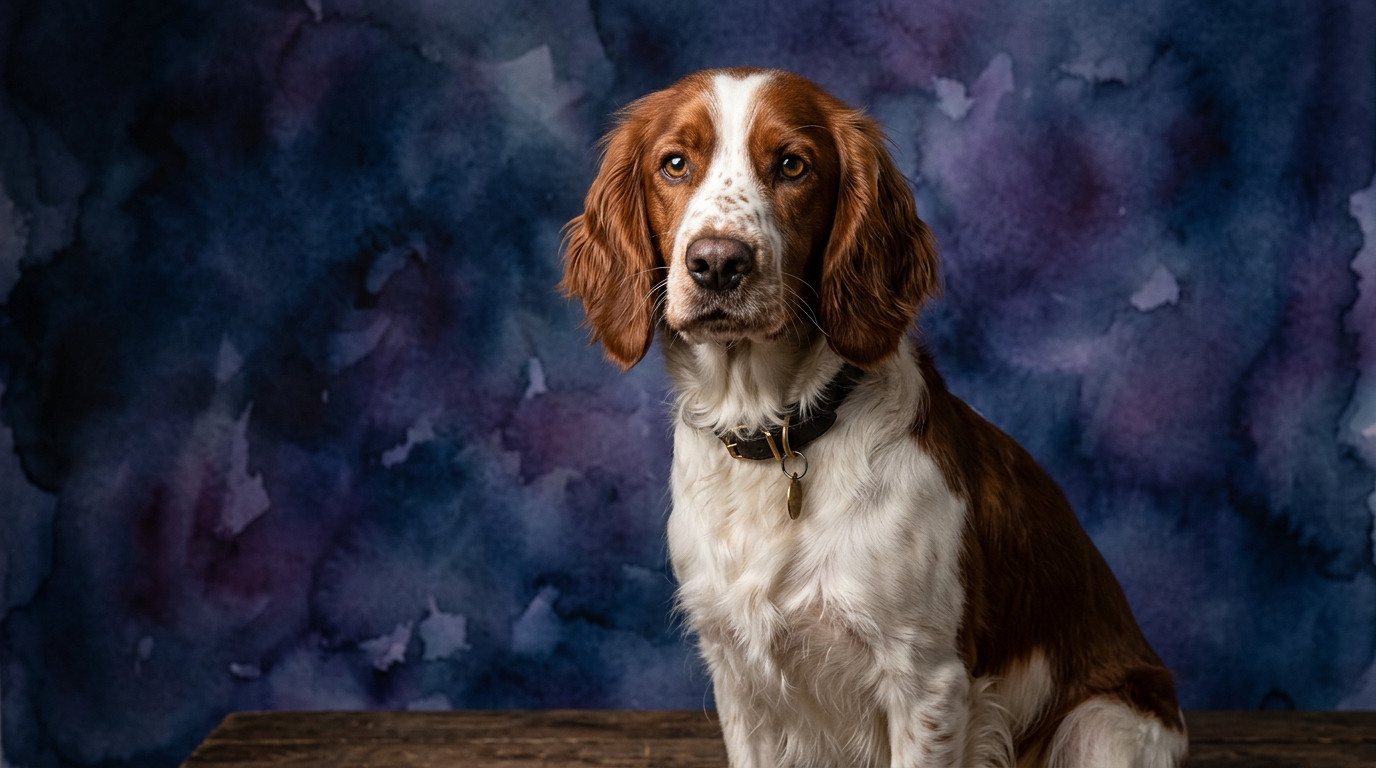

Side-by-Side Cognitive Profiles: Welsh Springer Spaniel vs. Pekingese
At The Cosmic Pet Pet IQ Lab, we evaluate canine intelligence across five critical dimensions. The Welsh Springer Spaniel, a Sporting breed ranking #31 in Coren's intelligence hierarchy, generally presents a more active and responsive cognitive profile. Its Problem Solving is rated 4/5, indicating a strong capacity for independent thought and figuring out solutions to novel challenges, such as opening latches or navigating complex environments to retrieve a toy. They aren't merely rote learners but can adapt strategies. Their Training Speed is also 4/5, signifying a quick grasp of new commands and routines, often requiring fewer repetitions than average; their eagerness to please and focus make them responsive students. Social Intelligence stands at 3/5, suggesting they can read human cues and interact appropriately within a family structure, but might not possess the nuanced, highly empathetic understanding seen in some therapy breeds. They are companionable but not overly dependent on constant human social feedback for direction. An Instinctive Drive of 3/5 reflects their sporting heritage; they possess a natural inclination for tasks like flushing and retrieving, but it's manageable and can be channeled through structured activities rather than being an overwhelming force dictating all behavior. Finally, their Memory is 4/5, meaning they retain learned commands, routines, and even specific locations or people over long periods, aiding in consistent behavior and recall.
In contrast, the Pekingese, a Toy breed ranking #77 on Coren's scale, exhibits a more independent and discerning cognitive style. Their Problem Solving score is 3/5, indicating they can navigate simple challenges but might not be inclined to devise complex solutions or show strong initiative in overcoming obstacles without human guidance; they prefer a predictable environment. Their Training Speed is also 3/5, suggesting they learn new commands at a moderate pace, requiring consistent and patient repetition; they might not be as eager to perform repetitive tasks, often preferring to do things on their own terms. Like the Welsh Springer, their Social Intelligence is 3/5. They form strong bonds with their chosen people and can understand basic social cues, but they are often described as independent and discerning, not necessarily seeking constant social interaction or approval from every person they meet. Their Instinctive Drive is 3/5, but for a Toy breed, this typically manifests differently than a Sporting breed; it's less about hunting and more about their inherent self-preservation and perhaps a territorial instinct, rather than a strong urge to perform specific tasks, often focused on their comfort and personal space. The Pekingese's Memory is 3/5, meaning they retain information adequately for daily routines and familiar commands, but might require more frequent refreshers for less common tasks or new concepts compared to breeds with higher scores.
Where the Welsh Springer Spaniel's Cognition Excels
The Welsh Springer Spaniel consistently demonstrates a more advanced and versatile cognitive profile across several key dimensions. Their superior problem-solving ability (4/5) means they are adept at navigating complex environments and figuring out solutions to novel challenges, such as manipulating puzzle toys or finding creative ways to retrieve an out-of-reach item. This cognitive flexibility allows them to adapt quickly to new situations and learn from experiences efficiently. Furthermore, their strong memory (4/5) ensures that once a lesson is learned or a routine is established, it tends to stick, contributing to their reliability and consistency in behavior. This breed's higher training speed (4/5) also positions them as more receptive students, absorbing new commands and concepts with remarkable efficiency, making complex obedience or specialized task training a more streamlined process. These combined strengths make them excellent candidates for activities requiring mental agility and sustained focus.
Where the Pekingese's Cognitive Profile Shines
While the Pekingese may not boast higher scores in traditional cognitive metrics, their unique mental makeup offers distinct advantages for specific owners and lifestyles. Their average instinctive drive (3/5), particularly when compared to a sporting breed, translates to a less demanding need for intense physical and mental exertion rooted in ancestral tasks. This can be a significant 'win' for owners seeking a companion whose primary focus isn't on flushing game or retrieving, but rather on shared, quiet companionship. The Pekingese's average problem-solving (3/5) and training speed (3/5) scores, combined with their renowned independent streak, mean they are less likely to constantly test boundaries or invent mischievous solutions to perceived problems. Their cognitive profile fosters a self-sufficient nature; they are content to observe and participate on their own terms, making them superb choices for individuals who appreciate a dog with a strong sense of self and less need for constant direction or complex mental games. This independence is a cognitive strength for owners valuing a dog that is comfortable in its own company and doesn't incessantly demand complex mental engagement.
Training Dynamics: Which Breed is Easier to Teach?
Based on their respective IQ profiles, the Welsh Springer Spaniel is unequivocally easier to train. Their 4/5 training speed score signifies a keen willingness and ability to grasp new commands and routines with fewer repetitions than the average dog. This responsiveness stems from their inherent drive to work alongside their human companions and their capacity for sustained focus. Coupled with their higher problem-solving ability (4/5), they can interpret instructions more effectively and apply learned behaviors to slightly varied contexts. In contrast, the Pekingese, with an average training speed of 3/5, requires more patience and consistency. Their independent nature often means they respond best to positive reinforcement delivered on their terms, and they may choose to comply based on their mood rather than an inherent eagerness to please. While perfectly capable of learning, their training journey will likely be slower and demand more creative motivational strategies from their owner, as they are less inclined to perform simply for the sake of it.
Lifestyle Match: Active Engagement vs. Relaxed Companionship
For active owners seeking a canine partner for adventures, the Welsh Springer Spaniel is the clear choice. Their moderate instinctive drive (3/5), coupled with superior problem-solving and memory, means they thrive on engaging activities like scent work, agility, or long hikes where they can utilize their mental and physical prowess. They possess the cognitive capacity to learn complex routes, retrieve items, and engage in extended periods of stimulated activity without becoming overwhelmed or bored. Conversely, the Pekingese is ideally suited for more relaxed owners. Their average instinctive drive and problem-solving scores mean they have a lower demand for strenuous physical activity or intricate mental challenges. They are content with shorter, leisurely strolls and enjoy observing their surroundings from a comfortable perch. Their self-sufficient cognitive style allows them to be excellent companions for individuals who appreciate a calm, independent presence rather than a dog that constantly seeks out the next mental puzzle or physical exertion.
The Verdict
Opt for a Welsh Springer Spaniel if you seek an intelligent, trainable companion eager to engage in diverse activities and thrive on mental stimulation and consistent interaction.
Select a Pekingese if you desire an independent, charming companion who appreciates a calmer lifestyle and offers devoted affection without demanding constant intense mental or physical engagement.
🧠 Find Your Pet's IQ Score
Our Pet IQ Lab assessment covers 25+ tests across 5 cognitive dimensions — personalized to your breed.
Take the Full IQ Test →Frequently Asked Questions
Does the Pekingese's lower IQ score mean they are not capable of learning?
Not at all; the Pekingese is perfectly capable of learning commands and routines, but they learn at an average pace (3/5 training speed) and often require more consistent motivation and patience due to their independent nature. Their intelligence manifests in a more self-sufficient, discerning way.
How does the Welsh Springer Spaniel's problem-solving ability benefit an owner?
Their 4/5 problem-solving score means they can figure out solutions to novel situations, like opening gates or navigating complex puzzle toys, providing mental engagement and making them adaptable in various environments. This ability can also make them quicker to understand and respond to new situations or challenges.
Is a Welsh Springer Spaniel's instinctive drive difficult to manage?
While they have a moderate instinctive drive (3/5) rooted in their sporting heritage, it is generally manageable and can be channeled effectively through structured activities like retrieving games, obedience training, or scent work, rather than being an overwhelming or unruly force.