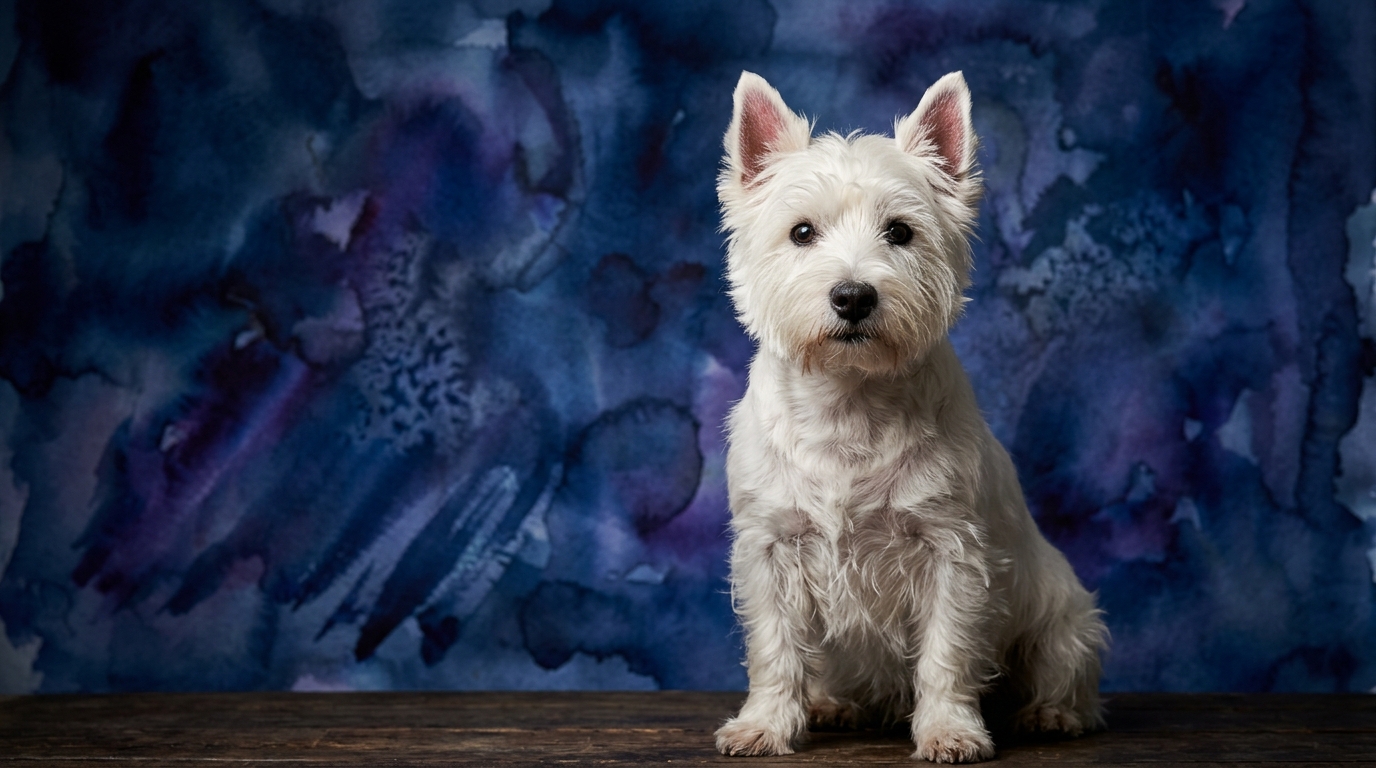
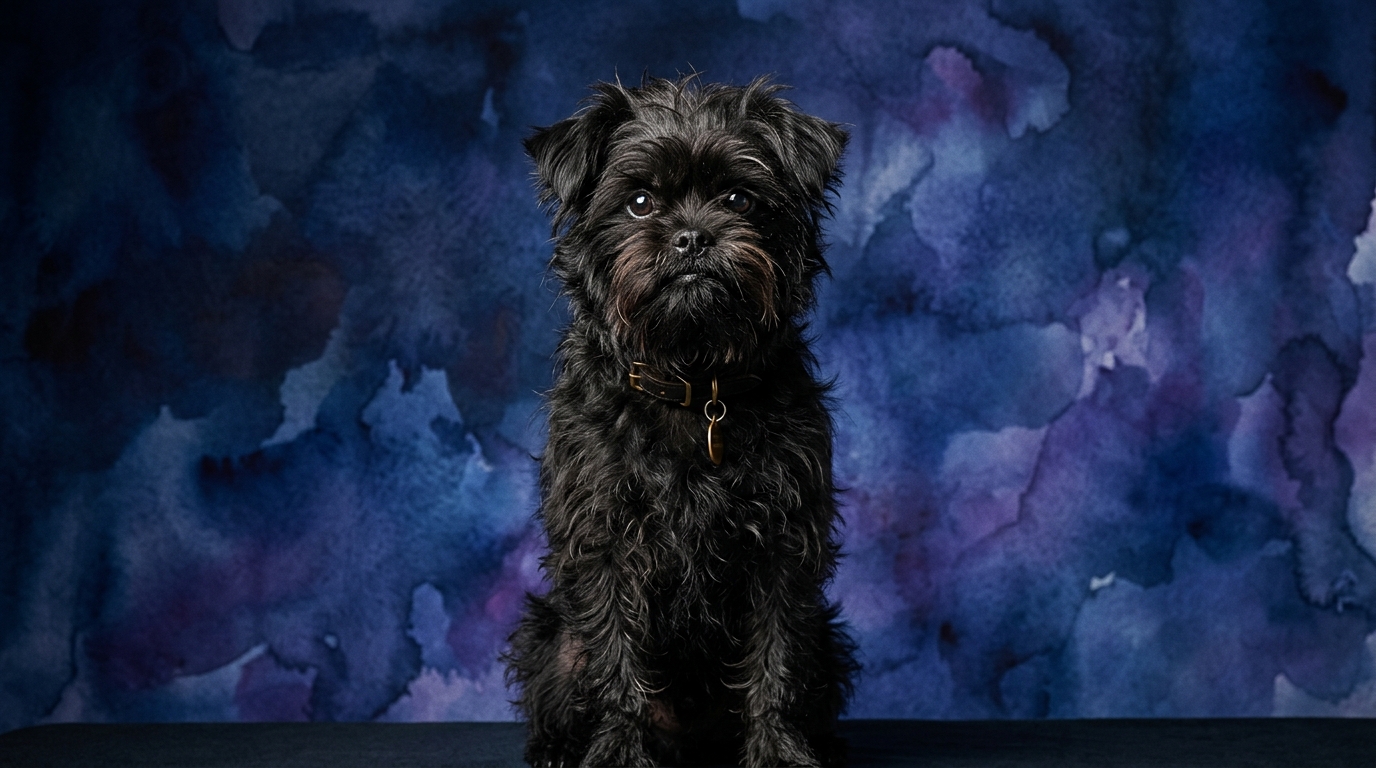
Side-by-Side Cognitive Profile
To truly understand the mental strengths of the West Highland White Terrier and the Affenpinscher, we turn to The Cosmic Pet Pet IQ Lab's five-dimensional framework, offering a detailed look beyond general impressions.
The **West Highland White Terrier (Westie)**, a robust Terrier breed with a Coren rank of #47, presents a cognitive profile shaped by its working heritage. Their **Problem Solving** is rated 3/5, indicating a moderate capacity for navigating novel situations and figuring out puzzles; their terrier tenacity often aids in persistence, allowing them to work through challenges, though they might not always find the most direct solution, sometimes relying on a determined trial-and-error approach. Their **Training Speed** also scores 3/5; Westies possess a moderate training speed, and while capable of learning commands, their independent terrier spirit means they can sometimes be willful, requiring consistent, engaging, and patient methods to solidify new behaviors, responding best when learning feels like a collaborative effort rather than a strict command. In **Social Intelligence**, they are rated 3/5, demonstrating a moderate aptitude for reading human cues and interacting with their immediate family, often forming deep bonds, but their territorial instincts can sometimes make them reserved or opinionated with strangers or other animals, necessitating careful introductions. Their **Instinctive Drive** is 3/5, deeply rooted in their history as rodent hunters, manifesting as an interest in chasing small critters, digging, and exploring their environment with keen curiosity, which are natural expressions of their breed purpose. Notably, the Westie's **Memory** stands at 4/5; they show a strong memory capacity, recalling learned commands and routines effectively, retaining information over extended periods, which contributes to their ability to learn complex sequences and understand the correlation between actions and outcomes, making them capable of mastering intricate tasks.
The **Affenpinscher**, a delightful Toy breed not currently Coren-ranked, offers a distinct cognitive makeup that reflects its role as a companion and house guardian. Their **Problem Solving** is rated 3/5; Affenpinschers also display a moderate aptitude for problem-solving, and their toy breed origins mean they might approach challenges with a bit less physical assertiveness than a terrier, often using observation, a touch of mischief, and their nimble paws to achieve goals, such as acquiring a desired toy. For **Training Speed**, they score 3/5; Affenpinschers show a moderate training speed, being eager to please their human companions but can also exhibit short attention spans or a stubborn streak typical of some small breeds, meaning patience, positive reinforcement, and keeping sessions short and fun are key to successful learning. Their **Social Intelligence** is 3/5; this breed exhibits moderate social intelligence, typically attuned to their owners' moods and can be quite affectionate, often displaying a charming, empathetic nature within their family unit, though their small stature can sometimes lead to a confident, sometimes demanding, demeanor in social settings. Their **Instinctive Drive** is 3/5, leaning towards companionship and alertness; while they may not have the strong prey drive of a terrier, they retain an instinct for guarding their territory and alerting to new presences, reflecting their historical role as watchful house guardians. The Affenpinscher's **Memory** is 3/5; they exhibit a moderate memory, capable of remembering commands and routines, but might require more consistent reinforcement over time compared to breeds with higher memory scores to keep complex behaviors sharp and reliable, as regular practice helps solidify their learning.
Where the Westie Cognitively Excels
The Westie's primary cognitive advantage lies in its superior memory, scoring 4/5 versus the Affenpinscher's 3/5. This means a Westie is generally more adept at retaining learned commands and routines over longer periods, potentially requiring less frequent review sessions to keep behaviors sharp. Their strong memory also contributes to their ability to learn complex sequences and understand the correlation between actions and outcomes, making them quite capable of mastering intricate tricks or agility courses with consistent effort. Furthermore, their terrier instinctive drive, while rated similarly at 3/5, is geared towards problem-solving through tenacious pursuit and exploration, which can sometimes translate into a more robust and physically assertive approach to overcoming environmental obstacles compared to the Affenpinscher's more companion-oriented instincts.
Where the Affenpinscher Cognitively Excels
While not having a higher score in any single category, the Affenpinscher's cognitive strengths often manifest in their nuanced social interactions and adaptability within a human household. Their moderate social intelligence (3/5) allows them to be highly attuned to their family's emotional states, often displaying a charming, empathetic nature that fosters deep bonds. Their toy breed background, while not directly measured in IQ scores, cultivates a cognitive framework centered on companionship, leading to a strong desire to engage with their owners. This can make them particularly responsive to human praise and affection, which can be a powerful motivator in training, even if their training speed is similar. Their problem-solving (3/5) and instinctive drive (3/5) are often expressed through clever antics and watchful guarding behaviors, demonstrating a distinct, albeit different, form of situational awareness and application of their mental faculties tailored to their role as a devoted house companion.
Training Dynamics: Westie vs. Affenpinscher
Both breeds share a 3/5 rating for training speed, suggesting neither is inherently "easier" in a broad sense, but their approaches differ significantly. The Westie's stronger memory (4/5) can be an asset; once they grasp a concept, it tends to be retained effectively. However, their independent terrier nature means they require a trainer who can make learning feel like a collaborative game rather than a command-and-obey exercise. They can be stubborn, necessitating consistent, positive reinforcement and a clear understanding of their motivations, often involving toys, chase games, or opportunities for digging.
The Affenpinscher, with its 3/5 memory, might need more repetition over time to solidify complex behaviors. However, their strong desire to be involved with their people and their generally less independent nature compared to a terrier can make them more amenable to training sessions focused purely on interaction and rewards. They respond well to praise and gentle methods, but their occasional short attention span or mischievous streak means sessions must be kept short, fun, and highly engaging. Neither breed is for the faint of heart in training; both demand patience, creativity, and a deep understanding of their unique temperaments to achieve consistent results.
Lifestyle Match: Active vs. Relaxed Owners
The West Highland White Terrier, with its terrier heritage and moderate instinctive drive, generally suits more active owners. They thrive on regular, vigorous exercise, including brisk walks, engaging play sessions, and opportunities for mental stimulation like puzzle toys or scent work that tap into their natural curiosity. Their moderate problem-solving and social intelligence mean they enjoy activities that challenge their minds and allow them to interact meaningfully with their human companions. A relaxed owner might find a Westie becomes restless, vocal, or destructive if their needs for activity and focused engagement are not consistently met.
The Affenpinscher, while certainly not a sedentary breed, is often better suited for owners with a more relaxed lifestyle, though they still enjoy daily walks and bursts of indoor playtime. Their moderate instinctive drive is less about relentless pursuit and more about companionship and watchful alertness within the home. They are content with indoor games, short bursts of outdoor activity, and ample cuddle time. Their small size also makes them adaptable to apartment living, provided they receive their daily dose of attention and modest physical and mental exercise.
The Verdict
Choose a West Highland White Terrier if you appreciate a tenacious, clever companion with a strong memory, and you are prepared to engage them with consistent, creative training, regular vigorous exercise, and mental challenges befitting their spirited terrier nature. They are a good fit for active homes that can channel their independent drive into constructive activities and exploration.
Choose an Affenpinscher if you desire a charming, attentive companion who is deeply attuned to their family, offering delightful antics and a watchful presence, and you are prepared for patient, positive training and a lifestyle that balances moderate activity with plenty of affectionate interaction. They excel in homes seeking a devoted, compact friend who thrives on close human connection.
🧠 Find Your Pet's IQ Score
Our Pet IQ Lab assessment covers 25+ tests across 5 cognitive dimensions — personalized to your breed.
Take the Full IQ Test →Frequently Asked Questions
Do Westies or Affenpinschers bark more?
Both breeds can be vocal, but often for different reasons. Westies might bark more due to their territorial instincts and higher prey drive, alerting to perceived threats or small animals. Affenpinschers, as historical house guardians, are also prone to barking to alert their families to new presences, though perhaps with a less persistent, more "monkey-like" alarm call.
Are West Highland White Terriers good with children?
Westies can be good with older, respectful children who understand how to interact gently and appropriately with a dog. Their independent nature and potential for sensitivity mean they might not tolerate rough or intrusive play, so supervision and teaching children proper dog etiquette are crucial for a harmonious household.
What are the grooming needs for an Affenpinscher compared to a Westie?
Both breeds require regular grooming for their distinct coats. The Affenpinscher has a wiry, shaggy coat that needs weekly brushing to prevent mats and occasional hand-stripping or professional clipping every few months to maintain its characteristic appearance. The Westie also has a double coat that requires weekly brushing and professional hand-stripping every few months to preserve its harsh texture and crisp white color, though some owners opt for clipping for easier maintenance.