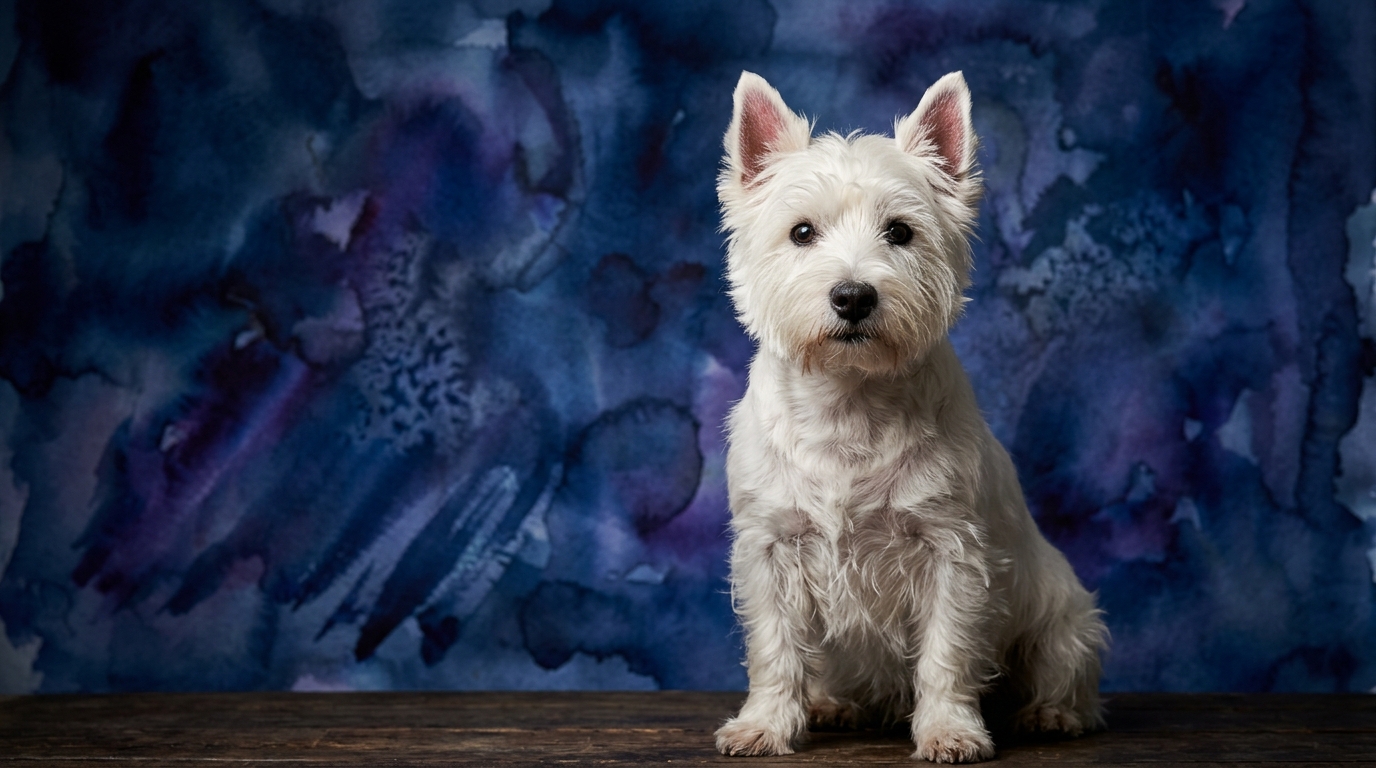

Side-by-Side IQ Profile: West Highland White Terrier
The West Highland White Terrier, Coren rank #47, presents a cognitive profile reflecting its vermin-hunting heritage. Its problem-solving ability, rated 3/5, manifests as resourceful, independent thinking, often seen when strategizing to retrieve a dropped toy or bypass a minor barrier. Training speed, also 3/5, indicates they grasp new commands moderately, though inherent terrier assertiveness can require creative motivation for consistent application. Social intelligence, at 3/5, shows they adeptly understand their immediate human family's cues and routines, but can be discerning with strangers, reflecting a self-assured nature. Their instinctive drive, 3/5, focuses on digging, chasing, and vocalizing. A standout trait is their memory, rated 4/5, allowing them to retain commands, routines, and past experiences with remarkable clarity, often remembering where a treat was hidden days later.
Side-by-Side IQ Profile: Black and Tan Coonhound
The Black and Tan Coonhound, while not Coren-ranked, demonstrates a unique cognitive structure optimized for its tracking profession. Its problem-solving capacity, rated 3/5, is largely applied to navigating complex scent trails, interpreting subtle olfactory cues to locate quarry over vast terrains. Training speed, 3/5, means they can learn, but their intense focus on scent often diverts attention, requiring immense patience and a consistent, engaging approach. Social intelligence, at 3/5, often sees them as generally amiable, interacting well within their 'pack' and with new people, though their primary sensory input is often the world of smells. Their instinctive drive, 3/5, is overwhelmingly dominated by their powerful nose, leading to persistent tracking and baying. Their memory, rated 3/5, is particularly strong for recalling specific scent patterns and the geography of successful hunts, though less robust for arbitrary commands when a compelling scent is present.
Where the West Highland White Terrier Wins Cognitively
The West Highland White Terrier shows a distinct cognitive advantage in its superior memory (4/5 compared to the Coonhound's 3/5). This enhanced recall means Westies often remember learned behaviors, household rules, and specific interactions for extended periods, making them consistent in their learned responses. While both breeds score 3/5 for problem-solving, the Westie's application of this skill leans towards independent, 'terrier-like' ingenuity. They excel at figuring out how to manipulate objects, such as opening a cupboard or devising strategies for a coveted toy. This involves trial-and-error coupled with excellent memory for what previously worked, allowing them to develop complex behavioral sequences. Their problem-solving is internally driven and less dependent on external sensory input like scent, making them adaptable to novel, non-olfactory challenges.
Where the Black and Tan Coonhound Wins Cognitively
The Black and Tan Coonhound's cognitive strengths are profoundly specialized, showcasing unparalleled mastery in olfaction. While their problem-solving is rated 3/5, its quality is fundamentally different. Coonhounds are supreme analytical thinkers when it comes to scent; they process a multitude of olfactory data points simultaneously, distinguishing between multiple trails, aging scents, and environmental interference. Their instinctive drive, also 3/5, is profoundly focused and persistent, allowing them to maintain intense concentration on a single, faint scent trail for hours, covering vast distances. This sustained cognitive effort in sensory overload is a testament to their specialized mental endurance. Their ability to map and remember complex territories through scent, rather than visual cues, represents a highly evolved form of spatial memory and navigation, a clear winning attribute.
Which is Easier to Train and Why?
For general obedience training, the West Highland White Terrier often presents a slightly more straightforward path. While both are 3/5 for training speed, the Westie's superior memory (4/5) and attentiveness to human cues mean they grasp and retain instructions more consistently. Their challenge lies in terrier independence and occasional stubbornness; they might understand a command but choose not to comply if motivation isn't compelling. Consistent positive reinforcement is crucial. The Black and Tan Coonhound presents unique hurdles due to its overwhelming instinctive scent drive. While possessing good social intelligence, their profound focus on olfactory stimuli means any interesting smell can instantly divert attention. This requires extraordinary patience, consistency, and a highly structured, distraction-free environment. Recalling a Coonhound off a scent trail is a significant challenge, often requiring extensive, specialized work. Therefore, for general household obedience and reliable recall, the Westie often proves marginally easier to train than the scent-driven Coonhound.
Which Suits Active Owners vs. Relaxed Owners?
The choice between these breeds hinges significantly on an owner's lifestyle. The West Highland White Terrier, while lively, adapts well to owners preferring moderate activity. They thrive on regular walks, engaging puzzle toys, and consistent mental stimulation. Not endurance athletes, but they need outlets for instinctive drives like supervised digging or 'hunt' games. Content with a relaxed evening once needs are met, they suit owners enjoying consistent daily interaction but not extreme outdoor adventures. In contrast, the Black and Tan Coonhound is unequivocally suited for highly active owners. These dogs require substantial daily exercise that ideally engages their powerful nose and tracking instincts. Long, leashed walks, hikes, or secure, spacious areas for free exploration are vital. Their relentless drive means they are not content with minimal activity; insufficient stimulation can lead to restlessness and destructive behaviors. The Coonhound is best for individuals or families with an active, outdoor-oriented lifestyle prepared to dedicate significant time to their dog's physical and mental exercise.
The Verdict
Choose the West Highland White Terrier if you desire a spirited, loyal dog with a sharp memory, a knack for independent problem-solving, and a personality that thrives on consistent engagement and moderate daily activity within a family setting.
Choose the Black and Tan Coonhound if you are an active, outdoor-oriented individual or family prepared to dedicate significant time to engaging a powerful, scent-driven companion in extensive physical exercise and specialized tracking activities.
🧠 Find Your Pet's IQ Score
Our Pet IQ Lab assessment covers 25+ tests across 5 cognitive dimensions — personalized to your breed.
Take the Full IQ Test →Frequently Asked Questions
Are West Highland White Terriers good with children?
Westies can be good with respectful children, especially if raised together. Their spirited nature and assertiveness mean they might not tolerate rough play, so supervision and teaching children how to interact gently are important for a harmonious household.
Do Black and Tan Coonhounds bark a lot?
Black and Tan Coonhounds are known for their distinctive "baying" vocalization, a deep, resonant sound used during tracking. They can be quite vocal, especially if bored, left alone, or when they pick up an interesting scent, which is a characteristic owners should be prepared for.
Which breed is better for apartment living?
The West Highland White Terrier is generally more adaptable to apartment living, provided they receive regular walks, mental stimulation, and indoor play to satisfy their moderate exercise needs. The Black and Tan Coonhound's large size, high exercise requirements, and vocal nature make them less suitable for typical apartment environments.