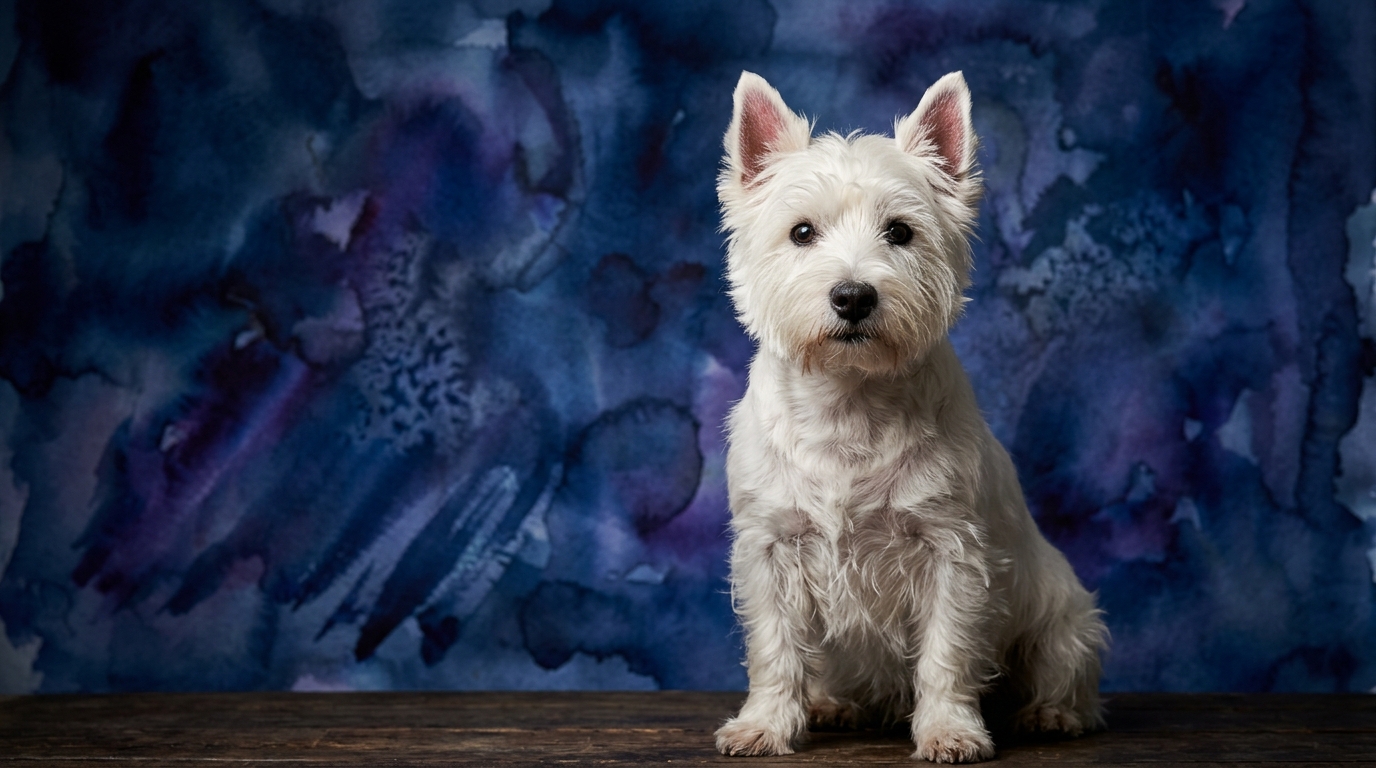
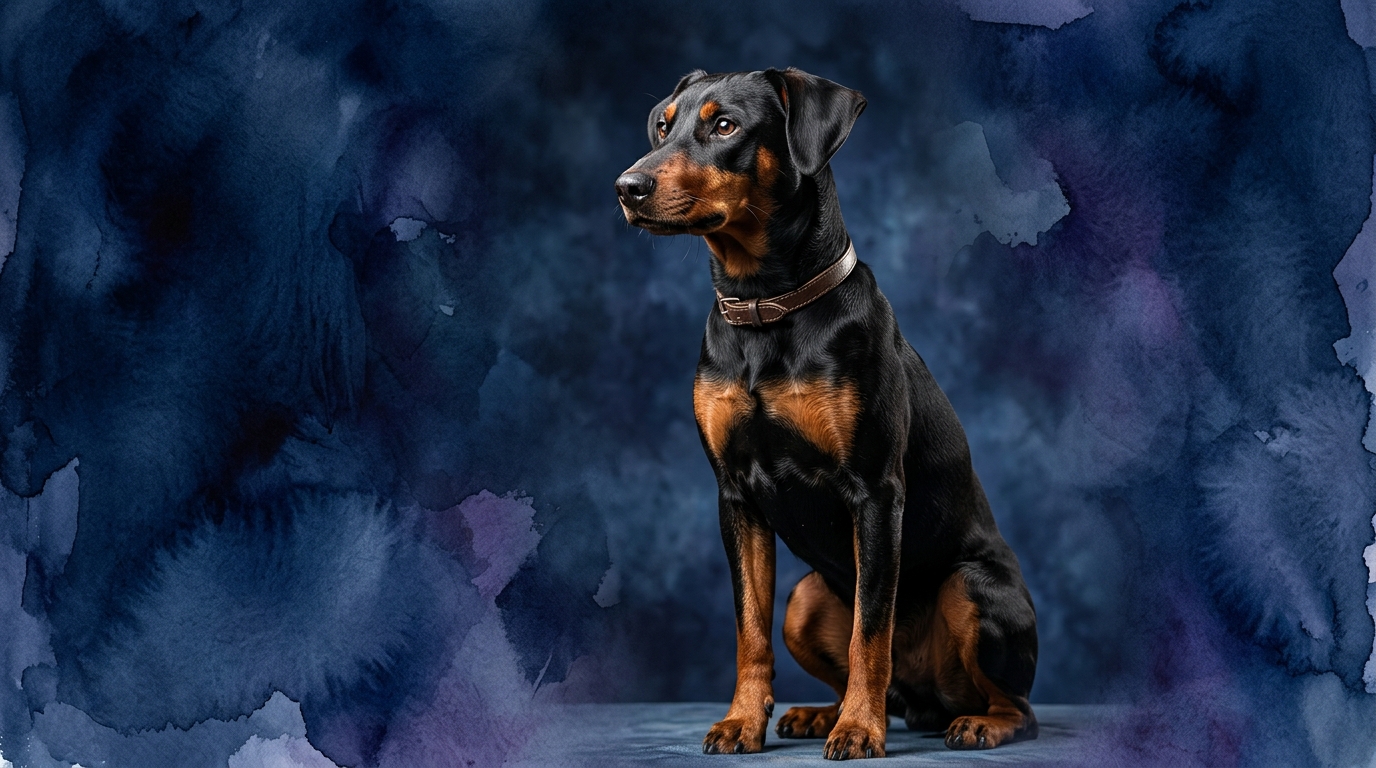
Side-by-Side IQ Profile: Westie vs. German Pinscher
At The Cosmic Pet Pet IQ Lab, we assess canine cognition across five key dimensions to provide a nuanced understanding of each breed's unique capabilities.
For the **West Highland White Terrier (Westie)**, we observe:
Problem Solving (3/5): Westies approach novel situations with a moderate capacity for figuring things out. Their terrier instincts often guide their solutions, sometimes leading to persistent digging or exploring rather than abstract reasoning in complex scenarios. They excel at practical problem-solving within their immediate environment, learning through trial and error and applying past experiences to new, similar challenges.
Training Speed (3/5): Westies grasp new commands at a steady pace, demonstrating a clear ability to learn. They are capable students, but their independent terrier spirit means they may not always be quick to comply even if they fully understand the instruction. Consistency, patience, and positive reinforcement are crucial to maintaining their engagement and ensuring steady progress in training.
Social Intelligence (3/5): Westies exhibit a moderate understanding of social cues, both canine and human. They can form strong, affectionate bonds with their family and navigate social interactions effectively, but their confident, sometimes assertive, nature requires careful and early socialization to ensure polite encounters with unfamiliar dogs or people. They read their family's emotions well, often offering comfort or seeking attention appropriately.
Instinctive Drive (3/5): The Westie's instinctive drive is moderate, primarily rooted in their terrier heritage of hunting small prey. This manifests as a keen interest in chasing squirrels, digging in the garden, and patrolling their territory with vigilance, providing a clear and often persistent purpose that can be effectively channeled through appropriate games and activities.
Memory (4/5): Westies possess a robust memory, retaining learned behaviors, commands, and experiences effectively over extended periods. This cognitive strength means once a lesson is ingrained, it tends to stick, making their long-term retention of training and established routines remarkably reliable and requiring fewer refreshers.
For the **German Pinscher (GP)**, our findings indicate:
Problem Solving (3/5): German Pinschers show a moderate ability to tackle new problems, often relying on their sharp senses and inherent tenacity. As a working breed, they are particularly adept at practical solutions related to their environment, such as figuring out how to access a desired object or skillfully navigating a complex obstacle course.
Training Speed (3/5): German Pinschers learn new tasks at a consistent and respectable rate. Their inherent drive to work and please, combined with their focused demeanor, makes them receptive students in structured environments, though their spirited nature means training needs to be engaging, varied, and fair to hold their attention consistently.
Social Intelligence (3/5): German Pinschers display a moderate capacity for social understanding. They are attentive to their family's moods and intentions, forming deep bonds. With proper, early, and ongoing socialization, they can interact appropriately with others, though their protective instincts may lead to a reserved or cautious initial approach with strangers, requiring careful introductions.
Instinctive Drive (3/5): German Pinschers have a moderate instinctive drive, stemming from their historical role as versatile farm dogs responsible for vermin control and guarding. This translates into a natural vigilance, a desire to patrol their home, and a keen prey drive that requires mindful management and appropriate outlets to prevent unwanted behaviors.
Memory (3/5): German Pinschers have a solid memory, capable of recalling commands, routines, and past experiences. While effective for everyday learning and retention, their recall is slightly less pronounced or consistent than the Westie's, meaning occasional refreshers might be beneficial to maintain peak performance on less frequently practiced tasks or complex sequences.
Where the West Highland White Terrier Wins Cognitively
The Westie's distinct cognitive advantage lies squarely in its superior Memory (4/5) compared to the German Pinscher's 3/5. This means that once a Westie has grasped a command, a routine, or the location of a favored toy, that information tends to be more deeply etched into their cognitive framework. For owners, this translates into less frequent need for repetition to maintain learned behaviors and a dog that remembers past lessons with greater clarity over longer periods. For instance, a Westie might recall a complex command sequence learned months ago with minimal prompting, whereas a German Pinscher might require a quicker refresher. This enhanced recall supports more consistent long-term behavior and can be particularly beneficial in complex, multi-step routines or advanced obedience work where cumulative learning is key. Their ability to retain environmental details also means they might be more adept at navigating familiar spaces or remembering where a hidden treat was last found with remarkable accuracy.
Where the German Pinscher Wins Cognitively
While the German Pinscher's individual IQ scores largely mirror the Westie's, its cognitive strength isn't about a higher score in a specific dimension but rather in the application of its balanced profile, particularly its Instinctive Drive (3/5) within a working context. As a breed developed for active roles like guarding and vermin control, the German Pinscher often exhibits a focused determination and resilience that, while not reflected in a higher numerical score, can translate into exceptionally effective problem-solving in real-world scenarios requiring sustained effort and purpose. Their balanced problem-solving and training speed, combined with their working heritage, suggests a cognitive makeup geared towards purposeful, directed activity. This can manifest as a greater willingness to engage in repetitive tasks if they perceive a clear goal, or a more direct, less distracted approach to challenges that align with their protective or hunting instincts, making them highly effective when given a job.
Which is Easier to Train and Why
Both the West Highland White Terrier and the German Pinscher score a 3/5 in Training Speed, suggesting they grasp new commands at a comparable pace. However, the ease of training can differ significantly due to other cognitive factors and breed-specific temperaments. The Westie's superior Memory (4/5) means that once a concept is learned, it is likely to stick more effectively long-term, potentially reducing the need for constant refreshers. Yet, their inherent terrier independence and occasional stubbornness can make initial compliance a hurdle, requiring patient, consistent motivation, and a clever approach to make training feel like their idea. German Pinschers, while having a 3/5 memory, often possess a strong desire for purpose and a keen focus derived from their working background. This can make them highly receptive to training methods that are engaging, varied, and goal-oriented, often showing a robust work ethic. They might be quicker to offer desired behaviors if the training feels like a job or game, but their spirited nature means trainers must maintain interest and prevent boredom through diverse activities. Ultimately, the Westie might require more strategic persuasion to engage, while the German Pinscher thrives on structured activity and clear objectives.
Which Suits Active Owners vs. Relaxed Owners
For active owners, the German Pinscher often proves a more natural fit. Their Instinctive Drive (3/5), rooted deeply in their working heritage, means they thrive on consistent physical exertion and mental engagement. They require daily opportunities to run, explore, and participate in activities like agility, advanced obedience, or scent work to satisfy their inherent need for purpose and challenge. A German Pinscher with insufficient outlets can become restless, destructive, or develop undesirable behaviors, making them unsuitable for owners who prefer a largely sedentary lifestyle. Their resilience, focus on tasks, and desire for a "job" make them excellent companions for owners who enjoy structured activities, outdoor adventures, and a dog that can keep pace.
The West Highland White Terrier, while certainly energetic and playful, can be more adaptable for relaxed owners, provided their moderate Instinctive Drive (3/5) for digging and chasing is acknowledged and managed. While they thoroughly enjoy walks and interactive playtime, their overall exercise needs can often be met with regular strolls, engaging indoor games, and short bursts of outdoor activity, rather than requiring intense, prolonged athletic endeavors. Their strong memory means they can settle into established routines effectively, making them comfortable with predictable daily structures. Owners who appreciate a dog that is content with a good walk and then happy to curl up nearby, but still possesses a confident, independent spirit and a spark of terrier mischief, might find the Westie a delightful and manageable companion.
The Verdict
Opt for a Westie if you prioritize a companion with robust memory for long-term retention of training, and appreciate a spirited yet adaptable dog capable of fitting into a moderately active household.
Select a German Pinscher if you seek a resilient, purposeful working breed that thrives on consistent mental and physical challenges, and you are prepared to provide structured engagement.
🧠 Find Your Pet's IQ Score
Our Pet IQ Lab assessment covers 25+ tests across 5 cognitive dimensions — personalized to your breed.
Take the Full IQ Test →Frequently Asked Questions
Does the Westie's higher memory score make it definitively smarter than the German Pinscher?
Not definitively, as "smartness" is multifaceted. While the Westie excels in memory retention, both breeds have comparable scores in problem-solving and training speed, indicating similar capacities for learning and adapting. The Westie's memory simply means learned information sticks more readily.
Given the German Pinscher isn't Coren-ranked, how can its intelligence be assessed?
The Coren ranking primarily focuses on obedience and working intelligence, which is only one aspect. Our IQ lab assesses five specific cognitive dimensions, providing a granular view of a breed's capabilities regardless of its inclusion in broader, comparative rankings. The German Pinscher's working background suggests a practical, task-oriented intelligence.
Are these breeds good for first-time dog owners?
Both breeds present unique challenges that first-time owners should consider. Westies require consistent handling of their independent terrier spirit, while German Pinschers need dedicated commitment to exercise and mental stimulation to prevent boredom. Neither is inherently "easy," but both can thrive with informed, patient guidance.